Your Takeout Box Is About To Vanish
Imagine a world where your single-use plastic trash simply melts away. Scientists have found a way to make common takeout containers truly disappear after use.
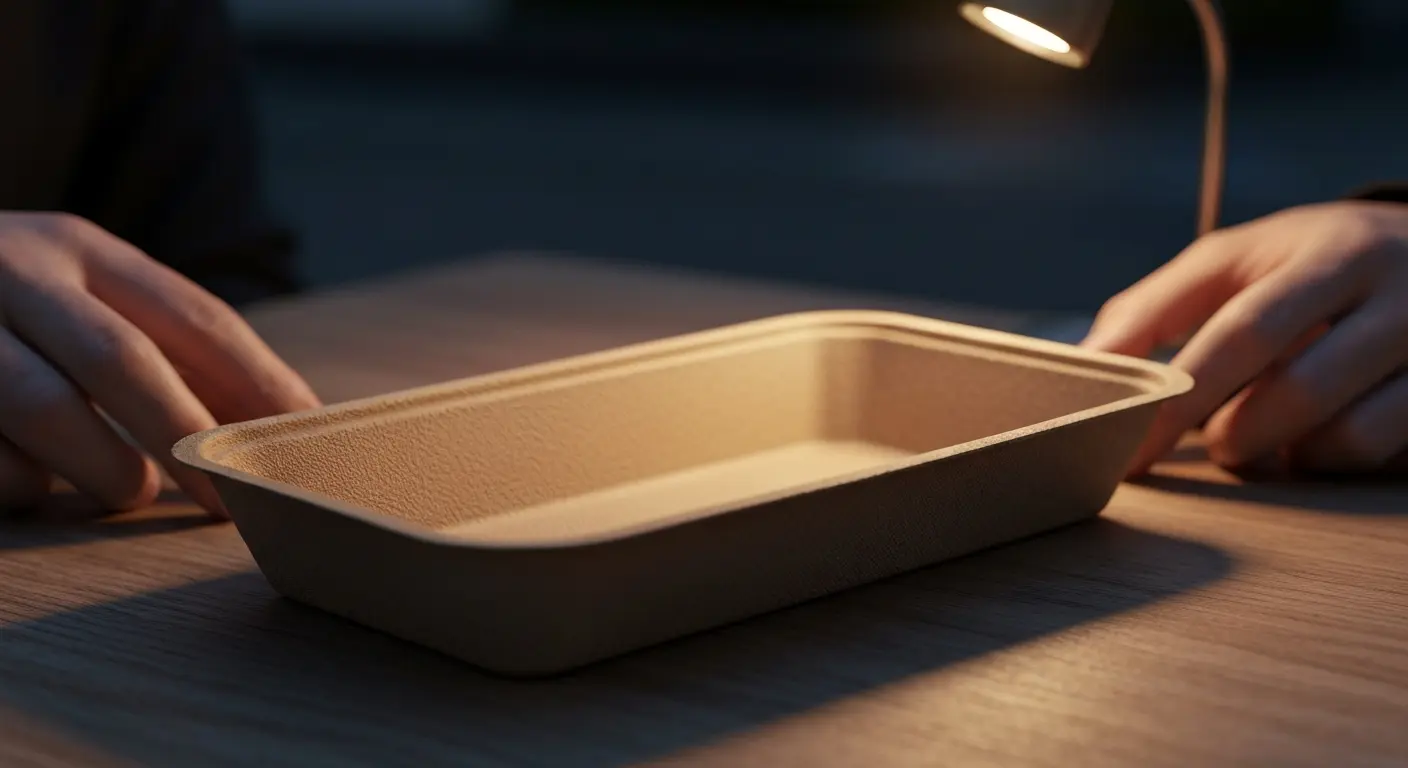
You know that moment: you've finished your delicious takeout, and then you're faced with the plastic tray—destined for a landfill, where it will sit for hundreds of years. But what if those ubiquitous single-use food trays, the kind used by every delivery service, could simply vanish? That reality is closer than you think, thanks to some clever material science.
Scientists are making real progress on cost-effective, truly biodegradable plastics. We’re not talking about plastics that just break into tiny pieces, but materials that organisms can actually digest, like food, leaving nothing harmful behind. Researchers at institutions like the University of Alicante have been evaluating new blends, and the results are pretty promising.
The Secret Sauce to Disappearing Plastics
The trick lies in combining specific types of bioplastics with common minerals. Think of it like baking a cake: you need the right flour, eggs, and sugar in the perfect ratio for it to turn out just right. In this case, researchers are experimenting with blends like polylactic acid (PLA) and poly(3-hydroxybutyrate-co-3-hydroxyhexanoate) (PHBH), often with talc, a soft mineral, added in. PLA is a bioplastic made from plant sugars, while PHBH is a unique biopolymer produced by bacteria, making it truly marine biodegradable—meaning it can break down in ocean environments without causing harm.
Another promising combination involves poly(butylene adipate-co-terephthalate) (PBAT) and poly(butylene succinate) (PBS), also mixed with talc. PBAT is a type of compostable polyester, and PBS is another biodegradable plastic. These formulations, especially those with PBAT and PBS, are particularly exciting because they significantly reduce the cost, partly due to recent price drops in PBAT raw materials. Imagine your takeout container made from something similar to this, offering a greener solution for all those convenient meals.
How They're Making It Work Without Breaking the Bank
One of the biggest hurdles for bioplastics has always been their cost and how well they perform. Early versions were often too flimsy or too expensive for widespread adoption, similar to how early electric cars were limited by battery range and price. These new formulations are designed to hit that sweet spot of affordability, durability, and environmental friendliness. For instance, the PBAT/PBS blends can incorporate a higher percentage of talc (up to 40%), which makes them cheaper to produce without sacrificing too much strength.
They use a process called twin-screw extrusion, which is essentially like pushing the melted plastic through a giant pasta maker, to mix these components thoroughly. This process ensures the different plastics and talc are perfectly blended. An interesting addition is a "reactive chain extender," which acts like a molecular glue, improving the strength of the plastic and preventing it from becoming too brittle, even with all that talc. This ensures your tray won't fall apart before your food gets to you.
Why This Matters for Your Daily Life (and the Planet)
This isn't just about making eco-friendly trays; it's about tackling a massive global problem. Think about how many plastic containers you’ve tossed over the past year. Every single-use food tray contributes to the mountains of waste in landfills. With these new materials, the environmental footprint shrinks dramatically. The PLA/PHBH formulations, for example, are a top choice for their minimal environmental impact, offering a truly sustainable option, albeit with a slightly higher production cost for now.
The PBAT/PBS blends, on the other hand, offer an excellent balance of lower cost and acceptable performance, making them ideal for widespread adoption. They passed compression tests without fracturing, meaning your food won't end up on your lap. This dual approach gives manufacturers options, balancing ecological goals with economic realities. This move towards better materials is much like the ongoing quest to make finally, solar cells that work, and last, addressing environmental needs with practical solutions.
What's Next for Disappearing Dinnerware?
While these developments are significant, it will still take some time for these "disappearing" plastics to be everywhere. The research is focused on refining the blends, optimizing production, and bringing down costs even further. We're likely looking at 5-10 years before these become a truly common sight in your local takeout spot. Ongoing challenges include scaling up production to meet global demand and ensuring the biodegradability claims hold true in diverse real-world conditions.
The potential here is huge, though. Imagine if your fridge food could last twice as long because it was stored in these advanced, breathable, and ultimately vanishing materials, or if the wrappers your food comes in could actually tell you if the food is bad before you even open it, like what you find in this wrapper will quietly tell you if food is bad. Ultimately, this research means your future takeout dinner could arrive in a container that quietly returns to nature, making your post-meal cleanup a little lighter on your conscience. This quiet shift could redefine our relationship with convenience and waste, allowing you to enjoy your meal without the lingering guilt of plastic pollution.
Key Takeaways
- New biodegradable plastic blends are balancing cost and environmental impact for single-use items.
- Materials like PHBH offer true marine biodegradability, breaking down even in ocean environments.
- The widespread adoption of these solutions could drastically reduce landfill waste from takeout containers.
Frequently Asked Questions
What are biodegradable single-use plastics? They are materials designed to break down naturally in the environment, usually through the action of microorganisms, turning into simpler, harmless substances like water and carbon dioxide, unlike traditional plastics that persist for centuries.
How do these new plastics achieve lower costs? Researchers are using blends of existing bioplastics like PBAT and PBS, which have seen price reductions, and incorporating common, inexpensive minerals like talc in higher percentages to reduce overall material costs without compromising essential performance.
When can I expect to see these in everyday use? While promising, these innovations require further refinement and scaling. You might start seeing these types of truly biodegradable takeout containers in widespread use within the next 5 to 10 years, as production becomes more efficient and cost-effective.
Editorial note: The scientific findings presented in this article are sourced exclusively from published research papers, peer-reviewed studies, certified inventions, and registered patent filings. Images generated by AI.
Stay ahead of the curve
The science that shapes tomorrow — in your inbox every week
The scientific findings presented in our articles are sourced from published research papers, peer-reviewed studies, certified inventions, and registered patent filings. Subscribe for focused weekly coverage, hands-on explainers, and practical insights that help you stay curious — no jargon, no noise.
By subscribing, you agree to receive newsletter and marketing emails, and accept our Terms of Use and Privacy Policy. You can unsubscribe anytime.
Bio-inspired Materials, Biomimetics & Green Material Design
Biomimetics journalist exploring the remarkable materials scientists are designing by studying — and copying — the natural world.
View full profile →