Your Body Can Finally Target Hidden Tumors
Imagine a tumor that hides from your body's defenses and ignores most treatments. Now, scientists are finding ways to sneak past its invisibility cloak using tiny delivery systems. This new approach could change how we fight aggressive cancers, especially those with no current targets.

Sometimes, your body's most aggressive enemies are also its best hiders. Triple-negative breast cancer (TNBC) is a notoriously tricky adversary because it lacks the usual "target" molecules that many modern cancer drugs aim for, making it feel like trying to hit a ghost. It's like having a special key, but the lock isn't there. This cancer doesn't respond to therapies that target estrogen receptors (ER), progesterone receptors (PR), or HER2, leaving fewer effective options.
What makes TNBC so hard to beat isn't just its lack of targets; it also builds a protective shield around itself, often called the tumor immune microenvironment (TIME). Think of the TIME as a personal fortress built by the tumor, filled with cells and chemicals that tell your immune system, "Nothing to see here!" It's a complex mix of tumor cells, immune cells, and structural cells, all working together to help the cancer grow and evade detection. This environment can be "cold," meaning it effectively keeps your body's natural defenders, like T cells and NK cells, from launching a proper attack.
How Tiny Packages Sneak Past the Tumor's Defenses
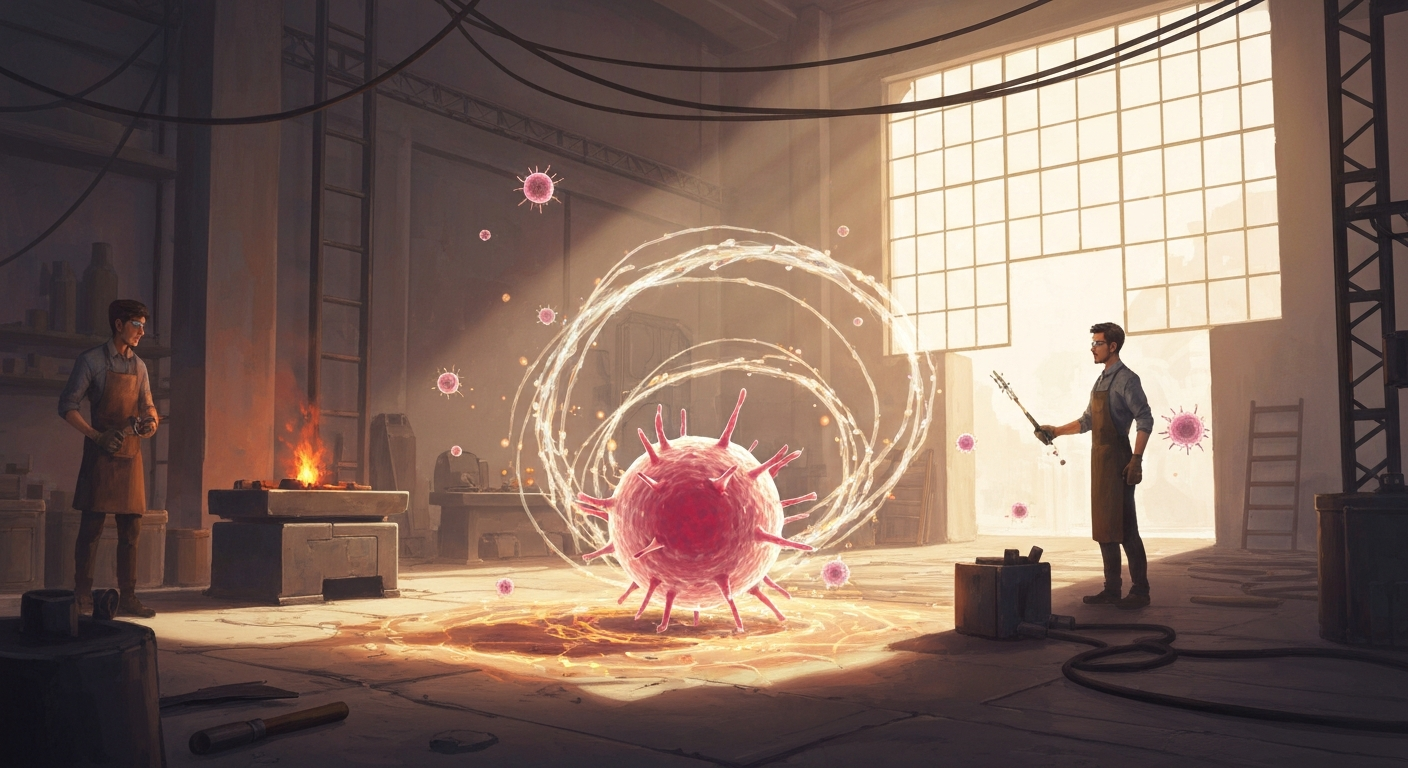
The exciting news is that scientists are developing stealthy delivery systems to outsmart this fortress. These aren't just any packages; they're tiny carriers, often referred to as nanocarriers, designed to carry medicines directly to the tumor. Imagine a tiny mail truck, too small for the fortress guards to notice, slipping through the walls with a critical message. These nanocarriers are often made from polymers or lipids, similar to the fatty building blocks of your body's own cells, making them biocompatible.
These smart delivery vehicles exploit the unique weaknesses of the tumor's fortress. For example, tumors often have areas with low oxygen (hypoxia), are more acidic than healthy tissue, and have faulty blood vessels that are leaky. The nanocarriers are engineered to recognize these specific conditions, acting like a smart bomb that only detonates when it senses the right environmental cues inside the tumor. This allows for what’s called stimulus-responsive release, where the drug payload is only let loose when it's exactly where it needs to be, like a timed-release capsule for cancer.
Boosting Your Body's Own Cancer Fighters
One powerful approach is using these tiny carriers to deliver therapies that activate your own immune system against the tumor. This is called immunotherapy. Instead of directly killing cancer cells, immunotherapy teaches your body's immune cells to recognize and destroy them, like giving your army better training and clearer instructions. Researchers are focusing on turning "cold" tumors, those ignored by the immune system, into "hot" ones that attract a strong immune response.
It’s like giving your body's immune system a precise map and a new weapon, so it can finally find and fight the hidden enemy. One surprising fact: even though tumors are part of your body, your immune system often struggles to tell them apart from healthy cells, or the tumor actively suppresses that recognition. These nanocarriers can deliver things like immune checkpoint blockade drugs, which are essentially "un-pausing" your immune system, allowing it to spring into action against the cancer. You can think of this as removing the handbrake your tumor has applied to your body's defenses.
The Road Ahead for Targeted Treatment
While these tiny packages offer incredible promise, they face real-world challenges. Tumors are incredibly diverse, even within the same patient, making it hard for one-size-fits-all nanocarriers to work perfectly every time. This is known as TIME heterogeneity, meaning the fortress itself keeps changing its defenses. Also, the body’s natural processes can sometimes coat these nanocarriers with proteins, like barnacles on a ship, which makes them less effective or marks them for early removal. This is called protein corona formation, and it's something scientists are actively trying to overcome.
Despite these hurdles, the progress is remarkable. Experts like those at the Chinese Academy of Sciences are pushing for more streamlined, reproducible designs for these nanocarriers. The goal is to move beyond complex lab setups and create simpler, more reliable systems that can be manufactured consistently for actual patients. We're still probably 5 to 10 years away from seeing these nanocarriers widely available in clinics, as they need extensive testing for safety and effectiveness.
What This Means For Your Future Health
Ultimately, this research means a future where cancer treatments are smarter and more personal. Instead of harsh, widespread treatments, you might one day receive therapies tailored to the specific characteristics of your tumor's microenvironment. This could lead to more effective treatments with fewer side effects, especially for aggressive cancers like triple-negative breast cancer that currently have limited options. It's about giving your body the best possible chance to fight back against its stealthiest foes. (/article/your-body-can-finally-target-sickness)
This focus on understanding and manipulating the tumor's hidden environment is opening new doors. It’s not just about what drug you use, but how and where it gets delivered. Imagine a future where doctors can precisely identify the unique vulnerabilities of a tumor’s fortress and deploy microscopic agents to dismantle its defenses and activate your own powerful immune response. (/article/your-scans-may-finally-spot-sickness-sooner) This precise delivery system is crucial for therapies where the drug needs to avoid healthy cells to prevent side effects, much like tiny engines quietly fix your body for other medical challenges.
Key Takeaways
- Triple-negative breast cancer is hard to treat because it lacks common drug targets and creates a protective shield against the immune system.
- New nanocarriers act like tiny, smart delivery systems, exploiting tumor weaknesses to deliver drugs precisely and activate the body's natural immune response.
- While still several years from wide clinical use, this technology promises more targeted, effective cancer treatments with fewer side effects by overcoming the tumor's hiding strategies.
Frequently Asked Questions
What is a nanocarrier in cancer treatment? A nanocarrier is a tiny, engineered particle, like a microscopic delivery truck, designed to transport drugs directly to tumor cells. It protects the medicine and releases it only when specific conditions within the tumor are met, minimizing harm to healthy cells.
Why are nanocarriers important for triple-negative breast cancer? Triple-negative breast cancer lacks common drug targets and creates a protective "immune microenvironment." Nanocarriers can bypass these defenses, delivering treatments that activate the body's immune system or directly attack the cancer in a targeted way.
How do nanocarriers find tumors specifically? Nanocarriers are designed to exploit unique features of tumors, such as areas with low oxygen, high acidity, or leaky blood vessels. They act like smart keys that only unlock and release their drug payload when they detect these specific tumor characteristics.
Editorial note: The scientific findings presented in this article are sourced exclusively from published research papers, peer-reviewed studies, certified inventions, and registered patent filings. Images generated by AI.
Stay ahead of the curve
The science that shapes tomorrow — in your inbox every week
The scientific findings presented in our articles are sourced from published research papers, peer-reviewed studies, certified inventions, and registered patent filings. Subscribe for focused weekly coverage, hands-on explainers, and practical insights that help you stay curious — no jargon, no noise.
By subscribing, you agree to receive newsletter and marketing emails, and accept our Terms of Use and Privacy Policy. You can unsubscribe anytime.
Battery Materials, Energy Storage Chemistry & Electric Vehicle Technology
Battery materials journalist covering the chemistry behind the electric revolution — and why the next decade of progress depends on what's inside the cell, not outside it.
View full profile →