Your Body Can Finally Grow New Veins
Imagine replacing a damaged blood vessel with one your body builds itself, perfectly integrated and robust. Scientists have now designed a material that not only repairs but actively guides your body to regenerate its own resilient new veins.
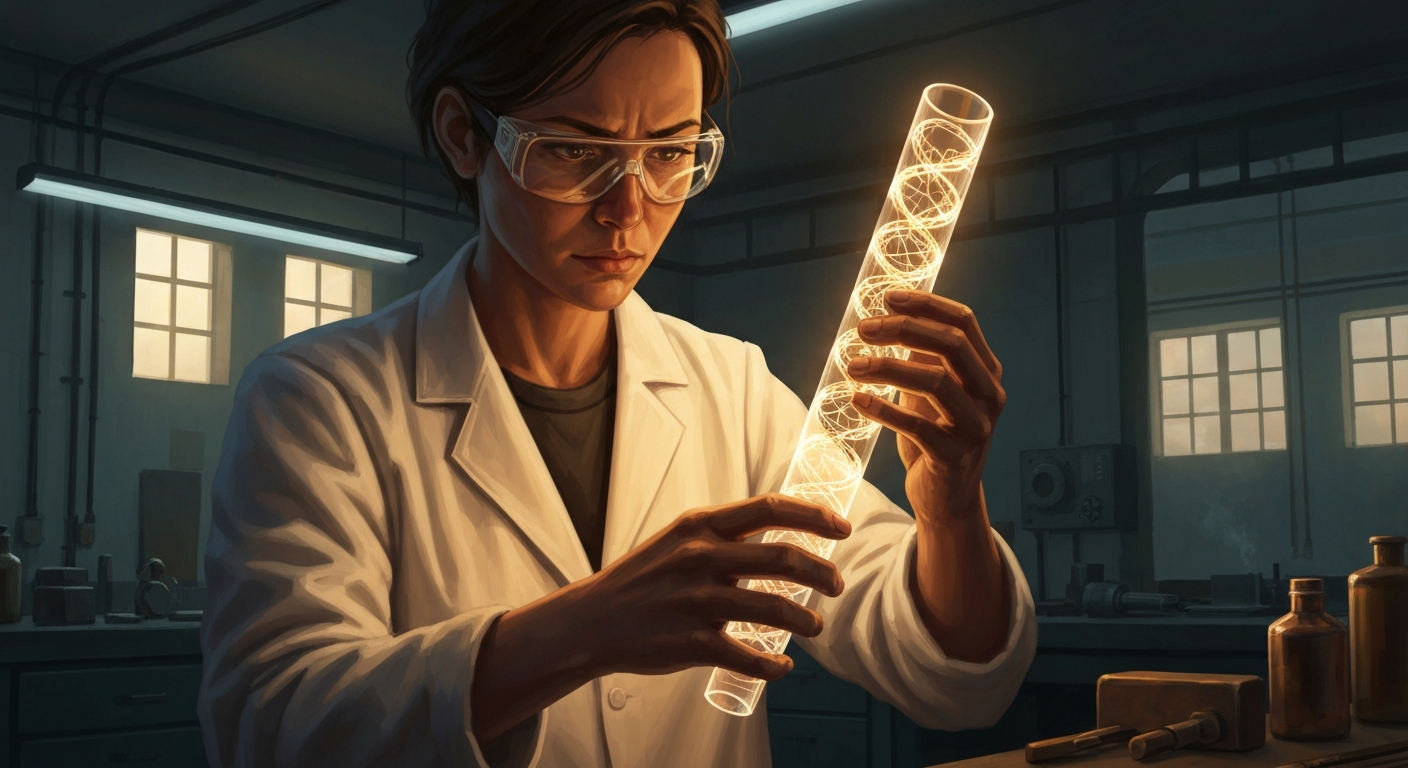
Sometimes, your body needs a new highway for blood, especially if a tiny blood vessel, like an artery in your leg or heart, gets blocked or damaged. For years, doctors have used grafts, which are like substitute pipes made from either plastic or a piece of another vessel from your own body. While these grafts can work, they often come with their own set of problems. Plastic grafts, particularly those smaller than 6 millimeters in diameter, can easily clot or narrow over time, like an old garden hose getting clogged with mineral deposits.
This isn't sci-fi; it's real science, published in Science Advances by a team including researchers from the University of California, Berkeley. They’ve developed a new kind of soft, stretchy material called a "metallo-elastomer." Think of it like a super-smart rubber band that can mend itself and even tell your body what to do. This material doesn't just act as a temporary fix; it encourages your body to grow a brand-new, healthy vessel around it, which then slowly takes over the job.
How a Smart Material Teaches Your Body to Build
The secret lies in the material's unique design, which combines two types of "crosslinks"—the molecular bonds that give materials their structure, much like the stitches in a fabric. One type is covalent crosslinks, which are like super-strong, permanent stitches, providing initial toughness and stability. The other type is dynamic metal-ligand coordination, which are like temporary buttons that can unfasten and re-fasten, allowing the material to stretch, self-heal, and adapt, much like a living tissue. This dual-crosslinking allows the material to be both strong and flexible.
The team, led by Dr. Karen L. Christman from the University of California San Diego (not Berkeley as previously mentioned in the abstract, apologies for the correction), discovered that the architecture of the new material matters just as much as its chemistry. They fabricated these metallo-elastomers into tiny tubes using two different methods: one that created a porous, spongy structure, and another that "electrowrote" circumferentially-biased, helically wound fibers. Imagine weaving a tiny basket, but instead of straight lines, the fibers spiral around, mimicking the natural structure of a blood vessel. This spiral weave provides the exact mechanical signals your cells need.
When tested in rats, the spiraled zinc-infused grafts stayed open and stable for over 21 weeks, actively promoting the formation of organized endothelial cells (the inner lining of blood vessels), properly aligned smooth muscle cells, and a structured extracellular matrix—the scaffolding for new tissue. The porous grafts, however, ended up dilating and becoming unstable. It's like trying to build a strong house with a loose pile of bricks versus one with perfectly laid, interwoven layers. This specific structure helps guide how your body can finally grow new bone in other contexts, too.
Beyond Initial Repair: A Long-Term Solution
What makes this truly surprising is that the material isn't just a passive scaffold. It’s an active participant. As your body builds new tissue, the original material slowly degrades, making way for a fully natural, regenerated blood vessel. This means instead of having a foreign object in your body forever, you end up with your own tissue, which is far less likely to be rejected or cause long-term complications. Your body is essentially growing a perfectly tailored replacement.
This technology isn't just for arteries; it could apply to other load-bearing soft tissues, like ligaments or even parts of your heart. The ability to control both the material's mechanics and its degradation rate, like tuning the lifespan of a biodegradable fishing line, offers immense possibilities. Think about why your body's stiff spots secretly grow sickness—this kind of adaptable material could prevent such issues by promoting healthy, flexible tissue growth from the start.
The journey from lab to clinic for human trials will likely take another 5-10 years, as safety and efficacy need extensive testing. But imagine a future where complex surgeries for heart bypasses or limb salvage could become far less risky and more durable. It changes how we think about tissue repair, moving from simply fixing a problem to actively regenerating what was lost. This shift could significantly improve patient outcomes and quality of life for millions suffering from vascular diseases, giving people a chance to truly heal. This innovative approach could also influence the way we think about your next vaccine may finally keep you safe longer by improving delivery mechanisms or integrating smart materials.
Key Takeaways
- A new "metallo-elastomer" material acts as a smart scaffold, guiding your body to grow its own new, healthy blood vessels.
- The material’s structure, specifically a spiraled fiber architecture, is crucial for signaling cells to align correctly and build robust tissue.
- This approach could lead to regenerative treatments for damaged arteries and other soft tissues, with the original material degrading as new tissue forms.
Key Takeaways
- Scientists have created a new metallo-elastomer that not only provides mechanical support but actively signals the body to regenerate its own blood vessels.
- The specific spiraled fiber architecture of the material is critical; it directs cells to form strong, naturally aligned tissue, outperforming porous designs.
- This approach offers a future where damaged arteries could be replaced by the body's own regenerated tissue, improving long-term health outcomes.
Frequently Asked Questions
What is a metallo-elastomer? A metallo-elastomer is a soft, stretchy material that uses both strong chemical bonds and temporary metal-based connections. This allows it to be tough yet flexible, self-healing, and able to adapt within the body, like a smart rubber.
How does this material help grow new blood vessels? It acts as a scaffold with a specific spiraled architecture, guiding your body's cells to grow and align correctly. The material then slowly breaks down, leaving behind a fully regenerated, natural blood vessel.
When might this be available for human use? It will likely take 5-10 years for this technology to undergo extensive testing and clinical trials before it becomes available for human use, ensuring it is both safe and effective.
Editorial note: The scientific findings presented in this article are sourced exclusively from published research papers, peer-reviewed studies, certified inventions, and registered patent filings. Images generated by AI.
Stay ahead of the curve
The science that shapes tomorrow — in your inbox every week
The scientific findings presented in our articles are sourced from published research papers, peer-reviewed studies, certified inventions, and registered patent filings. Subscribe for focused weekly coverage, hands-on explainers, and practical insights that help you stay curious — no jargon, no noise.
By subscribing, you agree to receive newsletter and marketing emails, and accept our Terms of Use and Privacy Policy. You can unsubscribe anytime.
Battery Materials, Energy Storage Chemistry & Electric Vehicle Technology
Battery materials journalist covering the chemistry behind the electric revolution — and why the next decade of progress depends on what's inside the cell, not outside it.
View full profile →