Your Rain Pipes Are Secretly Releasing Plastic
Did you know the pipes beneath your streets could be shedding tiny plastics into our water? Learn how scientists are finally tracking this hidden pollution and what it means for your drinking water.
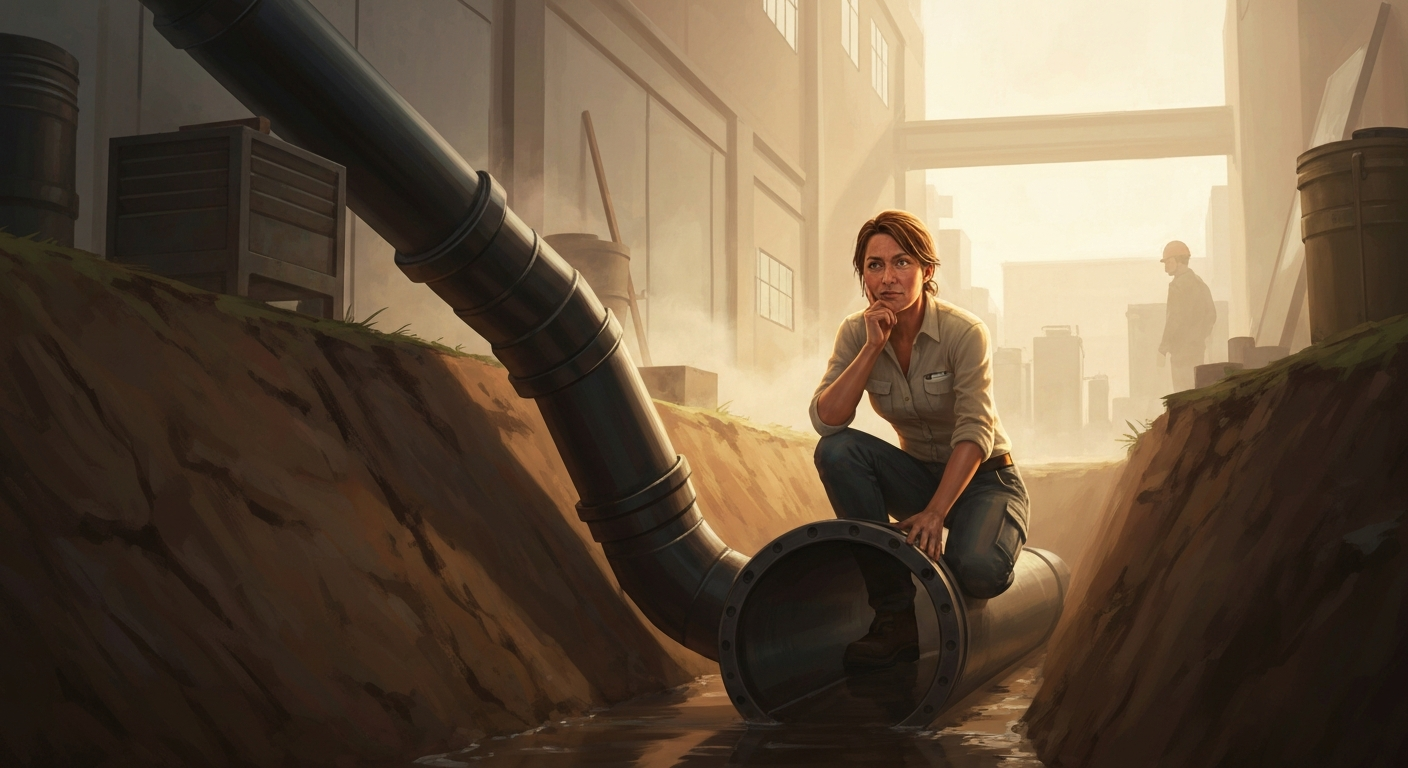
Imagine that the hidden pipes carrying rainwater away from your home — the ones designed to protect your streets from flooding — are actually shedding billions of microscopic plastic bits every single day. This isn't science fiction; it's a quiet reality happening beneath our feet, and scientists are now figuring out exactly how much plastic these essential systems are adding to our environment. We're talking about microplastics, tiny fragments smaller than a grain of sand, and even nanoplastics, which are so small you'd need an advanced microscope to see them, like specks of dust invisible to the naked eye.
These particles come from the very materials used to build modern stormwater infrastructure, like the polyvinyl chloride (PVC) in those white pipes you often see, or polyethylene (PE) and polypropylene (PP) used in bigger drainage systems. Manufacturers love these plastics because they're tough, cheap, and don't rust like old metal pipes. But here's the kicker: these durable materials aren't immune to the relentless forces of nature and the environment.
How Weather and Water Break Down Your Pipes
The pipes break down through several natural processes, much like how your car's paint fades and cracks over years of sun exposure. Sunlight, especially ultraviolet (UV) rays, slowly weakens the plastic structure. Chemicals in the water, like disinfectants or pollutants, can also chip away at the material, similar to how strong cleaning agents can damage surfaces over time. Then there's the physical wear and tear: water rushing through the pipes, carrying grit and sediment, acts like sandpaper, constantly abrading the plastic surfaces and knocking off tiny fragments. Even microscopic life, like bacteria and fungi, can contribute to the breakdown, much like how rust eats away at metal.
Researchers have been using specialized tools to study this degradation. For example, they use something called a Taber abrader, which basically rubs a material with an abrasive wheel to simulate wear and tear, and Darmstadt rigs, which are circulating-loop systems that mimic water flowing through pipes under controlled conditions. While these methods are great for testing how durable a pipe is, they haven't been so good at actually catching and counting the tiny plastic pieces that come off. It's like knowing your car tire is wearing down, but not having a way to measure how much rubber dust it's leaving on the road.

The Challenge of Catching Invisible Particles
The biggest hurdle has been accurately measuring these micro- and nanoplastics, especially the nanoplastics, which are incredibly hard to detect. Think of trying to catch invisible dust particles from a whirlwind with a fishing net — it’s tough. Scientists use advanced analytical techniques like μ-FTIR (micro-Fourier-transform infrared spectroscopy) and Raman spectroscopy. These are fancy terms for tools that use light to identify the chemical fingerprint of different plastic particles, much like a barcode scanner identifies products. They also use SEM/EDX (scanning electron microscopy with energy-dispersive X-ray spectroscopy) to get detailed images of the tiny particles and find out what elements they're made of.
Despite these tools, there have been major gaps. Sampling protocols aren't consistent, meaning different labs might collect samples in different ways, making it hard to compare results. Simulating the real flow of stormwater in a lab is tricky, too; it's rarely a smooth, consistent flow. And here's a surprising fact: most studies don't even compare how much plastic is released from brand-new "virgin" pipe materials versus recycled plastic pipes, which could behave differently.
What Scientists Are Doing Now to Track This Problem
To tackle these issues, researchers are pushing for a new, integrated approach. They propose a hydraulically realistic circulating-loop platform — essentially a mini, controlled stormwater system in the lab that can replicate the actual speed and turbulence of water flow. This system would also integrate UV light and chemical aging, so they can study all the degradation factors at once. Then, they'll use those powerful analytical techniques to actually quantify and characterize the released micro- and nanoplastics.
This work is happening in labs at institutions like the University of Southern California and the University of Birmingham, where scientists are developing predictive models. These models aim to link how a material degrades to how many plastic particles it releases. Imagine knowing that a specific pipe material, after five years in a certain climate, will release X amount of plastic. This knowledge is essential for designing infrastructure that pollutes less, making our water systems more sustainable.
What This Means for Your Future and Your Water
If these models prove successful, and new material standards are adopted, you could see a real difference in the plastics entering our water systems. This isn't something that will change overnight; we're likely 10-15 years away from widespread implementation of significantly improved, low-shedding pipe materials. However, this research lays the groundwork for engineers and urban planners to make informed choices, potentially leading to pipes that shed far less plastic.
Ultimately, this means cleaner water for everyone. Knowing that the water draining from your street isn't inadvertently carrying billions of tiny plastic particles into rivers and oceans can help address a hidden contributor to global plastic pollution. It's a quiet but vital step towards a future where our essential infrastructure works with nature, not against it, ensuring that what goes into your tap is as clean as possible.
FAQ_SECTION
What are micro- and nanoplastics? They are tiny plastic fragments, smaller than a grain of sand, with nanoplastics being even smaller and invisible without special microscopes. They come from the breakdown of larger plastic products.
How do stormwater pipes release plastics? Plastic pipes degrade due to sunlight (UV), chemical exposure (like disinfectants), and physical abrasion from flowing water and sediment, shedding tiny plastic particles over time.
Why is it hard to measure these tiny plastics? Detecting nanoplastics is particularly challenging due to their microscopic size. Inconsistent lab methods and difficulty in simulating real-world water flow also make accurate measurement difficult.
What's the goal of current research? Scientists aim to create lab systems that mimic real stormwater conditions to accurately measure plastic release, helping design more sustainable, low-shedding pipe materials for the future.
KEY_TAKEAWAYS
- Modern plastic stormwater pipes are shedding micro- and nanoplastics into water systems due to environmental degradation.
- Current lab methods for testing pipe durability often fail to accurately quantify the tiny plastic particles released.
- New integrated testing platforms are being developed to realistically measure plastic shedding for cleaner water infrastructure design.
Editorial note: The scientific findings presented in this article are sourced exclusively from published research papers, peer-reviewed studies, certified inventions, and registered patent filings. Images generated by AI.
Stay ahead of the curve
The science that shapes tomorrow — in your inbox every week
The scientific findings presented in our articles are sourced from published research papers, peer-reviewed studies, certified inventions, and registered patent filings. Subscribe for focused weekly coverage, hands-on explainers, and practical insights that help you stay curious — no jargon, no noise.
By subscribing, you agree to receive newsletter and marketing emails, and accept our Terms of Use and Privacy Policy. You can unsubscribe anytime.
Battery Materials, Energy Storage Chemistry & Electric Vehicle Technology
Battery materials journalist covering the chemistry behind the electric revolution — and why the next decade of progress depends on what's inside the cell, not outside it.
View full profile →