Soft Suits That Help Your Body Move Again
Imagine struggling to button a shirt or hold a fork because your muscles won't cooperate. New soft robotic suits are changing how people regain control after a stroke, offering a gentle but powerful way to rebuild strength and movement.
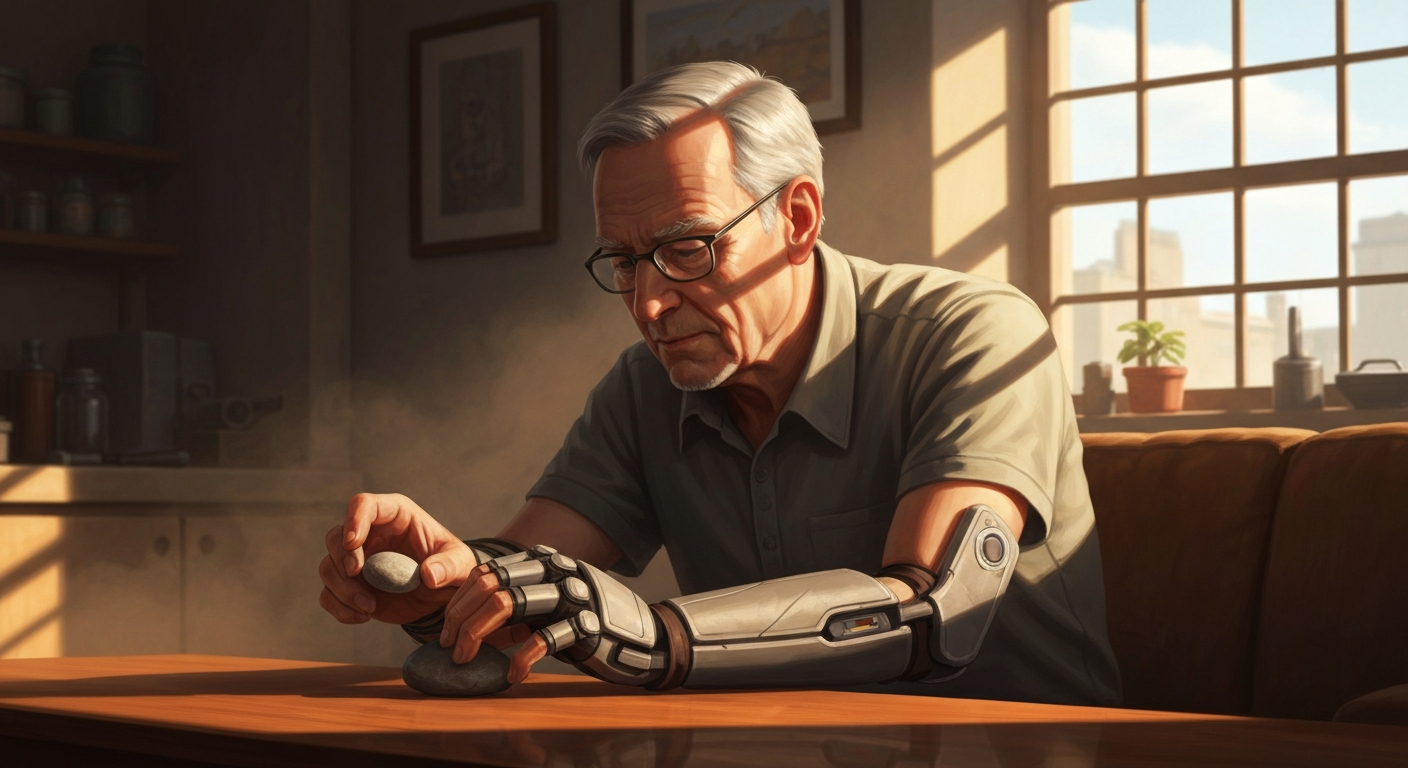
Sometimes, the simplest tasks—like reaching for a glass of water or brushing your hair—become monumental challenges. For millions of people who've experienced a stroke, this loss of easy movement is a daily reality, leaving them dependent on others and facing a long, arduous path to recovery. Standard rehabilitation often involves stiff, heavy robotic devices or intense manual therapy, which can feel intimidating, uncomfortable, and sometimes even painful, making it hard to stick with the exercises long enough to see real progress. This isn't just about physical weakness; it's about the brain struggling to relearn how to send signals to the muscles, a bit like a computer program crashing and needing to be debugged.
This persistent problem has spurred scientists to rethink how we support motor recovery. What if the tools for healing felt less like machines and more like a second skin? This is exactly the question being tackled by researchers developing new, wearable soft exoskeleton devices. Instead of rigid metal and clunky motors, these suits are made entirely from flexible fabrics and clever air-filled structures, offering a gentler, more intuitive way to guide your limbs through therapeutic motions.
Tiny Air Muscles Are Making Movement Possible
These devices work by using soft actuators, which are like tiny, inflatable muscles woven into the fabric. Think of them as balloons that change shape when air is pumped into them, providing gentle force and movement. There are different types, like bellows-type textile actuators that expand and contract, or McKibben-type artificial muscles that shorten when inflated, much like how your biceps muscle contracts to bend your arm. A surprising fact is that one common type, PneuNets multisegment actuators (MSA), can actually bend and twist, allowing for more natural, multi-directional movements.
When you wear one of these suits, a small, quiet pump sends air to specific actuators around your elbow, wrist, or fingers. This carefully controlled inflation helps move your limb through a prescribed range of motion, providing assistance where your own muscles are weak. The entire system uses a closed-loop control, meaning it constantly adjusts to your body's movements and resistance, making the experience feel more personalized and less like you're fighting a machine. This constant feedback helps your brain reconnect with the movement patterns, gradually relearning how to command your muscles.

Why Comfort Makes a Big Difference in Healing
The key advantage here is comfort. Traditional exoskeletons can be heavy, restricting, and sometimes even cause skin irritation over long periods. Imagine wearing a heavy cast for hours every day; it's mentally and physically draining. These new soft suits, however, are compact and lightweight, designed to be worn for extended periods, which is crucial for effective rehabilitation. Just like the bandage that helps your body heal itself by providing a supportive environment, these suits create a comfortable space for muscles and nerves to recover.
Researchers at institutions like the Technical University of Cluj-Napoca have been refining these designs, focusing on how much force these soft actuators can generate and their range of motion. Their preliminary tests show that these "air muscles" can develop enough force for recovery training, with errors in movement range as low as 2.29% for finger flexion. This precision is vital for rebuilding fine motor skills. While currently a research focus, the shift towards soft, wearable aids brings us closer to a future where rehabilitation feels less like a chore and more like a gentle, guided recovery.
Your Future of Movement Might Be More Comfortable
So, what does this mean for you or someone you know recovering from an injury or illness like a stroke? While these devices are still in development and require further testing on actual patients, they represent a significant step toward more accessible and effective rehabilitation. Think of it: a suit you can comfortably wear at home, guiding your hand as you practice picking up objects, or assisting your arm as you reach for a shelf. This comfort and ease of use could dramatically increase patient adherence to therapy, leading to better outcomes.
The next steps involve making these devices even more portable, perhaps integrating smaller pumps and power sources directly into the suit itself, so you're not tethered to a bulky machine. This ongoing work suggests that within the next 5-10 years, we could see these soft robotic suits become a common, gentle companion in the journey to regaining lost movement, helping countless individuals reclaim their independence. It’s a quiet promise that recovery can be not just effective, but also deeply personal and comfortable.
Key Researchers & Institutions:
- Technical University of Cluj-Napoca, Romania: A leading institution in the development and testing of soft wearable robotic devices for rehabilitation.
- Ongoing research is focusing on optimizing actuator performance and device portability for practical clinical application.
Key Takeaways
- Soft robotic suits use inflatable "air muscles" to gently guide limb movement, offering a comfortable alternative to rigid exoskeletons for rehabilitation.
- The comfort and lightweight design of these fabric-based devices could significantly improve patient engagement and recovery outcomes.
- While still in development, these wearable systems promise a future where recovering lost motor skills is more accessible and integrated into daily life.
Frequently Asked Questions
What is a soft exoskeleton? A soft exoskeleton is a wearable robotic device made from flexible materials and soft, air-powered actuators instead of rigid metal parts. It gently assists human movement for rehabilitation, making therapy more comfortable.
How do soft actuators work? Soft actuators are flexible, inflatable components that change shape when air pressure is applied. This controlled inflation provides the force needed to move a limb, mimicking muscle contractions without stiffness.
Who benefits from these soft suits? People recovering from conditions that impair motor skills, such as stroke patients, can benefit. The suits help them regain control and strength in their upper limbs through guided, repetitive movements.
How soon will these be available? These soft suits are currently undergoing preliminary testing. Further research, clinical trials, and portability improvements are needed, so they are likely 5-10 years away from widespread availability.
Editorial note: The scientific findings presented in this article are sourced exclusively from published research papers, peer-reviewed studies, certified inventions, and registered patent filings. Images generated by AI.
Stay ahead of the curve
The science that shapes tomorrow — in your inbox every week
The scientific findings presented in our articles are sourced from published research papers, peer-reviewed studies, certified inventions, and registered patent filings. Subscribe for focused weekly coverage, hands-on explainers, and practical insights that help you stay curious — no jargon, no noise.
By subscribing, you agree to receive newsletter and marketing emails, and accept our Terms of Use and Privacy Policy. You can unsubscribe anytime.
Battery Materials, Energy Storage Chemistry & Electric Vehicle Technology
Battery materials journalist covering the chemistry behind the electric revolution — and why the next decade of progress depends on what's inside the cell, not outside it.
View full profile →