Your Water Filter May Soon Clean Itself
The world faces a looming clean water crisis, but tiny particles hold a powerful solution. Discover how self-cleaning filters could soon give everyone access to safe drinking water, much sooner than you think.

The idea of a water filter that cleans itself sounds like something out of science fiction, doesn't it? Yet, it's quickly becoming a reality, thanks to something incredibly small: nanomaterials. These aren't just advanced filters; they're like microscopic janitors that can purify water more efficiently and sustainably than anything we've used before.
Traditional water treatment methods, while effective to a point, often struggle with newer pollutants, like certain industrial chemicals or tiny plastic particles, and even some hardy pathogens. They're like trying to catch sand with a fishing net – some things just slip through. But a new generation of filters, built from these special tiny materials, could change everything. Researchers at institutions like the University of Texas at Austin and the University of California, Berkeley, are at the forefront of this work, pushing the boundaries of what's possible in water purification.
Why Tiny Particles Make a Huge Difference for Clean Water
Nanomaterials are materials engineered on an incredibly small scale, where "nano" means one billionth of a meter – so small that a human hair is about 80,000 nanometers wide. At this size, materials behave differently, gaining surprising new properties. Think of it like this: a large block of ice melts slowly, but crushed ice melts much faster because it has more surface area exposed. Similarly, nanomaterials have an enormous surface area for their size, making them incredibly effective at grabbing onto pollutants. This increased surface area means they can remove toxic metals or neutralize harmful bacteria in water much more efficiently than larger particles.
For example, nano-adsorbents act like super-efficient sponges, selectively pulling out heavy metals such as lead and mercury. These tiny particles have a special affinity, like magnets, for specific harmful substances. Imagine trying to pick out every specific colored bead from a giant pile; these nano-sponges are designed to only pick up the "red" toxic beads. This level of specificity is something traditional filters often can't achieve, which means cleaner water with fewer passes.
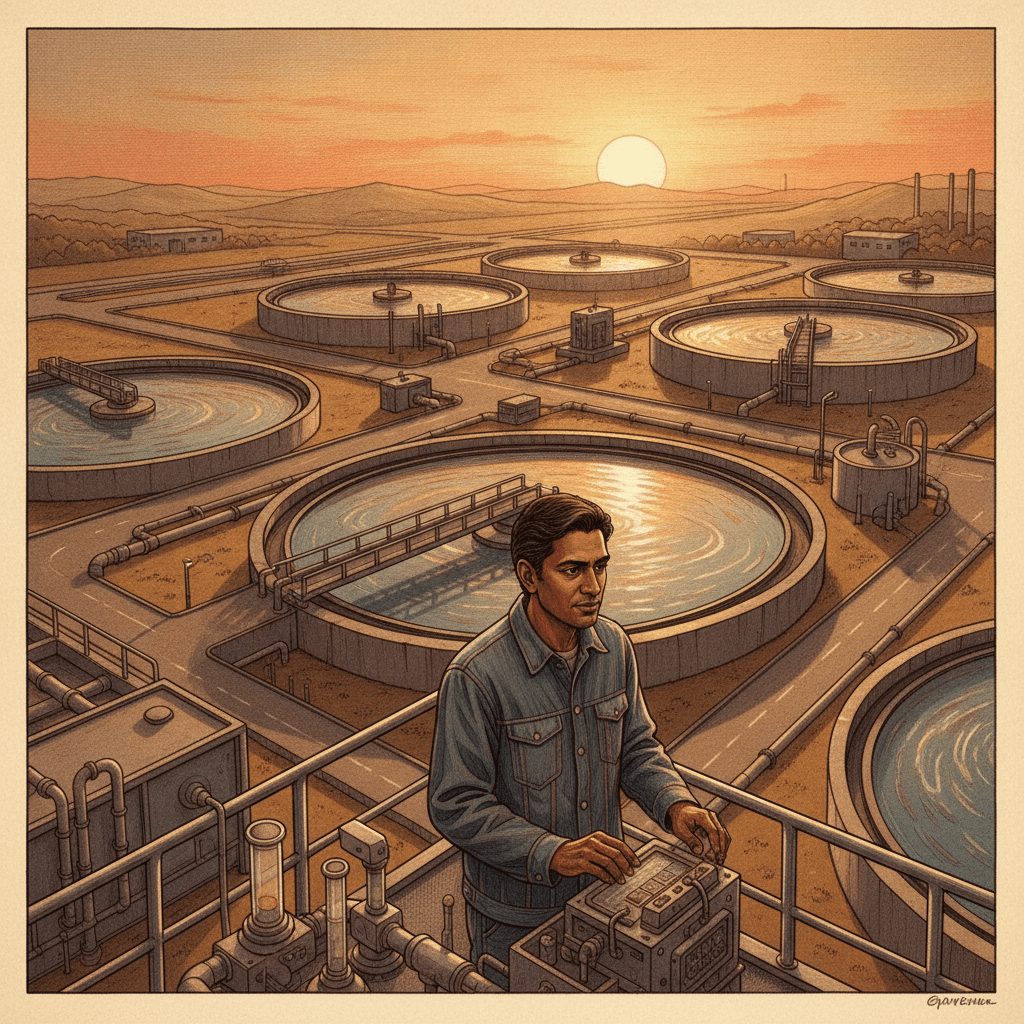
How Your Water Filters Could Become Self-Cleaning
One of the most exciting aspects of these nanomaterials is their potential for self-regeneration. Right now, most filters get clogged or saturated over time, requiring replacement or intense chemical cleaning. It's like replacing your car's oil filter every few thousand miles. But certain nanomaterials can actively break down pollutants or release captured contaminants when exposed to light or a mild electrical current, essentially "resetting" themselves. This extends their lifespan significantly, making water treatment far more cost-effective and environmentally friendly.
A surprising fact you might not know: some of these self-cleaning filters are already being explored in places like India and China, where water scarcity is an immediate challenge. They're using prototypes for industrial wastewater treatment, setting the stage for broader adoption. This isn't just lab talk; it's happening.
What's Holding Back Widespread Use?
While the potential is huge, there are still a few hurdles. One is scaling up production. Making enough of these super-tiny materials affordably for entire cities is a complex engineering challenge, much like manufacturing enough advanced computer chips for every device in the world. Another concern is ensuring that the nanomaterials themselves don't become a new pollutant after they've been used for a very long time. Researchers are diligently working on designs that securely contain these particles, ensuring they remain in the filter and don't end up in your drinking water.
The good news is that advancements in your body's messengers and even new farm plants that never get sick are driving innovation across materials science, which helps this field too. If manufacturing costs continue to drop and containment methods are perfected, you could see these self-cleaning water purifiers in industrial plants within 5-7 years, and potentially in advanced home filtration systems within 10-12 years.
The Future of Drinking Water Is Closer Than You Think
This isn't just about big industrial plants; it’s about you. Think about your current water filter pitcher or the filters on your tap. Imagine not having to replace them as often, or having one that tells you exactly when it's cleaned itself. This technology could drastically reduce plastic waste from disposable filters and provide consistent access to truly clean water, even in remote areas. It means safer drinking water for everyone, everywhere. With this progress in what your gut is telling your brain, we're learning how vital clean environments are to our entire wellbeing. The future of clean water isn't a distant dream; it's being built, nano-particle by nano-particle, right now.
Key Takeaways
- Nanomaterials, designed at a microscopic scale, offer superior pollutant removal by acting like super-efficient, selective sponges for contaminants.
- The ability of some nanomaterials to self-clean or regenerate significantly extends filter life, reducing waste and operating costs for water purification.
- While challenges remain in scaling production, these advanced filters are already being piloted for industrial use and could reach homes within a decade.
Frequently Asked Questions
What are nanomaterials in water purification? Nanomaterials are incredibly tiny particles (billionths of a meter) engineered to filter and clean water. Their small size gives them a huge surface area, making them highly effective at capturing and breaking down pollutants that traditional filters miss.
How do nanomaterials make filters self-cleaning? Certain nanomaterials can actively break down captured contaminants or release them when exposed to external stimuli like light or a mild electrical current. This allows the filter to regenerate, extending its lifespan and reducing the need for manual cleaning or replacement.
Why are these new filters better than old ones? These new filters can target specific, emerging pollutants like heavy metals and certain pathogens more effectively. They also offer the potential for self-cleaning and longer operational lifespans, making water treatment more sustainable and cost-efficient over time.
Editorial note: The scientific findings presented in this article are sourced exclusively from published research papers, peer-reviewed studies, certified inventions, and registered patent filings. Images generated by AI.
Stay ahead of the curve
The science that shapes tomorrow — in your inbox every week
The scientific findings presented in our articles are sourced from published research papers, peer-reviewed studies, certified inventions, and registered patent filings. Subscribe for focused weekly coverage, hands-on explainers, and practical insights that help you stay curious — no jargon, no noise.
By subscribing, you agree to receive newsletter and marketing emails, and accept our Terms of Use and Privacy Policy. You can unsubscribe anytime.
Battery Materials, Energy Storage Chemistry & Electric Vehicle Technology
Battery materials journalist covering the chemistry behind the electric revolution — and why the next decade of progress depends on what's inside the cell, not outside it.
View full profile →