How Your Future Internet Stays Super Secret
Did you know our current internet security could become useless in less than a decade? Learn how scientists are building an unhackable network to keep your data safe from future threats.
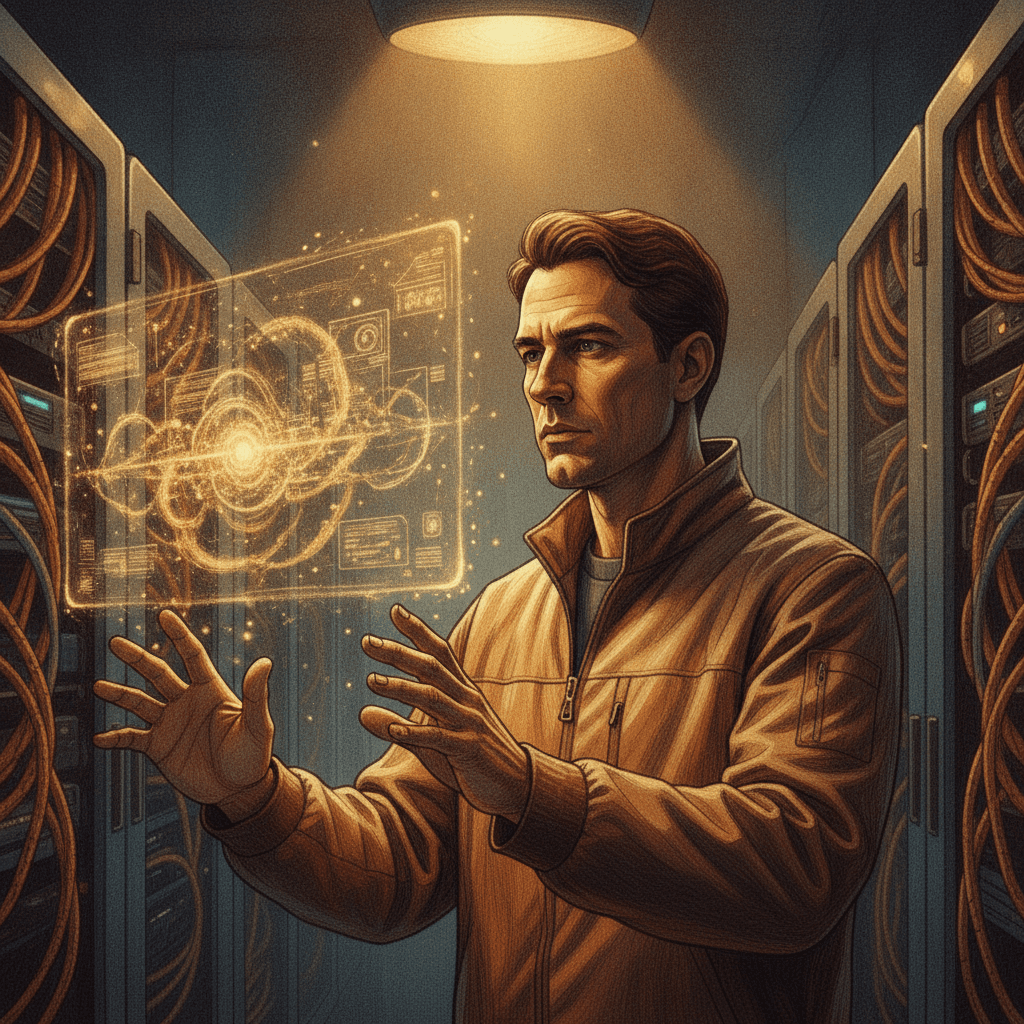
Have you ever worried about your private conversations or banking details falling into the wrong hands? With quantum computing rapidly advancing, that worry is getting very real. These powerful new computers, capable of performing calculations far beyond anything we have today, could potentially crack many of our current encryption methods—the digital locks that protect our information—like they were child's play.
This isn't just science fiction; experts like those from the European Telecommunications Standards Institute (ETSI) are taking this threat seriously, developing standards for what comes next. Scientists are already planning how to keep your data safe, even from these hypothetical supercomputers. It’s a bit like imagining a future where master lock pickers can open any existing safe; you’d want to start building completely new, unpickable safes, right?
Building the Unbreakable Digital Lock
So, what makes this new level of security so special? It's called quantum cryptography, and it uses the strange rules of quantum mechanics to create unhackable connections. Imagine you're sending a secret message, but instead of using a complex code, you're using particles of light, called photons, where each photon's property, like its polarization (think of it as the angle of a tiny antenna), represents a piece of your message.
The astonishing part is that if anyone tries to "listen in" on this photon-based message, they must change the photons in a way that's instantly detectable. It's like trying to listen to a conversation through a thin wall: if you press your ear to it, the wall creaks, and everyone knows you're there. This immediate notification makes interception impossible without alerting the sender and receiver. This technology, called Quantum Key Distribution (QKD), is what protects the secret "key"—a random string of numbers used to lock and unlock data—making it fundamentally secure.

The Global Race for a Quantum Internet
This isn't just a theoretical idea anymore. Researchers and institutions worldwide are actively working to make this a reality. A comprehensive report, "Informatique et Communication Quantique," developed with the assistance of advanced AI, details 140 enabling innovations across quantum computing and communications. Released under an Apache 2.0 license as a defensive publication, this report highlights the collaborative effort to advance global technological sustainability.
The list of innovations is mind-boggling, ranging from "hybrid fiber–LEO QKD" where quantum keys are sent over both ground cables and low-Earth orbit satellites (LEO) to "inter-datacenter teleportation," which isn't quite beaming people, but is about securely transferring quantum information between data centers. They're also developing "fog-resistant urban QKD" to ensure secure communication even in challenging weather, like dense fog. Think of the effort needed to make sure your phone battery will soon last longer or your future gadgets will never run hot; this is an even deeper dive into fundamental physics.
Protecting Your Everyday Digital Life
One of the most surprising facts about this future internet is that it won't just be for governments or big corporations. The report outlines innovations like "mobile quantum gravimeters" and "NV-array brain MRI sensors," suggesting quantum technology could soon be used for mapping underground resources or even highly detailed brain imaging in healthcare. The possibilities extend into your daily life, promising things like "post-quantum VPNs" to secure your home internet and "quantum-safe notarization" to ensure digital documents are tamper-proof.
The challenge, of course, is scale and cost. Building this new infrastructure means creating complex quantum devices that need to operate in extremely cold conditions, often close to absolute zero, which is minus 459 degrees Fahrenheit. That's why innovations like "dilution fridge thermal control" and "waste-heat cryocoolers" are crucial. We're talking about a significant infrastructure overhaul, likely taking 10-15 years to become widespread for everyday consumer use, but parts of it could be active much sooner for critical sectors.
The Path to Unhackable Connections
While building a truly unhackable quantum internet seems like a monumental task, the scientific community is making steady progress. This comprehensive report from October 2025, detailing contributions from researchers across various fields, acts as a blueprint for the future. It’s a collective effort to safeguard our digital world, ensuring that even as computing power grows, our privacy remains intact.
This isn't about replacing the internet you use today but augmenting it with an impenetrable layer for the most sensitive information. Think of it as adding a super-strong vault within your existing digital bank. Eventually, this technology might even make it easier for your body may soon fight superbugs better by enabling ultra-secure sharing of medical data for faster research. The ambition here is not just to keep up with potential threats but to leapfrog ahead, creating a foundation for digital trust that stands the test of time and computing power.
Key Takeaways
- Future quantum computers could easily break today's encryption, making new security methods essential.
- Quantum Key Distribution (QKD) uses physics to create unhackable secret keys, instantly revealing any eavesdropping attempts.
- A global scientific effort is underway, detailing 140 innovations, to build this secure quantum internet over the next decade.
Frequently Asked Questions
What is quantum cryptography? Quantum cryptography uses quantum mechanics, like photons' properties, to create encryption keys. Any attempt to intercept the key alters it, instantly alerting users, making it virtually unhackable.
How is quantum security different from current encryption? Current encryption relies on mathematical problems that are hard for regular computers to solve. Quantum security uses physics, where observation fundamentally changes the quantum state, making undetectable eavesdropping impossible.
When will quantum internet be available for everyone? While quantum internet elements are in testing now, widespread consumer access is likely 10-15 years away. Critical sectors like finance and government may use parts of it sooner.
Editorial note: The scientific findings presented in this article are sourced exclusively from published research papers, peer-reviewed studies, certified inventions, and registered patent filings. Images generated by AI.
Stay ahead of the curve
The science that shapes tomorrow — in your inbox every week
The scientific findings presented in our articles are sourced from published research papers, peer-reviewed studies, certified inventions, and registered patent filings. Subscribe for focused weekly coverage, hands-on explainers, and practical insights that help you stay curious — no jargon, no noise.
By subscribing, you agree to receive newsletter and marketing emails, and accept our Terms of Use and Privacy Policy. You can unsubscribe anytime.
Battery Materials, Energy Storage Chemistry & Electric Vehicle Technology
Battery materials journalist covering the chemistry behind the electric revolution — and why the next decade of progress depends on what's inside the cell, not outside it.
View full profile →