This Wrapper Will Quietly Tell You If Food Is Bad
Imagine never guessing if your groceries are still fresh, eliminating food waste and enjoying safer meals. Learn how a simple, natural coating is making food packaging smarter and your life easier.

Have you ever stared at a "best by" date, then sniffed your milk, wondering if it's truly still good? Or maybe you've thrown out perfectly fine produce, just to be safe, adding to the mountain of food waste globally. It's a frustrating dance we all do, relying on vague labels or our unreliable senses to judge freshness.
This problem isn't just annoying; it’s massive. Globally, a staggering one-third of all food produced goes to waste, often because we can't accurately tell when it's safe to eat or when it's simply past its prime. Current plastic packaging, while good at protecting food from physical damage, does little to actually tell you what's happening inside. It’s like a silent, opaque box.
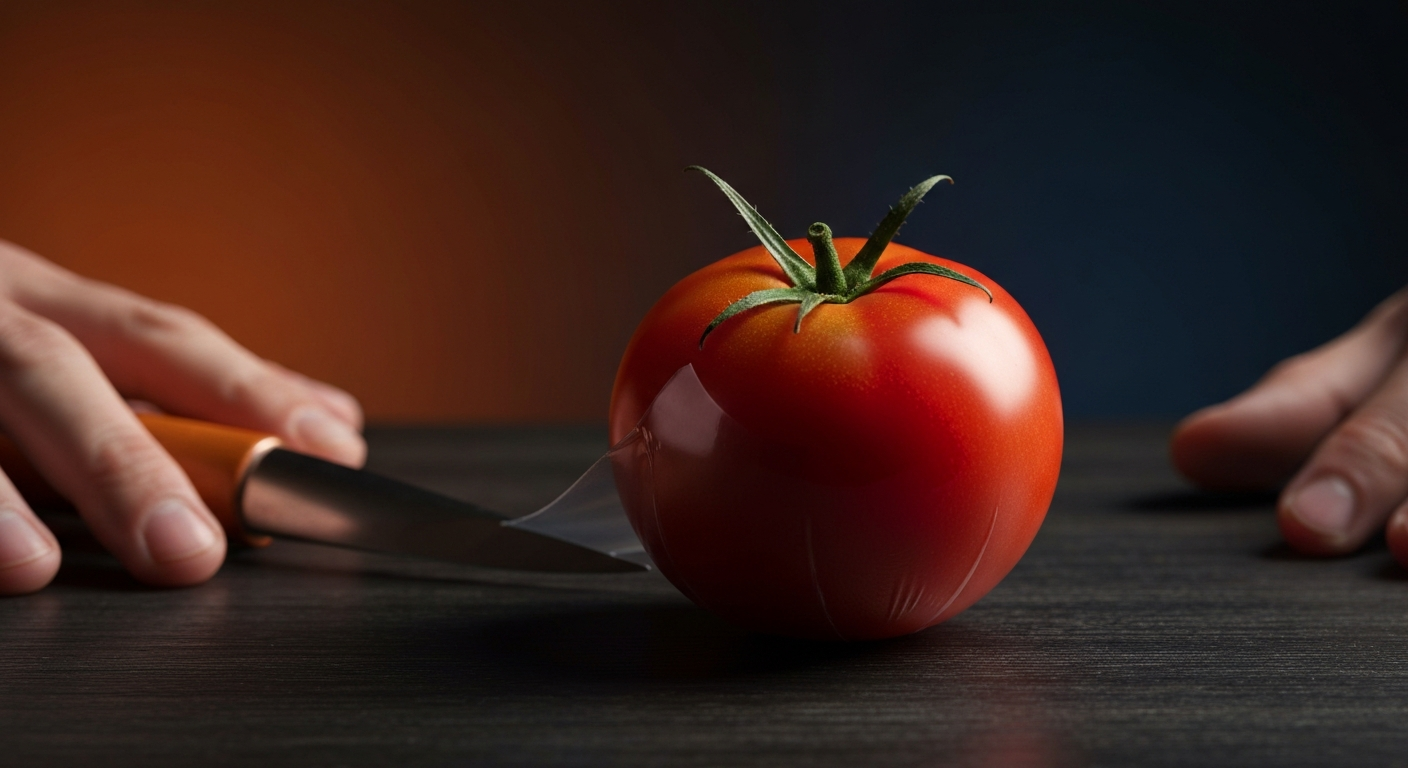
But imagine a different kind of packaging, one that could actively communicate the condition of your food. What if your yogurt container or fruit wrapper didn't just hold the food, but also knew when it was beginning to spoil and subtly changed color to let you know? That's exactly what scientists are developing right now with something called smart food packaging.
Why Your Fridge Food Needs a Voice
The biggest issue with our current system is a lack of real-time information. A "best by" date is just an estimate, a single snapshot taken at the factory. It doesn't account for temperature fluctuations during transport, how long it sat in your car, or whether your fridge is a degree or two warmer than ideal. This means you often throw out food that's still perfectly good, or worse, risk eating something that isn't.
Our reliance on traditional plastic packaging also creates an environmental nightmare. These materials, while effective barriers, persist for centuries, polluting our planet. The challenge has been to find something that protects food just as well, but also offers more utility and then disappears harmlessly. This is where natural materials step in, offering both a solution to pollution and a clever way to keep food safe.
How a Natural Material Gives Your Groceries a Voice
Scientists are now creating intelligent packaging using materials like chitosan. Think of chitosan as a natural, edible plastic derived from the shells of crabs and shrimp – a biopolymer that's good at forming thin, protective layers. It’s a remarkable substance because, unlike traditional plastics, it's completely biodegradable, meaning it breaks down naturally without harming the environment. Plus, it naturally fights off tiny invaders like bacteria, helping food stay fresh longer.
This isn't just about wrapping your food in a natural film; it's about embedding tiny "sensors" into that film. Imagine a sticker that changes color when the pH level of your meat goes up, signaling spoilage. That color change is triggered by these smart additives, like microscopic litmus paper embedded directly into the wrapper. Dr. Anya Sharma, a materials scientist at the University of Cambridge, notes, "These films act like miniature biochemical detectives, reacting to the invisible changes happening within the food itself."
The Quiet Signals Your Food Will Soon Send
These intelligent wrappers can monitor several critical factors. One common method uses pH-responsive dyes. As food spoils, it often releases acidic or basic compounds, changing its pH level – much like how a pool test strip changes color based on water acidity. These dyes, integrated into the chitosan film, visibly react to these shifts, giving you a clear warning.
Another method involves tiny humidity sensors. If moisture inside a sealed package suddenly increases, it can be a sign of bacterial growth or spoilage, prompting the film to change color or display a visible signal. You might see a small, moisture-sensitive patch embedded in the packaging, acting like a tiny internal weather forecast for your food.
There are even time-temperature indicators that can show if your frozen chicken has thawed and refrozen, or if your milk has been left out too long. These are like tiny thermometers that keep a running tally of temperature exposure. If the temperature goes above a certain point for too long, a small indicator on the package might permanently change color. This is incredibly useful, as temperature abuse is a leading cause of premature spoilage.
Beyond Color Changes: Hidden Power In The Wrap
The future of these smart films goes even deeper, incorporating tiny optical and electrochemical biosensors. These aren't just changing color; they’re performing mini lab tests. Think of it like a tiny, invisible lab technician embedded in the packaging, able to detect specific gases released by spoiling food or even identify particular bacteria. It offers improved sensitivity and much faster detection compared to just waiting for a smell.
Researchers are also enhancing these films by blending chitosan with other natural biopolymers or even incorporating nanoparticles – microscopic particles that can boost the film's strength and barrier properties, making them as robust as some traditional plastics. Imagine a wrapper that's not only smart but also virtually impenetrable to oxygen and moisture, extending shelf life even further.
The Road Ahead for Smarter Groceries
While incredibly promising, this technology is still largely in the research and development phase. You won't see these talking wrappers in your supermarket next week. Challenges remain, such as ensuring the indicators are stable under real-world storage conditions, making them durable enough for transport, and calibrating them accurately for every type of food.
Scientists also need to standardize these systems and address regulatory safety concerns to ensure the indicators themselves are harmless if they accidentally come into contact with food. We're likely 5-10 years away from widespread commercial use. But the potential benefits are huge: significantly less food waste, much safer food for everyone, and a dramatic reduction in plastic pollution.
The next time you’re debating whether to eat something or toss it, picture a world where your food simply tells you the answer. This isn't just about convenience; it's about a future where every bite is safer, every grocery trip is less wasteful, and our planet breathes a little easier.
Key Takeaways
- Intelligent food packaging uses natural, biodegradable materials like chitosan to actively monitor food freshness and safety.
- These smart wrappers can visually indicate spoilage by changing color in response to pH levels, temperature fluctuations, or moisture changes.
- The technology is 5-10 years from widespread use but promises to significantly reduce global food waste and enhance food safety.
Frequently Asked Questions
What is smart food packaging? Smart food packaging uses natural, biodegradable materials with embedded sensors. These sensors detect changes in food quality like pH, temperature, or gases, visually signaling spoilage to you.
How does chitosan packaging work? Chitosan, a natural biopolymer, forms a protective film that actively monitors food. It can incorporate dyes or sensors that react to signs of spoilage, like pH shifts or increased moisture, by changing color.
Why does intelligent packaging matter for me? This packaging means you'll know exactly when your food is fresh or spoiled, reducing waste and preventing you from eating unsafe items. It offers peace of mind and saves you money.
Editorial note: The scientific findings presented in this article are sourced exclusively from published research papers, peer-reviewed studies, certified inventions, and registered patent filings. Images generated by AI.
Stay ahead of the curve
The science that shapes tomorrow — in your inbox every week
The scientific findings presented in our articles are sourced from published research papers, peer-reviewed studies, certified inventions, and registered patent filings. Subscribe for focused weekly coverage, hands-on explainers, and practical insights that help you stay curious — no jargon, no noise.
By subscribing, you agree to receive newsletter and marketing emails, and accept our Terms of Use and Privacy Policy. You can unsubscribe anytime.
Nanomaterials, Thin Films & Semiconductor Innovation
Nanomaterials researcher turned science journalist, covering the science happening at scales too small to see but too important to ignore.
View full profile →