Your Farm Fields May Grow Themselves
Imagine crops thriving with less water and fewer chemicals. Bacteria from common plants are revealing a secret weapon against stress and disease.
Have you ever wished your garden, or even a vast farm field, could just... take care of itself? Imagine plants that naturally resist disease, shrug off drought, and pull nutrients from the soil without a constant supply of chemical helpers. This isn't just a fantasy; it's a future scientists are quietly building, by looking into the microscopic world within plants themselves.
This isn't sci-fi. Real, peer-reviewed research by scientists like Dr. Małgorzata Walasek and her team at the University of Warsaw is showing us how "endophytic" bacteria — tiny microbes living inside plants, almost like your gut bacteria live inside you — can act as personal bodyguards and nutritionists for crops. They’ve been studying these beneficial bacteria, specifically from common plants like cannabis and celandine, to unlock their secrets for sustainable agriculture.
Imagine a World Where Plants Nurture Themselves
Imagine fields of corn or wheat where each plant has its own microscopic support crew, making it stronger and more resilient. Picture a farmer checking on robust, green crops that have naturally fended off a fungal blight that would typically require heavy spraying. This isn't just about saving money; it's about making our food healthier and our planet happier.
These tiny bacterial helpers work in several incredible ways. Some produce indoles, which are like natural growth hormones for plants, helping them grow bigger and stronger roots, much like how a good diet helps a child grow. Others produce siderophores, which are molecules that snatch up vital nutrients like iron from the soil and deliver them directly to the plant, almost like a personal shopper for minerals.
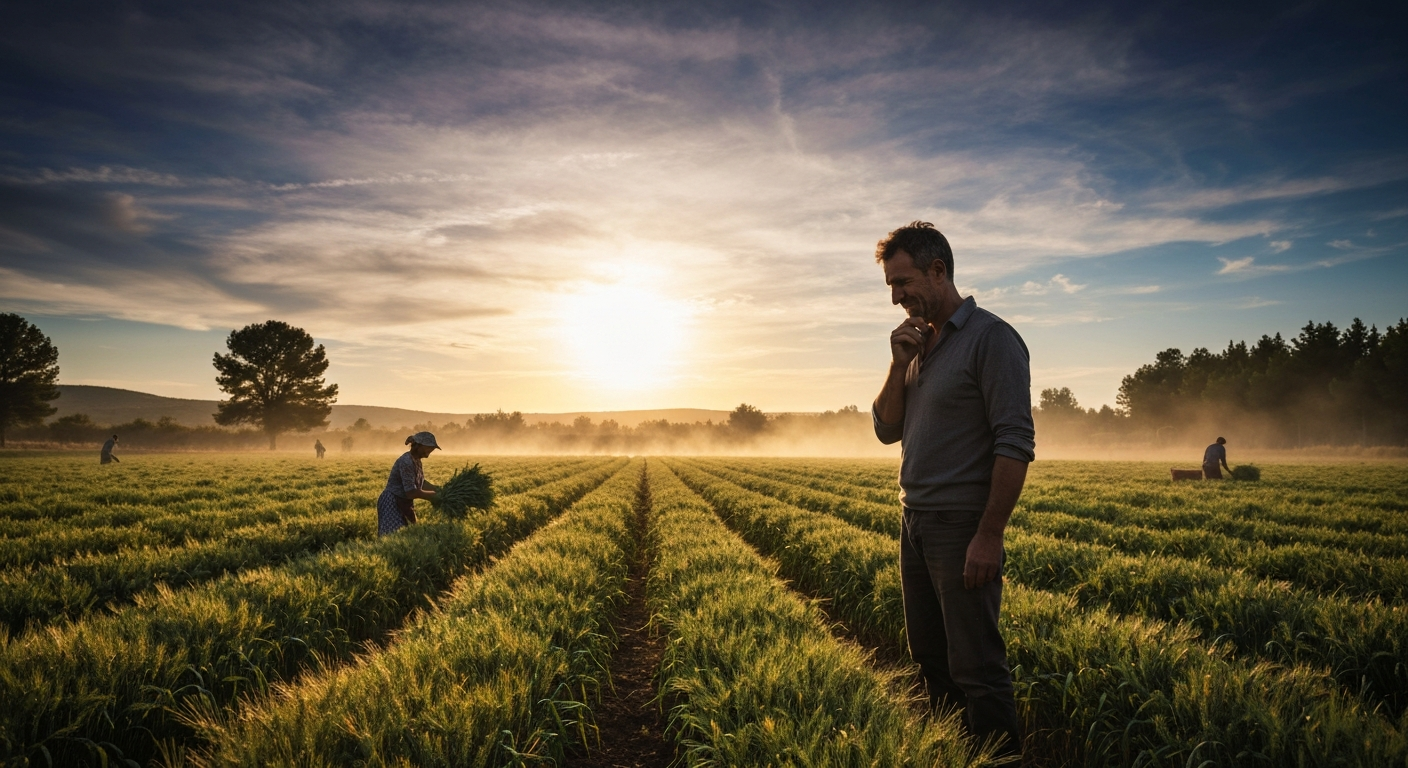
IMAGE ALT TEXT: HERO: A contemplative farmer stands in a vast, sun-drenched field at golden hour, silhouetted against a dramatic sky streaked with amber and purple. He looks down at a healthy, vibrant crop, a subtle smile playing on his lips. Volumetric haze hangs low, adding depth to the endless rows of plants.
The Secret Life Inside Plants: Your Unseen Allies
These endophytic bacteria are like tiny internal mechanics, constantly optimizing the plant's functions. They can dissolve hard-to-reach nutrients like phosphate and zinc, making them available to the plant, much like how your stomach acids break down food. They also form biofilms, which are protective communities of bacteria, clinging to plant roots like a microscopic armored shield, enhancing nutrient uptake and providing a physical barrier against invaders.
One surprising fact is how common these alliances are: nearly every plant on Earth hosts these internal bacterial partners. This co-evolution has been happening for millions of years, proving that nature already has many of the answers we seek for robust, resilient agriculture. You might be surprised to learn that we're only just beginning to fully understand your gut has a hidden power switch activated by similar microbial communities.
IMAGE ALT TEXT: SECTION1: A close-up, intimate shot of a farmer's weathered hands gently sifting rich, dark soil, revealing tiny, healthy plant roots intertwined with the earth. A single, warm spotlight highlights the texture of the soil and the delicate root system, with deep shadows creating a sense of focus and reverence.
How These Microbes Battle Stress and Disease
These internal plant partners don't just help with growth; they are formidable defenders. Researchers found that certain Bacillus and Pseudomonas strains of these bacteria can help plants tolerate abiotic stress, which is environmental hardship like heat, drought, or salty soil. They do this by accumulating protective molecules like proline (a stress-buffering compound, like an internal shock absorber for the plant) and boosting enzymes like superoxide dismutase (which neutralizes harmful reactive molecules, like an antioxidant defense system).
Think of it like a plant having its own internal climate control system, thanks to these microbes. Bacillus strains, for example, showed stronger resilience to high temperatures and salinity, meaning they help plants survive conditions that would normally wilt them. This is crucial as climate change brings more unpredictable weather patterns, making it harder for crops to thrive.
What Happens When Microbes Become Biocontrol Agents?
Beyond stress tolerance, these bacteria are also excellent biocontrol agents, meaning they can fight off plant diseases. Many Bacillus strains produce biosurfactants, which are like natural detergents that can break down the cell walls of harmful fungi. They also release antifungal metabolites, specific chemical weapons like fengycin and surfactin, that directly inhibit common plant pathogens.
One strain, BS-120, even showed broad-spectrum inhibition against several nasty fungal pathogens like Fusarium oxysporum and Rhizoctonia solani, which cause devastating crop diseases. This is huge because it suggests we could replace synthetic fungicides with natural, living solutions. Just as your rice might secretly kill weeds by releasing natural chemicals, these microbes offer a gentler approach to pest control.
IMAGE ALT TEXT: SECTION2: A wide, atmospheric shot of a vast field of vibrant green crops stretching towards a distant, hazy mountain range under a dramatic sunrise sky. The air is thick with a warm, golden glow, casting long shadows across the textured rows of plants.
The Road Ahead for Microbial Farm Solutions
While these findings are incredibly promising, bringing them to every farm field will take time. Scientists still need to prove that these microbial inoculants perform consistently across different soil types and climates, similar to how new medicines need extensive testing before they reach patients. We're probably looking at a decade or more before these solutions are widely adopted, but the research is moving fast.
The potential second-order effects are enormous. Imagine a future with less pesticide runoff polluting our water, healthier soils packed with diverse microbial life, and crops that require less irrigation. This shift could fundamentally change how we farm, making it more sustainable and less reliant on external, often environmentally damaging, inputs. It’s about leveraging nature’s own wisdom to grow our food, just like we’re learning that finally, solar cells that work, and last are changing how we power our world.
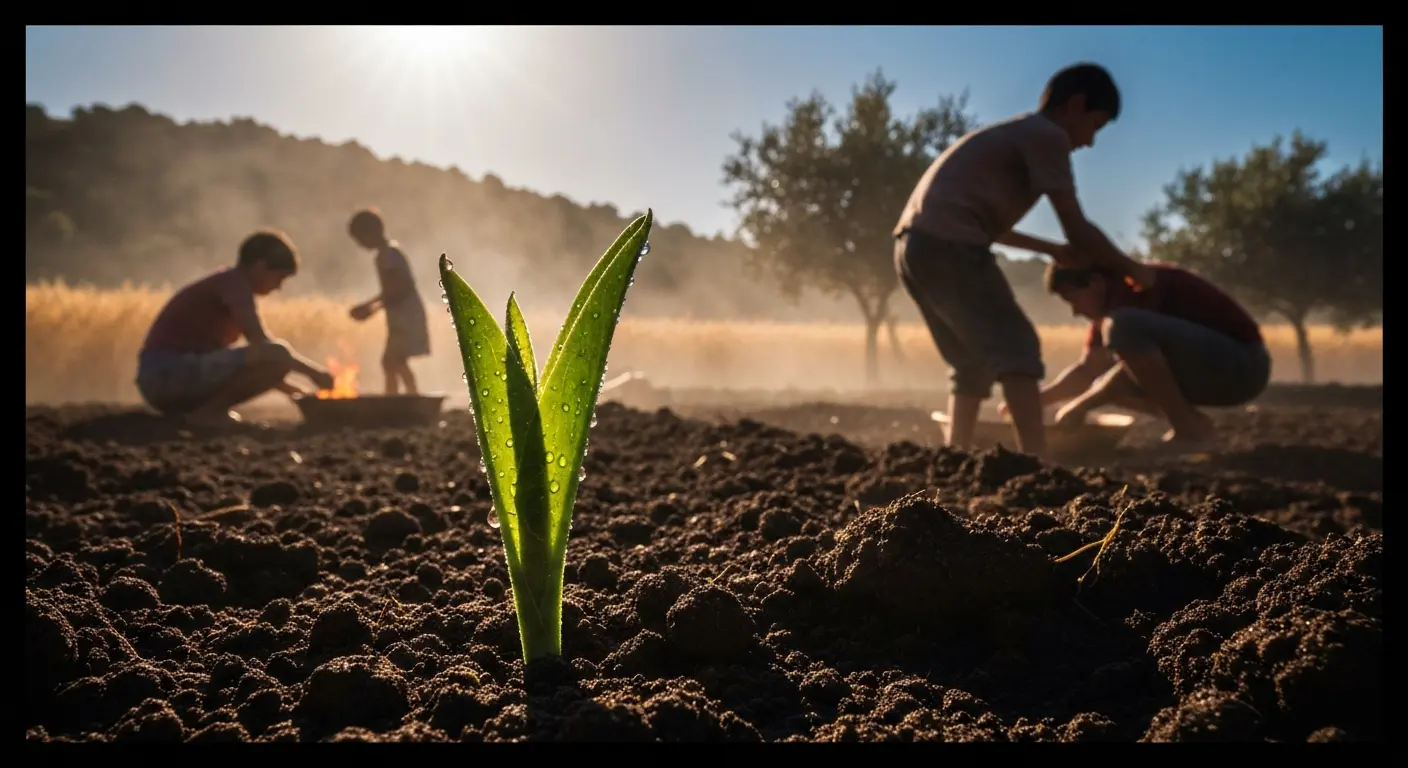
IMAGE ALT TEXT: SECTION3: A close-up, moody shot of a single, vibrant green plant shoot emerging from rich, dark soil, bathed in a soft, warm amber glow. Tiny water droplets glisten on its leaves, hinting at life and nourishment, with deep, velvety shadows surrounding it.
The Quiet Wonder of a Tiny World
Ultimately, this research reminds us that sometimes the most powerful solutions aren't big, flashy inventions, but rather quiet discoveries in the microscopic world. By understanding and working with the tiny ecosystems within our plants, we can unlock an agricultural future that is more resilient, more sustainable, and ultimately, healthier for all of us. It’s a profound testament to the intricate, self-sustaining systems that are already at play all around us, waiting to be understood and gently nudged in the right direction.
Key Takeaways
- Endophytic bacteria living inside plants can significantly boost crop growth, improve stress tolerance (like drought and heat), and fight off fungal diseases.
- These microbes work by providing plants with growth hormones, making nutrients more accessible, and producing natural chemical defenses against pathogens.
- Leveraging these natural bacterial allies offers a pathway to more sustainable agriculture, reducing reliance on synthetic fertilizers and pesticides over the long term.
Frequently Asked Questions
What are endophytic bacteria? Endophytic bacteria are beneficial microbes that live inside plants without causing disease. They form a partnership, helping plants grow, tolerate stress, and fight off pathogens, much like probiotics in your gut.
How do these bacteria help plants grow? They produce natural plant hormones, help dissolve and deliver essential nutrients like phosphorus and zinc from the soil, and form protective biofilms around roots to enhance nutrient uptake.
Can these bacteria replace chemical pesticides? Potentially, yes. Many strains produce natural antifungal compounds and biosurfactants that can inhibit common plant pathogens, offering a biological alternative to synthetic chemical pesticides.
How long until farmers can use these? While promising, widespread adoption will take time, likely a decade or more. Researchers need to ensure consistent performance across diverse conditions before these microbial solutions become a common farming tool.
Editorial note: The scientific findings presented in this article are sourced exclusively from published research papers, peer-reviewed studies, certified inventions, and registered patent filings. Images generated by AI.
Stay ahead of the curve
The science that shapes tomorrow — in your inbox every week
The scientific findings presented in our articles are sourced from published research papers, peer-reviewed studies, certified inventions, and registered patent filings. Subscribe for focused weekly coverage, hands-on explainers, and practical insights that help you stay curious — no jargon, no noise.
By subscribing, you agree to receive newsletter and marketing emails, and accept our Terms of Use and Privacy Policy. You can unsubscribe anytime.
Food Security, Biofortification & Agriculture in the Global South
Development journalist covering the agricultural innovations that can feed a warmer, more crowded world — particularly in Africa and South Asia.
View full profile →