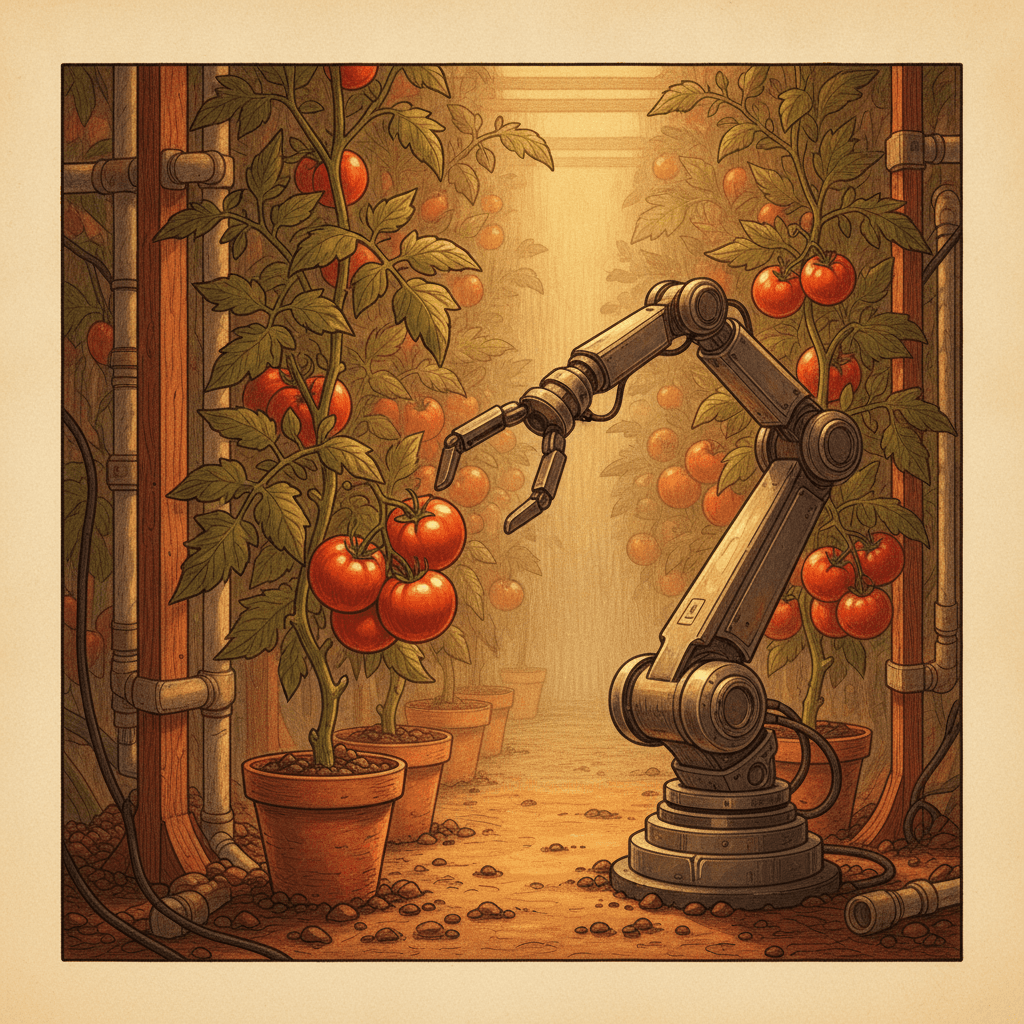
Your Farm Fields Are Finally Thinking for Themselves
The way we fertilize farms has been surprisingly wasteful for decades, pouring too much or too little in the wrong spots. Learn how a clever new method helps soil microbes tell farmers exactly what plants need, where and when.

Have you ever tried to feed a growing plant, only to watch it struggle despite your best efforts? Or perhaps you've seen a patch of green grass thrive while another just a few feet away with the same amount of care looks sickly. It’s a frustrating mystery, and it's a huge problem for farmers trying to feed the world. They've been guessing, more or less, about what their vast fields truly need, often blanketing entire areas with fertilizer.
This scattershot approach leads to massive waste, with tons of expensive chemicals washing away, polluting rivers, and releasing greenhouse gases into the air. It’s like trying to fill a leaky bucket by just spraying water everywhere – inefficient and damaging. Farmers know this, and while they've tried to be smarter, their tools haven't been sensitive enough to understand the tiny, complex world beneath their feet. They needed a way to listen to the soil itself, something far more precise than current methods.
Now, a new scientific fertilization method based on something called "soil impedance" and the actions of microbes is changing how farms are fed. Think of soil impedance like the soil's unique fingerprint, telling you how easily electricity flows through it, which in turn reveals how packed or loose the dirt is, and how much water it holds. This isn't just about throwing more fertilizer at a problem; it's about letting the soil's hidden helpers – its microscopic workers – guide the process.
This clever system first collects data on how dense the soil is (its impedance) and what kinds of tiny organisms are living there (its microbial indexes). Imagine using a special probe that feels the soil's texture at different depths, like a doctor checking your pulse, while also taking a census of all the busy bacteria and fungi. This physical data then helps correct assumptions about where those microbes actually live and work in the soil, because a microbe living deep in dense soil behaves differently from one near the surface in loose soil. This ensures that the system truly understands the how soil bacteria fix nitrogen and other vital tasks these tiny workers perform.
Understanding the Soil's Hidden Kitchen
The true genius comes from building what’s called a "metabolic activation model." This model looks at the soil's active organic carbon – basically, the fuel for the microbes – and its acid-base buffer capacity, which is like the soil's ability to resist big changes in its acidity. Combining these factors helps quantify how efficiently nitrogen-fixing bacteria (which grab nitrogen from the air and make it usable for plants) and phosphate-solubilizing bacteria (which unlock phosphorus stuck in the soil) are actually working. It’s like discovering the secret recipes these microbes use to prepare nutrients for your crops.
By understanding the soil’s "kitchen," the system can quantify the actual nutrient conversion efficiency. This means it can figure out exactly how much usable nitrogen and phosphorus these microbes are providing to the plants, rather than just guessing. This "biological fertilizer supply capacity" is then fed into a larger system that balances nutrient income and expenditure, just like managing a household budget. This is a surprising fact: we're only just now giving microbes the credit they deserve for feeding our crops.
Pinpointing Fertilizer Needs with Precision
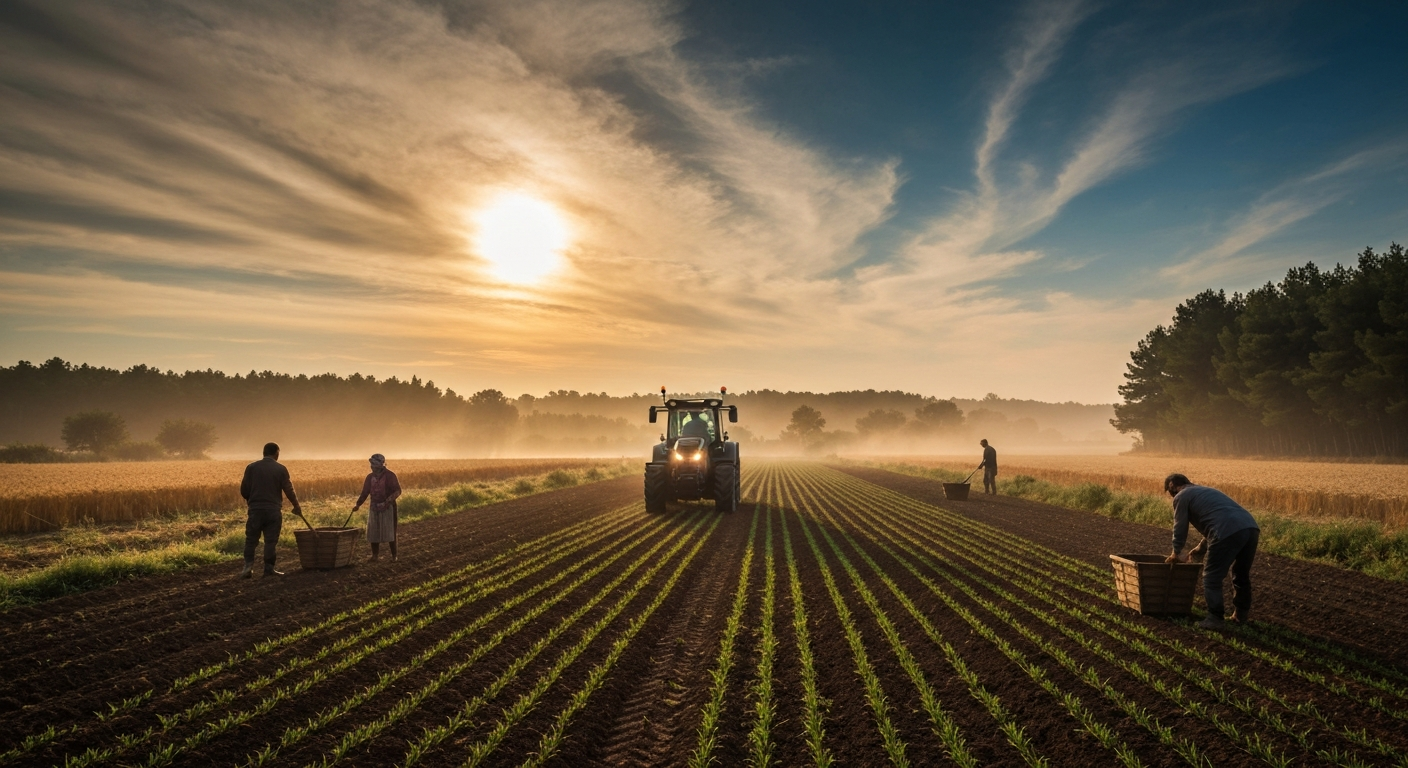
The system then uses this detailed understanding of microbial activity and soil health to generate precise instructions for fertilizer application. It compares what the plants actually need (their demand gap) with what the microbes are already supplying. If there's a deficit, it signals a machine to deliver the right amount of fertilizer exactly where it's needed, factoring in things like the speed of the tractor. It’s like a smart chef adding just a pinch of salt where it's missing, instead of salting the whole dish before tasting.
This approach significantly boosts the utilization rate of chemical fertilizer, meaning less waste and more nutrients reaching the plants. We're talking about improving agricultural ecological benefits by reducing runoff and pollution. While early stage, this method, detailed in an EPO patent, could be widely adopted within the next decade, especially as your computer finally simulates real molecules to predict these complex interactions faster.
What This Means for Your Food and the Planet
Ultimately, this innovative method means healthier crops, which translates to better food for you. It also means less environmental damage from excess fertilizer and more sustainable farming practices. Think about it: a world where food production is not only more efficient but also less harmful to the planet. This isn't just a win for farmers; it's a win for everyone who eats and breathes. The long-term implications are huge for future food security and ecosystem health.
Imagine that every grain of wheat or stalk of corn receives only what it genuinely requires, thanks to a dialogue between technology and the trillions of tiny organisms living in the soil. This shift from broad-stroke feeding to precision nutrition is the future of agriculture. It gives the soil a voice, allowing it to tell us precisely what it needs to grow our food, protecting our natural resources along the way. The tiny helper that makes food grow anywhere is finally getting the attention it deserves.
Key Takeaways
- New tech uses soil's electrical "fingerprint" and microbe data to precisely measure plant nutrient needs.
- This approach significantly reduces chemical fertilizer waste, cutting pollution and saving farmers money.
- It marks a shift towards truly sustainable agriculture, listening to the soil for healthier crops and a cleaner environment.
Frequently Asked Questions
What is soil impedance? Soil impedance measures how easily electricity moves through soil, revealing its density, water content, and compaction. It acts like a unique fingerprint, helping understand the soil's physical structure at different depths.
How do microbes help with fertilization? Specific microbes like nitrogen-fixing and phosphate-solubilizing bacteria naturally convert nutrients in the soil into forms plants can use. This new method quantifies their activity to reduce the need for chemical fertilizers.
Why is precision fertilization important? Precision fertilization reduces waste, lowers costs for farmers, and decreases environmental pollution from runoff. It ensures plants get exactly the nutrients they need, improving crop health and overall agricultural sustainability.
When will this technology be widespread? While the method is currently patented, widespread adoption is expected within the next 5-10 years. Further development and integration with existing farm machinery will be crucial for its broader implementation.
Editorial note: The scientific findings presented in this article are sourced exclusively from published research papers, peer-reviewed studies, certified inventions, and registered patent filings. Images generated by AI.
Stay ahead of the curve
The science that shapes tomorrow — in your inbox every week
The scientific findings presented in our articles are sourced from published research papers, peer-reviewed studies, certified inventions, and registered patent filings. Subscribe for focused weekly coverage, hands-on explainers, and practical insights that help you stay curious — no jargon, no noise.
By subscribing, you agree to receive newsletter and marketing emails, and accept our Terms of Use and Privacy Policy. You can unsubscribe anytime.
Vertical Farming, Lab-Grown Food & Precision Fermentation
Food tech journalist tracing the future of how humanity will grow, manufacture, and eat its food.
View full profile →