Desert Farms Can Grow Food With Less Water
Farming in harsh desert edges has always been a struggle against wind and sand, making food production difficult. Now, a clever planting method lets farms thrive in these tough conditions using much less water and fertilizer.
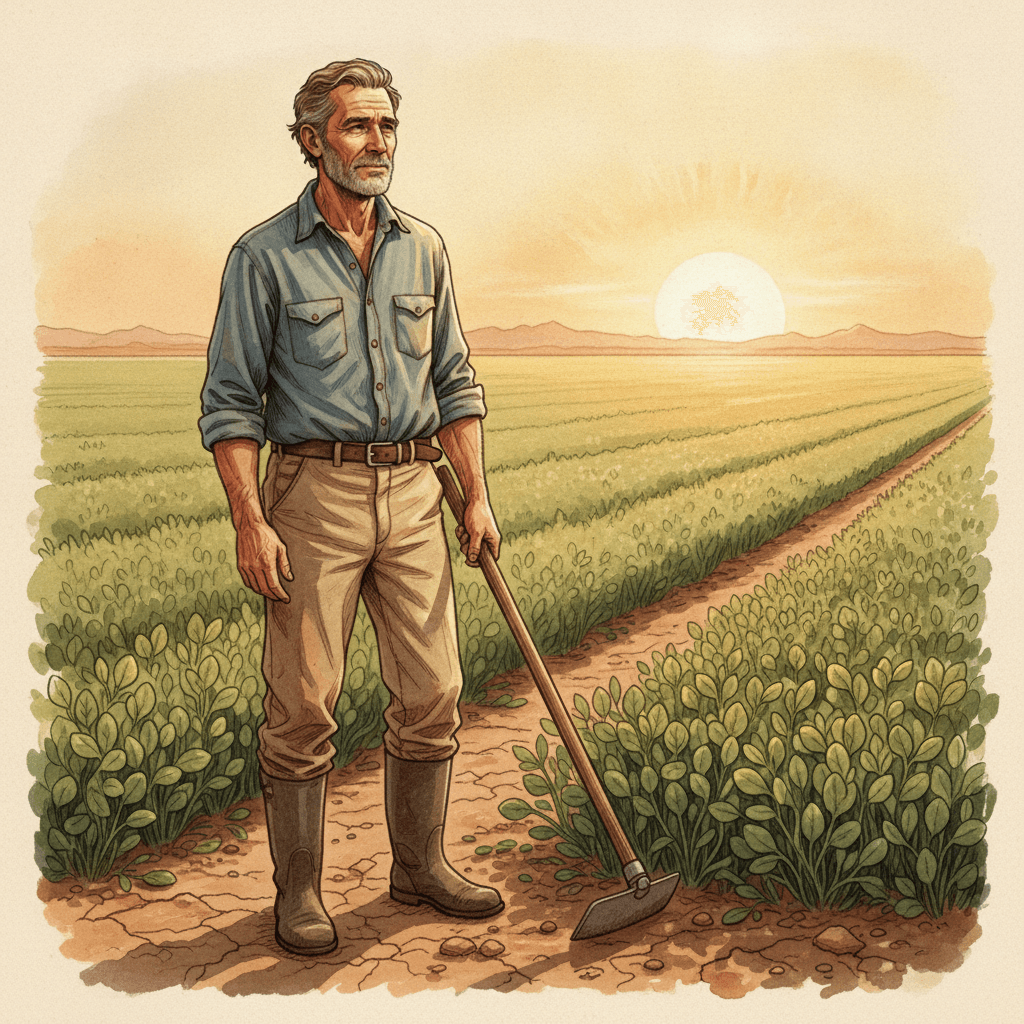
Have you ever seen those vast, empty stretches of desert and wondered how anything could possibly grow there? For centuries, communities living near deserts have battled relentless winds that strip away topsoil and bury young plants, making it incredibly hard to farm. Even with substantial irrigation, growing crops in these arid zones is a constant uphill struggle against nature, requiring huge amounts of water and nutrients just to get a modest yield.
This isn't just about harsh environments; it's about food security for millions. Deserts are expanding, pushing against fertile lands and making traditional farming harder. Current methods often involve planting huge "windbreak" forests, which take years to establish and consume even more precious water resources themselves, or simply accepting very low yields from expensive, water-intensive crops. It’s like trying to fill a leaky bucket with a tiny spoon.
But what if you didn't need a huge forest to stop the wind? What if a simple trick could protect young plants and let them flourish in sandy, dry conditions, all while using less water and fertilizer? A new method coming from sand ecological agriculture offers just that, allowing farmers to cultivate nutrient-rich forage even at the very edge of the desert without needing a permanent windbreak.
How Temporary Protectors Help New Plants Grow
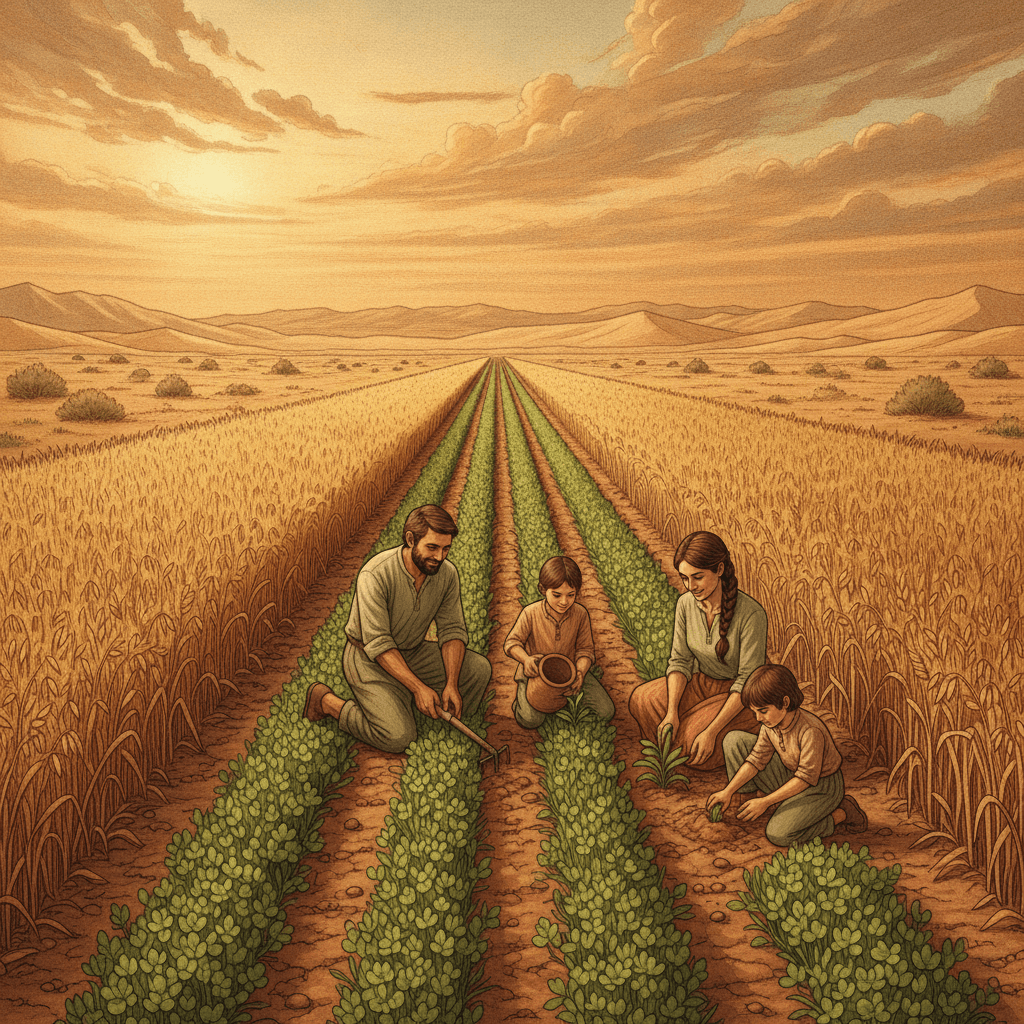
The core idea is pretty clever: use a fast-growing, temporary plant to shield the more valuable crop as it starts. Think of it like a protective big brother for the younger, more vulnerable plants. First, in spring, early-maturing feeding oats are sown in single rows. These oats grow quickly, reaching 10-20 cm high, creating a natural, living wall against the wind and sand within a few weeks.
Once these oat plants establish their protective barrier, drought-tolerant and saline-alkaline-tolerant alfalfa is planted in the spaces between the oat rows. This alfalfa, known for its deep roots and high protein content, can then get a strong start without being buried or sandblasted. This initial shield is crucial for the early development of plants.
Growing More With Less Water
You might think growing more in the desert requires more water, but this method actually cuts down on it. The farms use targeted drip irrigation or spray irrigation, which delivers water directly to the plant roots, minimizing evaporation. Plus, they reduce nitrogen, phosphorus, and potassium fertilizers by 20-30% compared to traditional methods. Instead of heavy chemical doses, after each alfalfa harvest, a special enzymolysis animal source small molecule peptide nutrient solution is applied with the water. This nutrient solution, with tiny molecules smaller than 1000 Daltons (like a super-fine sugar that dissolves instantly), is easily absorbed by the plants, giving them a quick boost without wasteful excess.
This approach means you're feeding the plants exactly what they need, when they need it, in a highly efficient form. It’s like giving your body a highly digestible protein shake instead of a huge, heavy meal that might go partially to waste.
Unexpected Yields and Long-Term Benefits
Here's the surprising part: using oats as a temporary windbreak dramatically lowers the death rate of young alfalfa plants from sandstorms to under 15%. This means you can get a full harvest in the same year you plant, which is almost unheard of in harsh desert conditions. Once the oats mature, they are harvested, leaving the alfalfa to thrive.
The alfalfa itself is then cut frequently, 5-6 times a year, once it reaches 50-60 cm tall. This "high-frequency cradling" maximizes the yield. You're looking at over 1200 kg of hay per mu (about 0.16 acres), with crude protein levels between 19-22%. This isn't just a one-off; the hay can be continuously harvested for 8-10 years. This method is especially suited for desert edge areas receiving less than 100 mm of rain annually. It offers a sustainable way to produce high-quality animal feed, supporting local economies and making farms more productive.
This method also hints at a broader future for agriculture, where we might see more plants designed to resist harsh conditions, helping us feed a growing population even as climates shift. In about 5-10 years, as these methods become more refined and widely adopted, you might see these once-barren desert edges become vibrant, productive agricultural zones, changing how we think about farming in challenging environments.
Key Takeaways
- Using fast-growing oats as temporary windbreaks dramatically increases the survival rate of young alfalfa in sandy, windy desert environments.
- The method reduces water and fertilizer use by targeting irrigation and applying an easily absorbed nutrient solution, making desert farming more sustainable.
- It enables high-yield, high-protein hay production (over 1200 kg/mu, 19-22% crude protein) for 8-10 years in areas with very low annual rainfall.
Frequently Asked Questions
What is a temporary windbreak in farming? A temporary windbreak uses fast-growing plants, like oats in this method, to create a natural shield for more sensitive young crops against wind and sand. They grow quickly and are later harvested.
How does this method save water and fertilizer? It uses targeted drip irrigation for efficiency and smaller amounts of standard fertilizers. A special easy-to-absorb nutrient solution is added with water after each harvest, reducing overall waste.
What kind of plants can grow with this technique? This method focuses on drought-tolerant and salt-tolerant alfalfa, a high-protein forage crop. The protective oats help it establish in desert-edge environments with very low rainfall.
How long can these desert farms stay productive? Once established, the alfalfa crops can be harvested continuously for 8-10 years, providing a stable source of high-quality animal feed in areas with less than 100 mm of annual precipitation.
Editorial note: The scientific findings presented in this article are sourced exclusively from published research papers, peer-reviewed studies, certified inventions, and registered patent filings. Images generated by AI.
Stay ahead of the curve
The science that shapes tomorrow — in your inbox every week
The scientific findings presented in our articles are sourced from published research papers, peer-reviewed studies, certified inventions, and registered patent filings. Subscribe for focused weekly coverage, hands-on explainers, and practical insights that help you stay curious — no jargon, no noise.
By subscribing, you agree to receive newsletter and marketing emails, and accept our Terms of Use and Privacy Policy. You can unsubscribe anytime.
Vertical Farming, Lab-Grown Food & Precision Fermentation
Food tech journalist tracing the future of how humanity will grow, manufacture, and eat its food.
View full profile →