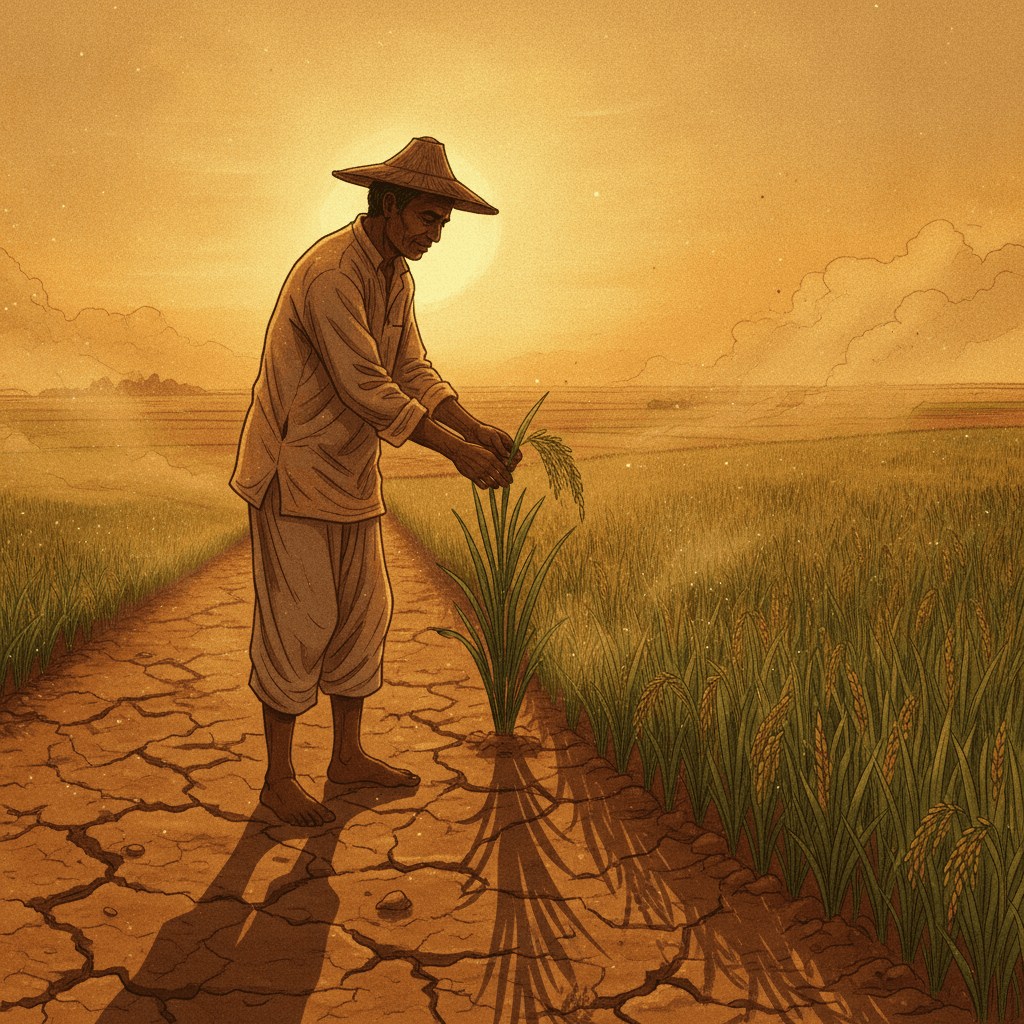
Fungus Can Make Your Wheat Resist Salt
Did you know tiny underground fungi could be the secret to growing food in harsh salty soil? Discover how wheat plants are teaming up with these hidden helpers to thrive where nothing else can, potentially feeding more people.
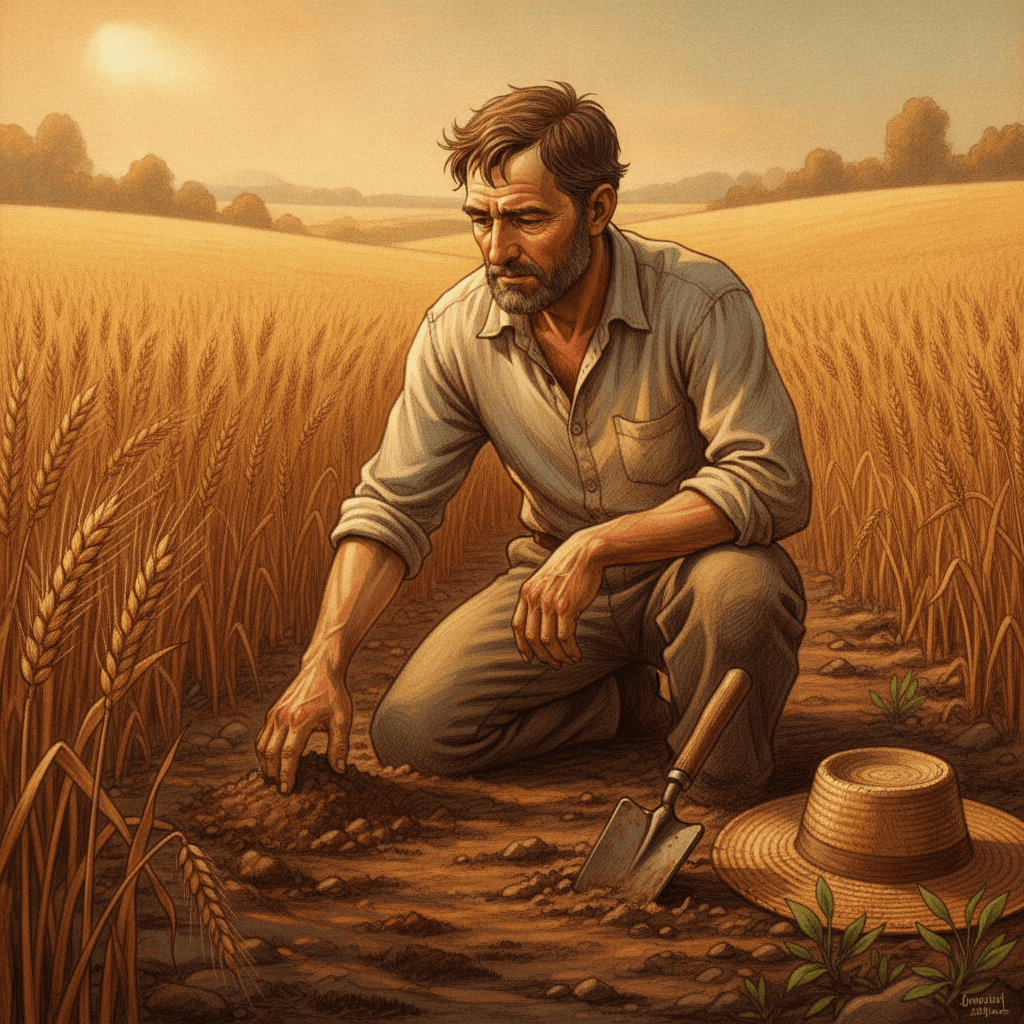
Your daily bread relies on a surprisingly deep connection that’s often invisible: wheat and fungi. This isn't just a friendly partnership; it's a survival strategy, especially as our planet's soils get saltier. What if a microscopic network underground could protect our food supply, making wheat flourish in places it currently can't?
This isn't sci-fi. Researchers from several institutions, including the University of Adelaide, have been detailing how arbuscular mycorrhizal (AM) fungi, which are like tiny, branching underground pipelines for plants, help wheat adapt to salinity. Their work, summarized in a recent Europe PMC review, pulls together direct studies on durum and bread wheat with broader mechanistic insights from model plants. It’s all about understanding these tiny underground partnerships.
How Tiny Fungi Turn Salty Soil Into Nourishing Ground
AM fungi act like a plant's extended root system, reaching out further into the soil to grab nutrients and water that the plant roots alone can't easily access. Imagine your wheat plant as a diner with short arms, and the fungi are waiters with incredibly long arms, fetching food from all corners of a very crowded, salty restaurant. When soil has too much salt, it's like a crowded restaurant where the good food is hard to reach and the water is too salty to drink. These fungi improve the plant's potassium (K⁺) to sodium (Na⁺) balance, which is vital because too much sodium messes with plant health, just like too much salt can make you feel unwell.
They also help with "osmotic stress," which is when the salt outside the plant roots basically sucks the water out of them, like a sponge in saltwater. The fungi are like tiny water filters and pumps, helping the plant hold onto its precious water. They even boost the plant's internal defenses, helping it fight off "oxidative pressure"—damage from unstable molecules, much like how antioxidants protect your own cells. This intricate dance of chemical signals and resource sharing is why fungi are so crucial for how farmers may grow food with less water in difficult conditions.

The Microscopic Mechanism That Protects Wheat
The way this protection works is complex, involving several coordinated actions. First, the fungi improve the plant's ability to take up nutrients and water, directly reducing the effects of salt stress. Second, they help stabilize the plant's cell membranes, which are like the protective skin of each cell, keeping the insides in and the unwanted salt out. Third, AM fungi kickstart the plant’s own internal antioxidant systems, fighting off cell damage caused by stress. They even help produce "osmoprotectants," which are compounds that shield plant cells from dehydration.
This isn't just one magic trick; it's a symphony of protective measures. Researchers at institutions like the China Agricultural University and the University of Geneva have detailed these mechanisms extensively in related crops, showing how these tiny fungi trigger specific plant genes to respond to stress. One surprising fact: a single teaspoon of healthy soil can contain miles of fungal filaments, illustrating the sheer scale of this hidden network.
What Scientists Need to Prove Next
While the benefits are clear, scientists still need to fine-tune how we use these fungi. They're looking to match specific types of wheat with the most effective fungal partners, understanding that not all fungi are equally helpful for every wheat variety. Think of it like pairing a chef with the perfect sous chef—the right combination makes all the difference. They also want to track how these fungal effects change over time, and exactly how signals like calcium (Ca²⁺) move within the plant when the fungi are present.
Much of the detailed biological pathway understanding comes from model plants, so the next big step is functional validation in wheat itself. This means rigorously testing these mechanisms directly in different wheat varieties under various field conditions. It’s about moving from understanding the concept to making it a practical reality for farmers, especially in regions facing increasing fading yields due to environmental shifts.
The Broader Impact on Our Food and Farming
If we can effectively harness these fungal networks, it changes everything for farming in salt-affected areas, which are growing larger every year. We could see larger harvests from lands previously deemed unsuitable for wheat, helping to feed a growing global population. It could reduce the need for expensive and environmentally damaging soil treatments.
This approach offers a way to naturally boost plant resilience, rather than relying solely on genetic modification or intensive chemical inputs. It allows for more sustainable agriculture, improving soil health in the long run. We are looking at a world where our food security is quietly strengthened by an ancient partnership hiding just beneath our feet. This means your farm will soon know what crops need more precisely, thanks to insights like these.
Key Takeaways
- Arbuscular mycorrhizal fungi create a natural partnership with wheat, helping plants grow in salty soils by improving nutrient and water uptake.
- These fungi enhance wheat's internal defense mechanisms, including better ion balance, membrane stability, and antioxidant production.
- Harnessing these fungal networks offers a sustainable path to improve global food security and farm productivity in challenging environments.
Frequently Asked Questions
What are arbuscular mycorrhizal fungi? These are tiny soil fungi that form a symbiotic relationship with plant roots. They create a vast underground network, exchanging nutrients and water with the plant in return for sugars, essentially acting as an extended root system.
How do these fungi help wheat in salty soil? AM fungi help wheat by improving its ability to absorb water and essential nutrients, like potassium, while reducing the uptake of harmful sodium. They also boost the plant’s natural defenses against stress.
When could farmers use this technology? While the basic science is well-understood, specific fungal inoculants tailored for different wheat types and salty conditions are still undergoing extensive field trials. Practical, widespread application is likely several years away, perhaps 5-10 years.
Editorial note: The scientific findings presented in this article are sourced exclusively from published research papers, peer-reviewed studies, certified inventions, and registered patent filings. Images generated by AI.
Stay ahead of the curve
The science that shapes tomorrow — in your inbox every week
The scientific findings presented in our articles are sourced from published research papers, peer-reviewed studies, certified inventions, and registered patent filings. Subscribe for focused weekly coverage, hands-on explainers, and practical insights that help you stay curious — no jargon, no noise.
By subscribing, you agree to receive newsletter and marketing emails, and accept our Terms of Use and Privacy Policy. You can unsubscribe anytime.
Sustainable Food Systems, Mediterranean Agriculture & Food Waste Innovation
Italian food systems journalist writing about the science of producing food more sustainably — and wasting far less of it.
View full profile →