Your Rice Might Secretly Kill Weeds
Imagine fields of rice thriving without chemical weedkillers. This isn't a distant dream, as scientists have uncovered how a special kind of rice fights off even resistant weeds. Discover how this natural defense works and what it means for your food.
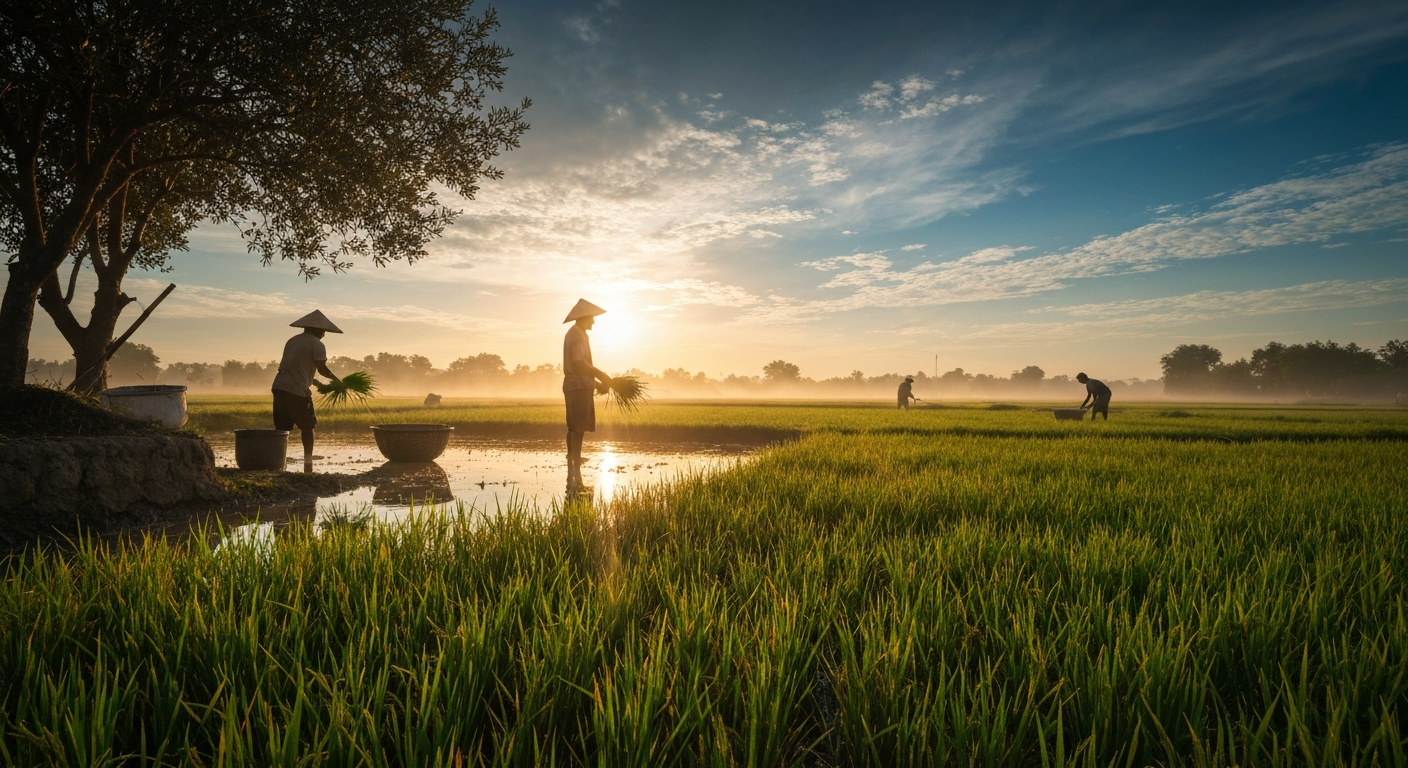
Imagine a future where the food on your plate, like rice, grows in fields without harsh chemical sprays. Picture vast paddies humming with natural life, the crops defended not by manufactured chemicals, but by their own ingenious biological powers. This vision is closer than you think, thanks to a remarkable discovery about how certain rice varieties protect themselves.
This isn't science fiction. Researchers have uncovered the incredible, nuanced strategies of allelopathic rice, a special type of rice that naturally produces its own weed-fighting compounds. A study detailed in Europe PMC used integrated transcriptomic, metabolomic, and metagenomic analyses – fancy ways to look at all the genes, chemicals, and microbes at play – to see exactly how these plants operate. They found that allelopathic rice doesn't just attack weeds; it has a sophisticated, dual-mode defense system, adapting its "weaponry" depending on the type of weed it encounters. This natural weed control could fundamentally change how we farm.
How Rice Plants Become Their Own Weed Defenders
So, how does this weed-fighting rice work its magic? Essentially, these special rice plants are like tiny, living pharmacies, manufacturing their own natural pesticides. They release specific chemicals from their roots into the surrounding soil, which then act like a natural spray, stunting or killing nearby weeds. It's an elegant, built-in defense mechanism that could reduce our reliance on synthetic herbicides.
The truly surprising part is that this allelopathic rice doesn't use a single, blunt attack. Instead, it precisely tailors its chemical defense based on whether the barnyardgrass – a common and problematic weed in rice paddies – is susceptible to traditional herbicides or has developed resistance. Think of it like a trained martial artist: they don't use the same move against every opponent; they adapt their strategy.
The Rice Plant's Two-Pronged Attack
Against herbicide-susceptible barnyardgrass, this special rice primarily deploys chemicals called terpenoids. Imagine terpenoids as the plant's general-purpose defense shield, like a broad-spectrum insect repellent you might use in your garden. These compounds, such as carnosic acid and phytocassane B, are very effective against weeds that haven't learned to resist common chemical threats. The rice cranks up its internal production lines for these chemicals, signaling an all-out offense.
But what about the truly stubborn weeds? The ones that have already shrugged off conventional weedkillers? That's where the rice's intelligence truly shines. When faced with herbicide-resistant barnyardgrass, the allelopathic rice switches tactics. It primarily uses amino acids, which are the building blocks of proteins, like pipecolic acid, L-glutamate, and L-histidine. These aren't just nutritional components; in this context, they act as a precision strike, a more targeted and sophisticated weapon designed to overcome the resistant weeds. This dual strategy is a significant step towards how plants secretly eat less fertilizer and protect themselves.
The Secret Helpers: Tiny Microbes in the Soil
This intricate defense isn't just about the rice plants themselves; it’s a team effort with the soil life around their roots. The rice’s roots are surrounded by a cozy, protective layer of soil particles and tiny living organisms called the rhizosheath microbiota. Think of this as the plant's personal army of microscopic helpers, living in a little fort around its roots. The rice's chemical signals — both terpenoids and amino acids — form stable ecological networks with these microbes.
For instance, when fighting susceptible weeds with terpenoids, the rice boosts certain cellular processes like ABC transporters (which are like tiny pumps moving molecules) and quorum sensing (how bacteria communicate). When battling resistant weeds with amino acids, a different process takes over: nitrogen fixation. This is a truly surprising fact: the amino acids don't just kill the weeds; they also help the soil microbes pull nitrogen from the air and turn it into a usable nutrient for the rice. It’s like the plant is not only defending itself but also fertilizing its own soil at the same time, leading to improved plant growth and better soil health, tackling issues that could otherwise lead to your soil may be feeding crop sickness.
A Natural Fertilizer and Weedkiller in One?
The implications of this nitrogen fixation are huge. By promoting this process, the rice effectively acts as its own slow-release, natural fertilizer. This dual role of amino acids – suppressing tough weeds and enriching the soil – offers a truly elegant solution to sustainable agriculture. Lab tests, known as bioassays, confirmed that specific amino acids like pipecolic acid and L-histidine effectively inhibited barnyardgrass seedling growth without harming the rice plants. This selectivity is key for practical application.
This means we’re not just talking about replacing one chemical with another; we're talking about an entire ecological system working in harmony. It offers a path to reduce the amount of synthetic nitrogen fertilizer applied to fields, which can have significant environmental benefits, including reducing greenhouse gas emissions and water pollution. It's a win-win for farmers, the environment, and ultimately, for you.
The Future of Farming Is Already Growing
While these findings from Europe PMC are incredibly promising, bringing this science from the lab to every farm field will take time. Researchers need to conduct large-scale field trials and selectively breed rice varieties that maximize these natural defenses. We are likely looking at five to ten years before this precision weed management becomes widely available to farmers.
However, the path is clear. Imagine seeing vast rice paddies across Asia, Africa, and beyond, naturally resisting weeds, even the ones that have baffled farmers for years. This isn't just about growing more rice; it's about growing healthier rice in a healthier environment, using less energy and fewer chemicals, aligning with the principles of the simple trick farmers use to grow more food while being gentle on the planet.
This discovery reminds us that nature often holds the most powerful and sustainable solutions. By understanding and enhancing the intricate biological systems that already exist, we can cultivate a future where our food is grown more efficiently, more cleanly, and more harmoniously with the Earth. It’s a beautiful thought, isn't it?
Key Takeaways
- Allelopathic rice uses a sophisticated, dual-chemical defense system, releasing terpenoids against susceptible weeds and amino acids against herbicide-resistant ones.
- This natural weed control is amplified by beneficial microbes around the rice roots, forming an ecological network that helps the plant fight off invaders.
- Surprisingly, the amino acid defense against tough weeds also promotes nitrogen fixation in the soil, effectively fertilizing the rice and improving soil health naturally.
Frequently Asked Questions
What is allelopathic rice? Allelopathic rice is a special type of rice plant that naturally produces chemicals from its roots to suppress the growth of weeds around it, acting as a built-in defense mechanism against unwanted plants.
How does allelopathic rice fight different weeds? This rice uses a two-part strategy: it deploys terpenoids against easily suppressed weeds and switches to specific amino acids for herbicide-resistant weeds, tailoring its chemical defense to the threat.
Can allelopathic rice improve soil health? Yes, when fighting resistant weeds, the rice releases amino acids that encourage beneficial soil microbes to perform nitrogen fixation, which enriches the soil with essential nutrients and acts like a natural fertilizer.
When will this technology be widely available? While research is highly promising, widespread adoption of allelopathic rice for commercial farming is still likely 5-10 years away, as it requires further field trials and selective breeding efforts.
Editorial note: The scientific findings presented in this article are sourced exclusively from published research papers, peer-reviewed studies, certified inventions, and registered patent filings. Images generated by AI.
Stay ahead of the curve
The science that shapes tomorrow — in your inbox every week
The scientific findings presented in our articles are sourced from published research papers, peer-reviewed studies, certified inventions, and registered patent filings. Subscribe for focused weekly coverage, hands-on explainers, and practical insights that help you stay curious — no jargon, no noise.
By subscribing, you agree to receive newsletter and marketing emails, and accept our Terms of Use and Privacy Policy. You can unsubscribe anytime.
Water Technology, Smart Irrigation & Sustainable Farming
Environmental scientist and journalist covering India's water crisis and the agricultural innovations designed to survive it.
View full profile →