The Simple Trick Farmers Use to Grow More Food
This new method for farming is changing how we think about feeding the world and powering our homes. Discover how a clever setup can produce more food, even in challenging climates.
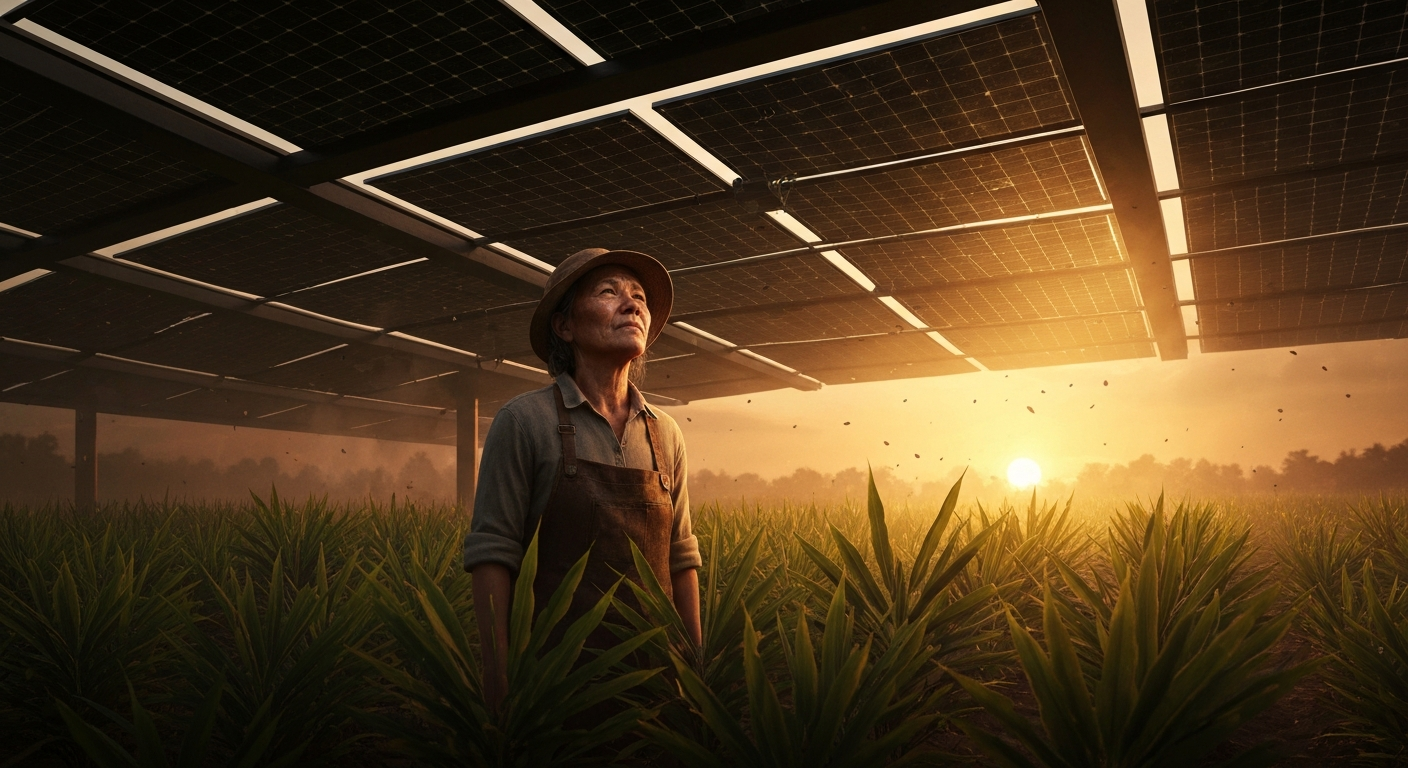
Have you ever driven past a vast field of solar panels and wondered if that land could be doing something else? It's a common dilemma: as our world hungers for both more clean energy and more food, the land available for either seems to shrink. It often feels like we have to choose between powering our homes and feeding our families, creating an impossible tension on our precious planet.
This push and pull between energy and agriculture creates a silent problem, especially in regions already stretched thin by climate change and growing populations. You might think that every square foot dedicated to solar panels is a square foot lost to food production. But what if the solar panels themselves could actually help grow crops? What if the very technology generating electricity could also be a farmer's best friend?
A surprisingly clever idea, often called agrivoltaics, is changing this narrative. It's essentially like giving farmland a high-tech, power-generating umbrella. Instead of panels occupying land instead of crops, they sit above them, creating a dual-purpose space. This setup works a bit like a natural shade tree for certain plants, but with the added benefit of generating clean electricity right on the farm.
New research coming out of Bangladesh, a country acutely aware of land scarcity, shows just how effective this can be. Scientists have been experimenting with what happens when you combine solar energy and food cultivation in the same spot, finding some truly unexpected benefits that could reshape how we manage land globally.
When Solar Panels Become Crop Canopies
The idea behind agrivoltaics is quite straightforward: install solar panels at a height that allows farming machinery or people to move comfortably underneath. Think of it like a very tall, open-sided greenhouse where the roof is made of electricity-producing solar cells. This isn't just about fitting two things into one area; it's about making them work together in harmony.
One key benefit is the shade the panels provide. For many crops, especially in hot, sunny climates, too much direct sunlight can be as damaging as too little. The panels act as a partial shield, filtering intense rays. This also means less water evaporates from the soil, a crucial advantage in arid or drought-prone regions. It’s like having an intelligent canopy that knows when to offer a little relief from the sun.
In Bangladesh, researchers set up a detailed field study to compare how crops fared under these panels versus in open fields. They looked at various plants over different growing seasons, from the cooler Rabi (winter) period to the sweltering Kharif-I (summer) months. This careful comparison allowed them to see exactly which crops benefited, and by how much, under these unique conditions.
The Surprising Crops That Thrive in the Shade
You might expect that putting anything above crops would reduce their yield, and for some, you'd be right. The study in Bangladesh, conducted by researchers in Tetulia, Panchagarh district, confirmed that seven types of Rabi crops, including common staples like tomatoes, onions, and garlic, did see a 10% to 20% reduction in their harvest when grown under the solar panels. This is because these crops generally prefer full, uninterrupted sun.
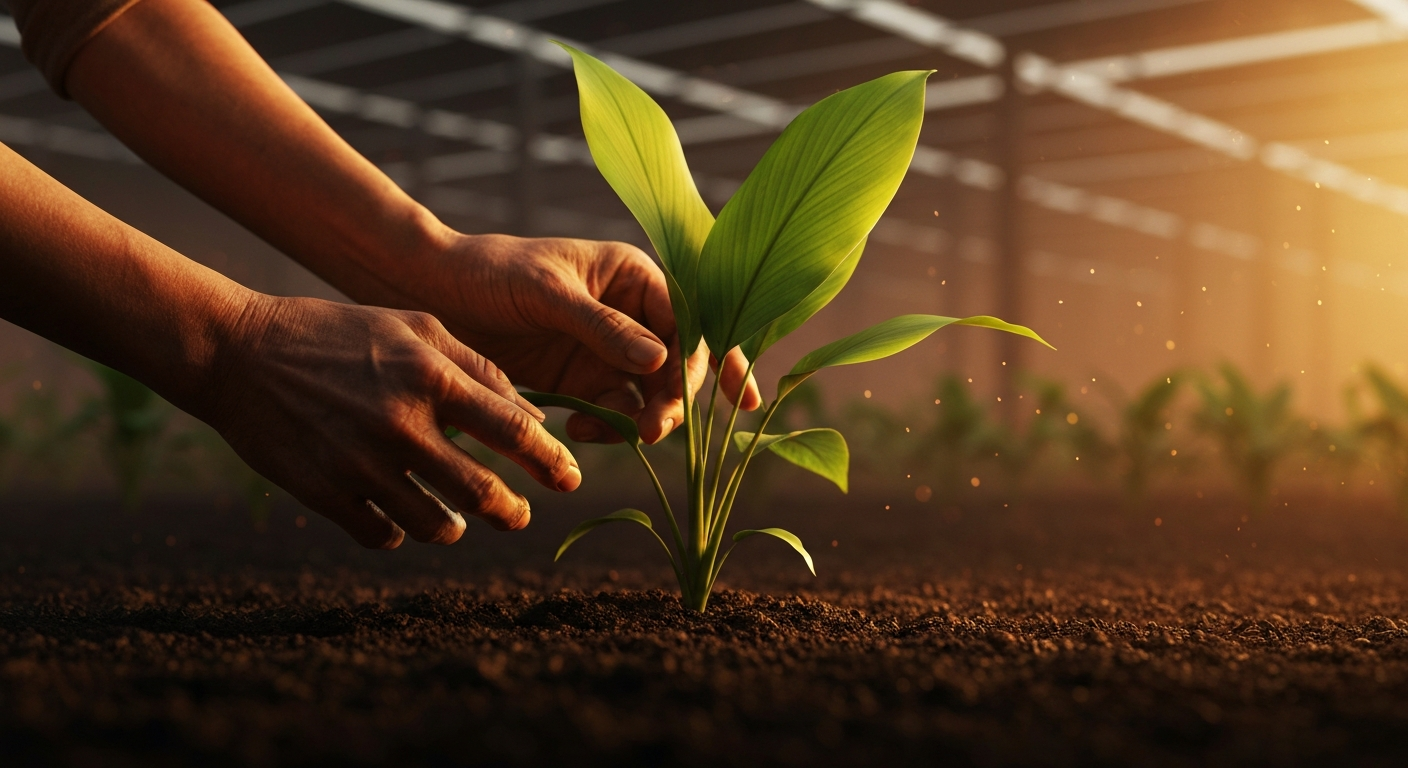
However, the real surprise came during the hot Kharif-I season. For shade-tolerant crops like ginger and turmeric, growing under the panels wasn't just acceptable—it was actually better. Ginger yields increased by an impressive 12.3%, and turmeric saw an 8.7% boost. This happens because the panels protect these sensitive plants from the scorching midday sun and help retain essential moisture in the soil, preventing them from drying out.
Imagine that: a solar panel not only generates clean energy but also acts as a climate buffer, helping certain foods grow more abundantly. Scaling up these findings from just a small pilot plot to about 45 hectares (the current land covered by solar irrigation pumps in Bangladesh) could yield nearly 594 tons of ginger and turmeric seasonally. This translates to an estimated economic value of about US$0.56 million, providing a significant boost to local farmers and the national economy.
More Than Just Food: How Solar Farms Help People
Beyond just increasing crop yields for specific plants, agrivoltaics offers a host of wider benefits that extend into social and economic realms. Farmers involved in the Bangladesh study showed keen interest in growing high-value crops like ginger and turmeric under the panels, recognizing the potential for higher income and more stable harvests. This isn't just about more food; it's about smarter, more profitable farming.
A crucial finding highlighted in the qualitative data from the study was the positive impact on women. With enhanced shade and easier access to crop management areas, women's participation in farming activities, including post-harvest processing, significantly increased. This also meant more opportunities for women to contribute to their household income, diversifying family finances and empowering individuals within rural communities. It's a quiet example of how infrastructure can create social change.
This dual-use approach also strengthens food security by making land more productive, especially in regions facing land-use conflicts. By integrating solar energy generation directly into agricultural practices, it also promotes the adoption of renewable energy, pushing communities towards a cleaner, more resilient future. It’s a win-win for both environmental sustainability and human well-being.
What Comes Next for This Dual-Use Future?
While the findings from Bangladesh are extremely promising, it's important to remember that agrivoltaics isn't a magic bullet for every single farm or every single crop. The optimal setup and crop choices will vary widely depending on local climate, soil conditions, and the specific needs of the plants being grown. For instance, crops that demand maximum direct sunlight might still do better in open fields.
The next steps involve more research across different environments and with a wider variety of crops to understand these nuances fully. We're probably looking at five to ten years before we see widespread adoption of agrivoltaics in diverse regions, as farmers and policymakers gain confidence and adapt existing practices. It requires a thoughtful integration of agricultural science and solar engineering, tailoring solutions to specific local challenges.
However, the path forward is clear: this climate-smart approach offers a tangible way to optimize land use, bolster food security, and accelerate the shift to renewable energy. It shows us that innovation isn't always about creating something entirely new, but sometimes about cleverly combining what we already have in ways that benefit everyone.
This smart way of farming could mean more food on your plate, cleaner energy for your home, and a more resilient future for communities around the globe. It's a powerful reminder that solutions to our biggest challenges often lie in looking at old problems with a fresh perspective.
Key Takeaways
- Agrivoltaics allows farmers to grow specific crops like ginger and turmeric with increased yields (up to 12.3% for ginger) even while generating clean solar energy on the same land.
- This dual-use farming method combats land scarcity, strengthens food security, and promotes renewable energy adoption, particularly in resource-constrained regions like Bangladesh.
- Beyond crop benefits, agrivoltaics can empower women in rural communities by increasing their participation in farming and contributing to household income diversification.
Frequently Asked Questions
What is agrivoltaics? Agrivoltaics is a clever system that places solar panels above farmland, allowing crops to grow underneath while simultaneously generating clean electricity. It's like having a power-producing shade structure for plants.
How do solar panels help crops grow? In hot climates, the panels provide partial shade, protecting sensitive crops from intense sun and heat. This also reduces water evaporation from the soil, helping plants retain moisture and thrive.
Which crops benefit most from agrivoltaics? Shade-tolerant crops, especially those sensitive to excessive sun and heat, benefit significantly. Research in Bangladesh showed increased yields for ginger (12.3%) and turmeric (8.7%) under solar panels.
Does agrivoltaics only benefit crop yields? No, it also boosts local economies by increasing high-value crop production, promotes renewable energy adoption, and can enhance social equity by increasing women's participation in agriculture.
Editorial note: The scientific findings presented in this article are sourced exclusively from published research papers, peer-reviewed studies, certified inventions, and registered patent filings. Images generated by AI.
Stay ahead of the curve
The science that shapes tomorrow — in your inbox every week
The scientific findings presented in our articles are sourced from published research papers, peer-reviewed studies, certified inventions, and registered patent filings. Subscribe for focused weekly coverage, hands-on explainers, and practical insights that help you stay curious — no jargon, no noise.
By subscribing, you agree to receive newsletter and marketing emails, and accept our Terms of Use and Privacy Policy. You can unsubscribe anytime.
Hydrogen Energy, Carbon Capture & Electrochemistry
Materials scientist turned writer, tracking the chemistry that could make a genuinely zero-carbon world possible.
View full profile →