Your Tomato Plants Are Quietly Crying for Help
Losing a huge chunk of your precious garden harvest because of silent plant diseases. Now, scientists have created an AI eye that spots these hidden threats faster than any human.
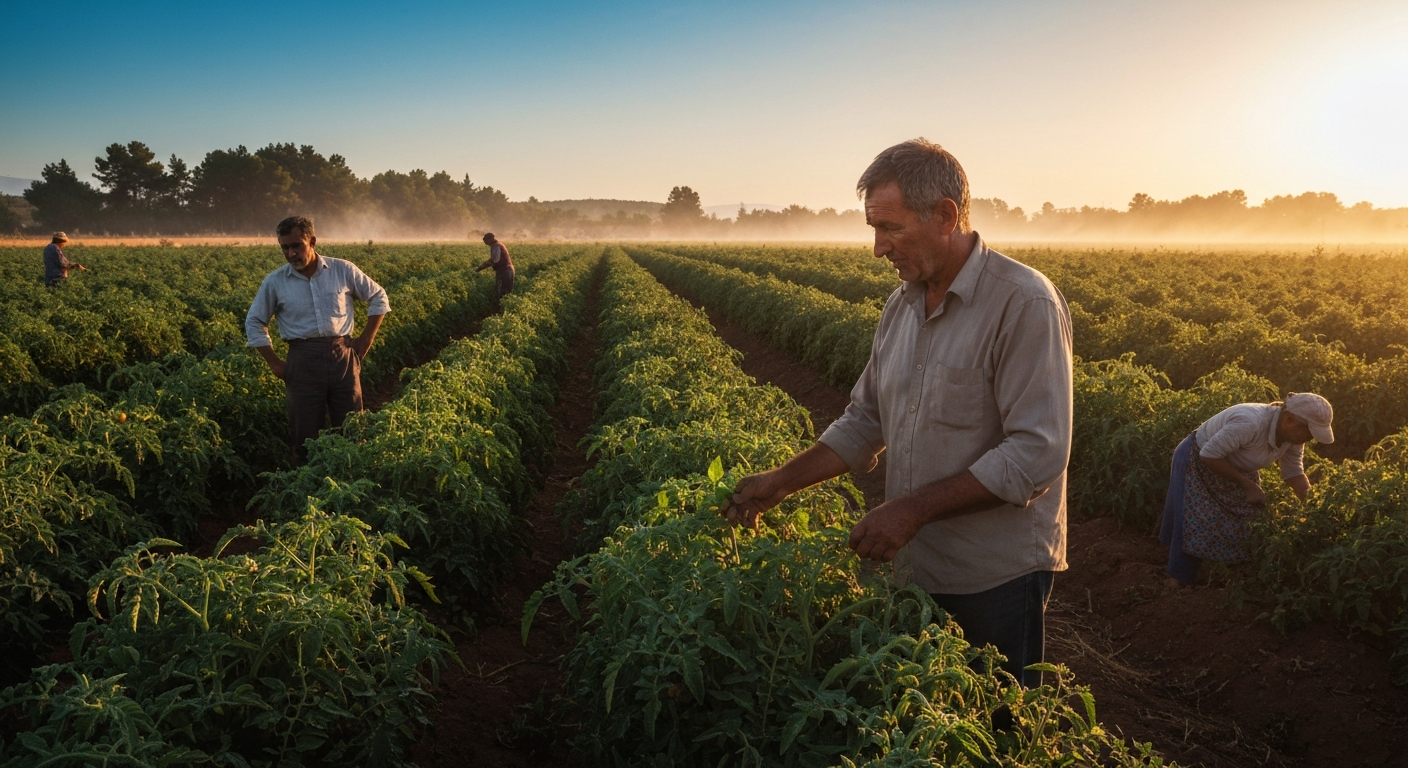
Have you ever watched your vibrant tomato plants, full of promise, suddenly start to wither, their leaves spotted and yellowing? It’s a gut-wrenching feeling, seeing all your hard work potentially ruined by some invisible enemy. For farmers, this isn't just a sad sight; it's a direct threat to their livelihood and our global food supply, making them reliant on often harsh chemicals.
The problem is, by the time you see those tell-tale spots, the disease might have already spread, like a quiet wildfire through your crop. Current detection methods often rely on human eyes, which can be slow, inconsistent, and frankly, too late. We needed something that could spot trouble early, no matter how subtle, and understand the chaotic reality of a real farm field.
Now, scientists have developed an artificial intelligence (AI) system that acts like an eagle-eyed, tireless gardener, constantly scanning for the earliest signs of disease in tomato plants. This "AI gardener" is designed to recognize problems even amidst the dappled light, shadows, and busy backgrounds of a real field, unlike older systems that only worked well in sterile lab conditions. It’s a huge step toward catching diseases before they devastate an entire harvest.
So, how does this clever system work? Imagine giving a detective an incredible new magnifying glass that can see clues invisible to the naked eye. This AI uses a special kind of digital "magnifying glass" called an Inverted Residual Convolutional Block Attention Module (IR-CBAM). Think of it as a highly specialized filter that helps the AI focus only on the critical parts of an image—like a plant leaf—while ignoring distracting elements, such as random shadows or a fence in the background. It helps the AI sift through visual "noise" to find the tiny, specific patterns of disease, even if the lighting is wonky or the plant is partially hidden.
Giving AI the Eyes to See Hidden Sickness
This AI's ability to "see" is built on a process called deep learning, where it's trained on thousands of images, similar to how a child learns to identify objects by seeing many examples. The team behind this advancement, including researchers from Sri Lanka and collaborators, created the first comprehensive "in-field" dataset of tomato leaf diseases, called SLIF-Tomato. This dataset isn't just pretty pictures from a lab; it contains photos of real diseased plants taken in diverse outdoor conditions, complete with precise digital outlines (or bounding box annotations) around the problem areas. This gives the AI the real-world experience it needs, much like a pilot training in a flight simulator that perfectly mimics real-world weather and turbulence.
This meticulous training paid off big time. The system achieved accuracy rates of over 99.6% in identifying various tomato leaf diseases, which is almost perfect. Then, using another AI model called YOLOv12-large—think of this as the "spotter" that uses the "magnifying glass" information—it could pinpoint the exact diseased regions on a leaf with an 88.5% average precision. This means it doesn't just say "this plant is sick," but it can tell you where on the plant the problem lies.
One surprising fact? Fungal diseases alone are estimated to destroy 10-50% of crops globally each year, highlighting the urgent need for tools like this AI. This means the silent spread of disease is already wiping out a massive amount of food before it even reaches our plates. For context, if a human farmer missed just 10% of their crop to disease, that's a significant financial loss and a reduction in available food.
What This Means for Your Dinner Plate
Catching diseases early is paramount because it allows farmers to intervene precisely, applying treatment only where needed. This precision agriculture approach minimizes the use of harsh chemical sprays, which benefits both the environment and our health. Imagine fewer pesticides on your produce and healthier soil for future crops. This echoes similar advancements in how we might use your trash is about to clean your city or even how your remote village can quietly power itself to create more sustainable living.
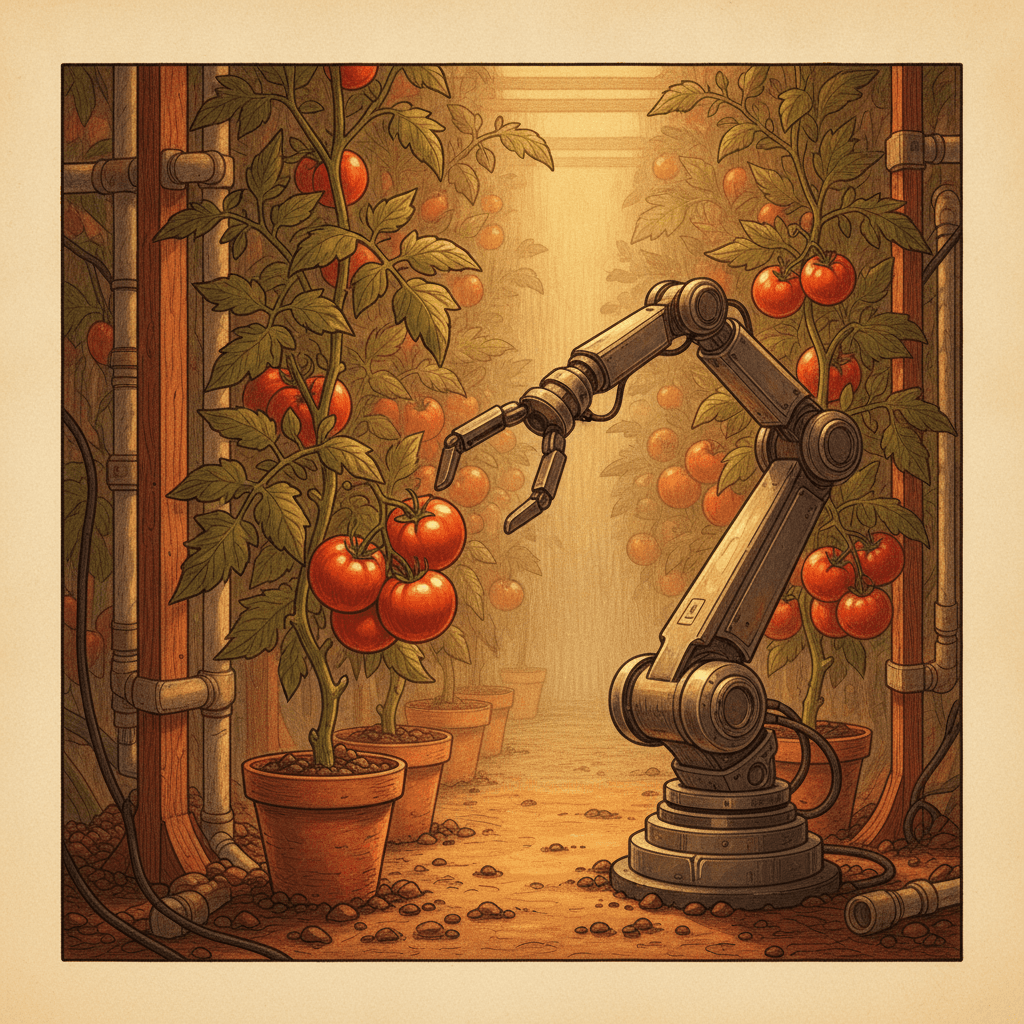
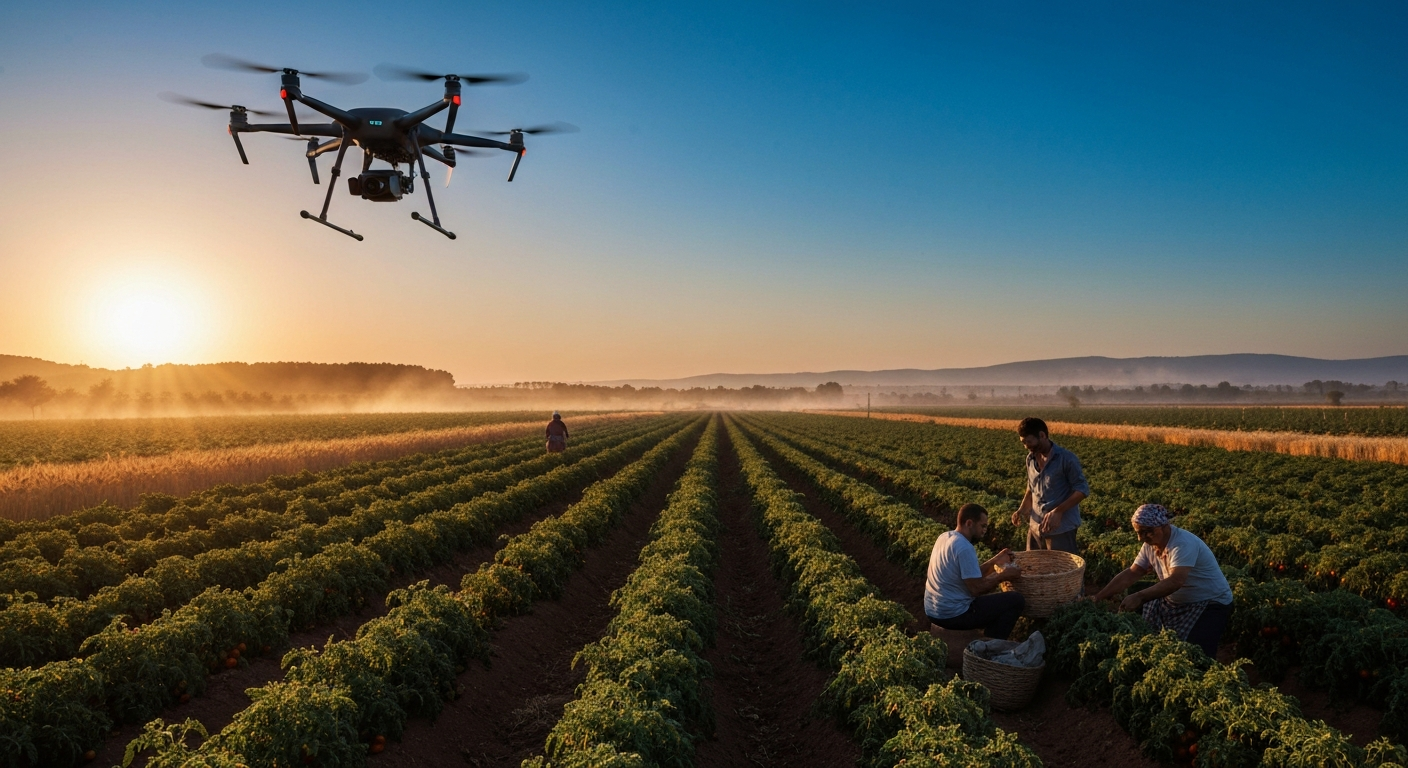
While the current results are incredibly promising, these systems are still in their testing phases and will likely need another 5-10 years of development and integration before they become a common sight on farms. The next steps involve making these AI models even more lightweight, so they can run efficiently on devices like drones or automated farm robots. Think of a drone flying autonomously over a field, quietly scanning every plant, providing a real-time health report to the farmer's phone.
Ultimately, this innovation moves us closer to a future where growing our food is smarter, safer, and more sustainable. It’s about giving farmers better tools to protect their crops, ensuring that the juicy, ripe tomatoes you enjoy are grown with less environmental impact and more certainty. It's not just about tech; it's about making sure our food supply is strong and healthy.
Key Takeaways
- New AI systems, like those using IR-CBAM and trained on the SLIF-Tomato dataset, can detect tomato leaf diseases with over 99.6% accuracy in real farm conditions.
- This AI acts as an early warning system, helping farmers target treatments precisely and reduce reliance on harmful chemical sprays.
- Catching diseases early could significantly increase crop yields and contribute to a more sustainable, resilient global food supply.
Frequently Asked Questions
What is the SLIF-Tomato dataset? The SLIF-Tomato dataset is the first complete collection of real-world tomato leaf images taken in farm fields, featuring various diseases with precise digital outlines. It helps train AI to recognize plant sickness under diverse, messy conditions, acting as a critical learning resource for the AI.
How does AI help detect plant diseases? AI systems are trained on thousands of images of healthy and diseased plants, learning to spot subtle patterns invisible to the human eye. They can rapidly scan entire fields, identifying and locating disease outbreaks much faster and more accurately than manual inspection, reducing crop loss.
Why is detecting plant diseases early so important? Early detection allows farmers to treat diseases quickly and precisely, preventing widespread crop destruction. This reduces the need for broad chemical applications, leading to healthier food, better environmental outcomes, and greater food security for everyone.
Editorial note: The scientific findings presented in this article are sourced exclusively from published research papers, peer-reviewed studies, certified inventions, and registered patent filings. Images generated by AI.
Stay ahead of the curve
The science that shapes tomorrow — in your inbox every week
The scientific findings presented in our articles are sourced from published research papers, peer-reviewed studies, certified inventions, and registered patent filings. Subscribe for focused weekly coverage, hands-on explainers, and practical insights that help you stay curious — no jargon, no noise.
By subscribing, you agree to receive newsletter and marketing emails, and accept our Terms of Use and Privacy Policy. You can unsubscribe anytime.
Food Security, Biofortification & Agriculture in the Global South
Development journalist covering the agricultural innovations that can feed a warmer, more crowded world — particularly in Africa and South Asia.
View full profile →