Your Remote Village Can Quietly Power Itself
Imagine a village completely off the grid, generating its own clean energy without relying on distant power lines. Scientists are making this vision a reality, using a surprising combination of nature's power.
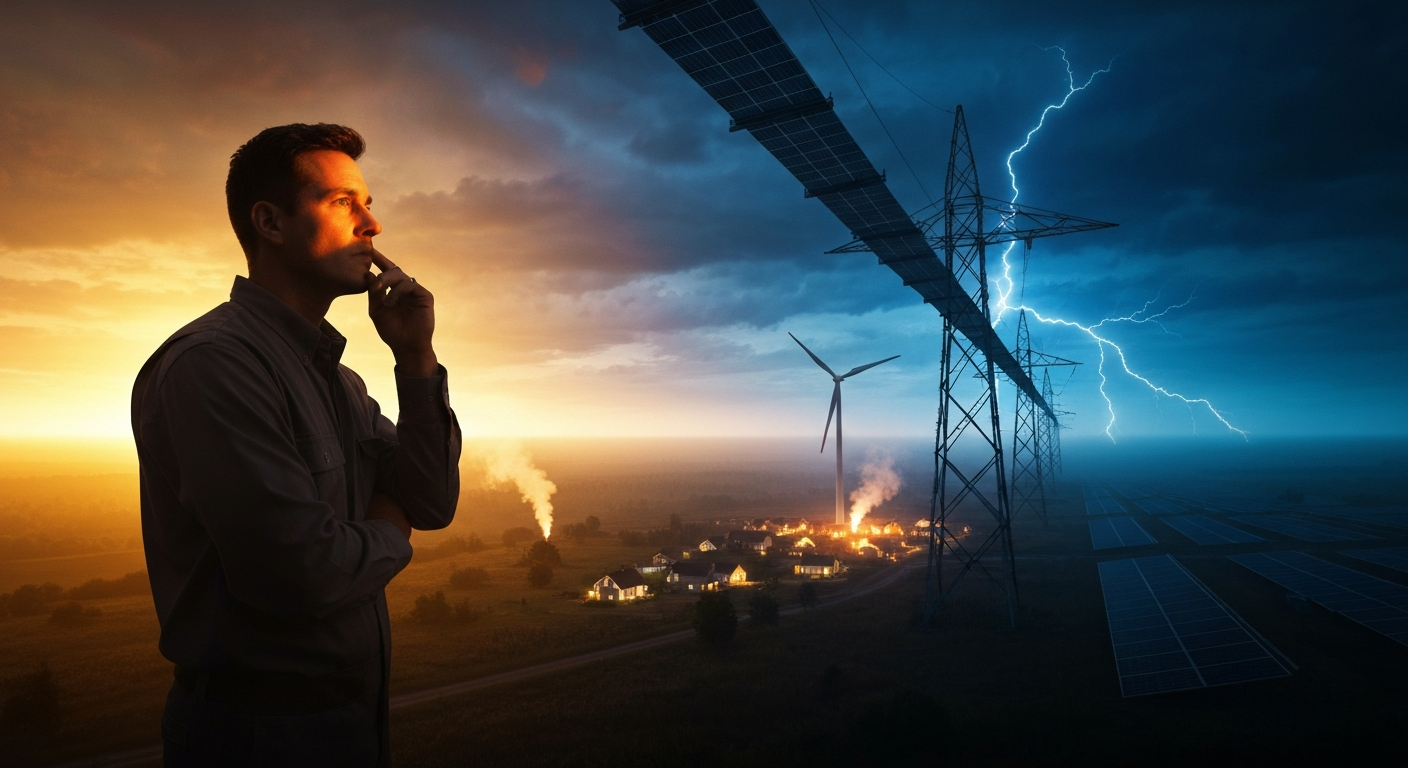
Have you ever wondered what it would be like if your remote community could create all its own power, completely cut off from the big, fragile grid? It's not just a dream for survivalists anymore; researchers are making real progress toward completely self-sufficient local power systems. This isn't science fiction, but a tangible path to bringing reliable electricity to places that desperately need it, all while cleaning up our carbon footprint.
Scientists from a multi-institutional team, including the University of Asia Pacific in Bangladesh and Universiti Teknologi PETRONAS in Malaysia, recently published a detailed study on how this could work. They looked at a real-world challenge: rural communities in coastal Bangladesh, which often struggle with weak grid access and growing energy demands. Their solution involved designing a "microgrid," which is like a miniature, self-contained power network that operates independently from larger, centralized grids. Think of it as a small, local brain controlling its own power needs.
They specifically evaluated a system for Char Ishwar, a community in Noakhali, using sophisticated modeling software called HOMER Pro. This software helps engineers simulate how different power sources, like solar panels (which turn sunlight into electricity, much like a tiny plant converting light for growth) and wind turbines (giant fans that capture the motion of air), would work together. The goal was to find the most efficient and reliable combination to provide electricity to 180 households.
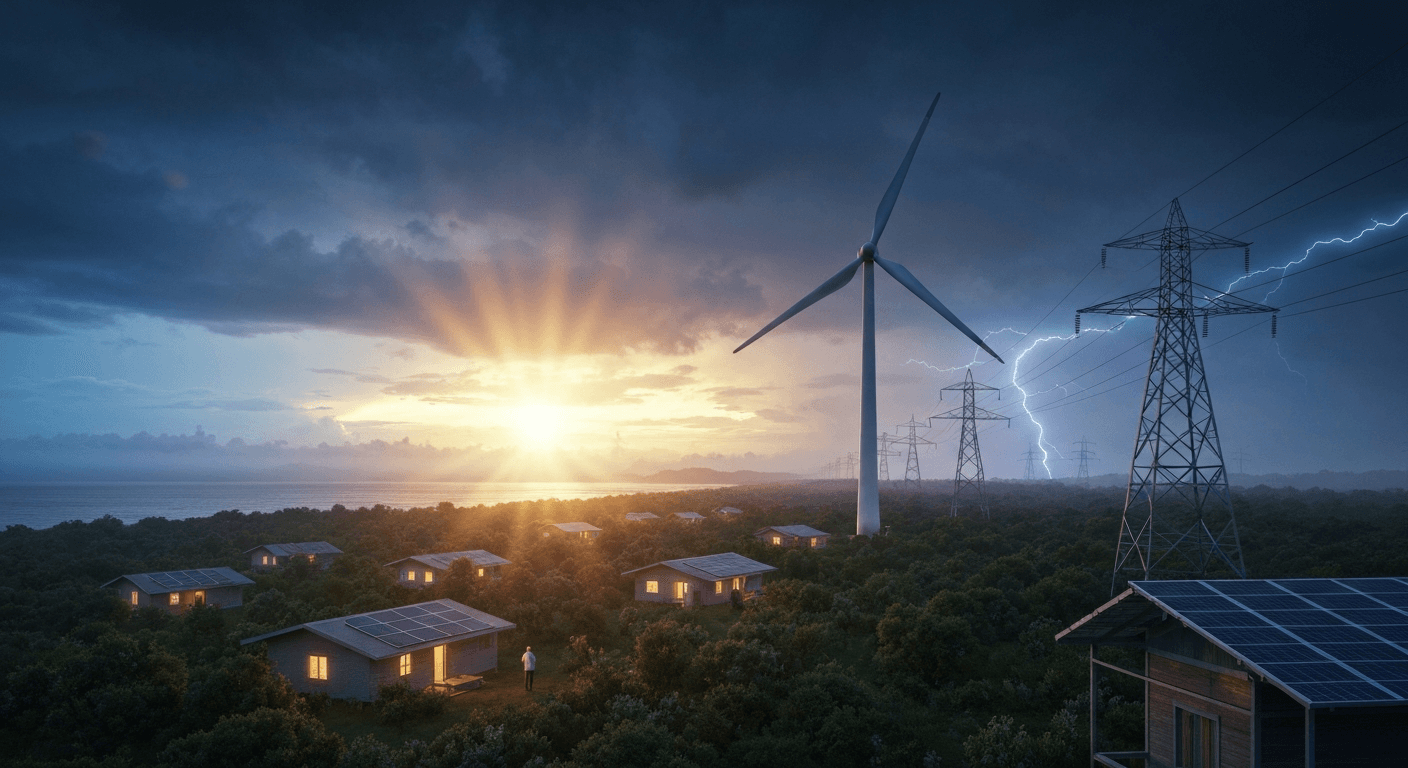
The researchers landed on an optimal design that combines several elements: solar panels, wind turbines, a big battery (like a massive power bank for the whole village), and a fascinating component called a fuel cell. This fuel cell uses hydrogen, a super light gas, to create electricity, working like a small chemical power plant that turns hydrogen into water and energy. What's truly surprising is that this system managed to achieve nearly zero net carbon dioxide emissions – a negative 3.79 kg per year, which is essentially carbon-neutral or even better, considering the avoided emissions compared to fossil fuels.
This integrated approach means the village wouldn't just be getting power, but green power. The sun and wind provide the main juice, and when they aren't available (like at night or on a calm day), the battery kicks in. If the battery runs low, the stored hydrogen can be converted back into electricity by the fuel cell. It’s a bit like having a diversified investment portfolio for your energy – spreading the risk across multiple sources ensures stability.
What if your local corner store could operate entirely on power generated by its own rooftop solar panels and a backyard wind turbine? This isn't so far-fetched. This research validates the robustness of these hybrid systems, demonstrating how they can adapt to varying wind speeds and electricity demands. Imagine a future where villages, hospitals, and even small towns can become energy independent, shielding them from blackouts and rising energy costs. This kind of local power generation can even make the entire national grid more resilient by taking some strain off it.
The economic numbers are compelling too. This optimal setup had a cost of energy (COE) of $0.139 per kilowatt-hour, making it surprisingly competitive. The initial capital cost was around $594,206, which might sound like a lot, but for electrifying 180 homes sustainably for decades, it’s a smart long-term investment. This kind of reliable, localized power is especially vital for emergency services and critical infrastructure, ensuring light and communication even when major storms hit.
It's not just about isolated villages. Consider the implications for disaster relief. If a hurricane wipes out traditional power lines, a self-contained microgrid could keep essential services running. We're talking about a future where your local fire station or community shelter could become an energy oasis, operating independently when the wider grid fails. This resilience is a huge, often overlooked benefit. (/article/your-power-grid-will-quietly-shrink-itself)
The biggest challenge, as with any new infrastructure, is the upfront investment. Scaling these systems requires significant initial capital. However, as the cost of solar panels and wind turbines continues to drop (they've plummeted by over 80% and 50% respectively in the last decade), and hydrogen production becomes more efficient, these projects become increasingly viable. Researchers still need to refine hydrogen storage solutions, making them safer and more compact.
This research, led by Dr. Iftekhar Uddin and others, published through Europe PMC, confirms that moving towards a future where communities generate their own clean, reliable power isn't just a hopeful idea – it’s a carefully engineered reality, just a decade or so away from widespread implementation. It transforms remote areas from energy-deprived to energy-rich, quietly changing lives one kilowatt at a time. (/article/your-homes-leftovers-could-quietly-power-a-city)
This movement toward decentralized power means your future energy might come from closer than you think. Imagine a world where energy scarcity becomes a relic of the past, replaced by localized abundance, powered by the very elements around us. This quiet revolution promises a more stable, cleaner, and ultimately, more equitable energy future for everyone, everywhere. (/article/your-carbon-could-fuel-a-tiny-robot)
Key Takeaways
- Remote communities can achieve energy independence using hybrid solar, wind, and hydrogen fuel cell microgrids, making them resilient to grid failures.
- These localized power systems can provide electricity with near-zero carbon emissions, offering a sustainable alternative to fossil fuels.
- While initial costs are a factor, decreasing renewable energy prices and enhanced reliability make microgrids a smart, long-term investment for sustainable development.
Frequently Asked Questions
What is a hybrid renewable microgrid? It's a small, self-contained power system that combines different clean energy sources like solar and wind, along with storage, to provide reliable electricity to a local community, independent of a larger grid.
How does hydrogen play a role in these systems? Hydrogen acts as an energy storage medium. When there's excess solar or wind power, an electrolyzer splits water to create hydrogen. This stored hydrogen can then be converted back into electricity using a fuel cell when needed, ensuring continuous power.
Why are microgrids important for remote areas? Microgrids offer energy independence and reliability to remote areas often challenged by weak or non-existent grid access. They reduce reliance on expensive, polluting fossil fuels and protect communities from large-scale grid failures.
Are these systems environmentally friendly? Yes, the system analyzed in the study achieved near-zero net carbon dioxide emissions. By using renewable sources like solar and wind, and green hydrogen, these microgrids significantly reduce greenhouse gas emissions compared to traditional fossil fuel-based power generation.
Editorial note: The scientific findings presented in this article are sourced exclusively from published research papers, peer-reviewed studies, certified inventions, and registered patent filings. Images generated by AI.
Stay ahead of the curve
The science that shapes tomorrow — in your inbox every week
The scientific findings presented in our articles are sourced from published research papers, peer-reviewed studies, certified inventions, and registered patent filings. Subscribe for focused weekly coverage, hands-on explainers, and practical insights that help you stay curious — no jargon, no noise.
By subscribing, you agree to receive newsletter and marketing emails, and accept our Terms of Use and Privacy Policy. You can unsubscribe anytime.
Energy Access, Microgrids & Clean Power for the Developing World
Energy access journalist focused on the innovations that can bring clean power to the two billion people the mainstream transition risks leaving behind.
View full profile →