Your Air Could Secretly Clean Itself
Imagine breathing truly clean air everywhere you go, not just indoors. This isn't a distant dream; scientists are building robots to purify the air around you, right where you need it most.
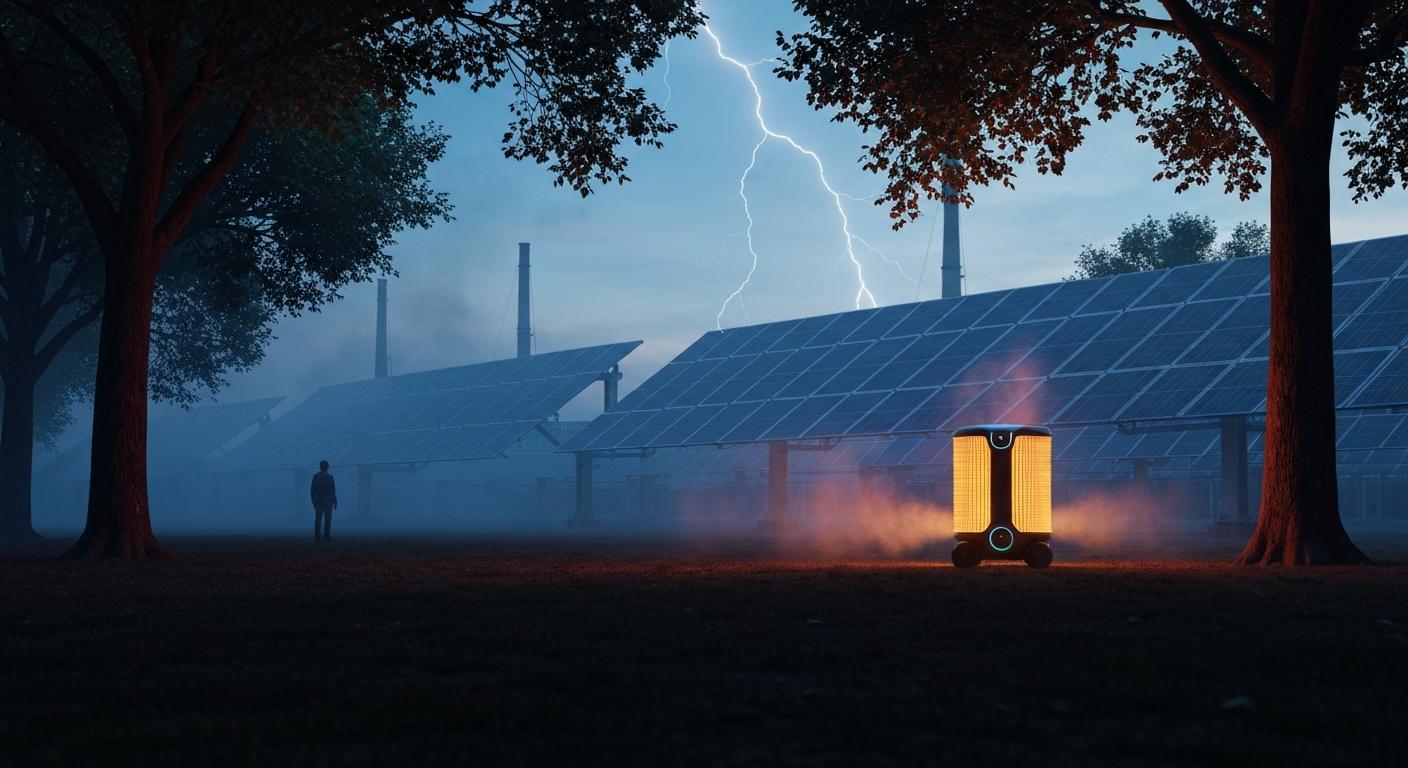
Imagine a world where the air you breathe is always crisp and clean, whether you're strolling through a bustling city park or working in a busy industrial zone. Forget that nagging cough or the haze blurring your skyline. What if tiny, silent guardians moved through your environment, sniffing out pollution and scrubbing it away before it ever reached your lungs?
This isn't science fiction anymore. Scientists are actively building intelligent, mobile robots that act like personal air purifiers, moving autonomously to target pollution hotspots. Researchers at institutions like Delhi Technological University have developed an "Intelligent Mobile Air Filtration Unit," or IMAF, which is essentially a small, self-driving cleaner for the air. This unit detects harmful gases and then actively filters them out, making the air immediately around it better.
So, how does this tiny air guardian actually work? Think of it like a smart Roomba, but instead of vacuuming dust, it's "vacuuming" invisible pollutants. The IMAF is a compact robot, small enough to navigate crowded areas, and it's packed with sensors. These sensors are like its "nose," constantly sniffing the air for things like carbon dioxide, smoke, or volatile organic compounds (VOCs)—which are harmful gases released from things like paints or cleaning supplies.
When the robot’s sensors detect that the level of pollutants goes above a safe threshold, it simply stops moving. At that point, it kicks its built-in air purification system into gear. This system uses a HEPA filter, much like the one in your home air purifier, to trap tiny particles and a fan to pull the dirty air through. It’s like having a tiny, localized cleaning crew that only works when and where it’s needed most. You might be surprised to learn that cities like Delhi, where some of this research originates, have pollution levels so severe that breathing the air is often compared to smoking multiple packs of cigarettes a day.
What makes these units particularly clever is their ability to move and monitor. They don't just sit in one spot; they can follow predefined paths, thanks to line-tracking sensors. It’s like having a digital breadcrumb trail the robot follows, allowing it to patrol specific areas, perhaps in a factory or a public plaza. All the while, it's sending real-time data about air quality to a remote monitoring system, so people can see exactly where the air is good or bad. This live feedback helps manage air quality dynamically, rather than just relying on fixed, distant sensors.
Of course, getting these smart cleaners out into the real world means tackling challenges like battery life, the sheer scale of urban pollution, and making them robust enough to handle various environments. Skeptics might argue that a single robot can't clean an entire city's air, and they'd be right. The idea isn't to replace large-scale environmental policies, but to create targeted, immediate relief in specific areas. Think of it as a personal bodyguard for your lungs, especially useful in localized pollution hotspots like construction sites, bus stops, or crowded markets.
If these intelligent mobile air filtration units become widespread, it could quietly change how we experience public spaces. Imagine an office building where a fleet of these robots patrols the open-plan areas, ensuring air quality is always optimal, or a schoolyard where they keep the air clean for children during recess. This could significantly reduce exposure to common urban pollutants, potentially leading to fewer respiratory illnesses and a noticeable improvement in overall well-being. It could even extend the concept of "smart cities" beyond traffic and streetlights to include proactive environmental management. (/article/your-farm-fields-may-grow-themselves) could explore how similar robotic principles are changing agriculture.
The technology isn't years away from being viable; the researchers built a working prototype for around $350 USD. While mass production and broader deployment will take time to refine, the core concept of autonomous, localized air purification is proving itself effective. It's a testament to human ingenuity: identifying a massive problem like air pollution and developing focused, adaptable solutions. These robots highlight how science often moves from complex global challenges to surprisingly simple, practical devices that improve our daily lives, one breath at a time. (/article/your-takeout-box-is-about-to-vanish) shows how materials science is also tackling environmental problems.

Key Takeaways
- Intelligent Mobile Air Filtration Units (IMAFs) are autonomous robots that detect and filter local air pollution.
- These robots use multiple sensors to identify harmful gases and HEPA filters for purification, communicating data wirelessly.
- They offer a targeted solution for improving air quality in specific, high-pollution areas, complementing broader environmental efforts.
Frequently Asked Questions
What is an Intelligent Mobile Air Filtration Unit (IMAF)? An IMAF is a compact, autonomous robot designed to detect air pollutants and actively filter them out from localized areas, monitoring air quality in real time.
How does an IMAF detect air pollution? IMAFs use gas sensors like MQ135, MQ2, and MQ5 to "sniff out" various harmful gases, including carbon dioxide, smoke, LPG, ammonia, and VOCs, alongside temperature and humidity sensors.
Where could these air-cleaning robots be used? They could be deployed in public spaces, industrial facilities, smart cities, and crowded areas to provide localized air purification and improve public health and safety.
When might we see these robots in public spaces? While prototypes are effective, widespread deployment requires further refinement and scaling. Expect to see them piloted in specific industrial or urban zones within the next 5-10 years.
Editorial note: The scientific findings presented in this article are sourced exclusively from published research papers, peer-reviewed studies, certified inventions, and registered patent filings. Images generated by AI.
Stay ahead of the curve
The science that shapes tomorrow — in your inbox every week
The scientific findings presented in our articles are sourced from published research papers, peer-reviewed studies, certified inventions, and registered patent filings. Subscribe for focused weekly coverage, hands-on explainers, and practical insights that help you stay curious — no jargon, no noise.
By subscribing, you agree to receive newsletter and marketing emails, and accept our Terms of Use and Privacy Policy. You can unsubscribe anytime.
Energy Access, Microgrids & Clean Power for the Developing World
Energy access journalist focused on the innovations that can bring clean power to the two billion people the mainstream transition risks leaving behind.
View full profile →