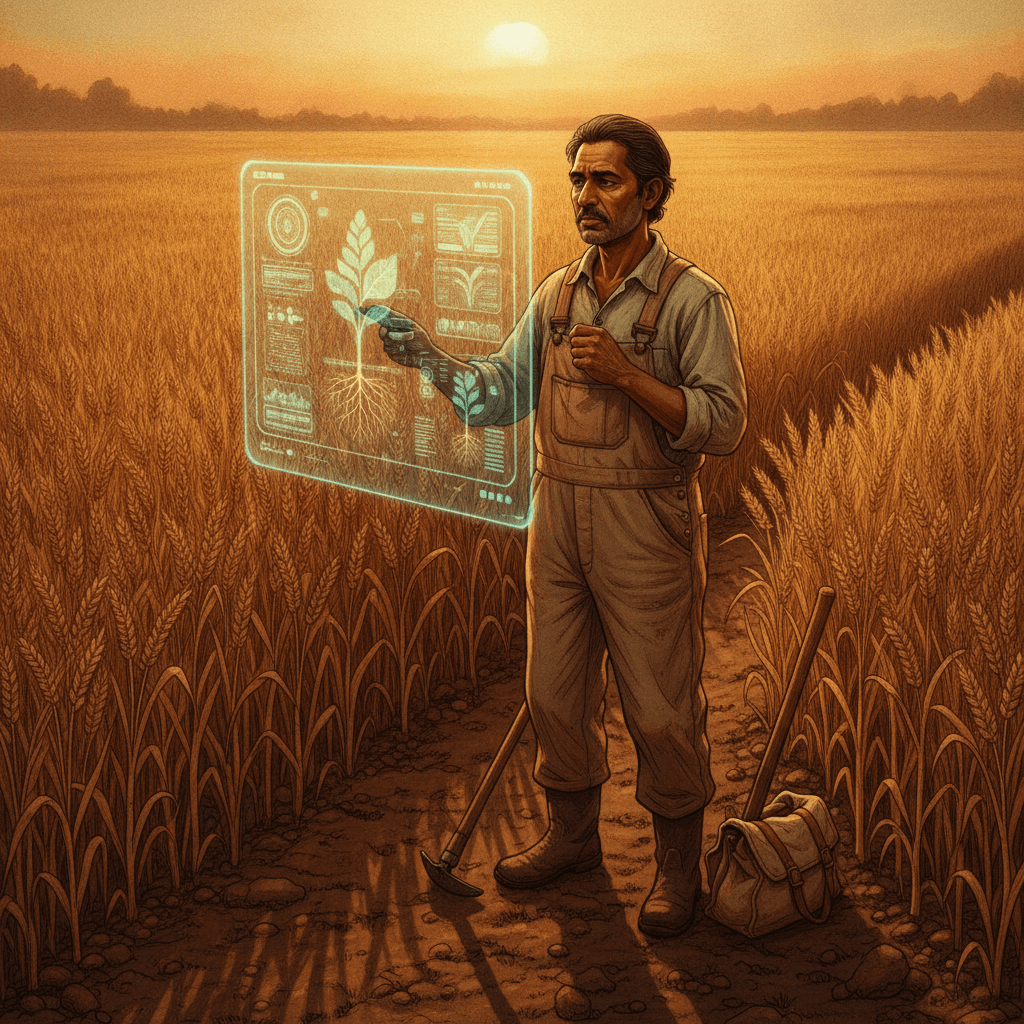
Your Wheat May Soon Sip Less Water
The relentless march of drought is making it harder to grow enough food, but scientists just found a surprising genetic switch in wheat that could change everything. Learn how a single tiny adjustment might help crops thrive on less water and secure our future meals.

Your future bread, pasta, and even beer might soon come from wheat plants that are far less thirsty. This isn't just a hopeful dream; real peer-reviewed evidence is emerging from labs around the world, pointing to a specific genetic tweak that could make wheat incredibly resilient to drought. Researchers, like those at Northwest A&F University in China, are zeroing in on a gene that acts like a plant's internal water manager.
The problem of limited water for your farm fields will grow more with less is only getting more urgent. The world population keeps growing, and global warming makes severe droughts more frequent and intense. If we can't grow enough staple crops like wheat, food security for billions becomes a terrifying challenge. Imagine a field of golden wheat, lush and abundant, even though it hasn't rained in weeks – that's the future this science hints at.
How a Tiny Genetic Switch Helps Wheat Survive Drought
The mechanism is surprisingly elegant. Scientists have identified a specific transcription factor called TaHY5 in wheat. Think of a transcription factor like a conductor in an orchestra: it doesn't play an instrument itself, but it tells other musicians (genes) when to start playing and how loudly. In this case, the TaHY5 gene conductor gives instructions to other genes that control how the plant handles stress, especially when water is scarce.
When researchers either boost the activity of TaHY5 (overexpression) or carefully edit it using a tool called CRISPR/Cas9, they see a dramatic difference in how wheat plants cope with drought. CRISPR/Cas9 is like a pair of microscopic genetic scissors, allowing scientists to precisely cut and paste sections of a plant's DNA to either enhance or silence specific genes. This targeted approach means they can finetune the plant's response.

What Happens Inside Thirsty Wheat Plants
What exactly changes when TaHY5 is at work? A lot. Studies show that wheat with enhanced TaHY5 maintains better biomass, meaning it grows larger and produces more plant material even under drought conditions. It's like giving the plant an internal super-booster shot for survival.
The plants also show significantly improved levels of antioxidant enzymes, like APX and CAT. These enzymes are the plant's natural cleanup crew, neutralizing harmful byproducts that build up when the plant is stressed, much like how your body uses antioxidants to fight cellular damage. Furthermore, they accumulate more soluble protein and glutathione (GSH), which help the plant manage water balance and protect its cells. Essentially, the plant becomes a master of self-preservation, reducing cellular damage and maintaining stability in its cell membranes.
Is This Science Fiction, or Is It Happening Soon?
This isn't theory; it's based on empirical data published by researchers like those at Northwest A&F University, who used agrobacterium-mediated methods to introduce these genetic changes into wheat. They measured various indicators like malondialdehyde content (a marker of cell damage) and electrolyte permeability (how well cell membranes hold up). The results consistently showed enhanced drought tolerance.
Skeptics might wonder about the long-term effects or the safety of genetically modified crops. These are valid questions, and extensive testing, often taking years, is standard practice for any new crop variety. However, the precision of modern gene-editing tools like CRISPR means changes are highly targeted, often mimicking natural variations that could occur through traditional breeding, but much faster. We're likely 5-10 years away from seeing such modified crops widely adopted, as regulatory hurdles and field trials take time.
Beyond Just Wheat: A Bigger Picture for Food
If this approach becomes widespread for wheat, the ripple effects could be enormous. Imagine entire regions where farming was once precarious due to unpredictable rainfall now being able to produce reliable harvests. This reduces food price volatility and strengthens food security, especially in vulnerable parts of the world. It could even reduce the pressure on freshwater reserves, as less irrigation would be needed for your crops will soon learn from everything.
What’s truly surprising is how a single gene can orchestrate such a comprehensive stress response, improving everything from photosynthesis to cellular defense. It highlights the incredible complexity and resilience already encoded within plant DNA, waiting for us to unlock it. This discovery doesn't just promise more wheat; it offers a glimpse into a future where our most important food sources are better equipped to face a changing climate, creating a more stable food system for everyone. It's a key part of how your beans can finally fight their own sickness and other plant challenges.
Key Takeaways
- Scientists have identified a gene, TaHY5, that dramatically improves wheat's ability to survive and grow during drought conditions.
- Modifying this gene helps wheat plants produce natural stress protectors and maintain healthy cell function with less water.
- This research offers a practical pathway to create more water-efficient crops, enhancing global food security against climate change.
Frequently Asked Questions
What is TaHY5? TaHY5 is a transcription factor gene in wheat that acts like a genetic conductor, instructing other genes on how to respond to stress, particularly drought conditions, helping the plant manage water scarcity.
How does enhancing TaHY5 help wheat resist drought? By increasing or editing TaHY5, wheat plants can better maintain growth (biomass), produce more protective antioxidant enzymes, and stabilize cell membranes, allowing them to thrive with less water.
When could this drought-resistant wheat be available? While the science is promising, widespread adoption of TaHY5-enhanced wheat is still likely 5-10 years away due to necessary field trials, safety assessments, and regulatory approvals for new crop varieties.
Editorial note: The scientific findings presented in this article are sourced exclusively from published research papers, peer-reviewed studies, certified inventions, and registered patent filings. Images generated by AI.
Stay ahead of the curve
The science that shapes tomorrow — in your inbox every week
The scientific findings presented in our articles are sourced from published research papers, peer-reviewed studies, certified inventions, and registered patent filings. Subscribe for focused weekly coverage, hands-on explainers, and practical insights that help you stay curious — no jargon, no noise.
By subscribing, you agree to receive newsletter and marketing emails, and accept our Terms of Use and Privacy Policy. You can unsubscribe anytime.
Vertical Farming, Lab-Grown Food & Precision Fermentation
Food tech journalist tracing the future of how humanity will grow, manufacture, and eat its food.
View full profile →