Your Crops Will Soon Learn From Everything
Imagine a farm where every plant, every soil particle, and even the weather patterns are constantly "understood" by an AI. This article reveals how new AI "scientists" are making that a reality, leading to smarter, more resilient agriculture.
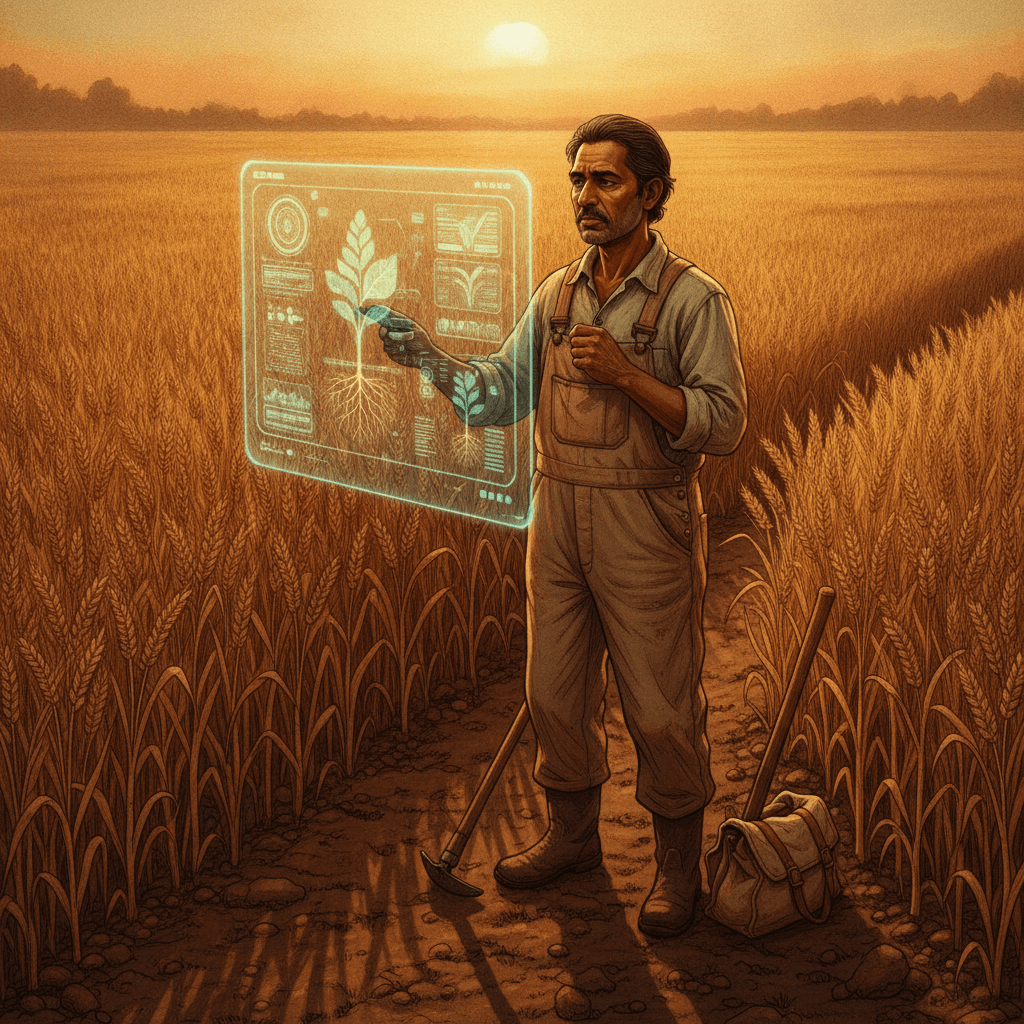
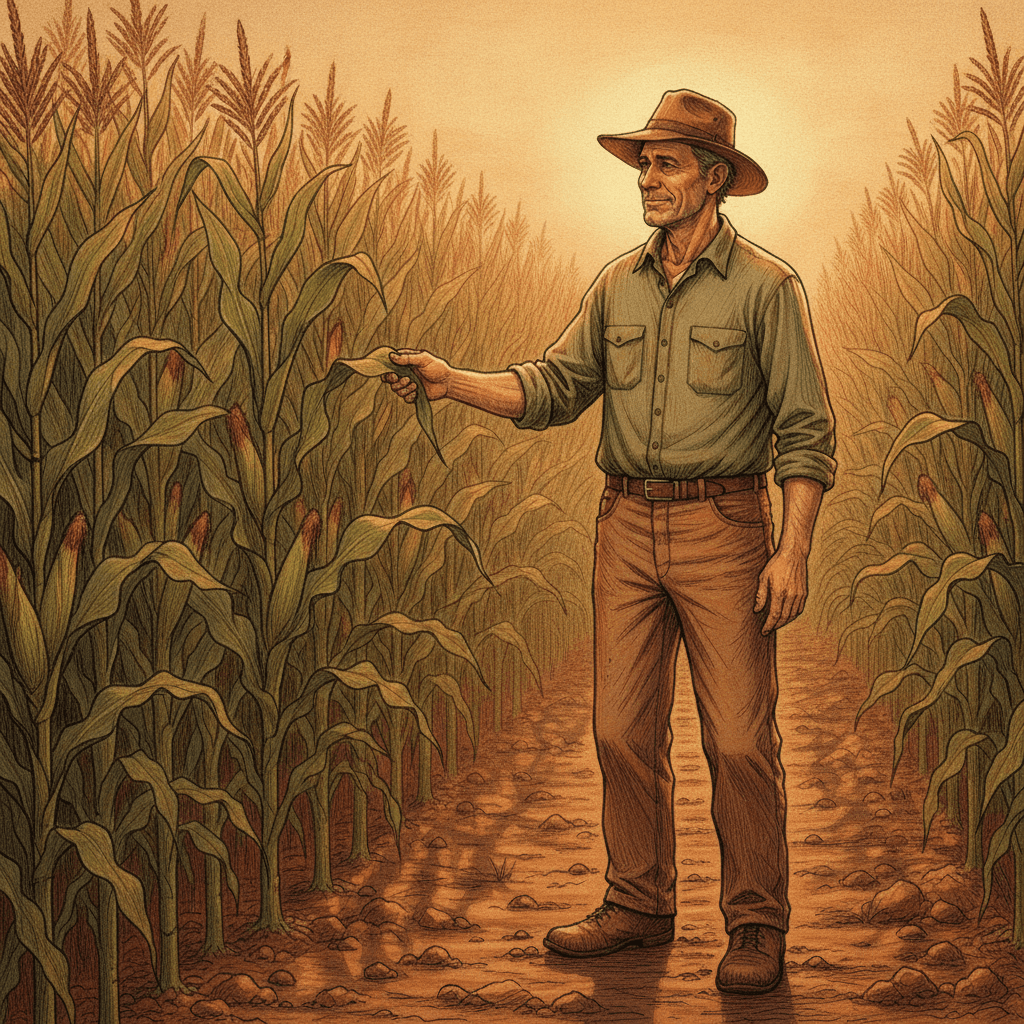
Have you ever tried to grow something, only to have it fail despite your best efforts? It’s frustrating because plants, much like people, are incredibly complex, and there are so many hidden factors affecting their growth. Even experienced farmers face an uphill battle, trying to interpret countless variables — from soil pH to subtle leaf discolorations — across vast fields. This problem of understanding every tiny detail has always limited how much we can truly optimize food production.
Current agricultural technology often relies on isolated pieces of information, like a drone image showing a dry patch or a sensor reporting low nitrogen. But that's like trying to understand a complex story by reading only a few random sentences. The real challenge is weaving together all this data – the sight of a wilting leaf, the sound of an irrigation pump, the historical rainfall data, and even the chemical makeup of the soil – into one complete, coherent picture. This fragmented approach means we miss critical connections, leading to wasted resources and lower yields. For instance, a small change in humidity might impact how effectively a plant absorbs nutrients, a link easily missed if you’re only looking at one data point.
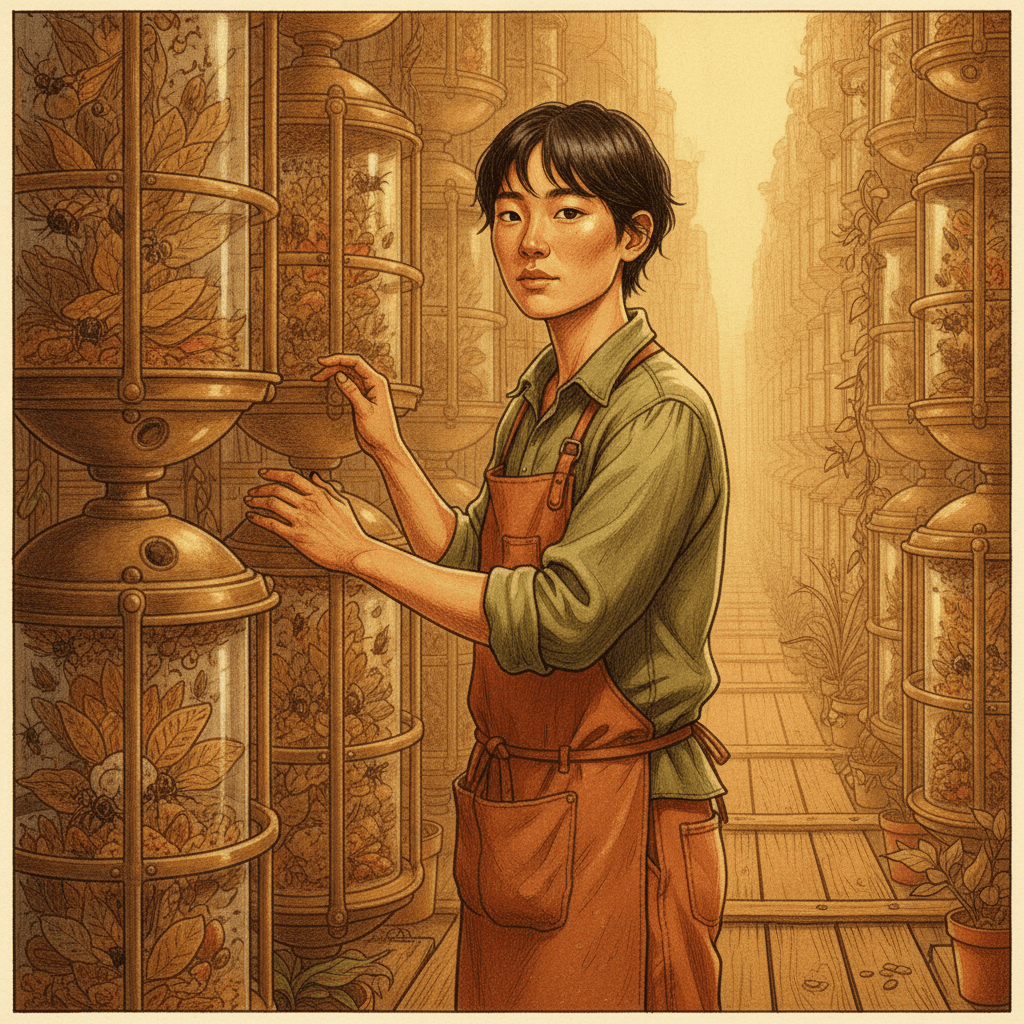
Now, imagine an artificial intelligence that acts like a tireless, omniscient scientist, capable of seeing, hearing, and understanding everything happening on a farm, all at once. Researchers have built "OmniScientist," an AI system that takes in all sorts of raw information — images, sounds, video, 3D structures, even chemical formulas — and uses it to conduct its own scientific experiments. It’s like having a team of experts constantly analyzing your crops, running tests, and writing up reports, all without needing to be told what to look for.
This AI works by using a "perception layer," which is like a super-sensitive set of digital eyes and ears that gather all the raw data, from the way light reflects off a leaf to the faint hum of a tractor. Then, three autonomous agents take over: one for "ideation" (generating new research questions), one for "experiment" (designing and virtually running tests), and one for "writeup" (compiling findings into clear reports). This deterministic pipeline means that everything the AI observes directly shapes the next step of its research, ensuring its conclusions are truly evidence-grounded. For example, if it "sees" a specific pattern in how plants respond to a nutrient, it might then "hypothesize" a better application method and "test" it virtually.
How AI Is Learning to "See" the Whole Farm
So, how does this AI manage to process so much diverse information? It’s a bit like a chef who can not only read a recipe but also smell the spices, feel the texture of dough, hear the sizzle of oil, and see how ingredients change color as they cook. The OmniScientist doesn't just read data points; it directly perceives the raw evidence from various "modalities," which are different ways data can appear, such as visual images, sound recordings, or even 3D models of plant structures. This direct perception allows it to identify subtle relationships that a human might miss or that wouldn't show up in a simple data table. This ability to integrate information from diverse sources, rather than just text or numbers, is what makes it so powerful for how soil bacteria fix nitrogen or how your air flows changes everything.
What’s truly surprising is that this system ran 36 real-world cases across five different scientific fields, from biology to materials science, and successfully completed the entire process from raw data to a finished scientific paper in every single one. Even more impressively, when compared to a version that only received pre-summarized data (like a human might provide), the direct perception version was judged better in 85% of head-to-head comparisons. This means letting the AI "see" and "hear" the raw world dramatically improves its ability to discover new insights.
What This Means for Your Food and Our Future
While OmniScientist is still a research project, it points to a future where agriculture becomes far more precise and sustainable. Instead of relying on generalized best practices, farms could be guided by AI that understands the unique needs of every single plant and patch of soil. This could lead to significantly less water waste, optimized fertilizer use, and much higher crop yields, making food production more efficient and environmentally friendly.
Imagine an AI that helps you manage plant diseases before they spread, or fine-tunes irrigation based on minute changes in humidity and soil moisture. This system isn't just about automating science; it's about making scientific discovery accessible to solve real-world problems. In the next 5-10 years, we might see similar AI assistants helping farmers make real-time decisions, transforming our food supply chain from reactive to proactive. This kind of advanced intelligence could fundamentally alter your dinner plate will quietly change soon and how we think about food security.
Key Takeaways
- A new AI system, OmniScientist, acts like an autonomous scientist, generating hypotheses and writing papers from raw data.
- By directly "perceiving" diverse data (images, sounds, 3D structures), this AI performs significantly better than those given summarized information.
- This approach promises more efficient, sustainable agriculture through hyper-personalized crop management, potentially within 5-10 years.
Frequently Asked Questions
Q: What is OmniScientist? A: OmniScientist is an AI system designed to conduct scientific research autonomously, processing diverse raw data like images, sounds, and 3D models to generate hypotheses, perform virtual experiments, and write scientific papers.
Q: How does OmniScientist improve agricultural research? A: It improves research by directly perceiving and integrating all types of raw farm data, allowing it to uncover complex relationships and optimize farming practices more effectively than systems relying on pre-summarized information.
Q: When will this AI technology be available for farmers? A: While the core technology is in research, applications derived from OmniScientist's capabilities could begin appearing in commercial agricultural tools within the next 5-10 years, offering advanced predictive insights.
Editorial note: The scientific findings presented in this article are sourced exclusively from published research papers, peer-reviewed studies, certified inventions, and registered patent filings. Images generated by AI.
Stay ahead of the curve
The science that shapes tomorrow — in your inbox every week
The scientific findings presented in our articles are sourced from published research papers, peer-reviewed studies, certified inventions, and registered patent filings. Subscribe for focused weekly coverage, hands-on explainers, and practical insights that help you stay curious — no jargon, no noise.
By subscribing, you agree to receive newsletter and marketing emails, and accept our Terms of Use and Privacy Policy. You can unsubscribe anytime.
Food Security, Biofortification & Agriculture in the Global South
Development journalist covering the agricultural innovations that can feed a warmer, more crowded world — particularly in Africa and South Asia.
View full profile →