Your Robots Will Soon See Exactly Like You
Imagine trying to teach someone a complex task if they could only see tiny fragments of what you do. This new data engine records every sight, sound, and touch, helping AI understand human actions in a way never before possible.
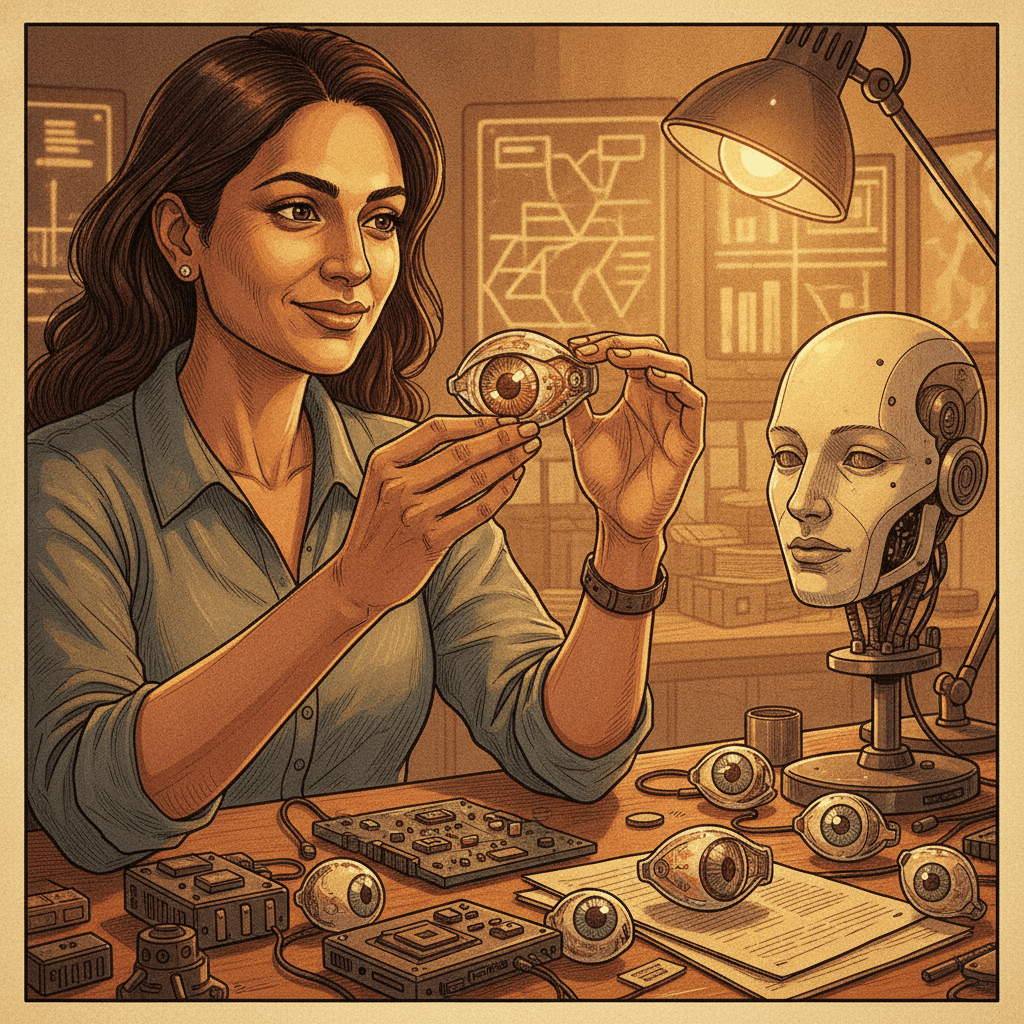
Have you ever tried to explain how to do something simple, like making a cup of coffee, only to realize how many tiny, unspoken steps are involved? You grasp the mug, fill it with water, place it in the machine, press a button, and wait. Each of these actions, from the way your fingers grip to the sound of the water pouring, is packed with information that we humans process without thinking.
For artificial intelligence, especially robots, learning these everyday tasks is incredibly difficult. Most AI models are like students trying to learn from fragmented notes — they might see a hand touching a mug in one recording, and a mug on a table in another, but rarely do they get the full, connected story of how a human interacts with objects and their environment over time. This creates a huge gap in understanding.
That’s where a new system called the Ambient Capture Engine (ACE) comes in. It’s a human-centric data engine that turns real homes into giant, synchronized recording studios. Think of it like a Hollywood soundstage for everyday life, where every single detail of human action and interaction is captured simultaneously. This isn't just about recording what you see, but also what you hear, what you touch, and how your whole body moves.
The ACE system works at two levels. A "table-scale" setup uses specialized sensors to precisely capture what your hands are doing, like twisting a bottle cap or stirring a drink. Meanwhile, a "room-scale" setup tracks your entire body as you walk, reach, and move through a furnished living space. All this data — egocentric video (what you see from your own eyes), multi-camera views, full-body and hand motion, object locations, sounds, and even tactile (touch) signals — gets recorded as one massive, perfectly aligned stream. It's like having dozens of tiny notetakers documenting every aspect of an experience, all syncing their notes perfectly.
One surprising fact is that this system has already amassed a dataset called ACE-Data-0, which holds 150 hours of recordings, totaling an astounding 17 million video frames. This isn't just a few people; it covers 50 participants performing 200 different task categories across two different home environments. That's 75,000 separate episodes of humans doing everything from simple manipulations to longer sequences of household activities, all while capturing natural variations in how people move.
This focus on natural behavior, where participants are given a goal ("make coffee") rather than step-by-step instructions ("pick up mug, pour water"), is crucial. It means the AI learns from real human improvisation, not just rigid demonstrations. Early tests with existing AI methods using this data show big gaps in areas like understanding contact (when an object is physically touched), occlusion (when an object is hidden from view), or egomotion (how your own movement changes what you see). Giving AI a truly holistic view of these everyday interactions is essential for building better robot mechanics.
So, how soon will your home robot be as adept as a human at folding laundry or unloading the dishwasher? We're still probably a decade away from robots seamlessly performing complex household tasks purely through observation. This is because raw data, however comprehensive, is just the first step. The next big challenge is for AI to learn to reason about this data — to predict what happens next, understand intent, and adapt to new situations. This data engine provides the rich training ground needed for such complex learning to happen. It will help AI systems build "world models," essentially internal simulations of how the world works, vastly improving their ability to interact with our messy, unpredictable lives.
This work from researchers at institutions like Carnegie Mellon University is laying a foundational brick for the future of AI. By giving AI richer, more human-like sensory data, we're helping it move closer to truly understanding and participating in our physical world. It’s like giving a child a full encyclopaedia of experiences, rather than just a few scattered pictures.
What Makes This Data Different for AI Learning?
The Ambient Capture Engine (ACE) creates a deeply unified, multi-sensory data stream unlike previous fragmented datasets. This means that instead of having separate recordings for vision, touch, and motion, ACE synchronizes them all perfectly. This comprehensive capture is vital because human actions are a complex dance between what we see, hear, and feel, all happening at the same time. AI needs to learn these connections to truly mimic human dexterity and understanding.
For example, when you pick up a glass, your eyes see it, your hand feels its weight and texture, and you might hear a clink. ACE records all these signals together, giving the AI a much clearer picture of the action. This helps AI models develop better understanding of human behavior and object interaction.
How Does This Improve Future Robots?
This new data engine helps future robots learn human tasks by giving them a much richer, more detailed understanding of how we interact with the world. Robots today struggle with tasks requiring fine motor skills or adaptation to slight changes, often because their training data lacks the nuance of human perception-action loops. This data allows for imitation learning, where robots observe and replicate human actions, and for building "world models," which are internal simulations of how objects and environments behave.
Imagine a robot trying to learn to bake. Instead of just seeing ingredients mixed, it can also learn the precise grip, the force applied, the sound of the whisk, and the changing texture of the dough. This level of detail is crucial for developing robust, adaptable robot behaviors that can handle the real world's complexity.
The Challenge of Human-Centric Data
Capturing human-centric data naturally and comprehensively is extremely difficult because our actions involve a vast array of sensory inputs and physical interactions. Traditional data collection often simplifies or isolates these elements, missing the real-time interplay between vision, touch, sound, and full-body movement. ACE overcomes this by integrating many sensors, from egocentric cameras (worn by the person) to external cameras, motion capture suits, and even object tracking, all precisely calibrated in space and time.
This meticulous synchronization ensures that when a person reaches for an object, the AI sees the hand moving, feels the simulated contact, hears any sound, and knows the object's exact position simultaneously. This fidelity allows AI to build more accurate mental models of human behavior.
Key Takeaways
- A new system called ACE records every aspect of human action – sight, sound, touch, and full-body movement – simultaneously, transforming homes into AI learning studios.
- The ACE-Data-0 dataset provides 150 hours of diverse human tasks, offering AI a complete picture of natural interactions, rather than fragmented observations.
- This rich, synchronized data is essential for AI to overcome current limitations in understanding physical contact, hidden objects, and long sequences of human behavior.
Frequently Asked Questions
What is ACE-Data-0? ACE-Data-0 is a dataset of 150 hours of human interactions in home environments, recorded by the Ambient Capture Engine. It includes synchronized video, motion, audio, and touch signals for AI training.
How will this help robots? It helps robots learn complex human tasks by providing a complete, multi-sensory view of actions. This allows for better imitation learning and building more accurate internal "world models" for AI.
Why is "human-centric" data important? Human-centric data captures actions from our perspective, including all the subtle sensory cues we use. This is crucial for AI to truly understand and replicate how humans interact with their surroundings.
Editorial note: The scientific findings presented in this article are sourced exclusively from published research papers, peer-reviewed studies, certified inventions, and registered patent filings. Images generated by AI.
Stay ahead of the curve
The science that shapes tomorrow — in your inbox every week
The scientific findings presented in our articles are sourced from published research papers, peer-reviewed studies, certified inventions, and registered patent filings. Subscribe for focused weekly coverage, hands-on explainers, and practical insights that help you stay curious — no jargon, no noise.
By subscribing, you agree to receive newsletter and marketing emails, and accept our Terms of Use and Privacy Policy. You can unsubscribe anytime.
AI in Healthcare, Biomedical Computing & Drug Discovery Algorithms
Computational biologist and science journalist covering the remarkable collision of artificial intelligence with medical research.
View full profile →