Drones Quietly Protect Your Food and Farms
Weeds are costing farmers billions every year, reducing harvests by nearly a third. Imagine precisely targeting only the weeds, slashing chemical use, and saving money with smart drones.

Weeds aren't just an annoyance in your garden; they're an agricultural catastrophe, quietly costing global farmers over $32 billion every single year. These unwanted plants are like tiny, hungry bandits, stealing light, water, and nutrients from vital crops, ultimately reducing yields by almost a third. Historically, the main weapon against them has been to spray herbicides across entire fields, a bit like carpet-bombing a whole city just to get a few bad guys. This approach leads to serious issues, including weeds becoming resistant to chemicals and harmful effects on the environment.
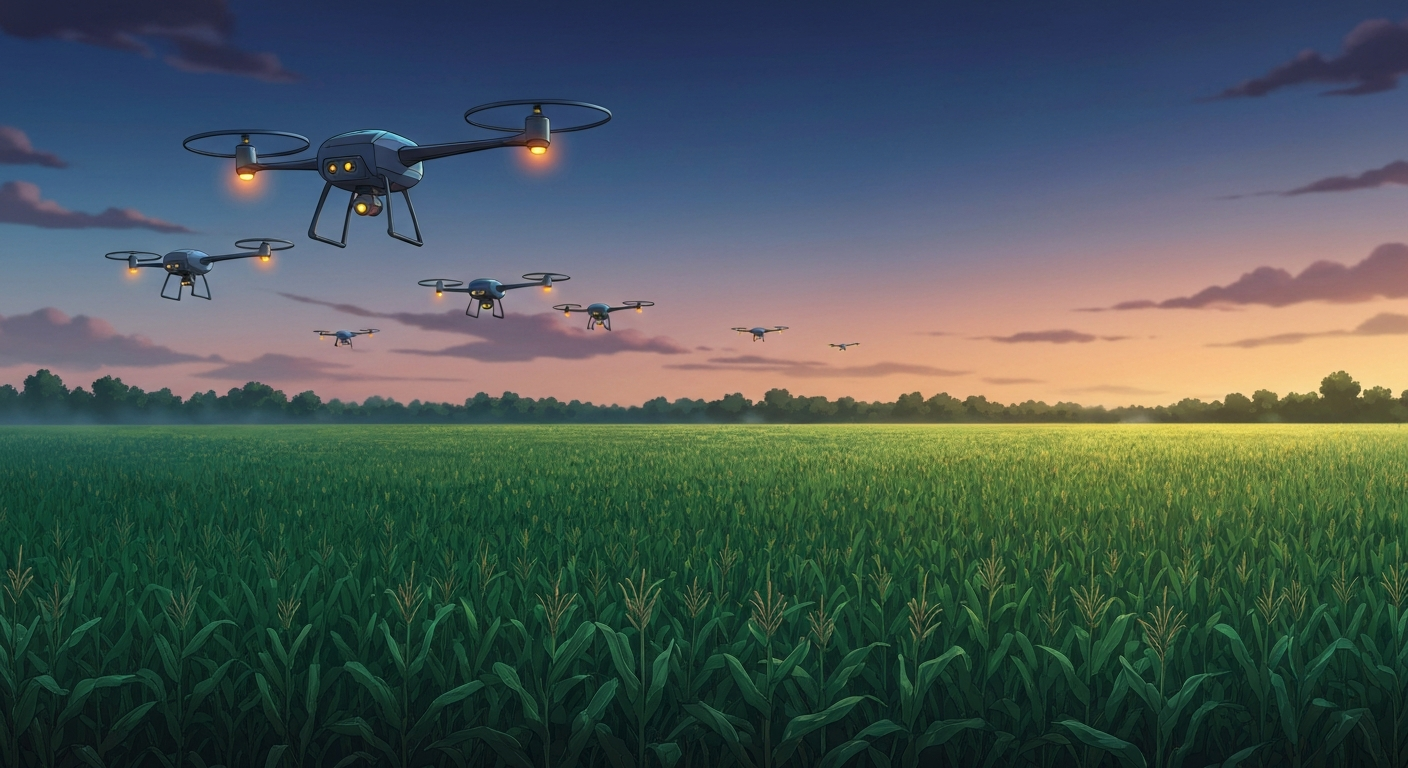
But what if you could fight these plant invaders with surgical precision, only spraying where a weed actually lurks? That's exactly the future researchers at Utah State University are working to build. They're developing an intelligent drone system that identifies weeds from the sky, much like a hawk spotting its prey, allowing farmers to spray only the necessary spots. This isn't science fiction; it's the real, peer-reviewed evidence found in a recent thesis by Tyler B. Hatch from Utah State University, laying the foundation for a much smarter way to farm.
How Tiny Drones Learn to Spot Pesky Weeds
This smart system works by combining unmanned aerial vehicles (UAVs)—which are just fancy drones—with deep learning, a type of artificial intelligence where computers learn from huge amounts of data, much like how a child learns to recognize different animals by seeing many pictures of them. The researchers first flew drones over commercial cornfields in Cache Valley, Utah, collecting high-resolution aerial images. These images were then painstakingly analyzed, with human experts hand-drawing labels around common weed species like common lambsquarters, redroot pigweed, and green foxtail.
This labeled image collection became USU-CornWeedDB, the first publicly available corn weed image dataset specifically for the Intermountain West region. Think of it as a meticulously organized photo album teaching the AI what a weed looks like in different lighting and growth stages. The team then put 28 different AI detection models to the test, evaluating which ones could most accurately and efficiently spot these specific weeds.
The Brains Behind the Drone's Eyes
The most promising model turned out to be a lightweight AI called YOLOv9s. Imagine YOLOv9s as a super-sharp, nimble detective, able to quickly identify suspects (weeds) without needing a huge, power-hungry computer. This efficiency is crucial because these AI brains need to run on small computers mounted directly on the drones themselves, processing information in real-time as the drone flies. It's like having a tiny, autonomous brain constantly scanning the field.
Beyond just identifying weeds, the team also explored ways to reduce the colossal effort of manually labeling images. They tested six different "unlabeled learning" methods, which are techniques where the AI tries to make sense of images even without human-drawn boxes around every single weed. This is like teaching the detective to recognize suspects by showing them many pictures, some with labels and some without, letting them figure out patterns on their own. While complex methods sometimes struggle with the messy reality of a farm field, simpler learning approaches proved more reliable in these challenging conditions.
What Happens When Your Farm Goes Autopilot?
If this technology scales, the implications are huge. Farmers could drastically cut their herbicide use, potentially by 70-80% or more, which means less money spent on chemicals and a healthier environment. Fewer herbicides entering the soil and water would protect delicate ecosystems and biodiversity. This also means fewer cases of herbicide-resistant weeds, a growing problem that threatens future harvests, much like antibiotic resistance threatens human medicine. This precision farming approach could also lead to better crop health overall, as crops aren't stressed by broad chemical applications.
Skeptics might point to the challenges of real-world deployment: what about strong winds affecting spraying accuracy, or the cost of equipping every farm with these intelligent drones? The next steps involve robust field testing in varied weather, ensuring the drones can operate reliably, and developing cost-effective solutions for widespread adoption. Imagine a single drone being able to cover hundreds of acres in a day, precisely mapping out weed infestations and even directing smaller ground robots to spray only the problem areas. This could redefine how food is grown, offering the tiny helper that makes food grow anywhere.
This kind of localized treatment is far more sustainable, protecting soil health and promoting ecological balance. It's a vision where technology doesn't just make things faster but makes them fundamentally better and more harmonious with nature. You're not just growing food; you're cultivating a smarter, greener future.
Key Takeaways
- Weeds cost global agriculture over $32 billion annually, causing significant crop loss and driving up herbicide use.
- AI-powered drones can precisely identify weeds in real-time, enabling targeted spraying and dramatically reducing chemical inputs.
- This approach offers huge benefits: lower costs for farmers, less environmental pollution, and a slowdown in the rise of herbicide-resistant weeds.
Frequently Asked Questions
What is the main problem this drone technology solves? This drone technology tackles the massive problem of weeds in agriculture, which currently cost farmers billions and lead to excessive herbicide use, damaging the environment and fostering chemical-resistant weeds.
How do drones identify weeds so precisely? Drones use high-resolution cameras to capture images of fields. These images are then fed to special AI models, like YOLOv9s, which have been trained on thousands of examples to accurately differentiate between crops and various weed species.
What are the benefits of using drones for weed control? Using drones allows farmers to apply herbicides only where needed, drastically reducing chemical use. This saves money, lessens environmental harm, slows the development of herbicide-resistant weeds, and leads to more sustainable farming practices.
Editorial note: The scientific findings presented in this article are sourced exclusively from published research papers, peer-reviewed studies, certified inventions, and registered patent filings. Images generated by AI.
Stay ahead of the curve
The science that shapes tomorrow — in your inbox every week
The scientific findings presented in our articles are sourced from published research papers, peer-reviewed studies, certified inventions, and registered patent filings. Subscribe for focused weekly coverage, hands-on explainers, and practical insights that help you stay curious — no jargon, no noise.
By subscribing, you agree to receive newsletter and marketing emails, and accept our Terms of Use and Privacy Policy. You can unsubscribe anytime.
AI in Healthcare, Biomedical Computing & Drug Discovery Algorithms
Computational biologist and science journalist covering the remarkable collision of artificial intelligence with medical research.
View full profile →