Your Body's Secret Weapon Against Cancer Just Got Smarter
Stomach cancer is the third leading cause of cancer death worldwide. But new advancements are helping your immune system fight back with incredible precision.

You know that unsettling gut feeling, that sense of dread when something feels off inside? For too many, that feeling leads to a diagnosis of gastric cancer – what most of us just call stomach cancer. It's a brutal reality, claiming more lives globally than almost any other cancer. You might wonder, with all our medical advancements, why is it still such a formidable foe?
The truth is, your body already has an incredible defense system: your immune system. It’s constantly patrolling, identifying threats like viruses and bacteria. But cancer, especially something as tricky as gastric cancer, has learned to play dirty, often hiding from your immune cells or even turning your body’s defenses against themselves.
The Hidden Enemy Within
Your immune system is like a highly trained army, but some cancer cells are master illusionists. They don't just evade detection; they actively suppress the signals that would call your army to action. This creates what scientists call an "immunosuppressive tumor microenvironment," or as researchers sometimes describe it, a "cold" tumor. Your army is there, but it's effectively been disarmed and blinded.
This is why traditional treatments, while often effective, hit a wall for a significant number of patients. Chemotherapy and radiation are powerful, but they’re blunt instruments. They kill rapidly dividing cells, which includes cancer cells, but also many healthy ones. We've been looking for a way to be smarter, to use your body's own intelligence against the enemy.
The problem persists because gastric cancer, in particular, is notorious for its molecular heterogeneity. This means different parts of the same tumor can act differently, making it a moving target that's hard to pin down with a single strategy. This internal variety makes it incredibly difficult for standard treatments to achieve a complete and lasting effect.
Unleashing Your Inner Army
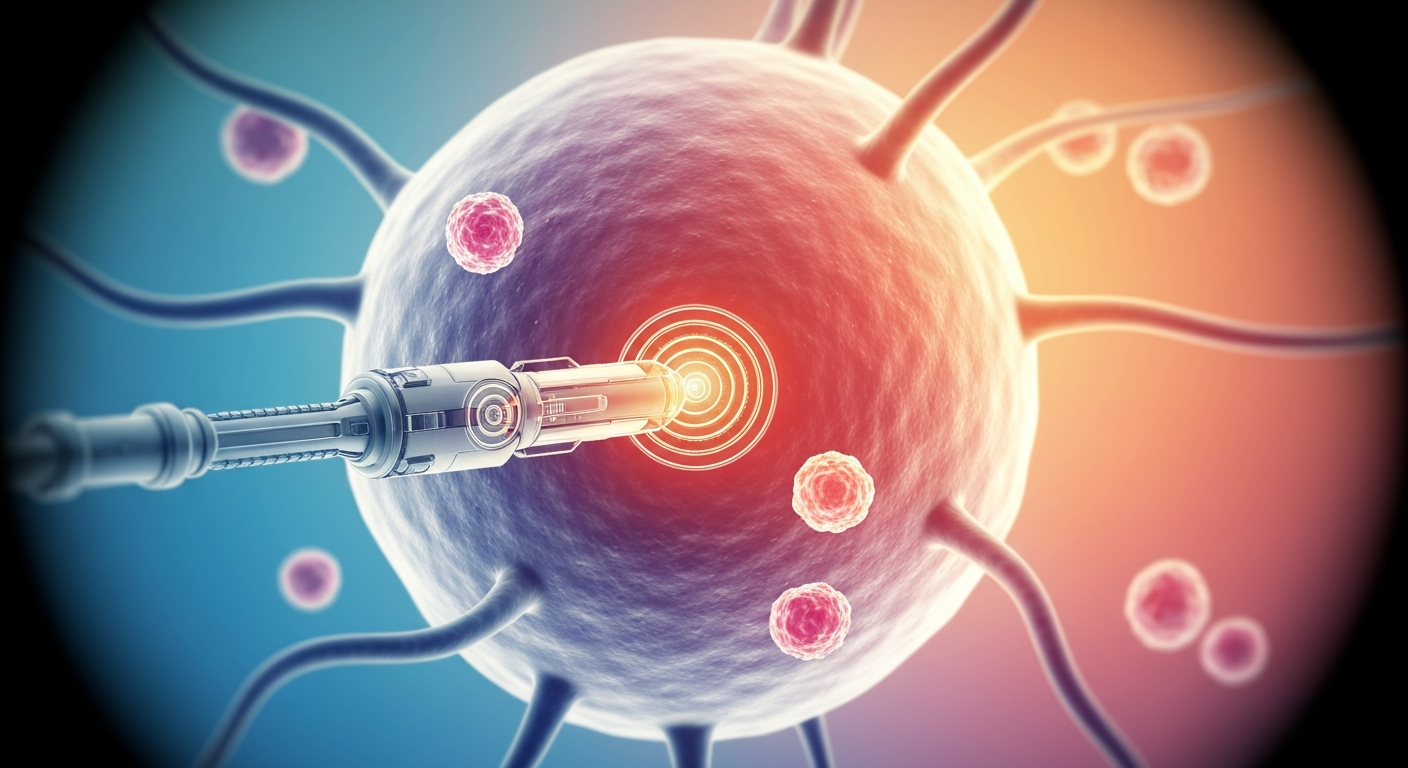
What if you could give your body's natural defenders a new set of eyes, a better map, and even super-soldiers? That's exactly the promise of modern immunotherapy, a field that's quietly changing how we think about fighting diseases like gastric cancer. It's not about attacking the cancer directly with outside chemicals anymore; it's about empowering your immune system to do what it was designed to do.
Imagine your immune cells as highly skilled operatives. For years, they've been held back by internal "handcuffs" or "blindfolds" put in place by the cancer itself. A class of immunotherapy called immune-checkpoint inhibitors (ICIs) works by removing these restraints. It's like taking off the blindfolds, allowing your T-cells – the elite fighters of your immune system – to finally see and engage the enemy.
This isn't a minor tweak; it's a fundamental shift. Instead of just trying to poison the enemy, we're teaching your own army to become more effective, more discerning, and more persistent. The beauty of this approach is that when your immune system learns to fight cancer, it can often remember how to do it, offering long-term protection.
Lighting Up the Invisible Foe
Some tumors are so good at hiding, they need more than just a clearer view. They need a spotlight, a signal to call the full force of your immune system to action. That's where emerging strategies come in, aiming to transform those "cold" tumors into "hot" tumors – making them visible and vulnerable to attack. Researchers are finding ways to send molecular signals, like flares, that attract and activate your immune cells.
These aren't just one-trick ponies; we're talking about a whole arsenal of new tools. Specialized immune cells called CAR-T cells are like custom-built robotic soldiers, engineered in a lab to specifically target cancer cells. Tumor-infiltrating lymphocyte (TIL) therapy harvests and multiplies your own cancer-fighting cells, then reintroduces them as a boosted army. Even cancer vaccines are being developed to teach your body to recognize the enemy before it gets a strong foothold.
What’s truly fascinating is how seemingly unrelated things, like the bacteria in your gut (your microbiota), are being studied for their potential to help rev up your immune response. Modulating your gut flora could act as an immune adjuvant, a kind of natural helper for your body's defenses. This surprising connection underscores how intricately linked your entire body is in the fight against disease.
Your Personalized Battle Plan
It sounds incredible, and in many cases, it is. However, immunotherapy isn't a magic wand for everyone just yet. One of the biggest hurdles is primary resistance; some tumors just don't respond, no matter how much we try to activate the immune system. Plus, when you rev up your immune system, there's a risk of it overreacting, leading to what doctors call immune-related adverse events (irAEs) – essentially your body attacking healthy tissue.
The challenge now is finding the right immunotherapy for the right patient. It's like trying to find the perfect key for a very complex lock. For years, doctors have relied on classical biomarkers – genetic flags like PD-L1 expression, tumor mutational burden (TMB), or the presence of the Epstein-Barr virus (EBV) – to predict who might respond. These were good starting points, but often constrained by how much they varied within a single tumor, or changed over time.
This is where the real intelligence comes in. Scientists are now looking beyond these basic flags, developing emerging biomarkers that integrate a much deeper understanding of the tumor. They're examining metabolic signals (how cancer cells process energy), epigenetic changes (how genes are turned on or off), and even specific cell-death signatures. It’s like moving from a simple map with a few landmarks to a sophisticated GPS system that knows every street, every alley, and every traffic jam.
Research published in reputable journals like PubMed highlights the shift towards these integrated biomarker approaches for gastric cancer. This level of detail provides a roadmap for precision immunotherapy, allowing doctors to predict response and fine-tune treatments like never before.
What This Means For Your Future
So, why should you care about obscure terms like "epigenetic signatures" or "tumor immune microenvironments"? Because this isn't just academic science; it directly translates to renewed hope and smarter care. Gastric cancer, for example, is the third leading cause of cancer-related mortality globally, as noted by recent research synthesizing therapeutic advances in PubMed. This new understanding of immunotherapy offers a powerful counter-attack.
What this means for you, or for someone you know facing this diagnosis, is the potential for vastly improved outcomes. Instead of a one-size-fits-all approach, you might receive a treatment specifically designed to "heat up" your particular tumor, making it visible and vulnerable to your body's defenses. It means therapies that are not just more effective, but potentially less damaging to healthy cells, leading to a better quality of life during treatment.
Imagine a future where a simple biopsy doesn't just identify cancer, but also provides a detailed battle plan for your immune system. This level of personalized medicine, guided by these emerging biomarkers, promises to shift the paradigm. It moves us away from trial-and-error treatments towards a strategic, targeted offensive. This optimization of treatment algorithms is a continuous process, but with every new discovery, the future of fighting cancer becomes a little brighter, a little more precise, and a whole lot more personal.
Your immune system is a marvel, and now, scientists are learning how to unleash its full potential against even the most stubborn enemies. While challenges remain, the progress in immunotherapy in gastric cancer shows that our bodies truly hold a secret weapon – we just needed to learn how to wield it with more intelligence.
Key Takeaways
- Gastric cancer is the third leading cause of cancer mortality globally, and its complexity often hides it from the immune system.
- Immunotherapy is empowering your body's own immune cells to effectively target and eliminate cancer, moving beyond broad treatments.
- New, detailed biomarkers that analyze metabolic and epigenetic changes are paving the way for highly personalized gastric cancer immunotherapy, improving treatment precision and patient outcomes.
Frequently Asked Questions
What is immunotherapy for gastric cancer? Immunotherapy for gastric cancer uses your body's own immune system to find and destroy cancer cells. It's like giving your immune cells the tools and signals they need to effectively fight the disease.
How do "cold" tumors become "hot" tumors? "Cold" tumors are those hidden from the immune system. Researchers are developing strategies like immune adjuvants or microbiota modulation to send signals that attract and activate immune cells, transforming these hidden tumors into "hot," visible targets.
Why are emerging biomarkers important for immunotherapy? Emerging biomarkers provide a detailed "map" of your specific tumor, looking beyond basic genetic flags to metabolic, epigenetic, and cell-death signatures. This allows for highly personalized treatment, improving the chances of finding the most effective immunotherapy for you.
Editorial note: The scientific findings presented in this article are sourced exclusively from published research papers, peer-reviewed studies, certified inventions, and registered patent filings. Images generated by AI.
Stay ahead of the curve
The science that shapes tomorrow — in your inbox every week
The scientific findings presented in our articles are sourced from published research papers, peer-reviewed studies, certified inventions, and registered patent filings. Subscribe for focused weekly coverage, hands-on explainers, and practical insights that help you stay curious — no jargon, no noise.
By subscribing, you agree to receive newsletter and marketing emails, and accept our Terms of Use and Privacy Policy. You can unsubscribe anytime.
Health, Mental Health & Neuroscience
European health correspondent exploring the science of the human brain and behaviour.
View full profile →