Your Body's Hidden Germs Found in Minutes
Imagine knowing if a nasty infection is brewing long before symptoms hit. New science lets doctors spot specific bacteria in your body in less than half an hour, changing how quickly you can get well.
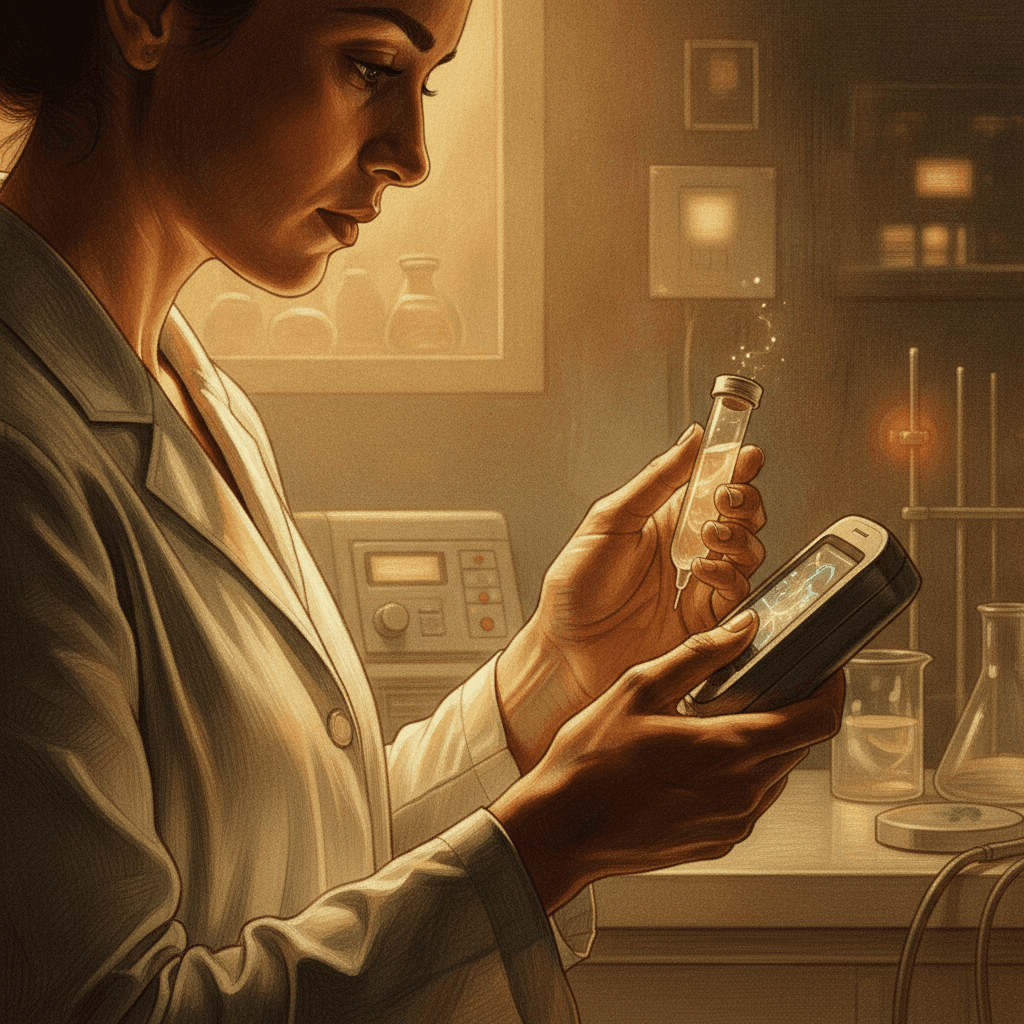
What if doctors could find out which specific bacteria are making you sick in minutes, not days? That future is closer than you think, thanks to a clever new sensor. Instead of waiting for lab cultures that can take a long time, this device uses genetic snippets to instantly identify invaders.
This innovation could mean the difference between a minor infection and a serious one, especially for things like urinary tract infections (UTIs) that need quick, targeted treatment. Researchers are already testing it with real human samples, showing it can find common bacteria in urine quickly and accurately.
How a Clever Sensor Catches Germs Fast
This new sensor, called dCARD, works a bit like a molecular detective, specifically looking for genetic fingerprints of bacteria. It uses a technology called CRISPR/dCas9, which you might know as a gene-editing tool, but here it's used differently, like tiny, programmable magnets. These "magnets" are tuned to stick only to very specific DNA sequences from certain bacteria.
When these CRISPR/dCas9 "magnets" find their target bacterial DNA, they act like tiny bridges. They connect gold nanoparticles – which are microscopic flecks of gold, like glitter – to other gold nanoparticles. This connection causes the gold particles to clump together.
This clumping of gold particles then creates two distinct signals. First, the solution changes color, shifting from red to purple, a visual cue you can see with your own eyes. Second, the clumping creates what scientists call "Raman hotspots," which are areas that dramatically amplify light signals, allowing a small, handheld device to confirm the presence of bacteria and even quantify how much is there. It’s like a tiny, sensitive tripwire for germs.

Real-World Tests Are Showing Promise
The dCARD biosensor isn't just a lab curiosity; it's already proving its chops in real-world scenarios. Researchers from institutions like Shanghai Jiao Tong University have demonstrated its effectiveness by detecting specific bacteria in actual urine samples from patients. This isn't theoretical; it's hands-on validation.
The system is incredibly sensitive, able to spot as few as 10 colony-forming units (CFU) per milliliter – that's like finding a single, tiny speck of dust in a whole swimming pool. Plus, it can tell the difference between harmful bacteria and harmless ones, meaning you get a precise diagnosis without worrying about false alarms. This specificity is key because it means doctors can prescribe the right antibiotic the first time, preventing unnecessary medication or ineffective treatments. You can learn more about how accurate medical diagnosis makes a difference in a simple sensor finds hidden sickness faster.
Why This Means Faster Treatment for You
One of the biggest problems with current bacterial detection is the waiting game. Often, you have to wait days for laboratory cultures to grow enough bacteria to identify them. That delay means you might be on a broad-spectrum antibiotic that isn't quite right or, worse, your infection could worsen.
But with dCARD, the entire process, from sample to diagnosis, can take less than 30 minutes. Think about that: you could walk into a clinic with symptoms, and before you leave, the doctor knows exactly what's going on and what specific bacteria they need to target. This speed is a game-changer for conditions like sepsis, where every hour counts, or for routine infections where getting the right treatment quickly reduces discomfort and speeds recovery. How your body's defenders get fooled by sickness explains why targeting specific invaders is so important.
A surprising fact: around 1.27 million deaths globally in 2019 were directly attributable to antimicrobial resistance, often due to delayed or incorrect diagnoses. Imagine how many lives could be saved by identifying the exact bacteria in under an hour.
What's Next for This Rapid Detection
Researchers are still refining the dCARD system, making it even more robust and user-friendly. The goal is to evolve it into a versatile, field-deployable screening tool that doctors could use almost anywhere – in a rural clinic, an emergency room, or even in developing nations where advanced lab facilities are scarce.
If trials continue to go well and regulatory approvals move forward efficiently, you could see this kind of rapid bacterial detection becoming standard practice within the next 5-10 years. It will mean quicker relief for you, fewer unnecessary antibiotics, and a more precise approach to fighting infections, making your health care much more responsive. This kind of rapid, precise information is vital for how AI is finally learning your body's secret signals.
Key Takeaways
- A new sensor, dCARD, can identify specific bacterial infections in under 30 minutes using genetic "fingerprints."
- It works by clumping gold nanoparticles, causing a color change and a measurable light signal.
- Faster diagnosis means doctors can prescribe the right treatment sooner, potentially saving lives and reducing antibiotic resistance.
Frequently Asked Questions
What is a dCARD biosensor? A dCARD biosensor is a rapid device that detects specific bacteria in minutes. It uses CRISPR/dCas9 technology to identify bacterial DNA, changing color and emitting a signal for quick diagnosis.
How quickly does dCARD detect bacteria? The dCARD biosensor can identify target bacteria from a sample in less than 30 minutes. This significantly reduces the waiting time compared to traditional laboratory methods that take days.
Why is rapid bacterial detection important? Rapid detection helps doctors prescribe the correct antibiotics faster, preventing the worsening of infections and reducing the use of broad-spectrum antibiotics, which helps combat antibiotic resistance.
Editorial note: The scientific findings presented in this article are sourced exclusively from published research papers, peer-reviewed studies, certified inventions, and registered patent filings. Images generated by AI.
Stay ahead of the curve
The science that shapes tomorrow — in your inbox every week
The scientific findings presented in our articles are sourced from published research papers, peer-reviewed studies, certified inventions, and registered patent filings. Subscribe for focused weekly coverage, hands-on explainers, and practical insights that help you stay curious — no jargon, no noise.
By subscribing, you agree to receive newsletter and marketing emails, and accept our Terms of Use and Privacy Policy. You can unsubscribe anytime.
Health, Mental Health & Neuroscience
European health correspondent exploring the science of the human brain and behaviour.
View full profile →