Your Body's Electrical Maps Will Soon Be Clearer
Imagine a tiny boat trying to map a complex river in a storm, guided only by distant whistles. That's a bit like how doctors navigate inside your heart to fix electrical problems today. New robotic tools are making this vital task much more precise, helping ensure treatments are safer and more effective.

Have you ever tried to pinpoint a tiny, flickering light in a pitch-black room? It’s incredibly difficult, especially if the light keeps moving. That’s a good way to think about what doctors face when trying to fix electrical misfires in your heart, known as arrhythmias. These conditions cause your heart to beat too fast, too slow, or irregularly, and can lead to serious health issues like stroke or heart failure. The standard treatment, called ablation, involves using a thin tube (a catheter) to find and gently burn the problematic tissue causing the misfire.
The challenge? Getting that catheter to exactly the right spot. Current methods rely on doctors manually pushing and rotating the catheter, often feeling for changes in resistance. It’s highly skilled work, but it lacks the kind of pinpoint accuracy you’d ideally want when working inside something as vital and delicate as your beating heart. You want to make sure the "burn" is just right—enough to fix the problem, but not so much that it damages healthy tissue. This careful balance is harder to achieve with less direct control.
Robots Are Bringing New Control to Heart Procedures
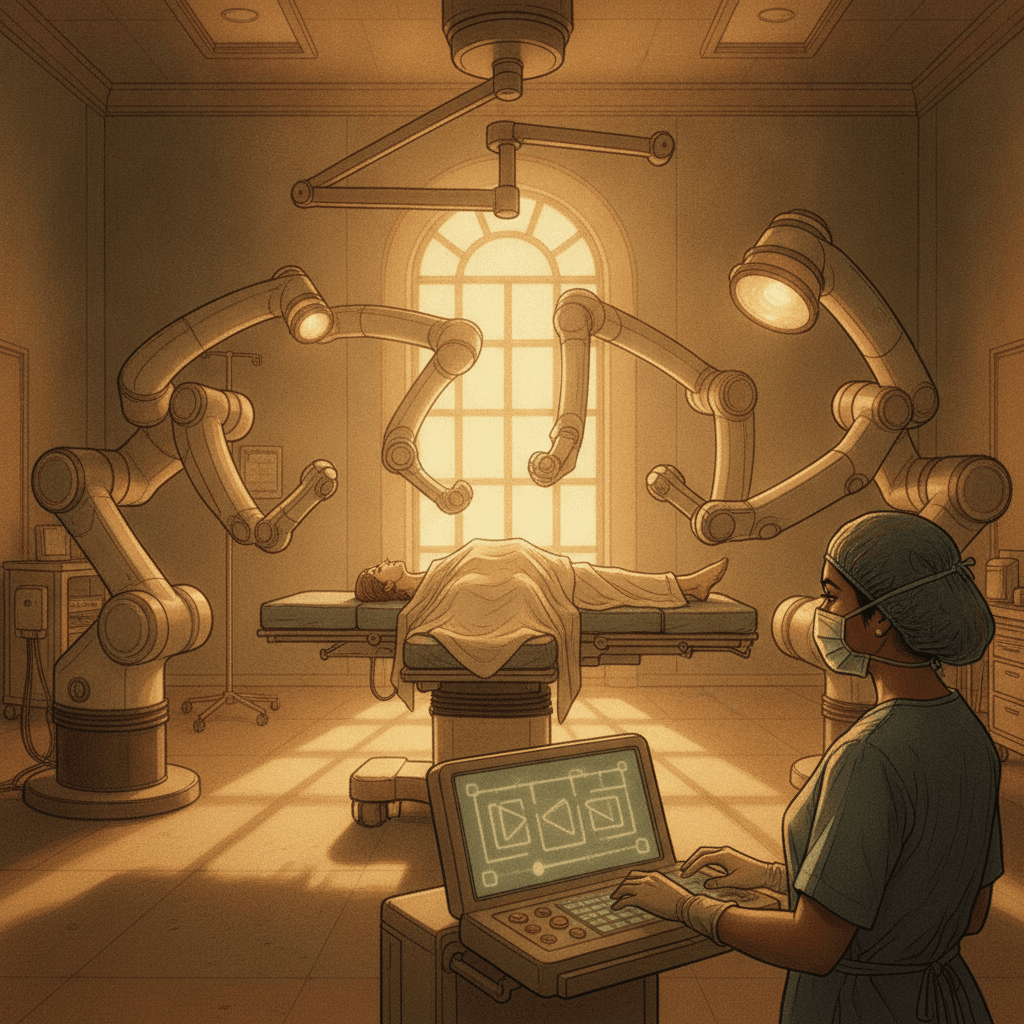
Now, imagine guiding that tiny boat with a joystick, not just distant whistles. That's what a new generation of robotic magnetic navigation (RMN) systems promises for heart ablation. These systems use powerful external magnets to steer the catheter inside your heart, much like how a magnet can move a paperclip on a table, but with incredibly fine control. This means doctors aren't physically pushing the catheter; they're essentially "remote controlling" it.
The real magic happens with something called contact force. Think of it like a chef pressing a knife against a vegetable: too light, and you don't cut; too hard, and you might slip or damage the cutting board. In ablation, doctors need to apply just the right amount of pressure (contact force) with the catheter tip against the heart tissue to create an effective lesion, which is the tiny scar that blocks the bad electrical signals. Too little force, and the procedure might fail, requiring you to come back for another one. Too much, and there’s a higher risk of complications.
Researchers, like those in a study published in PubMed, are specifically evaluating how well these robotic systems can maintain this precise contact force. They're comparing different types of catheters and various settings to see which combinations give the best, most consistent pressure. This detailed testing is crucial for refining the technology before it becomes widespread. One surprising fact: a human hand can only consistently maintain a contact force within a much wider range than a robot can, making the robot inherently more precise for delicate tasks like this.
Making Heart Treatments Safer and More Effective
This improved control over contact force means several things for you. First, it could lead to higher success rates for ablation procedures, potentially reducing the need for repeat treatments. If the "burn" is just right the first time, your heart is more likely to stay in rhythm. Second, it offers the potential for greater safety. By minimizing excessive force, the risk of complications like perforating the heart wall (poking a hole through it) or damaging surrounding structures is significantly lowered.
Think of it as having an incredibly steady hand guiding the procedure, even steadier than the most experienced human surgeon, especially in tiny, tricky areas. While the robotic systems aren't widely implemented in every hospital yet, the continued research and refinement are pushing them closer to being a standard tool. It's not a matter of if, but when, these precision tools will be common in cardiac care, potentially within the next 5-10 years as the technology matures and becomes more accessible.
This focus on precise control isn’t just limited to heart procedures. Similar principles are being explored in other areas of medicine where delicate navigation is key. For instance, understanding how to apply precise forces with tiny tools could also improve how scientists build AI-controlled body parts, ensuring they integrate perfectly with existing biological structures. Ultimately, these innovations mean less uncertainty and more confidence in procedures that directly impact your heart's health and your quality of life.
The Future of Minimally Invasive Care
The drive for greater precision doesn't stop with heart catheters. It's a foundational step towards a future where many complex medical procedures become less invasive and more predictable. Imagine doctors being able to deliver medicines or repair tiny tissues with unprecedented accuracy, minimizing collateral damage and speeding up recovery times. For you, this means potentially shorter hospital stays, fewer side effects, and a quicker return to your normal routine after a procedure. It's all about making intricate interventions as gentle and effective as possible for your body. The research into bacteria's secret messengers also relies on incredibly precise targeting, highlighting this wider trend in medical science.
Key Takeaways
- Robotic magnetic navigation offers much more precise control over catheters inside your heart than manual methods.
- Precise "contact force" is crucial for effective and safe heart ablation, reducing the risk of complications and failed procedures.
- This technology promises higher success rates and improved safety for treating heart rhythm problems in the coming decade.
Frequently Asked Questions
What is robotic magnetic navigation? It's a system where external magnets steer a thin tube (catheter) inside your heart to fix electrical problems. Doctors use a joystick to control the catheter's movement without direct physical contact.
How does precise contact force help in heart procedures? Maintaining exact pressure when touching heart tissue ensures the treatment (ablation) is effective without causing too much damage. This means higher success rates and fewer complications.
When will this technology be widely available? While still evolving, robotic magnetic navigation systems are expected to become more common in cardiac care within the next 5-10 years as research refines them further and they become more accessible.
Editorial note: The scientific findings presented in this article are sourced exclusively from published research papers, peer-reviewed studies, certified inventions, and registered patent filings. Images generated by AI.
Stay ahead of the curve
The science that shapes tomorrow — in your inbox every week
The scientific findings presented in our articles are sourced from published research papers, peer-reviewed studies, certified inventions, and registered patent filings. Subscribe for focused weekly coverage, hands-on explainers, and practical insights that help you stay curious — no jargon, no noise.
By subscribing, you agree to receive newsletter and marketing emails, and accept our Terms of Use and Privacy Policy. You can unsubscribe anytime.
Biotech, Genetics & Precision Medicine
Biotech correspondent following the genetic revolution reshaping how disease is diagnosed and treated.
View full profile →