Bacteria's Secret Messengers Could Fight Sickness
Imagine a tiny natural package, released by bacteria, that could deliver medicine right where it's needed. This isn't just a hopeful idea; real research shows these microscopic bubbles are powerful communicators with surprising medical potential.
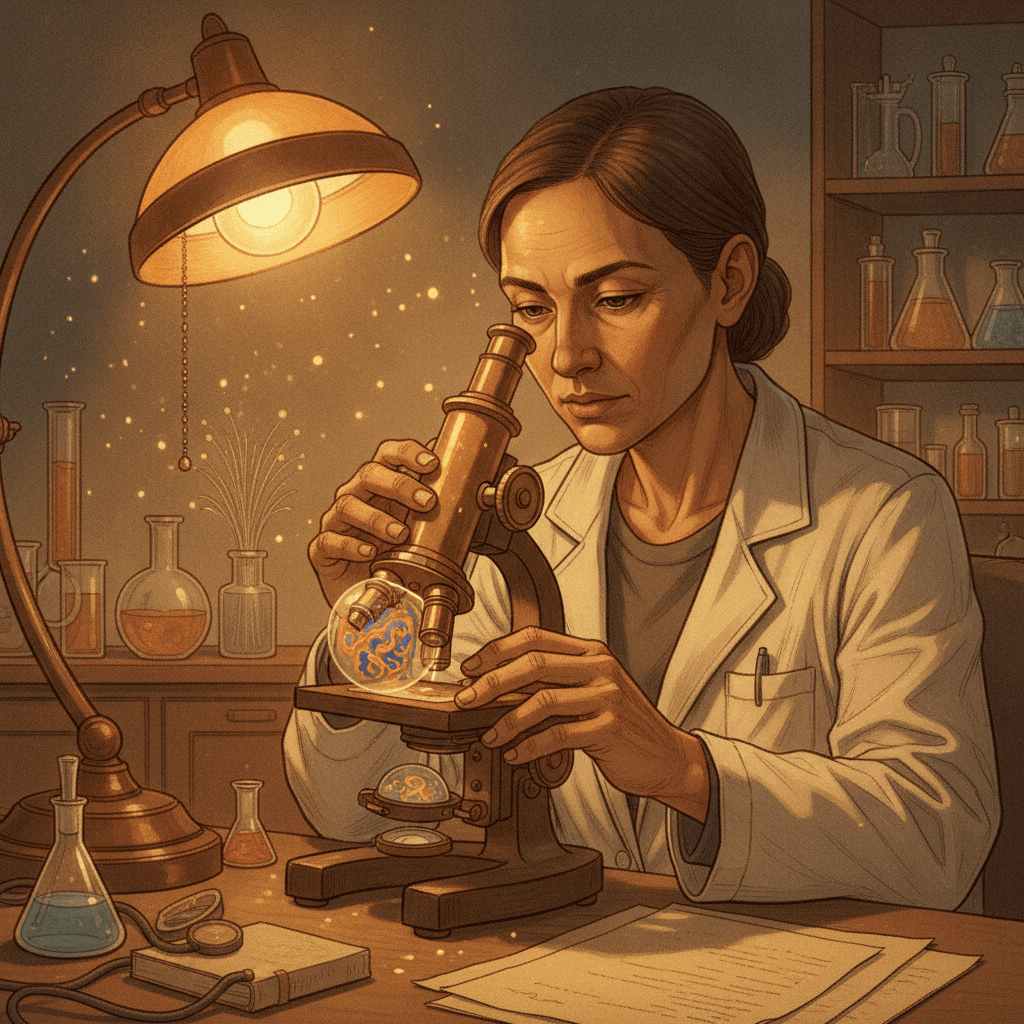
Your body is a bustling metropolis, and bacteria are some of its most active residents, constantly sending messages. But what if those tiny messages, wrapped in spherical envelopes called outer membrane vesicles (OMVs)—like microscopic mail pouches carrying proteins, sugars, and genetic instructions—could be reprogrammed to work for us? This isn't a far-off dream; the latest science suggests these bacterial couriers could become powerful new tools against sickness.
You see, for years, we’ve mostly seen bacteria, especially E. coli, as troublemakers. This particular bacterium, Escherichia coli, is a common type that lives in your gut but can also cause serious infections. But what's surprising is that even the "bad" bacteria are incredibly sophisticated communicators, constantly releasing these OMVs into their surroundings. These tiny bubbles are essentially miniature versions of the bacterial cell wall, packed with everything from enzymes (molecular tools that speed up chemical reactions) to genetic material.
This Isn't Sci-Fi: Here's the Real Evidence
This amazing potential is being seriously explored by researchers like those highlighted in a recent review in Europe PMC, examining the roles of E. coli OMVs. They're not just theoretical; studies show these vesicles are deeply involved in how bacteria cause disease, how they spread resistance to antibiotics, and how they interact with your body’s immune system. Think of it this way: bacteria aren't just invading; they're sending out reconnaissance drones and supply drops long before the main attack.
These OMVs are like tiny, biological drones, carrying specific cargo from the bacterium. When a bacterium wants to send a message or deliver a harmful payload, it doesn't just spew out random molecules. Instead, it meticulously packages these bioactive components—proteins, lipopolysaccharides (sugars linked to fats), and nucleic acids (the building blocks of DNA and RNA)—into these neat, spherical vesicles. They then float off to influence other bacteria or your own cells. This precise packaging is why they're so interesting for medicine.
How These Tiny Packages Work
OMVs work by fusing with other cells, much like a tiny soap bubble merging with a larger one, or by releasing their contents nearby. This delivery system is incredibly efficient and specific, which is why scientists are looking at harnessing it. Imagine if you could load these natural delivery trucks with medicines instead of bacterial toxins. For example, if you want to deliver a specific drug to a cancer cell, an OMV might be able to target it more precisely than traditional methods, which often affect healthy cells too.
The inherent ability of these vesicles to interact with host cells and evade certain immune responses makes them appealing. It’s a bit like a covert operative who already knows the secret passages and doesn’t trigger the alarms. Researchers are exploring how to strip these OMVs of their harmful bacterial components and then load them with beneficial cargo, turning a weapon into a medicine. This could involve using them as tiny vaccination platforms, carrying parts of a virus or bacterium to train your immune system, or even as miniature drug delivery systems for cancer therapy, targeting tumors directly.
What Scientists Still Need to Prove
Of course, the path from lab discovery to widespread treatment is long. Skeptics rightly point out that we need to fully understand how to modify these OMVs to be completely safe and effective for human use. This means making sure they don't trigger unwanted immune reactions and that their modified contents actually reach the intended target cells in the right concentration. We'd also need to figure out how to produce them on a large scale, which is a significant manufacturing challenge for any biological agent.
One surprising fact: these OMVs are so tiny, they're typically just 20 to 200 nanometers in size, roughly 1/500th the width of a human hair. Despite their minute size, they contain enough information to alter the behavior of much larger cells. This scale also presents challenges for isolation and purification, ensuring that only the therapeutic OMVs are used.
The Bigger Picture: A New Era for Medicine
If we can truly harness these tiny bacterial couriers, the implications are huge. Imagine a future where vaccines are more effective, requiring smaller doses because the delivery system is so optimized. Or consider targeted cancer therapies that deliver chemotherapy agents directly to tumor cells, minimizing side effects. This could open new doors for how AI is finally learning your body's secret signals by helping us understand precise molecular interactions, or even for developing new methods to fight antibiotic-resistant infections, which are a growing global concern. You can read more about how other bacteria are being engineered to do good things for agriculture in articles about how soil bacteria fix nitrogen.
This approach also highlights a profound shift in how we view the microbial world. Instead of just seeing bacteria as threats to be eliminated, we're beginning to understand their sophisticated communication systems and adapt them for our benefit. It turns out, some of the answers to our biggest medical problems might be hiding in plain sight, carried by the smallest inhabitants of our world. A simple sensor finds hidden sickness faster could someday be designed to detect these therapeutic OMVs in the body.
Myth vs. Reality
Myth: All bacteria are inherently bad and only cause disease. Reality: While many bacteria are pathogens, most are harmless or even beneficial. Even pathogenic bacteria communicate through complex mechanisms like OMVs, which can be reprogrammed for therapeutic uses.
We are truly just beginning to scratch the surface of these microscopic marvels. The sheer elegance of a bacterium releasing a perfectly packaged message, and our ability to intercept and repurpose that system, speaks volumes about the incredible adaptability of life—and the ingenuity of science.

Key Takeaways
- Bacteria naturally release tiny, packaged messengers called OMVs, which play a key role in how infections spread and resist drugs.
- Scientists are actively exploring how to re-engineer these natural OMVs to deliver vaccines or drugs directly to target cells, like cancer.
- This approach could lead to more effective, targeted treatments with fewer side effects, but significant research into safety and production is still needed.
Frequently Asked Questions
What are outer membrane vesicles (OMVs)? OMVs are tiny, spherical pouches released by bacteria, made of their outer membrane and packed with various molecules like proteins and DNA. They act as natural messengers, influencing other cells.
How could OMVs be used in medicine? Scientists aim to remove harmful bacterial components from OMVs and fill them with medicines. This could create targeted delivery systems for vaccines, cancer drugs, or treatments for antibiotic-resistant infections.
Are OMV-based therapies available now? No, OMV-based therapies are currently in the research and development phase. Scientists are working on ensuring their safety, efficacy, and large-scale production before they can be used clinically.
Editorial note: The scientific findings presented in this article are sourced exclusively from published research papers, peer-reviewed studies, certified inventions, and registered patent filings. Images generated by AI.
Stay ahead of the curve
The science that shapes tomorrow — in your inbox every week
The scientific findings presented in our articles are sourced from published research papers, peer-reviewed studies, certified inventions, and registered patent filings. Subscribe for focused weekly coverage, hands-on explainers, and practical insights that help you stay curious — no jargon, no noise.
By subscribing, you agree to receive newsletter and marketing emails, and accept our Terms of Use and Privacy Policy. You can unsubscribe anytime.
Battery Materials, Energy Storage Chemistry & Electric Vehicle Technology
Battery materials journalist covering the chemistry behind the electric revolution — and why the next decade of progress depends on what's inside the cell, not outside it.
View full profile →