AI Could Build Your Better Body Parts
Imagine a future where your doctor designs personalized treatments with a computer. New research shows artificial intelligence is learning to custom-build gene therapies, potentially offering safer and more effective cures for complex diseases.
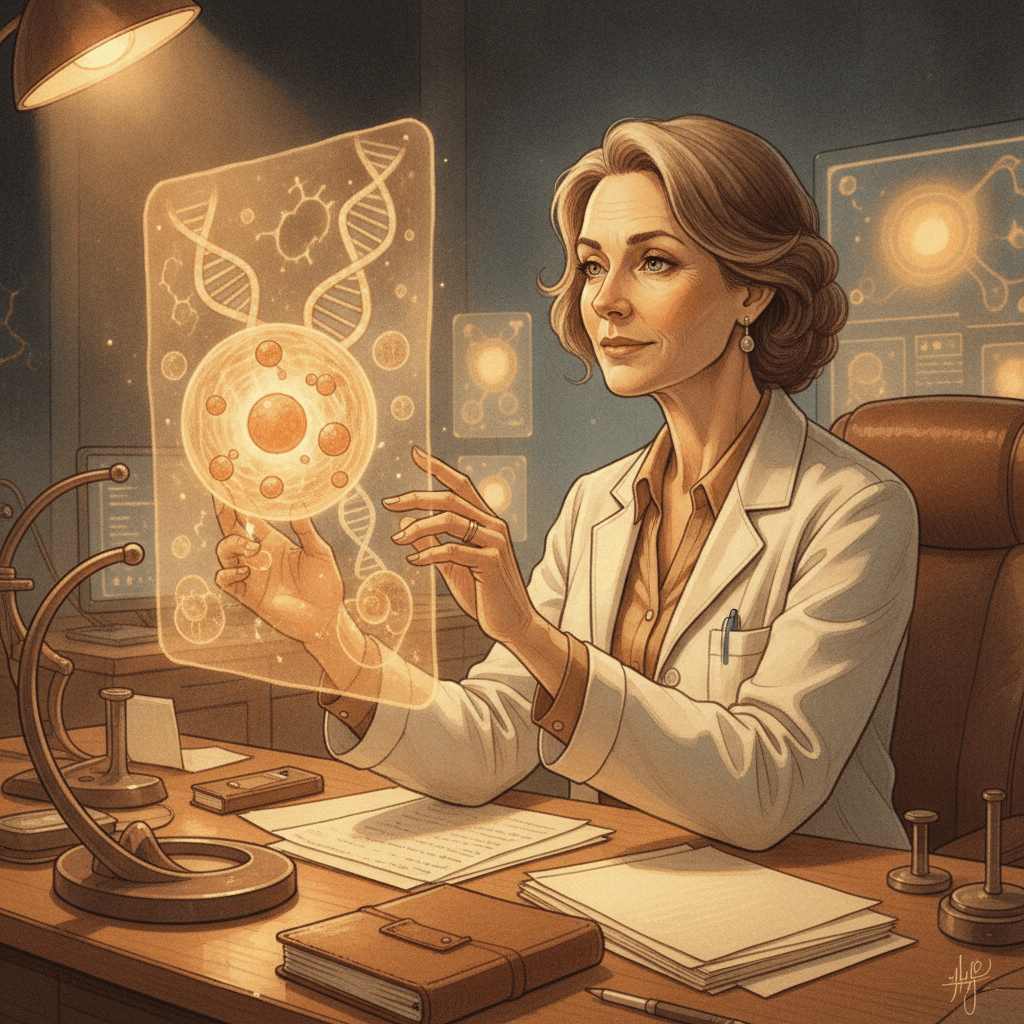
Could a computer one day help craft your perfect cure, tailored precisely to your unique biology? That future is closer than you think, as artificial intelligence (AI) begins to learn the complex language of your genes to design personalized treatments. This isn't science fiction; researchers are already using AI to transform how we approach medicine, moving from broad treatments to highly specific ones.
Traditionally, finding new therapies has been a bit like trying to find a specific key in a giant, dark warehouse. You'd try key after key, often with many failed attempts, hoping one would open the right lock. Now, AI acts as a super-smart librarian, not just searching faster but also predicting which keys are most likely to work for your specific lock. This predictive power is what makes AI a genuinely powerful partner in medicine, especially for complex genetic conditions.
Crafting Gene Therapies With Digital Precision
AI is extensively applied throughout the entire gene therapy development process. Think of gene therapy as a tiny repair crew sent into your body to fix faulty instructions in your DNA, the instruction manual for every cell. These faulty instructions can cause a range of illnesses, from cystic fibrosis to certain cancers. To send in the repair crew, you need a safe vehicle—often a harmless virus—that can deliver the correct genetic information to the right cells.
Designing these vehicles, known as vectors, and ensuring they don't cause unwanted immune reactions has been a huge hurdle. This is where AI steps in, predicting how your body's immune system, like a vigilant security guard, might react to the incoming vehicle before it's even made. Scientists at institutions like the University of Cambridge and MIT are already using machine learning, a type of AI that learns from data without explicit programming, to sift through vast amounts of genetic data. This helps identify which tiny pieces of genetic code, called variants, are actually causing disease, rather than just being harmless differences. This precision helps in designing safer and more effective treatments by minimizing unwanted side effects and improving the secret shield against hidden sickness that your body naturally employs.
Learning From Billions of Biological Clues
How does AI get so good at this? It's all about data. Our bodies are incredibly complex, generating vast amounts of biological information, from our unique genetic code (our genome) to the proteins our cells produce (our proteome). AI systems, particularly deep learning models which are like sophisticated digital brains, can analyze what we call "multi-omics data." This is like giving the AI every single blueprint, wiring diagram, and maintenance log for your entire biological system, all at once.
One surprising fact is that AI can now predict the optimal way to use CRISPR, a gene-editing tool often described as biological "scissors" that can cut out and replace specific sections of DNA. It can identify the exact spot to cut with greater accuracy than human researchers alone. This level of precision is crucial because even tiny errors can have big consequences when you're editing the fundamental instructions of life.
The Power of Digital Twins and Generative AI
If this works, we could see a complete shift in medicine. Imagine having a "digital twin" of your own body – a virtual, highly detailed model that AI uses to test different gene therapies before they ever touch you. This isn't science fiction anymore; it's a field of active research. Generative AI, the same kind of AI that can create images or text, is also being used to design new proteins and vectors from scratch, exploring possibilities that human scientists might never conceive.
This means doctors could potentially stratify patients, grouping them not just by their illness, but by their specific genetic makeup, to offer a truly personalized medicine approach. This is like tailoring a suit precisely to your measurements instead of offering a one-size-fits-all garment. The process of manufacturing these therapies could also become much more efficient. While this vision is still likely 5-10 years away for widespread clinical use, the foundational work is happening now.
The collaboration needed for this future is immense, requiring computational scientists, biologists, doctors, industry, and regulatory bodies to work together. But the promise is extraordinary: safe, highly effective, and deeply personalized treatments for diseases that are currently difficult to manage. This offers a new hope for how bacteria's secret messengers could fight sickness more effectively.
What Comes Next for AI in Medicine?
The skeptics rightly ask about safety and ethics. AI-designed therapies need rigorous testing to ensure they are both effective and completely safe, avoiding unintended side effects or off-target edits to the genome. Regulatory agencies will need to adapt quickly to assess and approve these new types of treatments. The journey from AI concept to approved medicine is long, but the tools AI provides accelerate every step.
If successful, this approach could reduce drug development costs and speed up delivery of life-saving treatments. It could even make manufacturing more predictable, like a smart factory anticipating demand for how your robots finally understand what you want. This isn't just about faster research; it’s about a future where your genetic code is the blueprint for your cure.

Key Takeaways
- AI is shifting gene therapy from trial-and-error to a precise, data-driven design process for personalized treatments.
- It analyzes vast biological data, identifies disease-causing genetic variants, and optimizes gene-editing tools like CRISPR with high accuracy.
- The future could involve "digital twins" of patients and generative AI designing new therapies, though widespread clinical application is years away.
Frequently Asked Questions
What is AI's role in gene therapy? AI helps design precise gene therapies by identifying disease genes, interpreting genetic variants, optimizing gene-editing tools like CRISPR, and engineering safe delivery vehicles that avoid immune reactions.
How does AI personalize treatments? AI analyzes a patient's unique multi-omics data (genes, proteins, etc.) to create a "digital twin." This virtual model allows AI to test and tailor gene therapies, ensuring maximum effectiveness and minimal side effects for that individual.
When will AI-designed gene therapies be available? While research is ongoing and promising, widespread clinical use of AI-designed gene therapies is likely still 5-10 years away. Significant testing and regulatory approvals are needed before they become standard treatments.
Editorial note: The scientific findings presented in this article are sourced exclusively from published research papers, peer-reviewed studies, certified inventions, and registered patent filings. Images generated by AI.
Stay ahead of the curve
The science that shapes tomorrow — in your inbox every week
The scientific findings presented in our articles are sourced from published research papers, peer-reviewed studies, certified inventions, and registered patent filings. Subscribe for focused weekly coverage, hands-on explainers, and practical insights that help you stay curious — no jargon, no noise.
By subscribing, you agree to receive newsletter and marketing emails, and accept our Terms of Use and Privacy Policy. You can unsubscribe anytime.
AI Ethics, Algorithmic Bias & Responsible Computing
Technology ethicist and journalist covering the human consequences of the decisions embedded in algorithms and AI systems.
View full profile →