A Simple Spray Helps Corn Survive Salt
Imagine fields of corn thriving in salty soil where nothing grew before. This isn't a distant dream; scientists are using a common plant chemical to make it happen, boosting global food security. Discover how this simple solution could make farming possible in new, challenging places.

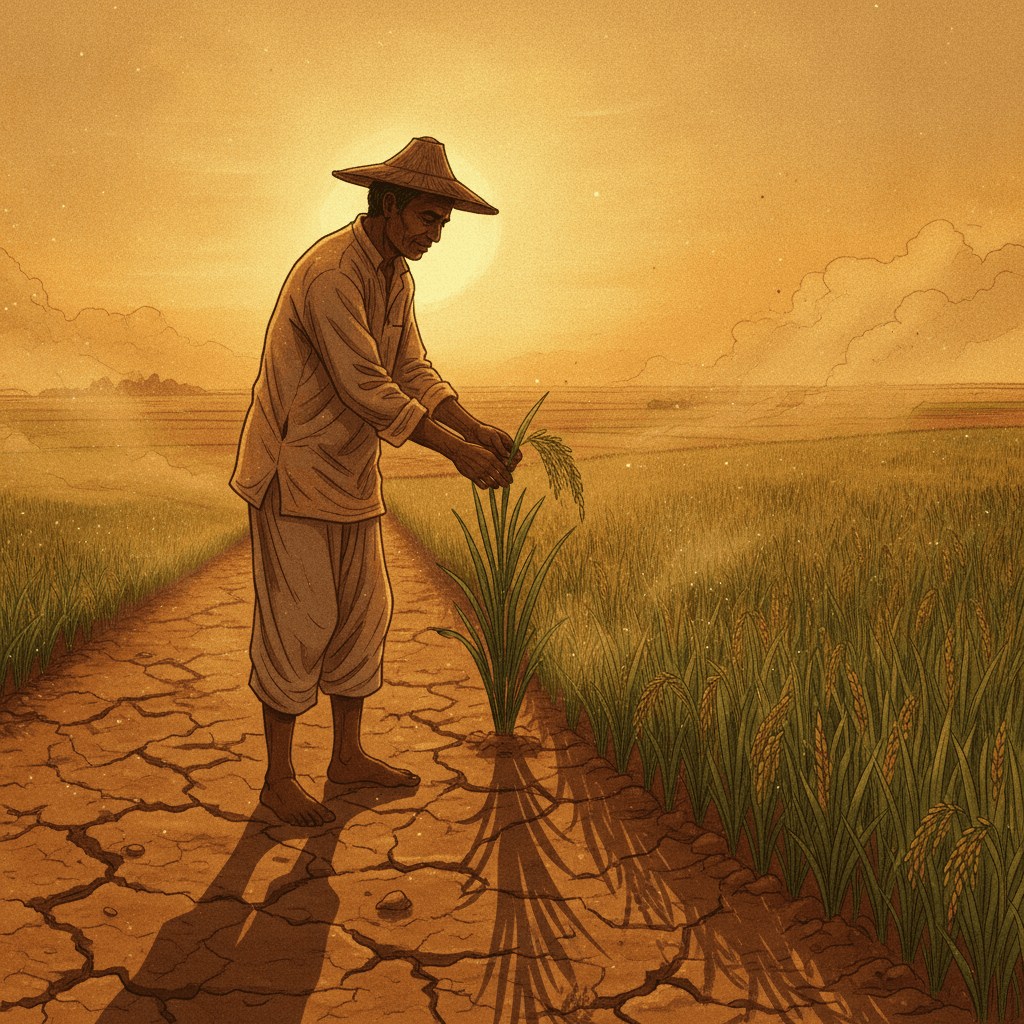
Your breakfast cereal, your dinner plate, even the fuel in your car often starts as corn. But imagine if the very ground it needs to grow became toxic. Salty soil, a problem for about 20% of irrigated land worldwide, is a silent killer of crops, turning fertile fields into barren land. This isn't sci-fi; it's a looming reality for millions of farmers.
The good news? A team of researchers from Pakistan, led by Dr. Muhammad Hamza from the University of Agriculture, Faisalabad, published a study in Environmental Science and Pollution Research showing how a common plant chemical could be the answer. They found that spraying corn plants with phenylalanine, an amino acid that's like a building block for proteins in both plants and humans, dramatically boosts their ability to withstand salt stress. This research, available on Europe PMC, offers a tangible, science-backed approach to a widespread agricultural challenge.
How a Natural Chemical Fortifies Corn Against Salt
When plants encounter salty soil, it's like trying to drink incredibly salty water – their cells struggle to take in nutrients and hydrate properly. This stress also creates harmful molecules, called reactive oxygen species, which act like tiny, uncontrolled fires inside the plant's cells, damaging everything from their leaves to their roots. This process is similar to how rust eats away at metal, only it's happening at a cellular level inside a living plant.
Phenylalanine steps in as a cellular bodyguard. The researchers found that applying a 40 mM solution of phenylalanine (that's 40 millimoles per liter, a measurement of concentration) to corn leaves significantly improved their growth and photosynthesis. Photosynthesis, the process by which plants convert sunlight into energy, saw an impressive 32% increase in chlorophyll a and a 47% increase in chlorophyll b, crucial pigments for capturing light. It’s a bit like giving the plant a specialized shield that helps it maintain its internal balance and fight off the microscopic damage from salt. This helps protect the plant from cellular damage, similar to how your body's defenders get fooled by sickness if they don't have the right signals.
The study showed that phenylalanine reduced stress indicators like MDA (malondialdehyde) by 10% and H2O2 (hydrogen peroxide) by 19%. Think of MDA and H2O2 as smoke detectors for cell damage; less smoke means less cellular fire. What’s truly surprising is how effective this simple molecule is, turning on the plant's natural antioxidant systems – like POD (peroxidase) and CAT (catalase) – by 38% and 36% respectively, which are enzymes that neutralize these harmful molecules.

Why This Simple Spray Matters for Your Dinner Plate
Skeptics might wonder if a spray can truly solve a problem as complex as soil salinity. The key lies in phenylalanine's role as a precursor, a starting molecule, for many important compounds in plants. It doesn't just act as an antioxidant itself; it helps the plant make more of its own defense compounds. The critical next steps would involve large-scale field trials to confirm these lab and greenhouse results in diverse soil conditions and to optimize the timing and frequency of application. We'd also need to see if this works on other vital crops beyond corn.
If this approach scales, the second-order effects could be enormous. Farmers currently facing declining yields due to salinization could reclaim vast tracts of land. This could mean more food grown on less land, which is vital as the global population grows. It might even help reduce the pressure to clear forests for new farmland. Imagine being able to grow more food in places like Pakistan, India, and parts of the Middle East, where salinity is a major issue. This could lead to a more stable food supply and lower prices for everyday staples, putting more food on your table. You can already see how technologies like your farm fields will grow more with less are changing agriculture.
This research reminds us that sometimes the most powerful solutions aren't complex engineering marvels, but elegant biological mechanisms already present in nature. By understanding and subtly nudging these natural processes, we can unlock incredible resilience.
The Future of Farming in Changing Climates
The ability to make crops more tolerant to environmental stresses like salinity isn't just about current problems; it's about preparing for the future. Climate change is expected to exacerbate salinity issues in many regions through rising sea levels and altered rainfall patterns. A simple, affordable spray like phenylalanine offers a scalable, sustainable strategy for agriculture to adapt. It could empower farmers in vulnerable regions, ensuring food security for millions. This simple discovery highlights how deeply interconnected plant biochemistry is with our daily lives, transforming the ordinary into something truly extraordinary.
Key Takeaways
- A simple spray of the amino acid phenylalanine can significantly improve corn's ability to grow in salty soil.
- Phenylalanine enhances the plant's natural defenses, boosting antioxidant production and photosynthesis by up to 47%.
- This approach offers a sustainable, scalable strategy to increase food security in regions impacted by soil salinity.
Frequently Asked Questions
What is phenylalanine's role in plants? Phenylalanine is an amino acid that acts as a precursor for many vital compounds in plants, including those involved in stress defense and structural integrity, helping them build resistance to challenges like salty soil.
How does phenylalanine protect corn from salt? It boosts the corn plant's natural antioxidant systems, which fight off harmful molecules generated by salt stress. This helps the plant maintain its internal balance, grow better, and photosynthesize more effectively even in harsh conditions.
When could farmers start using this spray? While promising, this research is still in earlier stages. Large-scale field trials are needed to confirm effectiveness across different environments, so widespread adoption by farmers is likely several years away, perhaps 5-10 years.
Editorial note: The scientific findings presented in this article are sourced exclusively from published research papers, peer-reviewed studies, certified inventions, and registered patent filings. Images generated by AI.
Stay ahead of the curve
The science that shapes tomorrow — in your inbox every week
The scientific findings presented in our articles are sourced from published research papers, peer-reviewed studies, certified inventions, and registered patent filings. Subscribe for focused weekly coverage, hands-on explainers, and practical insights that help you stay curious — no jargon, no noise.
By subscribing, you agree to receive newsletter and marketing emails, and accept our Terms of Use and Privacy Policy. You can unsubscribe anytime.
Food Security, Biofortification & Agriculture in the Global South
Development journalist covering the agricultural innovations that can feed a warmer, more crowded world — particularly in Africa and South Asia.
View full profile →