Your Phone Might Soon Spot Animal Sickness
Devastating animal diseases threaten our food supply and economy, but current tests are too slow. Your smartphone could soon detect these sicknesses instantly, protecting billions in farming and preventing outbreaks before they spread.
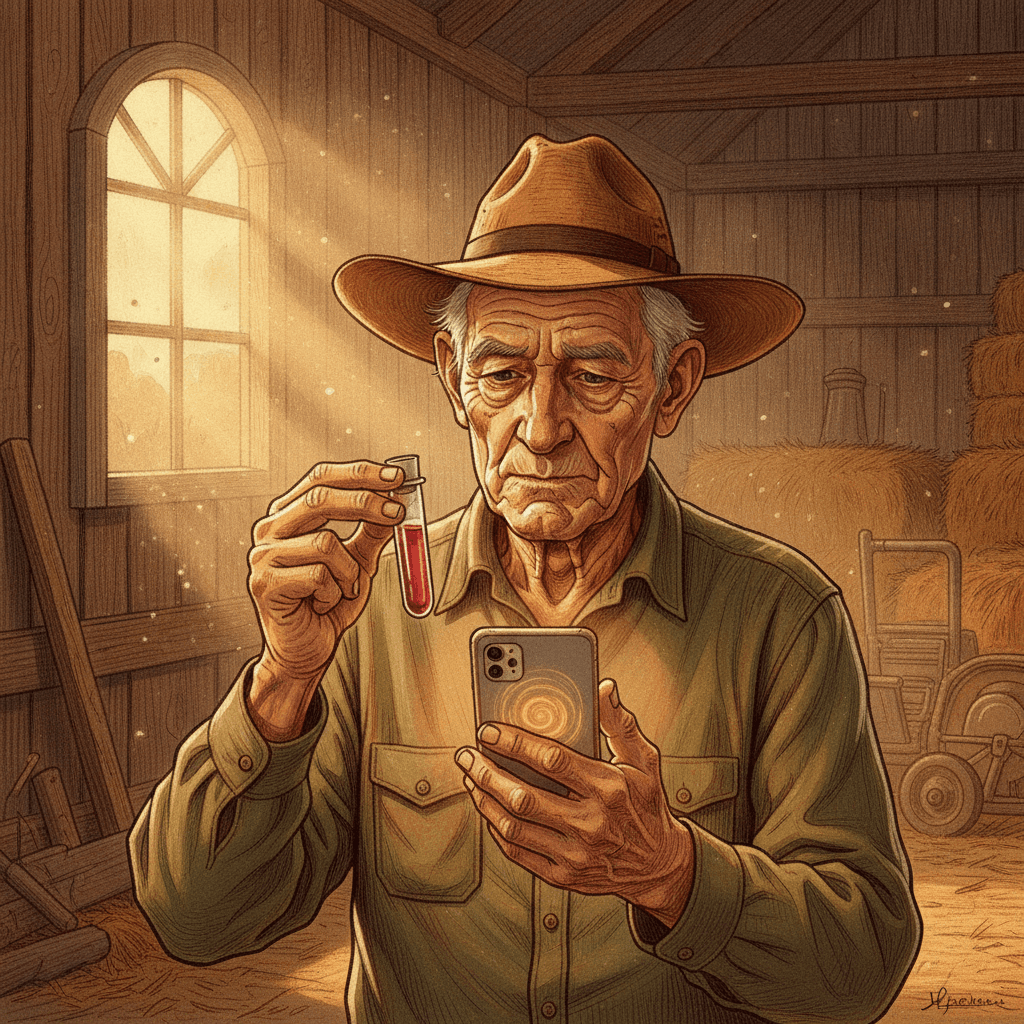
Imagine a world where devastating animal diseases, like African Swine Fever, don't spread unchecked. This isn't science fiction; it’s a near-future reality being built right now by researchers aiming to turn your smartphone into a disease detector, catching sicknesses before they can cause widespread economic and food crises.
This incredible leap comes from the work of researchers like those at the University of Florida, who recently published their findings in PubMed. They've created a portable, affordable system that could quickly identify viruses in animals, right where they live, without needing a high-tech lab. This means faster responses to outbreaks, saving countless animals and protecting our food sources.
How a Simple Color Change Could Save Farms
The core idea is incredibly clever: the system uses tiny gold nanoparticles, which are like microscopic mirrors that change color when something attaches to them. Think of it like this: you have a chef who needs to identify a specific ingredient in a soup. Instead of a complex lab test, they have special tiny magnetic beads that only stick to that one ingredient. If the ingredient is there, the beads clump together, and the soup changes color. The gold nanoparticles work similarly, designed to only "stick" to the DNA of specific viruses, like the African Swine Fever Virus (ASFV).
When the ASFV's genetic material, its DNA, is present, it grabs onto a special probe on these gold nanoparticles. This connection forms a strong bond, a "duplex," that protects the nanoparticles from acid. If the virus isn't there, the nanoparticles are exposed to the acid and clump together, causing a visible color shift from ruby-red to blue. This color change is the signal.

Your Phone Becomes a Lab
What makes this truly practical is the smartphone connection. The team developed a Bio-Analytics App that uses your phone's camera to read this color change. It analyzes the RGB color values – red, green, blue, the basic components of digital color – and converts them into a quantifiable signal. This is like your phone judging the ripeness of a fruit by its exact shade of red. This app then tells you, with high accuracy, if the virus is present.
This method is incredibly specific, identifying the target virus without mistaking it for other bacteria commonly found in animals, ensuring fewer false alarms. The detection limits are also impressive, picking up as few as 285 copies of the virus per reaction, which is on par with what expensive lab tests achieve.
Why This Matters for Your Plate and Wallet
If this technology becomes widely available, the impact would be massive. Consider African Swine Fever, which has already devastated swine populations across Europe, Asia, and the Caribbean. It poses a huge threat to the United States' pork industry, which is worth billions. Current tests take time, allowing the virus to spread further and cause more damage. This new phone-based test costs only about $2 per test, making it accessible even in remote areas.
This means farmers could test their animals right on the farm, getting immediate results and isolating infected animals before the sickness spreads. This isn't just about pigs; the same principle could be applied to detect other animal diseases, protecting poultry, cattle, and even crops. Imagine a future where a quick scan prevents a food shortage or dramatically reduces the price of your bacon because fewer animals were lost. It's a bit like how AI just quietly found your hidden sickness, using smart tech to catch problems early.
The Next Steps for This Smart System
Of course, like all new science, this still needs real-world validation. The next big step is testing these sensors with actual clinical samples from sick animals to ensure they perform just as well outside the controlled lab environment. We’re likely still a few years away from seeing this in widespread use, perhaps 5-10 years for full integration into farming practices.
But the potential is undeniable. This kind of portable, low-cost diagnostic tool could completely change how we manage animal health globally. It’s a powerful example of how clever design and common technology can solve big, complex problems, making our food supply safer and more resilient, one smartphone scan at a time. It also shows how advanced tools are improving many areas, including why your rice is changing for the better or how your crops will soon learn from everything.
Key Takeaways
- Smartphones can become portable disease detectors, using simple color changes in specially prepared gold nanoparticles.
- This technology offers rapid, low-cost (around $2 per test), and highly specific detection of viruses like African Swine Fever.
- It promises to protect global food supplies and prevent economic losses by enabling immediate responses to animal disease outbreaks on farms.
Frequently Asked Questions
What is a plasmonic biosensor? A plasmonic biosensor uses tiny metal particles, usually gold, that interact with light and change color when specific molecules, like a virus's DNA, attach to their surface. This color change signals the presence of the target.
How does this sensor detect African Swine Fever Virus (ASFV)? It uses gold nanoparticles with special probes that only bind to ASFV DNA. If ASFV DNA is present, it protects the nanoparticles from an acid that would otherwise make them clump and change from red to blue, signaling a positive test.
Why is rapid, low-cost detection important for animal diseases? Fast and cheap detection allows farmers to quickly identify and isolate sick animals, preventing widespread outbreaks that can devastate livestock populations, cause massive economic losses, and threaten global food security.
Editorial note: The scientific findings presented in this article are sourced exclusively from published research papers, peer-reviewed studies, certified inventions, and registered patent filings. Images generated by AI.
Stay ahead of the curve
The science that shapes tomorrow — in your inbox every week
The scientific findings presented in our articles are sourced from published research papers, peer-reviewed studies, certified inventions, and registered patent filings. Subscribe for focused weekly coverage, hands-on explainers, and practical insights that help you stay curious — no jargon, no noise.
By subscribing, you agree to receive newsletter and marketing emails, and accept our Terms of Use and Privacy Policy. You can unsubscribe anytime.
Health & Biomedical Innovation
Science journalist and former biomedical researcher covering the frontiers of medicine.
View full profile →