Your Phone Could Secretly Grow Better Food
Imagine knowing exactly what your plants need just by taking a photo. Scientists have found a way your everyday phone can measure plant health, offering a low-cost tool for monitoring crops. This simple method could help farmers optimize yields and reduce waste.
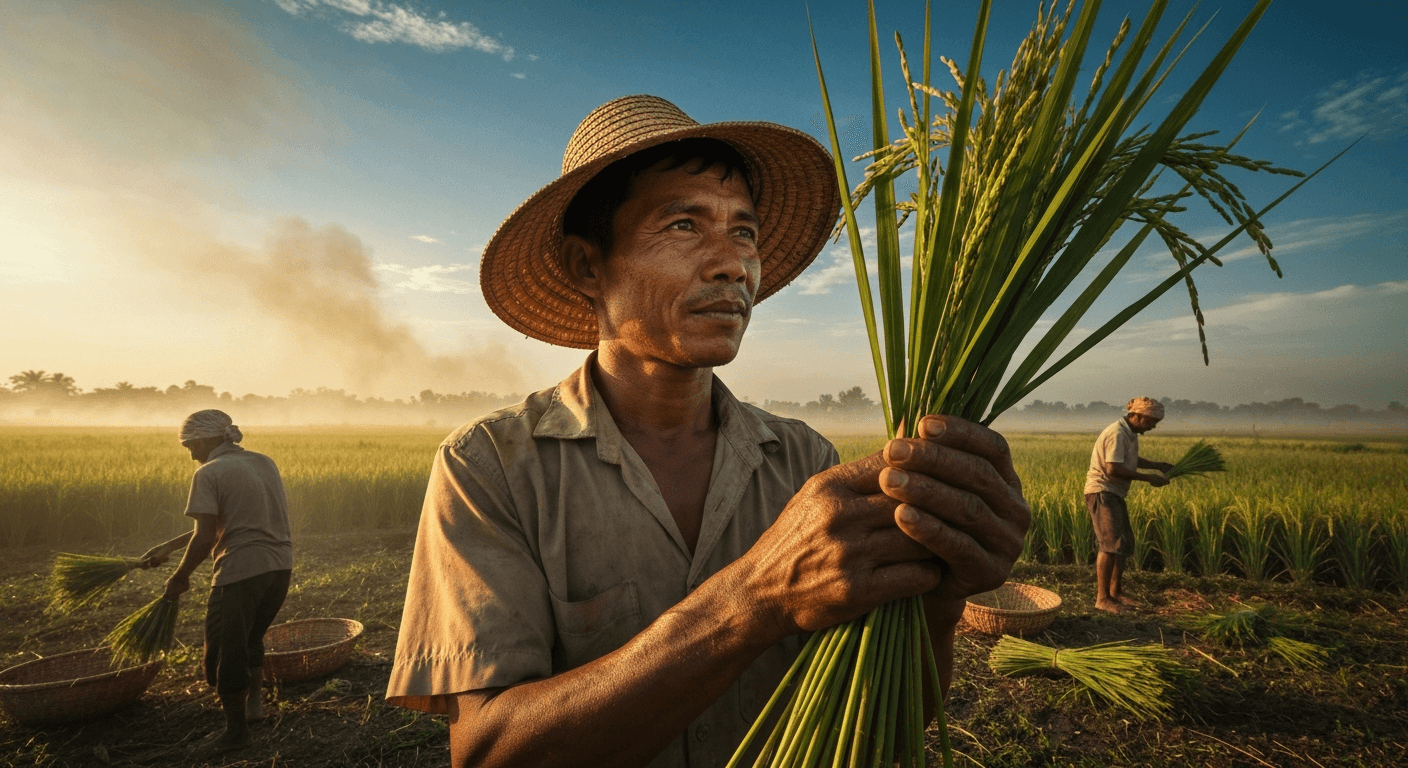
Sometimes, the future of farming is hidden in plain sight, sitting right there in your pocket. What if your phone, the same device you use for social media or checking the weather, could also tell you if your crops are hungry? This isn't some far-off sci-fi dream. It's becoming a practical reality, thanks to clever science.
This isn't sci-fi. Here's the real peer-reviewed evidence. Researchers from institutions like Thailand's National Science and Technology Development Agency have been exploring how standard mobile phone cameras can accurately assess plant health. Their work, detailed in a bioRxiv preprint, focuses on measuring chlorophyll content and SPAD values in rice plants.
Chlorophyll is the green pigment in plants, like their tiny solar panels, capturing sunlight to make food. SPAD (Soil and Plant Analysis Development) value is just a quick way to estimate how much chlorophyll is in a leaf, giving you a snapshot of its nitrogen content, which is crucial for growth. Think of it like a plant's blood test, telling you if it has enough vital nutrients.
Currently, farmers often rely on expensive, specialized handheld meters or send samples to labs to get these readings. This takes time and money, making regular checks difficult for smaller farms or those in remote areas. The new approach uses your phone's camera, turning it into a sophisticated sensor.
How Your Phone Learns to Read Leaves
The process works by taking a photo of a plant leaf and letting a specialized app, like PhotoFolia, analyze the image. The app looks at the specific colors and light reflections from the leaf, which are subtle indicators of its chlorophyll levels. It's a bit like how a sommelier can tell the age of wine by its color; the phone "sees" the plant's health in its greenness.
This mobile-based method can predict SPAD values within an error margin of about 1.2 units, which is remarkably close to the ±1 unit accuracy of commercial devices. For chlorophyll concentration, it hits within 7.2% of lab results. That's good enough to make real decisions about fertilizing or watering.
Why does this matter? Well, giving plants exactly what they need, when they need it, is the secret to growing more food with less waste. Too much fertilizer, for example, is not only expensive but can also harm the environment by running into waterways. (/article/how-soil-bacteria-fix-nitrogen) and other nutrients naturally, but even then, plants need a boost. Knowing a plant’s precise nutritional status can prevent over-application.
Why This Method Changes Farming
This simple idea has huge implications for sustainable agriculture. Imagine a farmer in a remote village, unable to afford a thousand-dollar SPAD meter. With just their smartphone, they could get instant, accurate feedback on their crops. This democratizes access to important agricultural technology, making sophisticated crop management tools available to everyone.
It could mean healthier crops, fewer wasted resources, and ultimately, more food on the table. When you can monitor plants more frequently and accurately, you can spot problems earlier, whether it's a nutrient deficiency or even a sign of disease. It's about empowering farmers with actionable data, not just guessing.
Skeptics might wonder about the variations in phone cameras or lighting conditions. The researchers tested this under ambient lighting, and their results suggest the method is robust. The goal isn't to replace high-precision lab equipment for every single scientific study, but to offer a reliable, accessible tool for everyday farm management.
The Bigger Picture for Global Food
If this technology becomes widespread, it could help reduce the environmental footprint of farming. More precise fertilizer application means less runoff, protecting our water systems. Better crop health means more yield from the same land, reducing the pressure to clear more forests for agriculture. (/article/the-tiny-helper-that-makes-food-grow-anywhere) suggests other approaches for maximizing yield, but this is a fundamental, in-field measurement.
This isn't just about rice, either. While this study focused on that staple crop in Thailand, the principles can be applied to many other plants. Think about home gardeners, small community farms, or even large agricultural operations looking to cut costs and improve efficiency. It’s a tool that could scale from a backyard tomato plant to vast fields.
The surprising fact is how much detail your phone camera actually captures, far beyond what the human eye perceives. The raw data from those tiny sensors, once properly analyzed, reveals a plant's hidden physiological state. It reminds us that often, the most impactful innovations are not about building something entirely new, but about reimagining what we already have.
Future Harvests and Your Handheld Device
We are still probably a few years away from every farmer having this exact app in their daily toolkit, but the research shows a clear path forward. Continued development will refine the algorithms, perhaps adding more features like disease detection or irrigation recommendations. This type of mobile-based analysis is a powerful step towards smarter, more sustainable food production for everyone. The simple act of pulling out your phone could truly change how we grow our food.
Key Takeaways
- Your mobile phone can accurately measure plant chlorophyll and SPAD values, offering a low-cost alternative to expensive lab equipment.
- This technology enables more precise nutrient management, leading to reduced fertilizer waste and healthier crops.
- It empowers farmers in remote or underserved areas with accessible tools for sustainable and efficient food production.
Frequently Asked Questions
What is a plant's SPAD value? A SPAD (Soil and Plant Analysis Development) value is a quick way to estimate the amount of chlorophyll in a plant leaf. It’s a proxy for how much nitrogen the plant has, indicating its overall health and ability to grow.
How does a phone measure plant health? A phone measures plant health by analyzing images of leaves. Specialized apps interpret the subtle color variations and light reflections, correlating them to known chlorophyll and nutrient levels, much like a digital "blood test" for plants.
Why is measuring chlorophyll important for crops? Measuring chlorophyll is crucial because it’s the pigment responsible for photosynthesis, where plants make food from sunlight. Knowing chlorophyll levels helps farmers understand if their plants are getting enough nutrients like nitrogen, enabling them to optimize fertilizer use and improve yields.
Editorial note: The scientific findings presented in this article are sourced exclusively from published research papers, peer-reviewed studies, certified inventions, and registered patent filings. Images generated by AI.
Stay ahead of the curve
The science that shapes tomorrow — in your inbox every week
The scientific findings presented in our articles are sourced from published research papers, peer-reviewed studies, certified inventions, and registered patent filings. Subscribe for focused weekly coverage, hands-on explainers, and practical insights that help you stay curious — no jargon, no noise.
By subscribing, you agree to receive newsletter and marketing emails, and accept our Terms of Use and Privacy Policy. You can unsubscribe anytime.
Sustainable Food Systems, Mediterranean Agriculture & Food Waste Innovation
Italian food systems journalist writing about the science of producing food more sustainably — and wasting far less of it.
View full profile →