Your Farm Fields Are Secretly Poisoning the Air
Did you know over 70% of a powerful warming gas comes from farming? New AI tools are learning to predict these hidden emissions, offering a path to cleaner air.
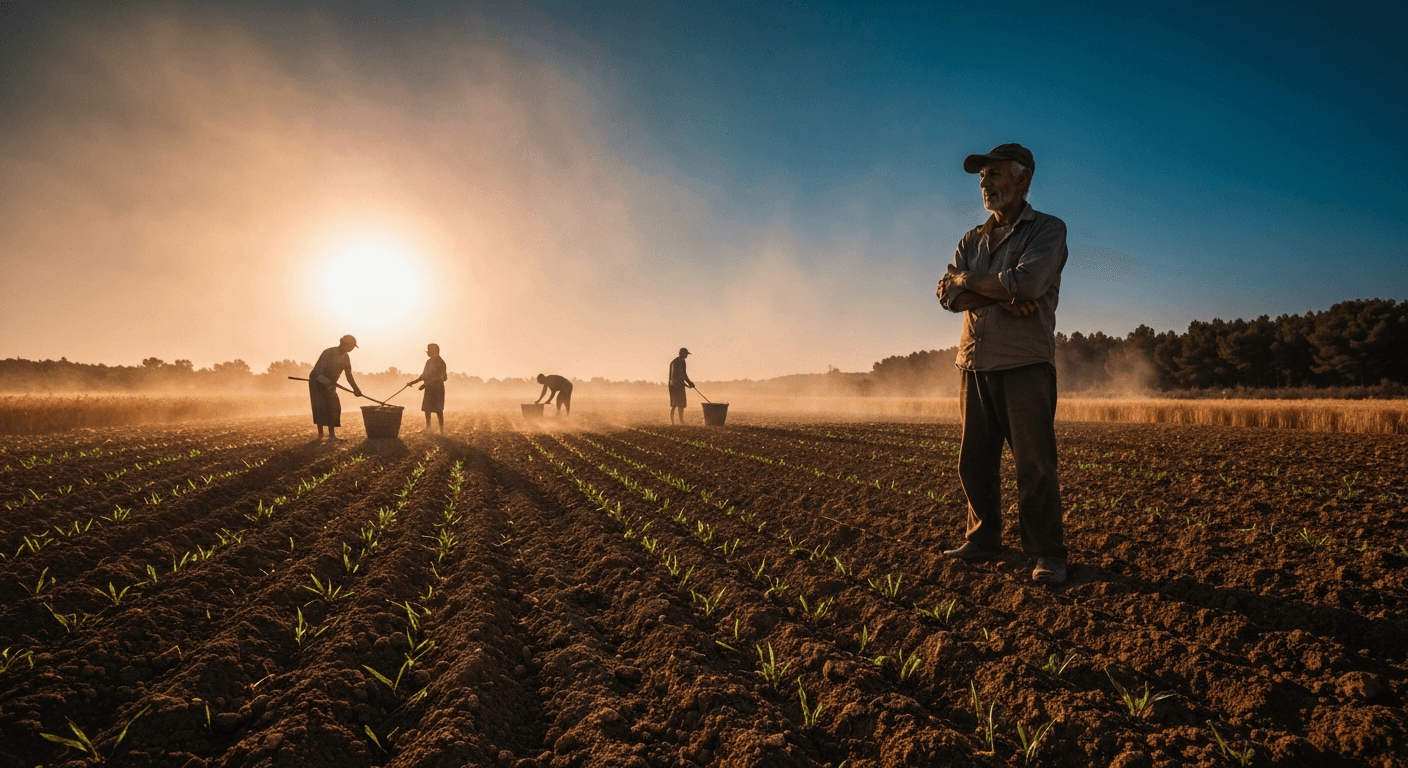
Every time you drive past a farm field, a powerful invisible gas called nitrous oxide (N₂O) is quietly seeping into the atmosphere. This isn't just any gas; it's the dominant substance currently eating away at our ozone layer, which is like Earth's natural sunscreen, and it's also a major contributor to global warming, far more potent than carbon dioxide. The crazy part? Over 70% of these emissions come directly from agricultural practices.
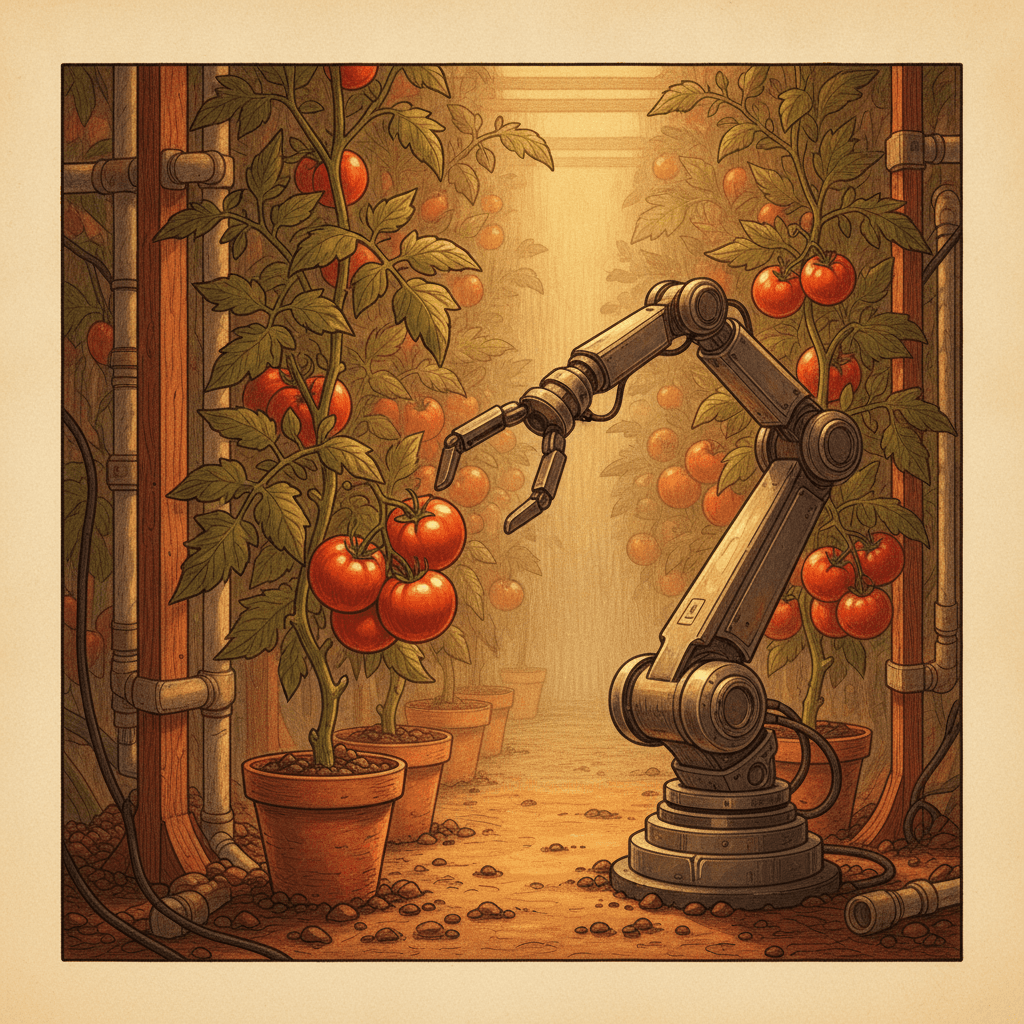
Imagine a world where farmers know exactly when and where their fields are releasing too much of this invisible pollutant, allowing them to adjust their methods to protect our air. This isn't some far-off dream. Researchers are now developing new kinds of artificial intelligence, called Physics-Informed Neural Networks (PINNs), that can predict these emissions with surprising accuracy.
This isn't sci-fi. Here's the real peer-reviewed evidence. A team of researchers from institutions including Michigan State University and the University of Minnesota recently published their findings on arXiv, demonstrating how PINNs could map out nitrous oxide flux – that's the rate at which gas escapes the soil – across different agricultural sites. They built their AI using decades of knowledge about how gases move through soil.
So, how does this work? Think of it like a chef learning to bake a new cake. A traditional AI (a "classical AI model") would just taste a bunch of cakes and try to guess the recipe, getting better with each try. It might eventually bake a decent cake, but if you give it weird ingredients, it might fail spectacularly.
A Physics-Informed Neural Network, on the other hand, is like a chef who already knows the basic science of baking – how flour reacts with yeast, how sugar caramelizes. This chef still tastes cakes to improve, but their underlying knowledge of physics (or in this case, biogeochemical processes like how soil bacteria fix nitrogen) guides them. This means when you give them new or unusual ingredients (like different soil types or weather patterns), they're much less likely to mess up completely.
The researchers used detailed equations, much like a blueprint, from existing "process-based models" – think of these as very detailed instruction manuals for how gases behave in soil. They fed this deep understanding into their AI, allowing it to learn not just from data, but from established scientific rules. This combination makes the PINN more robust when faced with unfamiliar conditions, like data from a farm it's never seen before. While it might be slightly less accurate on the specific data it was trained on, it performs much better when trying to predict emissions in completely new locations, according to their study.
Making Invisible Emissions Visible Across Different Farms
One of the surprising facts about this research is that while adding physics rules made the AI slightly less accurate on the exact data it learned from, it made it much more reliable when predicting emissions in places it had never seen before. This is a crucial trade-off. It’s the difference between an AI that works perfectly on one farm and one that can help farmers across an entire region.
The team trained their AI on agricultural data from four distinct sites across the US, stretching its ability to generalize. They found that their PINN consistently outperformed simpler prediction methods that didn't include these physics rules, sometimes by a massive margin. For example, their basic AI, without the physics rules, was already significantly better than previous common simulations, but the PINN added an extra layer of reliability for predicting emissions in new places.
You might be thinking, "But why not just use the existing detailed instruction manuals (the process-based models)?" Those manuals are incredibly complex and often need a lot of specific, local data to "calibrate" them, making them hard to use widely. PINNs offer a faster, more adaptable way to get similar benefits without all the manual tweaking. This is particularly important for helping farmers implement precise strategies to reduce greenhouse gas emissions.
The Path to Cleaner Air and Smarter Farming
If this technology becomes widely available, what changes? Firstly, farmers could get real-time, personalized advice on their fields. Imagine sensors in your fields feeding data to an AI that tells you exactly when to apply fertilizer to minimize nitrous oxide release, instead of a blanket schedule. This means less wasted fertilizer, which saves money, and cleaner air for everyone.
This also means policymakers could have more accurate tools to track and manage agricultural emissions on a national or even global scale. Currently, estimating these emissions is a huge challenge due to their variability. With better predictive models, we could set more effective environmental policies. It also means we could better understand why your soil is always secretly thirsty and how these practices impact water usage too.
The scientists are honest: cross-site generalization, meaning predicting emissions in a completely new, geographically distinct area, remains challenging. However, their work shows a clear path forward for creating smarter, more robust AI tools for agriculture. This isn't a quick fix arriving next year, but rather a promising direction for tools that could be ready in the next 5-10 years to help farmers make better choices for their land and our planet. It’s a quiet revolution in how we understand and manage our impact on the air we breathe.
Key Takeaways
- Over 70% of ozone-depleting nitrous oxide emissions come from agriculture, making it a critical environmental challenge.
- Physics-Informed Neural Networks (PINNs) offer a robust way to predict these invisible emissions by integrating scientific laws with AI learning.
- These AI tools promise to help farmers reduce pollution and improve efficiency, offering cleaner air and more sustainable food production within the next decade.
Frequently Asked Questions
What is nitrous oxide (N₂O)? Nitrous oxide is a powerful greenhouse gas and ozone-depleting substance. It is much more potent than carbon dioxide and remains in the atmosphere for a long time, primarily emitted from agricultural soils.
How do Physics-Informed Neural Networks (PINNs) work in agriculture? PINNs combine artificial intelligence with established scientific laws, like how gases move through soil. This allows them to learn from data while also adhering to fundamental physics, making predictions more reliable, especially in new environments.
Why is predicting N₂O emissions important? Predicting N₂O emissions helps farmers optimize fertilizer use, reducing waste and costs. More importantly, it helps mitigate climate change and protect the ozone layer, as agriculture is the largest source of this potent gas.
Editorial note: The scientific findings presented in this article are sourced exclusively from published research papers, peer-reviewed studies, certified inventions, and registered patent filings. Images generated by AI.
Stay ahead of the curve
The science that shapes tomorrow — in your inbox every week
The scientific findings presented in our articles are sourced from published research papers, peer-reviewed studies, certified inventions, and registered patent filings. Subscribe for focused weekly coverage, hands-on explainers, and practical insights that help you stay curious — no jargon, no noise.
By subscribing, you agree to receive newsletter and marketing emails, and accept our Terms of Use and Privacy Policy. You can unsubscribe anytime.
Sustainable Food Systems, Mediterranean Agriculture & Food Waste Innovation
Italian food systems journalist writing about the science of producing food more sustainably — and wasting far less of it.
View full profile →