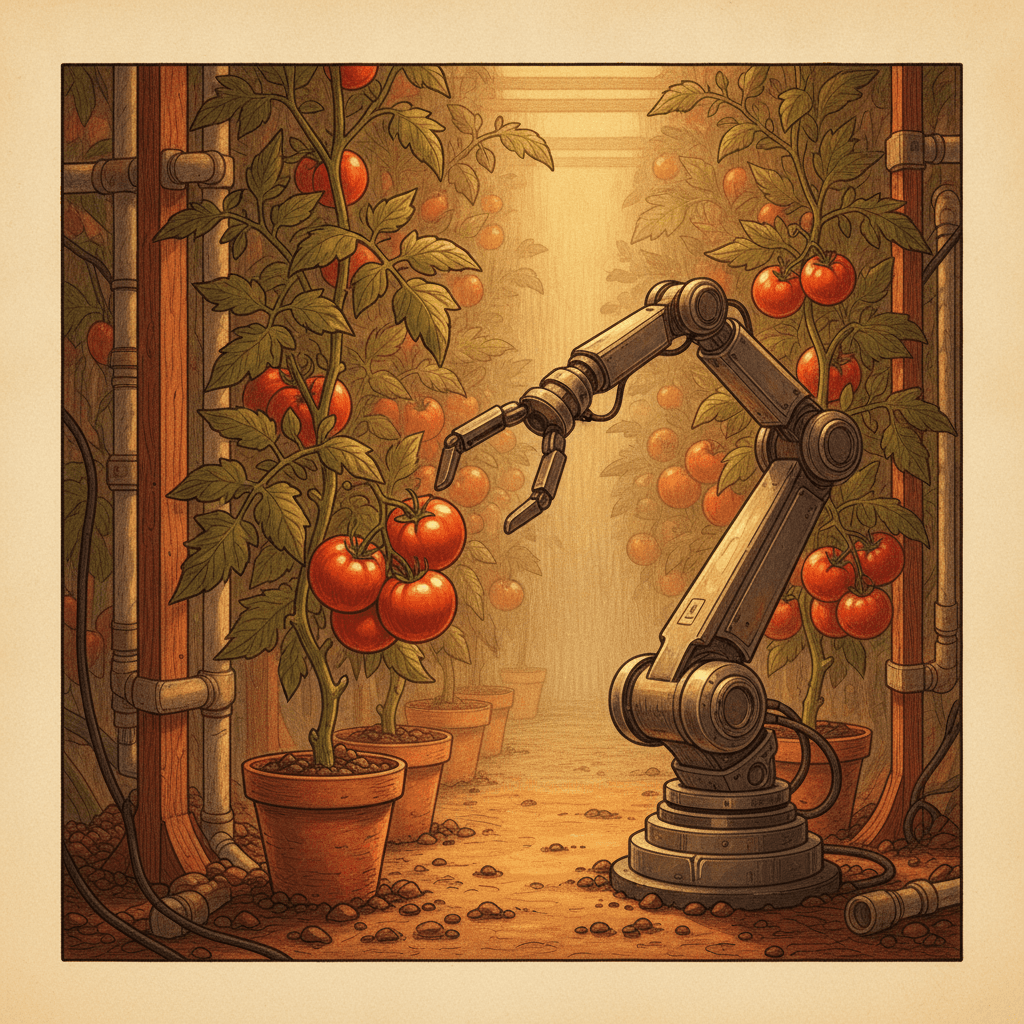
The Air You Breathe Could Feed the World
Imagine a future where farms don't need chemical fertilizers, and food grows cleaner than ever. New science is quietly tapping into the air around us to make this vision a stunning reality.

What if the very air you breathe could help feed the world, making farms greener and food production cleaner? This isn't just a hopeful dream; it’s a vision that’s getting closer to reality thanks to some incredibly tiny helpers. Picture vast fields of corn, wheat, or rice flourishing without a drop of synthetic fertilizer, their roots fed by a natural, endless supply of nutrients.
This world would mean healthier soil, cleaner rivers free from chemical runoff, and significantly less carbon pollution warming our planet. Farmers would save immense costs, and you could enjoy food knowing its journey from farm to plate was far more sustainable. It sounds almost too good to be true, like something straight out of a utopian science fiction story.
The Hidden Secret in Every Breath You Take
This isn't sci-fi, though. This is the real, peer-reviewed evidence emerging from cutting-edge biotechnology. For decades, scientists have known about nature’s original fertilizer: microscopic organisms called nitrogen-fixing bacteria. These incredible creatures possess a unique ability, like tiny alchemists, to convert nitrogen gas from the atmosphere—which makes up about 78% of the air you breathe—into ammonia, a form plants can actually use to grow. This natural process is called nitrogen fixation, and it's essential for all life on Earth.
The problem is, most of these natural bacteria only do this job efficiently under very specific conditions or when "told" to stop by the presence of ammonia. This has limited their widespread use as a replacement for synthetic fertilizers. The process for making synthetic nitrogen fertilizers, known as the Haber-Bosch process, is incredibly energy-intensive, consuming about 1-2% of the world's total energy output each year—that’s a surprising amount of power just to feed our crops!
Unlocking Nature's Own Fertilizer Factory
Now, a recent patent by Chinese researchers details a method to supercharge these tiny helpers, turning them into non-stop ammonia factories. Think of it like this: your body has genes that act like on/off switches, controlling different functions. These nitrogen-fixing bacteria have a specific gene, called nifL, which acts like a cautious foreman in their ammonia-producing factory. This foreman constantly monitors the environment; if it detects even a little ammonia, it tells the factory workers (the bacteria’s enzymes) to slow down or stop production.
The ingenious part of this new approach is a genetic engineering method that essentially "fires" that cautious foreman by knocking out the central part of the nifL gene. Without the nifL gene interfering, the ammonia factory in the bacteria runs at full throttle, continuously producing and secreting ammonia. This means the bacteria can keep fixing nitrogen and feeding plants, regardless of how much nitrogen is already in the soil. This engineered stability is critical because earlier attempts often saw these modified traits fade over time.
Real-World Farms: Moving Beyond the Lab
Of course, getting something to work brilliantly in a lab is one thing; seeing it thrive in a farmer's field is another challenge entirely. Scientists will need to conduct extensive field trials, testing these engineered bacteria across different soil types, climates, and crop varieties. They'll need to demonstrate that these bacteria not only boost crop yields but also do so safely and reliably over many growing seasons. This isn't an overnight fix; widespread adoption is likely still a decade or more away, even with promising early results.
Beyond the technical hurdles, there are regulatory processes and public acceptance to consider. Just as with any new agricultural technology, robust testing and clear communication will be essential to build trust. However, the potential upside for food security, environmental health, and farmer livelihoods is truly immense, making these efforts well worth the time and investment.
A Greener Future, From Your Plate to the Planet
If this technology scales successfully, the second-order effects would ripple across the globe. Farmers could significantly reduce their reliance on expensive, environmentally damaging synthetic fertilizers, leading to cost savings and improved financial stability. This could particularly benefit smaller farms and developing nations, making food production more accessible and resilient. The environmental impact would be profound: cleaner waterways, healthier soil ecosystems, and a substantial reduction in agricultural greenhouse gas emissions.
Imagine air quality improving because fewer nitrogen oxides are released into the atmosphere during fertilizer production and use. Your food might become even more nutritious as plants receive a steady, natural supply of nitrogen directly from the soil's microbial helpers. It changes not just how we farm, but how we think about our relationship with nature and the hidden power within the smallest organisms.
This Is How Science Makes the Ordinary Feel Incredible
This quiet revolution in agriculture reminds us that some of the biggest solutions often lie hidden in plain sight, waiting for science to unlock their potential. The very air around us, a seemingly inert part of our environment, holds the key to a future of more sustainable, abundant food. It's a powerful reminder that our planet's tiniest inhabitants are capable of the most extraordinary feats, especially when we learn how to respectfully collaborate with them. It truly makes you wonder what other simple, profound solutions are just waiting to be discovered.

Key Takeaways
- New genetic engineering techniques can turn nitrogen-fixing bacteria into continuous "ammonia factories" for plants.
- This approach could drastically reduce the world's reliance on energy-intensive, polluting synthetic nitrogen fertilizers.
- Widespread adoption of this natural fertilizer method promises healthier soil, cleaner environments, and more sustainable global food production within the next decade.
Frequently Asked Questions
What is nitrogen fixation? Nitrogen fixation is a natural process where specialized microorganisms convert inert nitrogen gas from the atmosphere into ammonia, a usable nutrient for plants to grow. It’s essential for life on Earth.
How do these engineered bacteria work differently? These genetically engineered bacteria have a "switch" gene disabled, allowing them to continuously produce and secrete ammonia, acting as a constant natural fertilizer source for plants, even when nitrogen is already present.
Why is this better than current fertilizers? This method offers a natural, sustainable alternative to energy-intensive synthetic fertilizers, reducing pollution, improving soil health, cutting farmer costs, and lowering greenhouse gas emissions.
Editorial note: The scientific findings presented in this article are sourced exclusively from published research papers, peer-reviewed studies, certified inventions, and registered patent filings. Images generated by AI.
Stay ahead of the curve
The science that shapes tomorrow — in your inbox every week
The scientific findings presented in our articles are sourced from published research papers, peer-reviewed studies, certified inventions, and registered patent filings. Subscribe for focused weekly coverage, hands-on explainers, and practical insights that help you stay curious — no jargon, no noise.
By subscribing, you agree to receive newsletter and marketing emails, and accept our Terms of Use and Privacy Policy. You can unsubscribe anytime.
Agricultural Biotechnology & Soil Microbiome Science
Agricultural scientist and writer covering the innovations in seed, soil, and farming that will determine whether the world can feed ten billion people.
View full profile →