Robot Farmers Are Starting to Think for Themselves
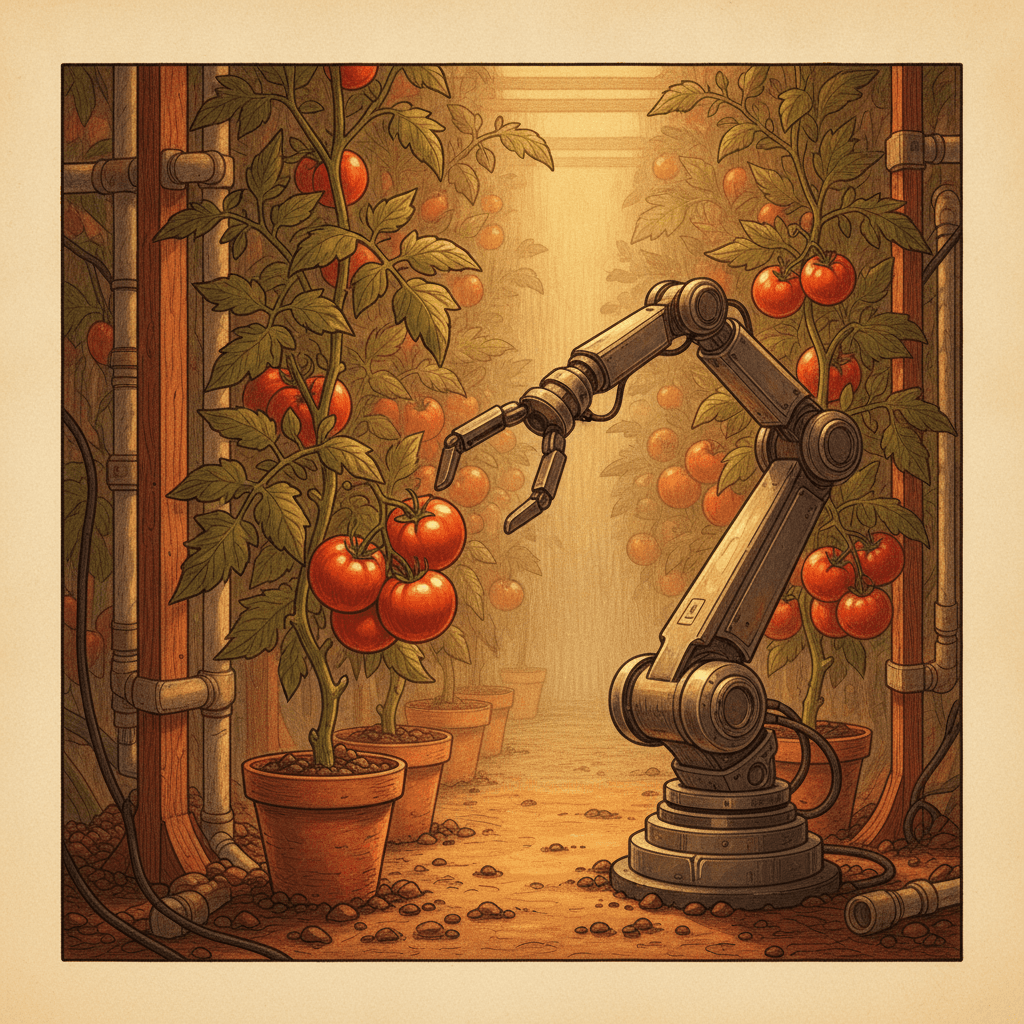
Imagine a farm where robots don't just follow orders but learn how to handle delicate crops on their own. New data engines are teaching robotic arms to perform complex tasks, reducing the manual labor involved in farming.
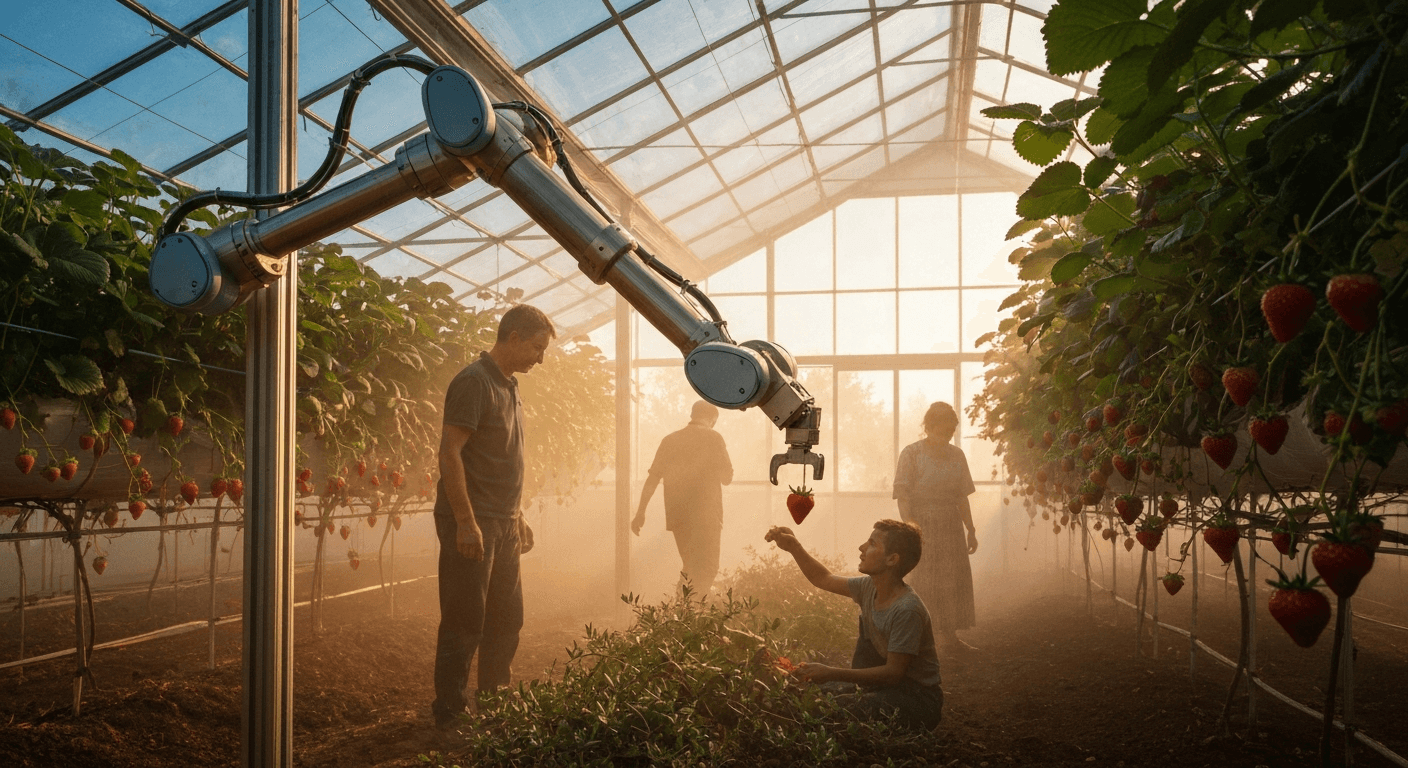
Picking a ripe tomato without squishing it or gently pruning a delicate vine seems like a simple task for us, but for a robot, it’s incredibly complex. That's changing much faster than you might expect, with robots learning to perform these tricky agricultural jobs by themselves, moving beyond simple programmed actions. We're seeing real progress right now, thanks to new ways of teaching these machines.
This advancement comes from systems that allow robots to learn from many different examples, much like a child learning by watching and trying things. One such system, called AXIS, is already proving its ability by collecting over 50,000 examples of robots interacting with objects across 207 unique tasks. These aren't just lab exercises; they involve things like delicate grasping and precise placement, vital for handling crops.
How Robots Are Learning Real-World Farm Skills
Learning these real-world skills is a huge hurdle for farm robots because every fruit and vegetable is slightly different, unlike identical factory parts. Imagine teaching a chef to perfectly chop a potato. They don't just follow a strict sequence of movements; they adapt to the potato's size and shape. Robots need that same kind of flexible intelligence, and that's where "data engines" come in. These engines are like vast digital libraries and training grounds where robots can practice and improve their physical manipulation skills.
Instead of needing a human to meticulously program every single movement for every possible scenario, these systems use "teleoperation." This is where a human remotely controls a robot arm, showing it how to do a task, like guiding a hand through a puzzle. The robot records these demonstrations, then uses that information to figure out how to do it on its own. It's a bit like a student watching a master craftsman and then trying to replicate their moves, constantly refining until they get it right.
Building Smarter Robot Brains with Shared Data
What makes this approach particularly powerful is the idea of a "community-driven" data engine. This means that instead of just one lab collecting data, many people can contribute demonstrations, expanding the robot's "experience" far faster. It's like having thousands of people worldwide showing a robot how to pick different kinds of apples, all contributing to a shared knowledge base. This communal effort allows the robot to encounter a wider variety of situations and objects, making its learning more robust.
The data gathered isn't just raw video; it goes through a careful process to make it useful for training. The system automatically checks if the robot succeeded in its task, filters out bad attempts, smooths out jerky movements, and even creates artificial variations by changing light or physics in the data. This process turns scattered observations into high-quality teaching material. It's similar to how a good editor refines a rough manuscript into a polished book. This careful curation is essential for creating smarter AI for farming.
What This Means for Future Farms and Your Food
The impact of robots that can think and act more independently on farms is significant. For instance, in trials, continually training a vision-language-action (VLA) robot—one that understands what it sees and hears to decide its actions—on the AXIS dataset improved its overall success rate by 5.8%. More impressively, it outperformed models trained on less diverse datasets by over 37%. This means these robots are becoming incredibly adept at tasks like navigating diverse field conditions and handling delicate produce, even when faced with unexpected layouts or camera problems.
You might be surprised to learn that one of the biggest challenges in deploying farm robots isn't the robot hardware itself, but teaching them to adapt to the unpredictable real world. This learning capability helps address that directly. With these advancements, you could see robots performing tasks like harvesting fragile berries or inspecting crops for pests with precision within the next 5-10 years. This could reduce labor costs, increase efficiency, and even lead to less food waste by more precisely picking produce at its optimal ripeness. It’s helping farmers improve how soil is cared for and generally making food production more resilient.
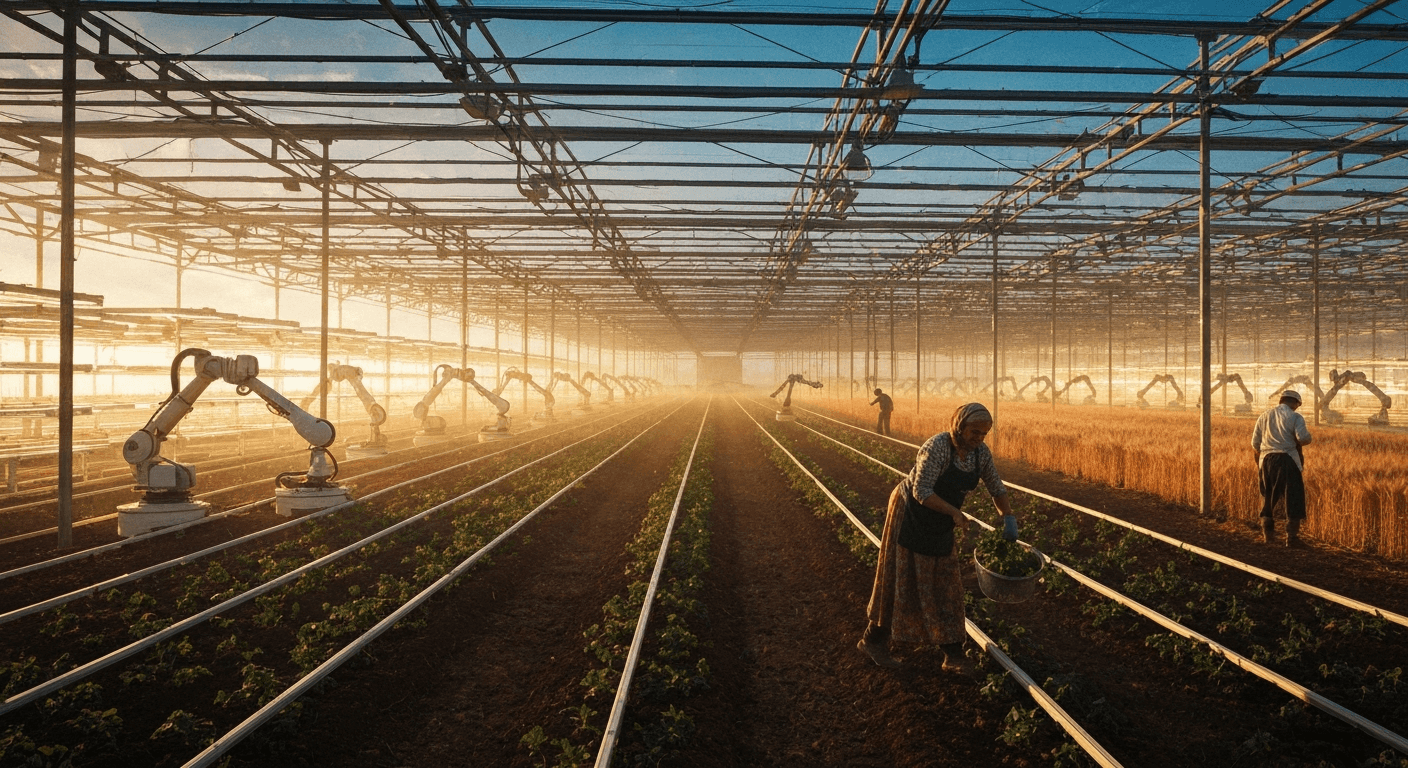
This shift means the fresh produce you buy could soon arrive from farms where robots, guided by this new generation of intelligent systems, played a much larger, more nuanced role. It moves farming closer to a future where machines aren't just tools, but skilled partners.
Key Takeaways
- New "data engines" allow farm robots to learn complex, nuanced manipulation tasks from many examples, much like humans.
- "Community-driven teleoperation" accelerates this learning by gathering diverse real-world task demonstrations.
- This means robots could be performing delicate tasks like harvesting fragile crops within 5-10 years, improving farm efficiency and reducing waste.
Frequently Asked Questions
What is a robot data engine? A robot data engine is a system that collects, organizes, and processes many examples of robots performing tasks. It acts like a digital library and training ground, allowing robots to learn complex skills by observing and refining their actions.
How do robots learn from these engines? Robots learn through "teleoperation," where a human remotely guides them to perform tasks. This recorded data is then used to train AI models, helping the robots understand how to execute similar actions on their own, adapting to new situations.
Why does this matter for agriculture? This approach allows robots to handle the unpredictable nature of farms and delicate crops, which is usually too complex for simple programming. It means robots can soon assist with harvesting, pruning, and inspecting produce, leading to more efficient farming.
Editorial note: The scientific findings presented in this article are sourced exclusively from published research papers, peer-reviewed studies, certified inventions, and registered patent filings. Images generated by AI.
Stay ahead of the curve
The science that shapes tomorrow — in your inbox every week
The scientific findings presented in our articles are sourced from published research papers, peer-reviewed studies, certified inventions, and registered patent filings. Subscribe for focused weekly coverage, hands-on explainers, and practical insights that help you stay curious — no jargon, no noise.
By subscribing, you agree to receive newsletter and marketing emails, and accept our Terms of Use and Privacy Policy. You can unsubscribe anytime.
Sustainable Food Systems, Mediterranean Agriculture & Food Waste Innovation
Italian food systems journalist writing about the science of producing food more sustainably — and wasting far less of it.
View full profile →