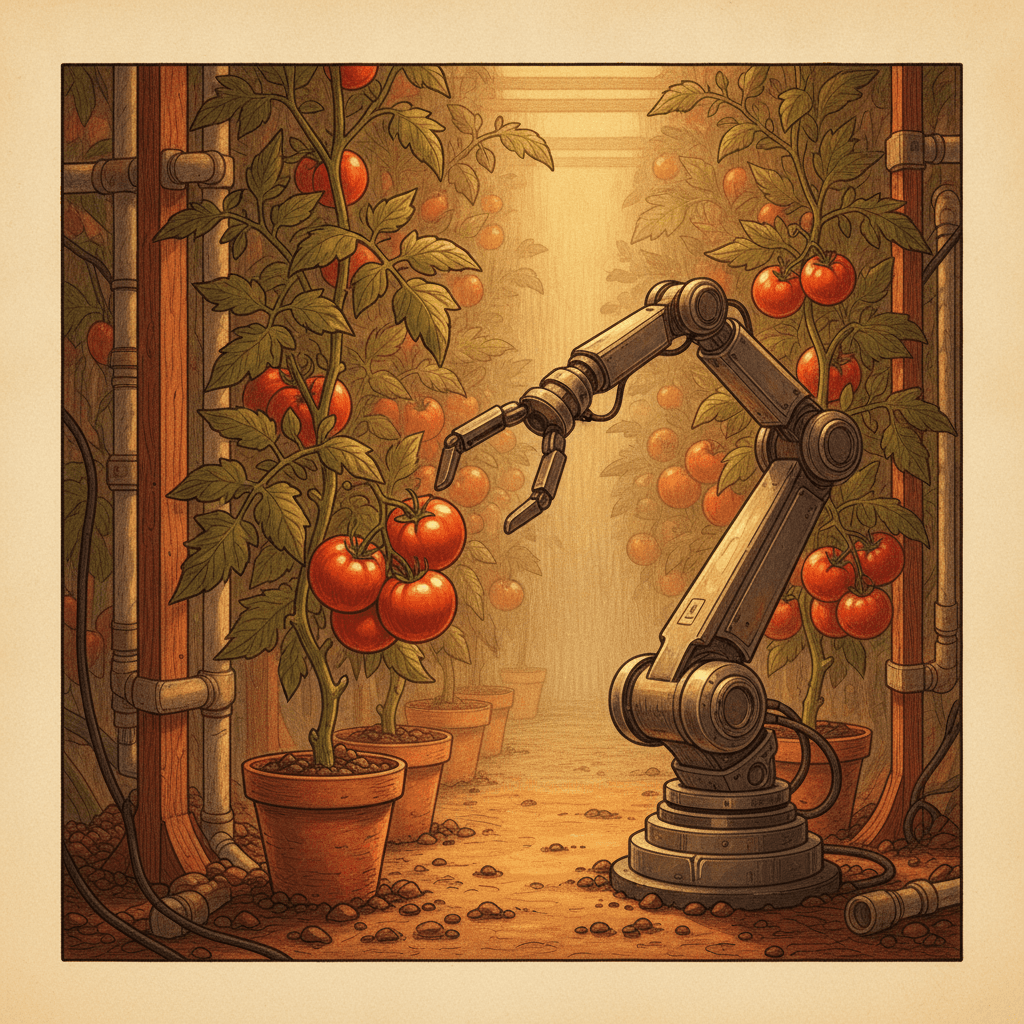
Robot Excavators Are Learning to Dig Smarter
Self-driving construction vehicles are quickly getting smarter, learning complex tasks like digging with visual cues. You'll discover how these machines are tackling challenging jobs and what it means for everything from construction sites to farming.

Have you ever watched a huge excavator on a construction site, scooping dirt with surprising precision? Soon, those colossal machines might be doing it all by themselves, guided by an intelligence that helps them "see" what to do. Researchers are building a future where these powerful robots don't just follow pre-programmed paths, but actually understand and react to their environment, much like a skilled human operator. This isn't science fiction anymore; it's happening right now in advanced simulation environments.
Robot excavators, in particular, are learning to dig complex shapes by seeing what needs to be removed. Instead of rigid instructions, they get a "target mask," which is like a highlighted area on a screen showing them exactly where to dig and how deep, similar to how a painter sees the outline of a shape they need to fill. This visual guidance allows them to adapt to different pile sizes and soil conditions.
How Robots "See" and "Learn" to Dig
The secret weapon for these autonomous diggers is something called a "target-conditioned intelligent control framework." Think of it as a highly specialized brain for the robot. This brain takes in multiple observations, like different camera views (RGB observations) and its own internal sensor data (proprioception, which is like the robot's sense of its own body position and movement), along with that target mask. It then maps all this information to "action chunks," which are sequences of joystick commands, much like a gamer executing a combo move in a video game.
A critical part of their learning involves "paired-condition supervision." Imagine you're teaching a child to clean their room. You might show them two identical messy rooms, but in one, you point to the toys to pick up, and in the other, you point to the clothes. The robot learns by seeing the same scene but with different target masks, helping it understand that the target is what matters, not just the general environment. This method drastically improves how well the robot follows instructions. For example, in diagnostic tests, a basic robot ignored the target 96% of the time, but with this paired learning, it hit the target 96% of the time.
Improving Robot Accuracy and Efficiency
This smart approach is yielding impressive results. In simulated pile-clearing tasks, the advanced "paired-condition mask-conditioned Action Chunking Transformer" removed 76.8% of the pile, while older methods only managed 27.4% and 15.7%. That's a huge leap in efficiency, performing at 91.0% of human-normalized efficiency. This means the robot is almost as good as a human at clearing a pile of material, but it can do it tirelessly and potentially safer in hazardous environments. The researchers, including those from Carnegie Mellon University, see this as a practical step towards automating heavy machinery.
You might be surprised to learn that automating heavy machinery isn't just about saving labor; it's also about safety and consistency. Humans operating excavators can suffer fatigue, leading to errors. Robots can work 24/7 without getting tired. This is similar to how we're seeing robot farmers are starting to think for themselves in other agricultural applications, improving crop yields and reducing manual labor.
The Near Future of Autonomous Work
While these systems are currently tested in "physics-based deformable-soil simulation workflows," essentially a highly realistic video game, the next steps involve deploying them in real-world environments. Testing on actual construction sites comes with its own set of challenges, like unpredictable weather, unexpected obstacles, and the sheer force required to move real earth. However, the simulation results are so promising that it's a clear indication of what's coming.
Within the next 5-10 years, you could expect to see more and more autonomous excavators on large-scale construction projects, mining operations, and even in disaster response scenarios where human safety is at risk. Think of how much faster and safer a major highway project could be, or how quickly debris could be cleared after an earthquake if machines could handle the heavy lifting without direct human control. Imagine a world where complex tasks like digging specific trenches for how your internet may finally stop dropping out are executed perfectly every time by a machine, minimizing errors and improving infrastructure quality.
This movement towards visually guided robots extends beyond digging. It's a fundamental step in making machines truly intelligent and adaptable. It means your future infrastructure, from roads to buildings, could be built with unprecedented precision and efficiency, thanks to robots that can "see" and "understand" their work just like us.

Key Takeaways
- Autonomous excavators can "see" target digging areas using digital masks, vastly improving their precision.
- A new learning method called "paired-condition supervision" has increased robot accuracy in digging tasks to 96% target success.
- These intelligent machines promise safer, more efficient construction and mining operations within the next decade.
Frequently Asked Questions
Q: What is a target mask in autonomous excavation? A: A target mask is like a highlighted blueprint on a digital screen, showing the robot excavator the exact area and depth where it needs to dig. It's a visual command for the desired digging region.
Q: How do these robots learn to dig accurately? A: Robots learn through a method called paired-condition supervision, where they see the same scene with different target masks. This teaches them to focus on the target area rather than just the general environment.
Q: When might we see these autonomous excavators in real life? A: You could start seeing autonomous excavators on large construction sites or in mining operations within the next 5-10 years, as current simulation successes move into real-world applications.
Editorial note: The scientific findings presented in this article are sourced exclusively from published research papers, peer-reviewed studies, certified inventions, and registered patent filings. Images generated by AI.
Stay ahead of the curve
The science that shapes tomorrow — in your inbox every week
The scientific findings presented in our articles are sourced from published research papers, peer-reviewed studies, certified inventions, and registered patent filings. Subscribe for focused weekly coverage, hands-on explainers, and practical insights that help you stay curious — no jargon, no noise.
By subscribing, you agree to receive newsletter and marketing emails, and accept our Terms of Use and Privacy Policy. You can unsubscribe anytime.
Food Security, Biofortification & Agriculture in the Global South
Development journalist covering the agricultural innovations that can feed a warmer, more crowded world — particularly in Africa and South Asia.
View full profile →