Farmers Are Quietly Growing Food Where Nothing Grows
Imagine lush fields thriving in deserts and salty lands. A simple seed coating could make this future real, promising an end to food scarcity. Discover the tiny innovation that could change how we eat forever.
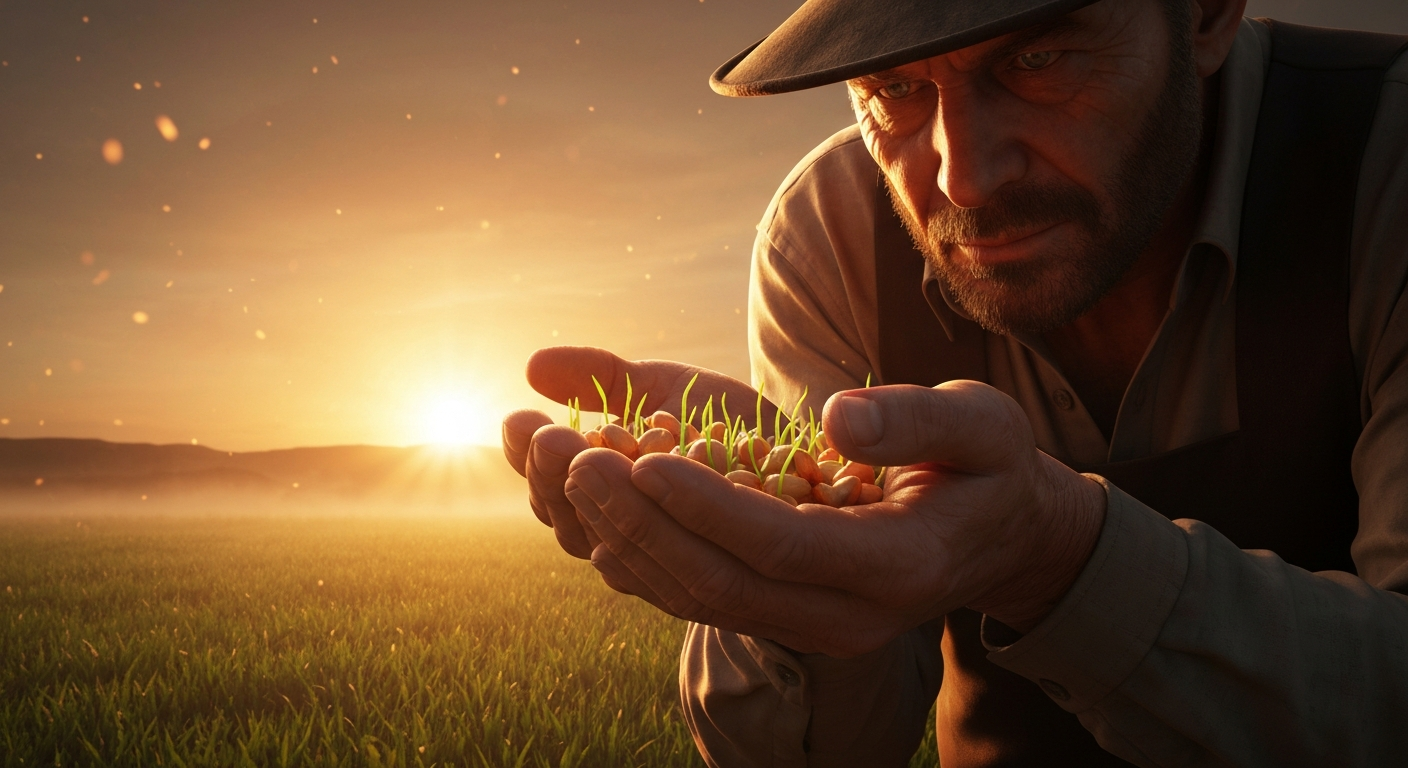
The news can feel pretty bleak sometimes, especially when you hear about expanding deserts, relentless droughts, and farmlands turning barren. You watch food prices climb, knowing that climate shifts are making it harder and harder for farmers to grow the food we all need. What if you could flip that script entirely?
What if, instead of struggling, crops could thrive in places where nothing grows today? Picture cornfields swaying in regions once thought impossible for agriculture – like vast, arid plains or land ruined by salty soil. This isn't just a fantasy; it's a future that could be closer than you think, thanks to a quiet revolution happening at the microscopic level of a simple seed.
Your Food Might Soon Grow in Any Desert
This incredible vision isn't from a sci-fi movie; it's emerging from real, peer-reviewed evidence, specifically detailed in recent patent filings by researchers from China. These scientists are developing a drought-resistant crops solution: a special seed coating that empowers corn to grow robustly even in the harshest conditions, like severe drought or highly salty soil. This new approach targets some of agriculture's biggest environmental challenges.
So, how does it work? Think of it like a high-tech survival suit for a tiny seed. This isn't just a single magical ingredient; it's a carefully engineered blend of substances, each playing a crucial role. The key components include things you might recognize from chemistry class, like nano polyacrylamide, polyvinyl alcohol, and bacillus subtilis, all working together in a powerful symphony.
A Tiny "Survival Suit" for Every Seed
At the heart of this seed coating's power are two ingenious materials: Mo-coated ZIF-8 and modified MgAl-LDH. Imagine Mo-coated ZIF-8 as a microscopic, super-smart sponge, like a sophisticated water filter on steroids. This sponge has two jobs. First, it's designed to snatch up harmful sodium ions (Na+) – the main culprits in salty soil – preventing them from ever reaching the seed's delicate cells. This effectively shields the seed from salt stress, giving it a fighting chance.
But here's a surprising fact: this tiny sponge also releases special imidazole molecules. These molecules gradually seep into the soil around the seed, gently lowering the alkalinity of the root environment. It’s like having a tiny, friendly chemical engineer subtly adjusting the soil conditions, making them much more favorable for the corn seed to sprout and grow strong roots.
The Seed's Secret Hydration Layer and Tiny Gardeners
The other critical player, modified MgAl-LDH, acts like a microscopic water bottle attached directly to your seed. This material forms a hydration layer, a kind of invisible shield that holds onto water molecules incredibly well. It effectively reserves water for the seed, making it far more resistant to drought conditions. And to make things even smarter, this layer is coated with something called polydopamine, which you can think of as a "smart skin."
This smart skin performs dynamic water regulation. It knows when to hold water close to the seed and when to release it gradually, ensuring the seed gets just the right amount of moisture, even when rainfall is scarce. Imagine having a tiny, self-regulating hydration system for every single corn seed you plant!
Beyond these chemical marvels, the coating also includes bacillus subtilis. Imagine having a team of microscopic, friendly gardeners living right on your seed. These beneficial bacteria thrive in the soil, optimizing the local microbial environment around the plant's roots. This synergy helps the crop grow stronger, absorb nutrients more efficiently, and resist diseases – all crucial for thriving in challenging landscapes.
Can This Really Feed the World?
Of course, with any powerful new technology, skepticism is healthy. While the evidence from the EPO patent abstract is compelling, showing improved drought resistance and saline-alkaline tolerance, scaling this solution up to global agricultural levels presents significant challenges. We'll need extensive field trials in diverse environments, rigorous cost-benefit analyses, and clear demonstrations of long-term environmental safety.
What about the cost of applying these coatings to billions of seeds? And will these novel materials have any unforeseen impacts on soil health or ecosystems over many years? Researchers will need to prove that this technology is not only effective but also economically viable and environmentally sustainable for widespread adoption. While laboratory results are promising, commercialization and full-scale deployment could still be a decade away.
A Greener, More Stable Future for Everyone
If this technology can overcome those hurdles, the second-order effects could be truly profound. Imagine less migration due to famine, more stable global food prices, and a dramatic reduction in the amount of freshwater needed for agriculture. This could free up vast quantities of water for other human needs and ecological systems. It could also revitalize economies in regions currently struggling with infertile land.
The ability to grow drought-resistant crops like corn in challenging environments means less pressure on existing fertile lands, potentially allowing some overused areas to recover. We could see entirely new agricultural industries bloom in unexpected places, creating jobs and fostering economic independence. This isn't just about feeding more people; it's about building a more resilient, equitable, and sustainable world.
This quiet innovation with tiny seed coatings reminds you that some of the biggest solutions often come in the smallest packages. It’s a powerful testament to human ingenuity, showing that even against the vast forces of climate change, science continues to make the ordinary feel extraordinary, offering genuine hope for our shared future.
FAQ_SECTION###
What is a drought-resistant seed coating? It's a special layer applied to seeds, like corn, that helps them survive and grow in harsh conditions. It protects against drought by holding water and defends against salty soil by blocking harmful ions.
How does this seed coating protect against salt? The coating contains tiny smart particles that act like sponges. They adsorb (or stick to) harmful sodium ions in salty soil, preventing them from entering the seed and damaging its growth.
Can this technology help grow food in deserts? Yes, by providing built-in water retention and salt protection, this coating aims to allow crops to thrive in arid, saline-alkaline environments that are currently unsuitable for agriculture.
When will this technology be widely available? While promising, the technology is still in development. Extensive testing and scaling are needed, so widespread commercial availability for farmers could be around 5-10 years away.
KEY_TAKEAWAYS###
- A new seed coating uses microscopic materials to enable corn to grow in drought conditions and salty soil.
- The coating acts as a dual defense, providing a built-in water reservoir and actively neutralizing harmful salt ions around the seed.
- This innovation holds potential for significantly increasing global food security, opening new agricultural lands, and reducing water usage in farming.

Editorial note: The scientific findings presented in this article are sourced exclusively from published research papers, peer-reviewed studies, certified inventions, and registered patent filings. Images generated by AI.
Stay ahead of the curve
The science that shapes tomorrow — in your inbox every week
The scientific findings presented in our articles are sourced from published research papers, peer-reviewed studies, certified inventions, and registered patent filings. Subscribe for focused weekly coverage, hands-on explainers, and practical insights that help you stay curious — no jargon, no noise.
By subscribing, you agree to receive newsletter and marketing emails, and accept our Terms of Use and Privacy Policy. You can unsubscribe anytime.
Agricultural Biotechnology & Soil Microbiome Science
Agricultural scientist and writer covering the innovations in seed, soil, and farming that will determine whether the world can feed ten billion people.
View full profile →