Your Trash Can Is Printing New Parts
Plastic waste fills our landfills, but what if your empty milk jug could become a functional part for your car or home? Scientists are now turning everyday plastic trash into high-performance 3D printing material, changing how we create and consume.
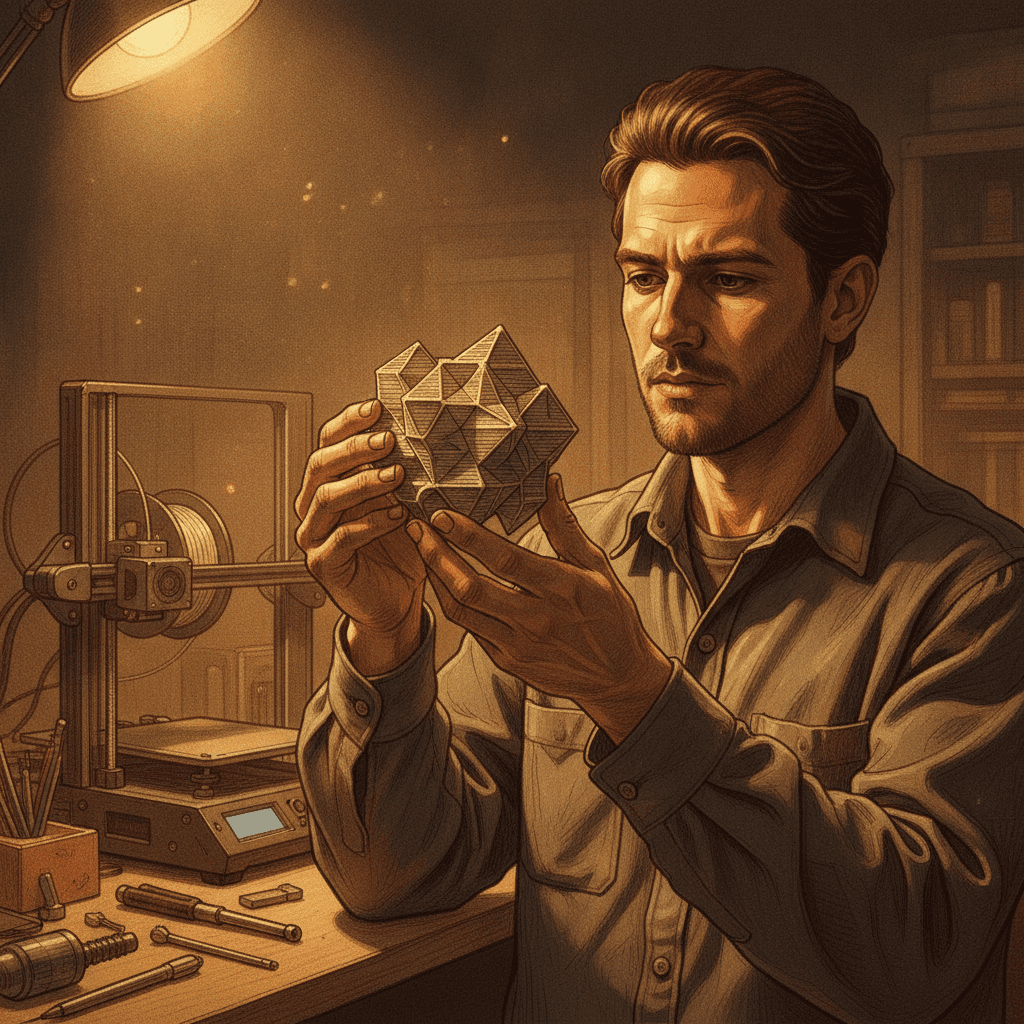
Did you know your discarded plastic could soon be the raw material for new objects you use every day? This isn't some far-off dream, but a reality being built right now by researchers and engineers. Imagine your empty milk jug transforming into a replacement part for a broken appliance, or even a tool for your workshop.
The sheer amount of plastic waste we produce is overwhelming, creating massive environmental problems. At the same time, 3D printing is everywhere, from industrial factories to hobbyists' homes, and it typically relies on brand-new plastic filaments. This creates a double problem: more virgin plastic used, and more waste generated. A recent study, published in OpenAlex, explored a way to solve both by turning your everyday plastic trash into usable, strong 3D printing material.
How Your Plastic Waste Becomes Something New
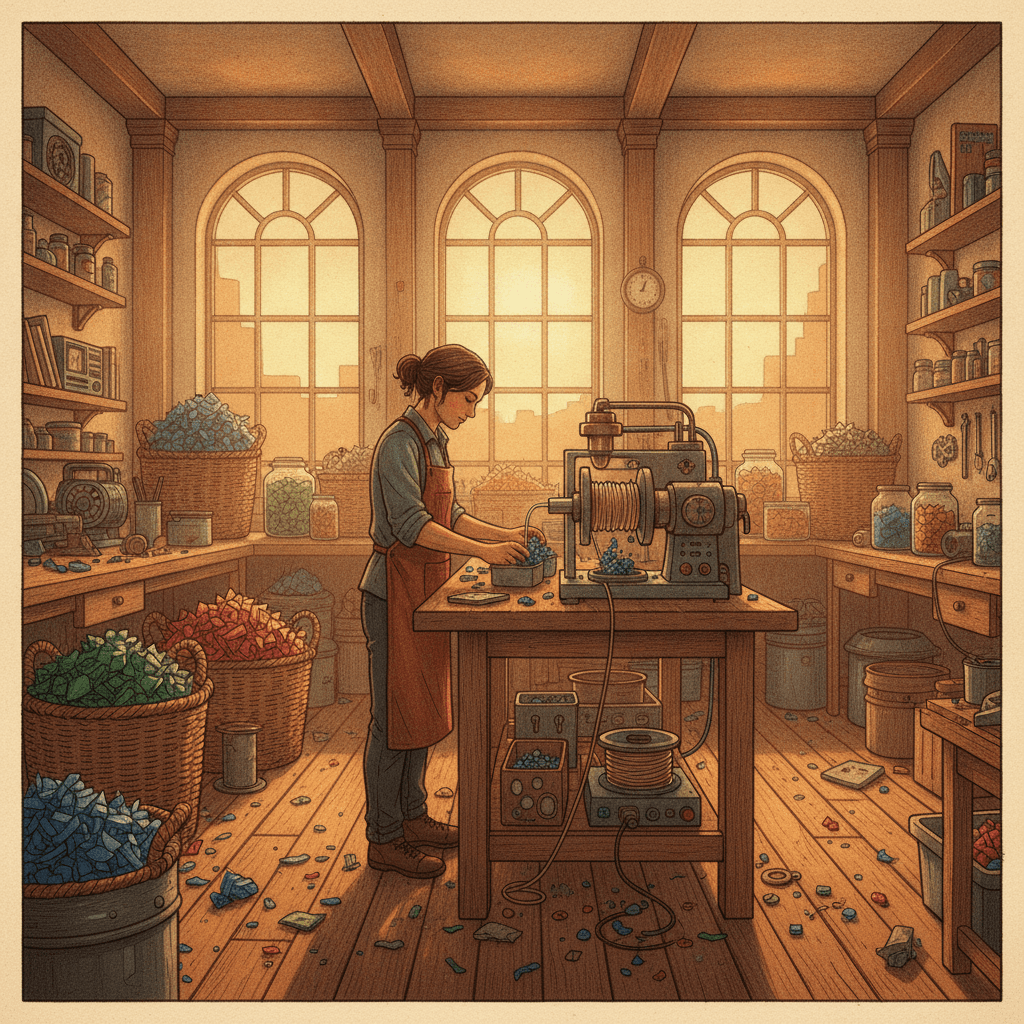
The process involves taking common household plastics, like the High-Density Polyethylene (HDPE) from milk jugs or Polypropylene (PP) from food containers, and giving them a new life. First, these plastics are carefully sorted and cleaned – think of it like meticulously picking out ingredients for a perfect recipe. Any labels or sticky bits are removed, and then the plastic is washed thoroughly and dried to ensure no contaminants mess up the final product.
Next, the cleaned plastic is shredded into tiny flakes, roughly the size of a small pea. These flakes are then fed into a specialized machine called an extruder, which works a bit like a giant pasta maker. It heats the plastic until it melts into a thick liquid, then pushes it through a tiny hole, creating a continuous strand, or filament, that’s perfect for 3D printers. This filament is carefully cooled and spooled, ready for use.
Scientists found that while these recycled plastic filaments, like those from HDPE and PP, might be slightly less stiff and strong than brand-new commercial plastics—about 18% to 25% less tensile strength, which is like comparing a slightly softer rubber band to a firmer one—they actually have some fantastic qualities. They show exceptional impact resistance, meaning they’re really good at absorbing a hit without shattering, and high toughness, which means they can deform a lot before breaking entirely. Think of it like a material that bends rather than snaps. This is especially useful for parts that need to withstand bumps and drops, making them ideal for many functional items.
Why This Matters for Your Wallet and the Planet
This research isn't just about making new stuff; it's about building a sustainable future. Instead of constantly digging up more raw materials to make new plastics, we can reuse what we already have. This "closed-loop recycling" system drastically cuts down on manufacturing costs for anyone using 3D printers, from a school lab to a small business. It also significantly reduces our environmental footprint by diverting tons of plastic from landfills. You might be surprised to learn that in the United States alone, over 30 million tons of plastic waste are generated annually, with only a fraction being recycled. This new approach offers a tangible way to make a dent in that number.
This technology isn't just theoretical; it's being actively developed. Companies like Reflow and ProtoCycler are already making desktop extruders that can turn plastic waste into filament. However, the consistency and quality control of these recycled filaments remain a challenge. Ensuring every batch has the right diameter and strength is crucial for reliable 3D printing. (/article/your-trash-could-become-new-medical-tools) explores another facet of how waste is being reimagined for high-value applications.
The goal is to perfect the process so that by 2030, you could buy a compact, affordable device for your home or workshop that effortlessly turns your cleaned plastic waste into functional 3D printer filament. Imagine printing a new garden tool, a custom phone stand, or even spare parts for an old toy, all from the plastic you would otherwise throw away.
The Path Forward: From Lab to Living Room
For this to become truly widespread, we need better sorting and cleaning at the community level, along with more efficient and accessible filament extruders. The researchers at the studied institution, for example, used a meticulous multi-step process for preparing the plastic, including hot water immersion with detergent and careful drying to prevent problems like moisture bubbles in the final filament. This precision is key.
The advancements in robot farmers are starting to think for themselves show how automation can handle complex tasks, and similar principles could one day streamline plastic sorting. As these systems improve and become more robust, we’ll see a future where "waste" plastic isn't just a problem, but a valuable resource right in your home. This shifts us from a linear "make-use-dispose" economy to a circular one where resources are constantly reused. (/article/the-secret-material-protecting-future-power) highlights how materials science is driving new solutions for critical infrastructure.
Ultimately, this innovation means you could soon have a direct hand in reducing plastic pollution and saving money on materials. Your daily habits, like sorting plastics, could directly power your next DIY project, turning a simple act of recycling into an act of creation.
Key Takeaways
- Scientists are successfully turning common plastic trash, like milk jugs, into durable 3D printing filaments.
- Recycled plastics show slightly reduced stiffness but offer superior impact resistance and toughness for functional parts.
- This approach cuts raw material costs and reduces environmental plastic waste, promoting a circular economy from your home.
Frequently Asked Questions
What kind of plastic can be recycled for 3D printing filament? Common household plastics like HDPE (milk jugs) and PP (food containers) are suitable. They must be carefully sorted and cleaned to ensure the filament is pure and performs well during printing.
How does recycled plastic filament compare to new plastic filament? Recycled plastics typically have slightly lower tensile strength (around 18-25% less stiff), but they often boast superior impact resistance and toughness, making them great for parts that need to withstand bumps.
Is this technology available for home use yet? Desktop filament extruders exist, but making high-quality, consistent filament from mixed household waste is still mostly in the research and early adopter phase. Widespread consumer-friendly solutions are likely 5-10 years away.
Editorial note: The scientific findings presented in this article are sourced exclusively from published research papers, peer-reviewed studies, certified inventions, and registered patent filings. Images generated by AI.
Stay ahead of the curve
The science that shapes tomorrow — in your inbox every week
The scientific findings presented in our articles are sourced from published research papers, peer-reviewed studies, certified inventions, and registered patent filings. Subscribe for focused weekly coverage, hands-on explainers, and practical insights that help you stay curious — no jargon, no noise.
By subscribing, you agree to receive newsletter and marketing emails, and accept our Terms of Use and Privacy Policy. You can unsubscribe anytime.
Battery Materials, Energy Storage Chemistry & Electric Vehicle Technology
Battery materials journalist covering the chemistry behind the electric revolution — and why the next decade of progress depends on what's inside the cell, not outside it.
View full profile →