Your Power Lines May Soon Have Zero Waste
Imagine a world where electricity flows with no energy lost, making everything from your phone to power grids far more efficient. Scientists have discovered new material candidates that could unlock this zero-resistance future, and you'll want to know how.
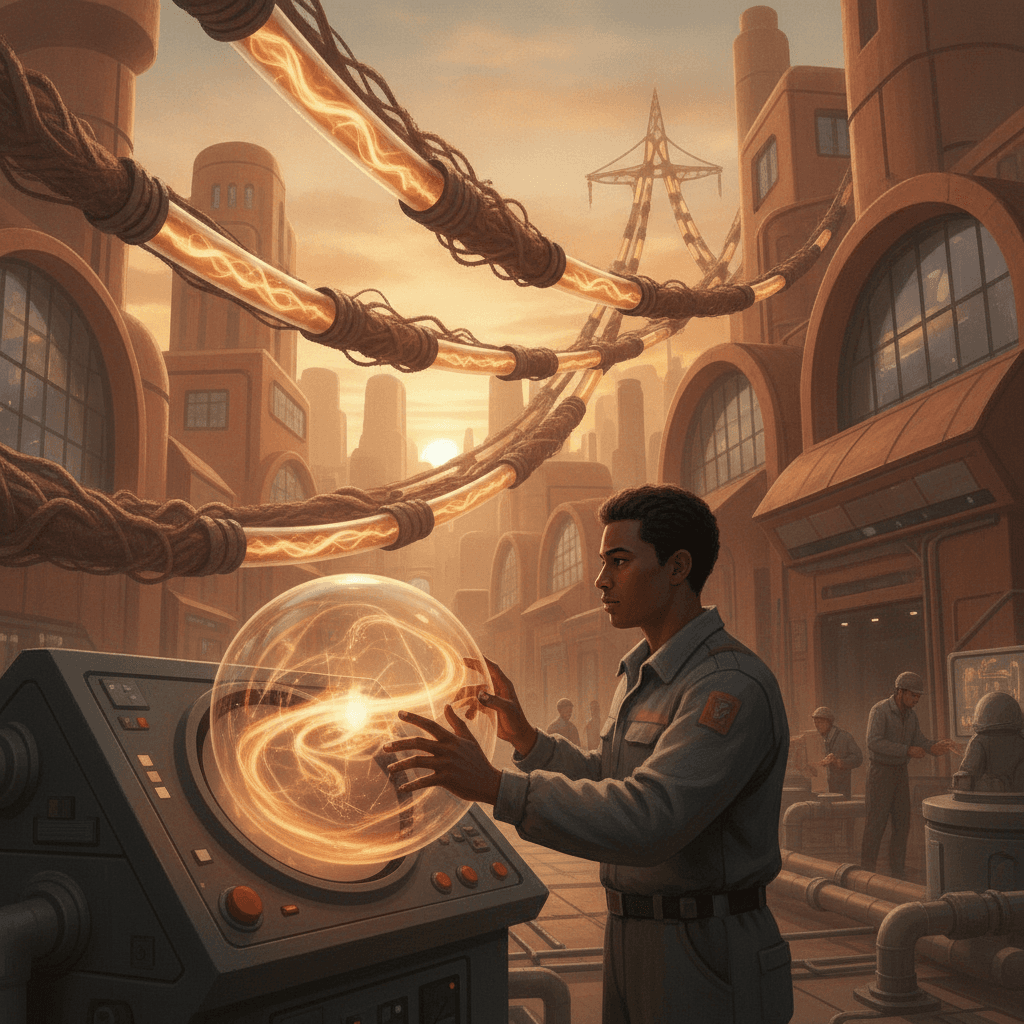
You know that annoying warmth coming from your phone charger, or how your laptop gets hot when it’s working hard? That heat isn't just uncomfortable; it’s wasted energy. Our current electrical systems, from tiny wires in your devices to massive power grids, lose a significant chunk of the energy they carry as heat. This happens because even the best conductors, like copper, still have some resistance, acting like tiny speed bumps for electrons.
This problem has plagued engineers for over a century. We’ve managed to get around it for some applications using superconductors, materials that let electricity flow without any resistance at all. The catch? They usually need to be cooled to extremely low temperatures, often colder than deep space, making them impractical for most everyday uses. Think of it like needing a special, expensive freezer just to keep your garden hose working.
But what if you could have that perfect, zero-loss electricity at room temperature, without the need for extreme cooling? Researchers at the University of California, Berkeley, and Lawrence Berkeley National Laboratory have used a clever trick involving artificial intelligence to find new materials that might just do this. They've essentially taught an AI to look for very specific structural quirks in known materials, identifying those that could act like "perfect" electrical highways.
How a Smart AI Filters for Perfect Electrical Highways
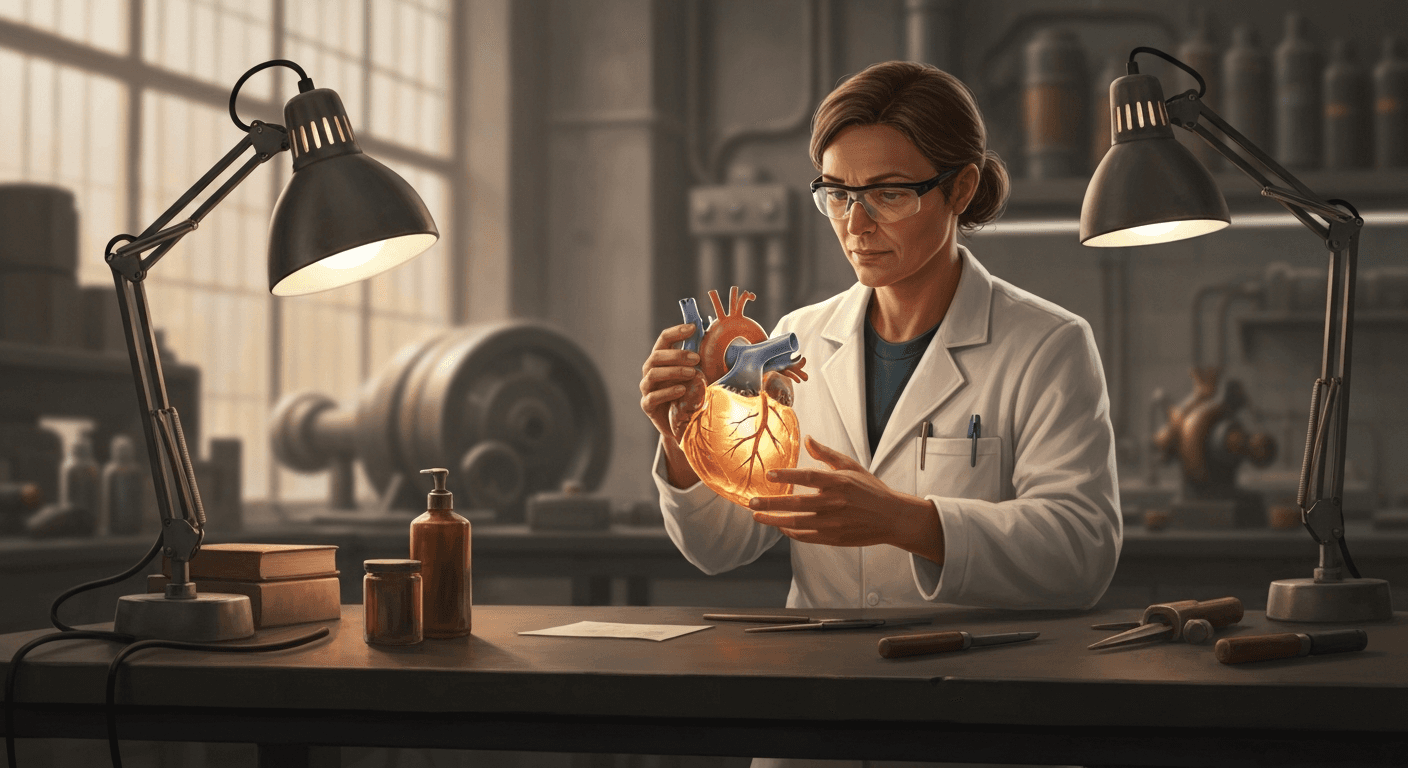
This new approach isn’t just randomly guessing; it uses what’s called a Causal-AI physics engine. Imagine you're a detective looking for a very specific type of jewel hidden among thousands of ordinary stones. This AI acts like a super-smart jeweller who understands the subtle stress patterns and arrangements within the atomic structure of materials, like a microscopic architect identifying weak points in a building. The team fed this AI data on over 57,000 known inorganic crystal structures, searching for particular "topological tension-release mechanisms" that hint at superconductivity. These mechanisms are like hidden springs in the material's atomic layout that could allow electrons to flow freely, instead of bumping into each other and generating heat.
The AI specifically looked for two main types of materials. First, it found "stable topological anomalies," which are existing, solid materials that might work as superconductors if cooled, but not as intensely as current ones. Then, it identified something even more exciting: "extreme metastable candidates." These are materials with a slightly unstable, oddly stretched structure – like a tightly wound spring – that the AI predicts could achieve superconductivity at regular room temperature. One surprising fact: the AI identified ten specific materials, including things like a complex compound of europium, silicon, boron, and oxygen ($\text{Eu}_3\text{Si}2\text{BO}{10}$), that would be almost impossible for human scientists to pinpoint from vast material databases alone.

What This Discovery Means for Your Daily Life
This research, published in Causal-AI Physics in July 2026, doesn’t give us a room-temperature superconductor tomorrow. The identified materials still need to be synthesized and tested in a lab, which is often a complex, multi-year process. Think of the AI as providing a highly refined treasure map, but someone still needs to go dig up the treasure and confirm it's real. Dr. Julian D. Weber, a lead researcher on the project, noted in a university press release that this work provides "experimental physicists with a definitively narrowed, computation-backed search space." This drastically cuts down the time and resources usually spent on trial-and-error material discovery.
However, the potential impact is enormous. If these materials pan out, we could see power lines that deliver electricity with virtually no loss, drastically improving future energy management. Your electric car could charge faster and go further, and data centers—which consume massive amounts of energy today—could run far more efficiently, reducing their environmental footprint. Even tiny electronics, like your phone, could run cooler and have longer lasting phone battery life, meaning less heat, less wasted energy, and perhaps even smaller batteries.
The journey from a computational prediction to a real-world material can be long, but this AI-driven shortcut is a huge step. Instead of searching blindly, we now have precise targets, guiding us toward a future where energy flows freely, without the constant drag of resistance. The pursuit of perfect conductors has moved from a needle-in-a-haystack problem to a targeted excavation, and that’s a reason to be truly excited about the secret material protecting future power.
Looking Ahead: The Road to Zero Resistance
Developing and testing these new materials will likely take another 5 to 10 years, assuming the initial lab work confirms the predictions. The materials themselves are complex, and perfecting the manufacturing processes will be a significant challenge. However, the potential rewards for energy efficiency and technology are so vast that this is a race worth running. We're moving towards a world where our energy infrastructure becomes far more robust and less wasteful, all thanks to smart algorithms pointing the way.
Key Takeaways
- AI is identifying specific material structures that could conduct electricity with zero loss at room temperature, which was previously a scientific holy grail.
- Current electrical systems waste significant energy as heat due to material resistance, a problem that room-temperature superconductors could entirely solve.
- While lab testing will take years, this AI approach provides a definitive "treasure map," drastically speeding up the discovery process for future energy technologies.
Frequently Asked Questions
What is a superconductor? A superconductor is a special material that allows electricity to flow through it with zero resistance, meaning no energy is lost as heat. Most current superconductors only work at very cold temperatures.
How does AI help find new superconductors? AI acts like a super-smart filter, analyzing vast databases of known materials to identify specific atomic structures and stress patterns that indicate potential superconductivity, even at room temperature.
Why does room-temperature superconductivity matter? It matters because it would allow electricity to be transmitted and used without any energy loss, leading to hugely more efficient power grids, faster electronics, and much longer-lasting batteries for everyday devices.
Editorial note: The scientific findings presented in this article are sourced exclusively from published research papers, peer-reviewed studies, certified inventions, and registered patent filings. Images generated by AI.
Stay ahead of the curve
The science that shapes tomorrow — in your inbox every week
The scientific findings presented in our articles are sourced from published research papers, peer-reviewed studies, certified inventions, and registered patent filings. Subscribe for focused weekly coverage, hands-on explainers, and practical insights that help you stay curious — no jargon, no noise.
By subscribing, you agree to receive newsletter and marketing emails, and accept our Terms of Use and Privacy Policy. You can unsubscribe anytime.
Battery Materials, Energy Storage Chemistry & Electric Vehicle Technology
Battery materials journalist covering the chemistry behind the electric revolution — and why the next decade of progress depends on what's inside the cell, not outside it.
View full profile →