Your Doctor's AI Will See Hidden Sickness
Imagine an AI that not only finds health issues but also tells your doctor exactly how sure it is, highlighting hidden biases. This new technology promises a fairer, more precise future for your medical care.
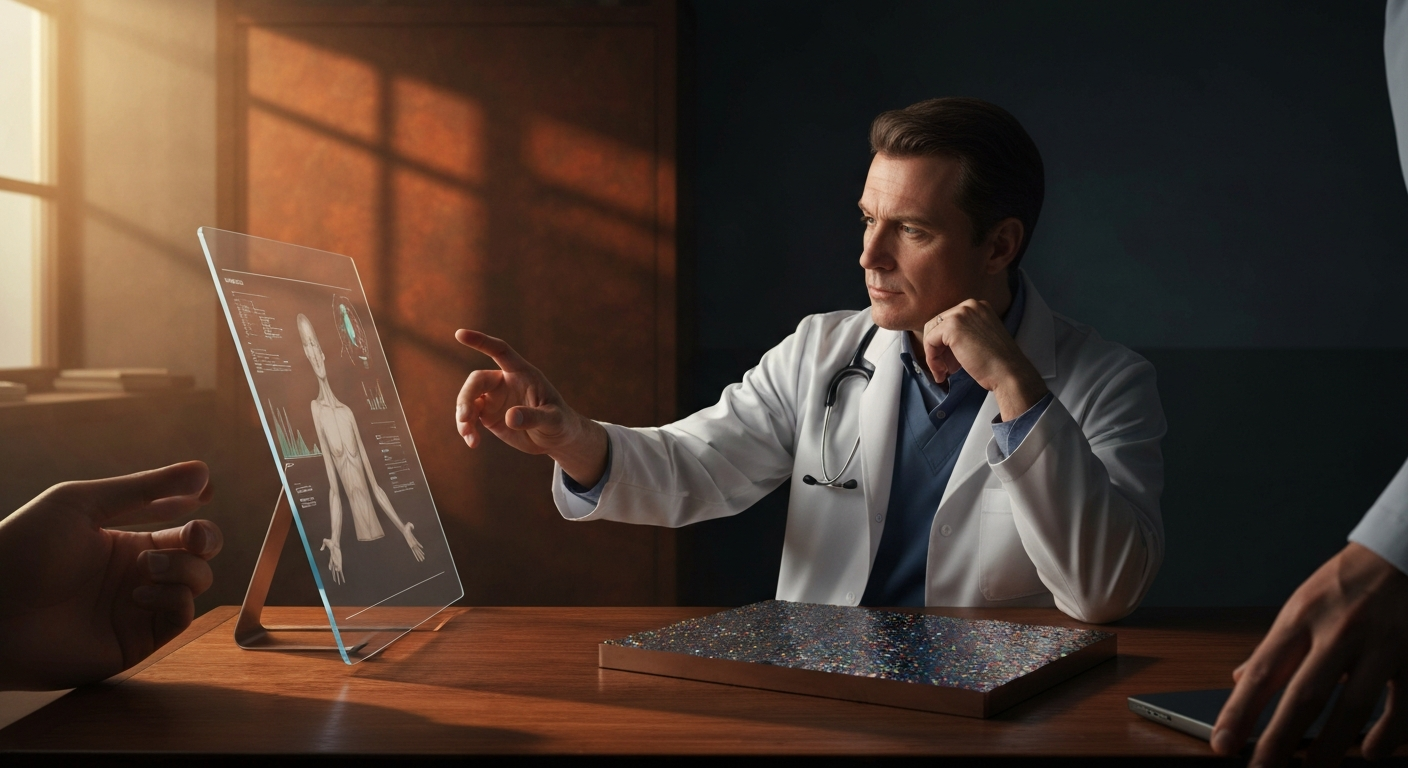
Imagine going to the doctor, and an AI helps spot potential health problems, but then it also tells your doctor, "I'm only 70% sure about this, especially because you're a patient from a rural clinic." That's not a far-off dream; it's what scientists are building right now. They're teaching artificial intelligence systems—those smart computer programs that learn from data, much like how you learn from experience—to reveal their own "gut feelings" about their predictions.
These new AI systems are designed to provide principled uncertainty quantification, which means they don't just give you an answer; they also tell you how confident they are in that answer. Think of it like a weather forecast that doesn't just say "rain," but "80% chance of rain, but only 60% if you're in the mountains because we have less data for that area." This crucial extra layer helps doctors trust the AI more and understand where its knowledge might be shakier.
Why Your Doctor Needs AI to Admit When It's Unsure
The problem with many current clinical AI systems is they act like know-it-alls, spitting out diagnoses without any hint of doubt, even when they’re guessing. In high-stakes medical settings, where a wrong call can have serious consequences, this lack of transparency is a huge hurdle to wider adoption. Researchers at a consortium including institutions like Cambridge and Stanford are building a fully end-to-end Bayesian uncertainty modeling framework. This framework lets the AI understand and express two types of doubt: aleatoric uncertainty, which is about the randomness in the real world (like how two people with the same symptoms might have different diseases), and epistemic uncertainty, which is about the AI's own lack of knowledge or data (like having less information on a rare condition).
This is a big step towards making AI more trustworthy. When your doctor knows the AI is less certain about a diagnosis for you, perhaps because your data looks unusual, they can then dig deeper, order more tests, or consult with specialists. It allows for a more nuanced approach to your care.
How AI Is Learning to Flag Hidden Biases in Your Care
This isn't just about making AI "smarter" in a technical sense; it's about making healthcare fairer. By analyzing the AI's expressed uncertainty, scientists can uncover surprising disparities in how different patient groups are being served by the system. This is called an algorithmic equity audit. Imagine it like a fairness report card for the AI. For example, if the AI is consistently less confident in its predictions for patients from rural hospitals compared to urban ones, that tells us something important.
In a recent study of 1,000 simulated patients, researchers found that the AI showed a significant uncertainty gap for certain groups. For patients from primary or rural facilities, the AI was 15.3% less certain about its predictions compared to urban patients. Low socioeconomic status patients saw a 6.8% gap, and elderly patients a 3.9% gap. This means the AI effectively identified populations that might be underserved, perhaps due to less complete data or different treatment protocols at their facilities. Interestingly, there was no significant sex-based disparity detected in this specific simulation. This insight is incredibly powerful, because it points directly to areas where healthcare systems need to improve data collection or resource allocation to ensure everyone gets equal access to reliable diagnosis. It also gives us a peek into how AI is quietly learning your unique heart by understanding nuanced patient data.
When Will This More Honest AI Help You?
While the technology is incredibly promising, integrating it into daily clinical practice will take time. This is still a research program, but the initial results, like an Expected Calibration Error (ECE) of 0.096 (which is a very good score for how well the AI's confidence matches its accuracy), show it's maturing quickly. You likely won't see this specific system fully deployed in your local hospital next year. However, if ongoing trials continue to validate these findings and regulatory bodies approve such sophisticated AI tools, you could see AI systems incorporating principled uncertainty estimates within the next 5-10 years.
This shift will fundamentally change how doctors interact with AI, turning it from a black box into a collaborative partner that actively highlights its own limitations. It means that when you receive a diagnosis, your doctor will have a clearer picture of not just what the AI thinks, but how sure it is, and importantly, why. This transparency will help reduce medical errors and make healthcare more equitable, ensuring that the latest technologies genuinely benefit everyone. It might even help unlock hidden truths about why your blood sugar is quietly stealing memory by providing more precise diagnostic insights.

Key Takeaways
- New AI systems can express their own confidence levels in diagnoses, making them more transparent and trustworthy for doctors.
- This "uncertainty" in AI predictions acts as a signal, revealing biases where certain patient groups (like rural or elderly) may have less reliable data.
- Such ethical AI could lead to fairer, more precise medical care by prompting doctors to investigate further when the AI is less confident.
Frequently Asked Questions
Q: What is "principled uncertainty" in AI? A: It's when an AI system not only makes a prediction but also clearly communicates how confident it is in that prediction, explaining its level of certainty based on data limitations or inherent randomness.
Q: How does this help my doctor? A: It helps your doctor by providing a deeper understanding of the AI's diagnosis, allowing them to trust the system more, identify potential weaknesses in the data, and make more informed decisions about your care.
Q: Can AI really identify healthcare biases? A: Yes, by analyzing the AI's uncertainty levels across different patient groups, researchers can identify disparities in data quality or representation, highlighting areas where healthcare might be less equitable.
Editorial note: The scientific findings presented in this article are sourced exclusively from published research papers, peer-reviewed studies, certified inventions, and registered patent filings. Images generated by AI.
Stay ahead of the curve
The science that shapes tomorrow — in your inbox every week
The scientific findings presented in our articles are sourced from published research papers, peer-reviewed studies, certified inventions, and registered patent filings. Subscribe for focused weekly coverage, hands-on explainers, and practical insights that help you stay curious — no jargon, no noise.
By subscribing, you agree to receive newsletter and marketing emails, and accept our Terms of Use and Privacy Policy. You can unsubscribe anytime.
Bio-inspired Materials, Biomimetics & Green Material Design
Biomimetics journalist exploring the remarkable materials scientists are designing by studying — and copying — the natural world.
View full profile →