Your Body Could Print Its Own New Bone
Imagine regenerating a damaged limb with a precise, custom-made bone. We're talking about 3D printing new parts inside you, dramatically improving recovery for serious injuries.
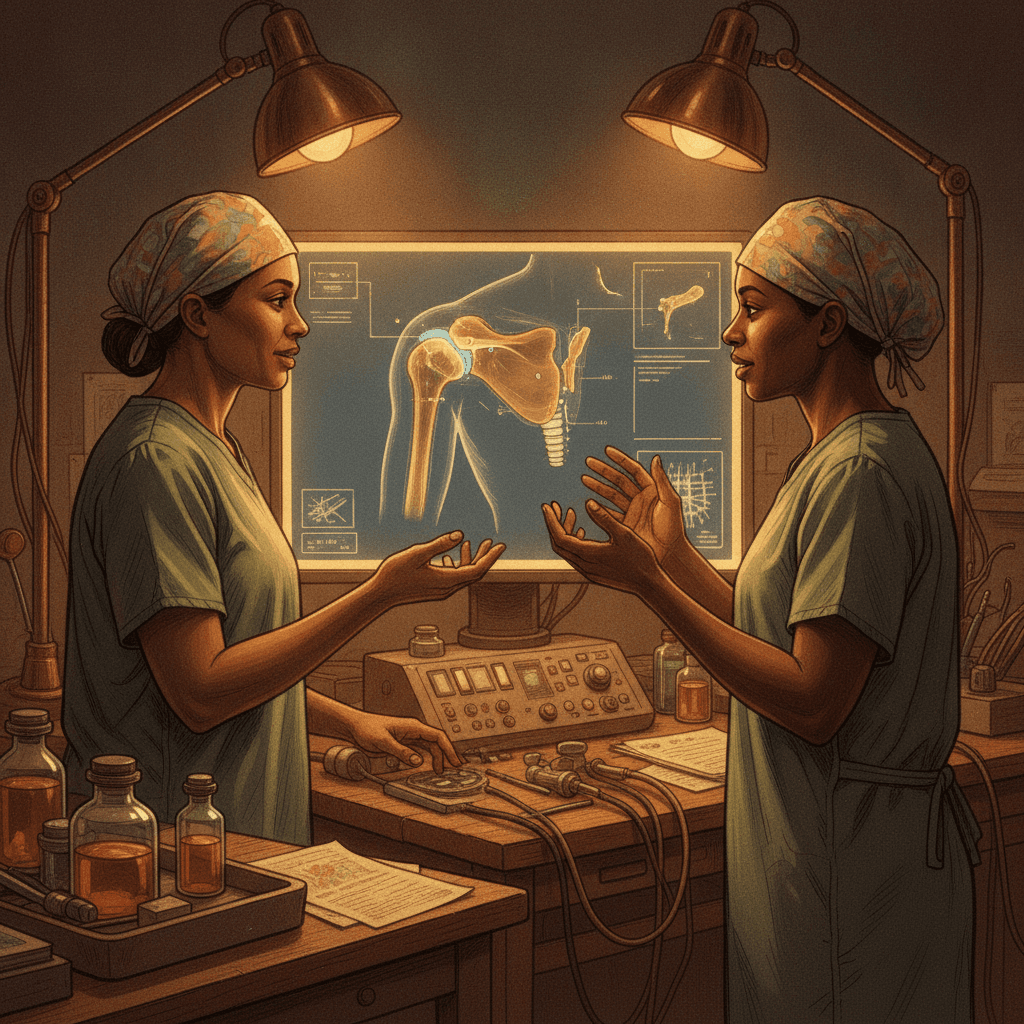
Sometimes, when an injury is truly severe, like a combat trauma, you don't just lose soft tissue; entire sections of bone vanish. This isn't just a challenge for surgeons; it's a profound problem at the intersection of many medical fields, leading to prolonged recovery and difficult outcomes. But what if your own body could print a new, perfectly fitted piece of bone right where it's needed?
This isn't science fiction. Scientists are now designing and using patient-specific implants, crafted with 3D printing, to repair massive bone and tissue damage. Researchers at the Russian Academy of Sciences and Burdenko Main Military Clinical Hospital have developed a protocol using these implants, specifically for glenohumeral arthrodesis, which is the surgical fusion of your shoulder joint, typically done to stabilize a badly damaged arm. This work, published in Traumatology and Orthopedics of Russia, involved 35 patients with severe upper limb injuries.
Building a Custom Repair Kit for Your Body
The method works a bit like a skilled tailor creating a custom suit, but for your skeleton. First, doctors meticulously clean the injury site and rebuild the soft tissues. Then, they plan the bone reconstruction using advanced imaging, like CT scans, which are like taking thousands of detailed X-ray slices to build a 3D model of your body. This digital model helps them figure out the exact shape and size of the missing bone piece.
The crucial next step involves patient-specific digital modeling. Here, specialists create a virtual blueprint for the missing bone part. This blueprint is then sent to a high-tech 3D printer, which builds a titanium implant layer by tiny layer, much like a pastry chef builds a multi-tiered cake, but with metal powder. This process is called additive manufacturing, and it allows for incredible precision, creating a metal scaffolding that perfectly matches your anatomy. You can already see how your trash can is printing new parts in other fields, but here, it's about rebuilding bodies.
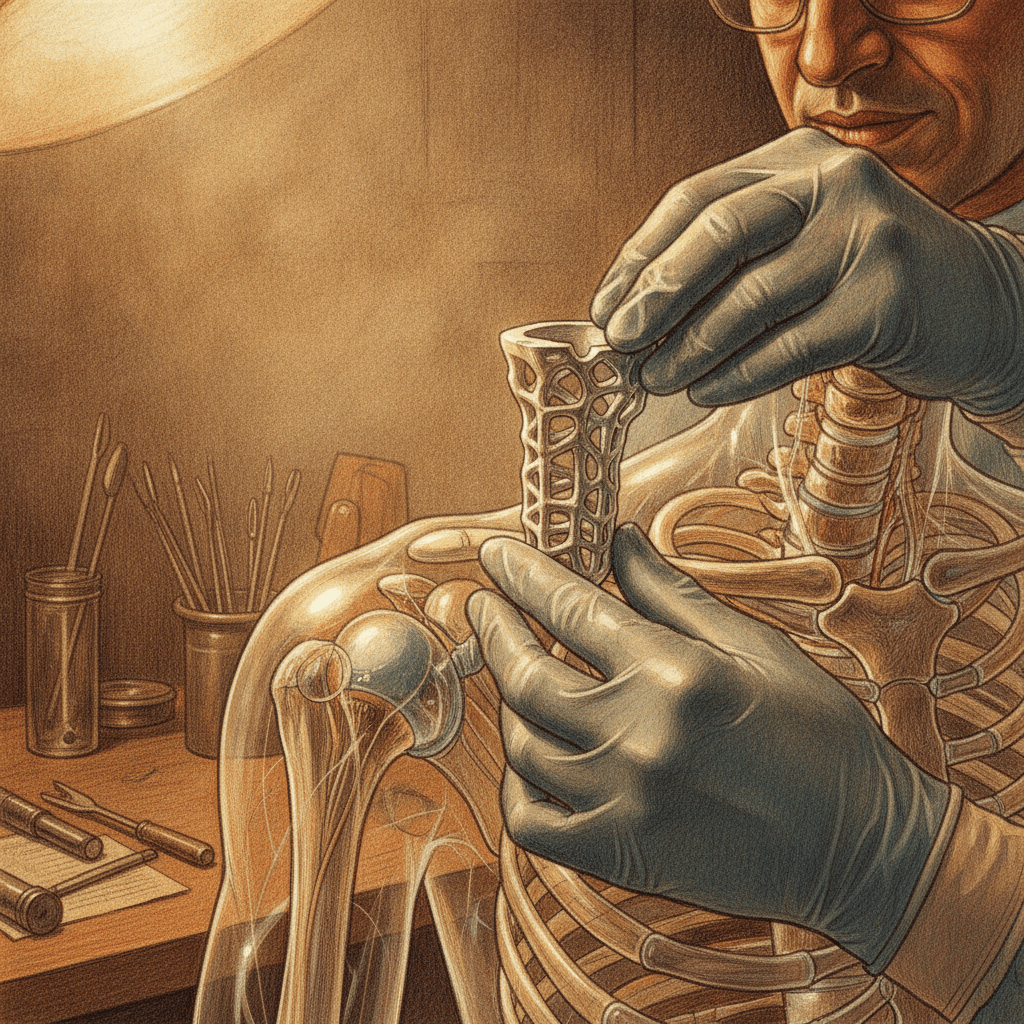
How Custom Implants Fuse With Your Living Bone
After the custom implant is printed, surgeons use virtual planning software to practice the operation beforehand, minimizing surprises. During the actual surgery, the patient-specific titanium implant is carefully placed to support a bone graft—a piece of bone taken from another part of your body, or from a donor. This implant provides what's called controlled interfragmentary compression; imagine using a tiny, precisely engineered clamp to hold broken pieces of wood together perfectly while they glue. This pressure helps the living bone graft fuse seamlessly with your existing bone, stabilizing the joint.
The results from the initial patient group were genuinely surprising. After 18 months, pain intensity, measured on a visual analog scale (a simple way to rate your pain from 0 to 10), dropped significantly from an average of 8 points to just 1 point. That's a huge reduction. Functional deficit scores, which measure how much difficulty you have using your upper limb, decreased from 85 points to 23 points, indicating a dramatic improvement in daily activities. This allows people to regain significant support and strength, even if the shoulder joint itself no longer moves actively.
The Future of Rebuilding Our Bodies
Skeptics might wonder about long-term integration or the body's reaction to a metal implant. The researchers addressed this by monitoring patients for months with multidetector computed tomography and scintigraphy (imaging techniques that track bone activity and remodeling), confirming the bone graft was successfully incorporating. This detailed follow-up adds a lot of trust to their findings.
The implications go far beyond severe combat injuries. Think about people with massive bone loss from cancer, severe osteoporosis, or complex fractures from accidents. If this approach scales, it could drastically reduce recovery times and improve the quality of life for countless individuals. It's a stepping stone towards a future where your body could print its own new parts, moving from metal scaffolds to potentially growing entirely new biological structures. This also hints at a future where even the hidden molecule that rewinds your cells could be combined with structural repair to truly regenerate.
This method transforms how we think about repairing severe damage. It shifts from generic fixes to deeply personal solutions, recognizing that every body, and every injury, is unique. It's a testament to how combining advanced materials science with surgical precision can unlock entirely new possibilities for healing.
Key Takeaways
- Custom 3D-printed titanium implants are being used to repair massive bone defects from severe injuries, improving patient recovery.
- The technique involves digital modeling, virtual surgical planning, and precise placement of implants to support bone grafts.
- Patients experienced significant reductions in pain and dramatic improvements in upper limb function within 18 months post-surgery.
Frequently Asked Questions
What is glenohumeral arthrodesis? It's a surgical procedure to permanently fuse the bones of your shoulder joint, often performed to relieve severe pain or instability after extensive damage, making the arm stable but losing active shoulder movement.
How do 3D-printed implants help? They create a custom-fitted scaffolding, precisely matched to your anatomy, which supports a bone graft and provides the necessary compression for it to heal and integrate strongly with your existing bone.
What kind of injuries can this help? This method is particularly effective for severe injuries with large bone and soft tissue loss, such as those from gunshot wounds, but holds promise for other complex fractures, bone defects from tumors, or severe joint degeneration.
Editorial note: The scientific findings presented in this article are sourced exclusively from published research papers, peer-reviewed studies, certified inventions, and registered patent filings. Images generated by AI.
Stay ahead of the curve
The science that shapes tomorrow — in your inbox every week
The scientific findings presented in our articles are sourced from published research papers, peer-reviewed studies, certified inventions, and registered patent filings. Subscribe for focused weekly coverage, hands-on explainers, and practical insights that help you stay curious — no jargon, no noise.
By subscribing, you agree to receive newsletter and marketing emails, and accept our Terms of Use and Privacy Policy. You can unsubscribe anytime.
Battery Materials, Energy Storage Chemistry & Electric Vehicle Technology
Battery materials journalist covering the chemistry behind the electric revolution — and why the next decade of progress depends on what's inside the cell, not outside it.
View full profile →