The Simple Secret That Helps Rice Ignore Salt
Imagine vast rice fields thriving where only salt-baked earth once lay barren. Discover how tiny, unseen life in your soil could unlock a future of abundant food for everyone.
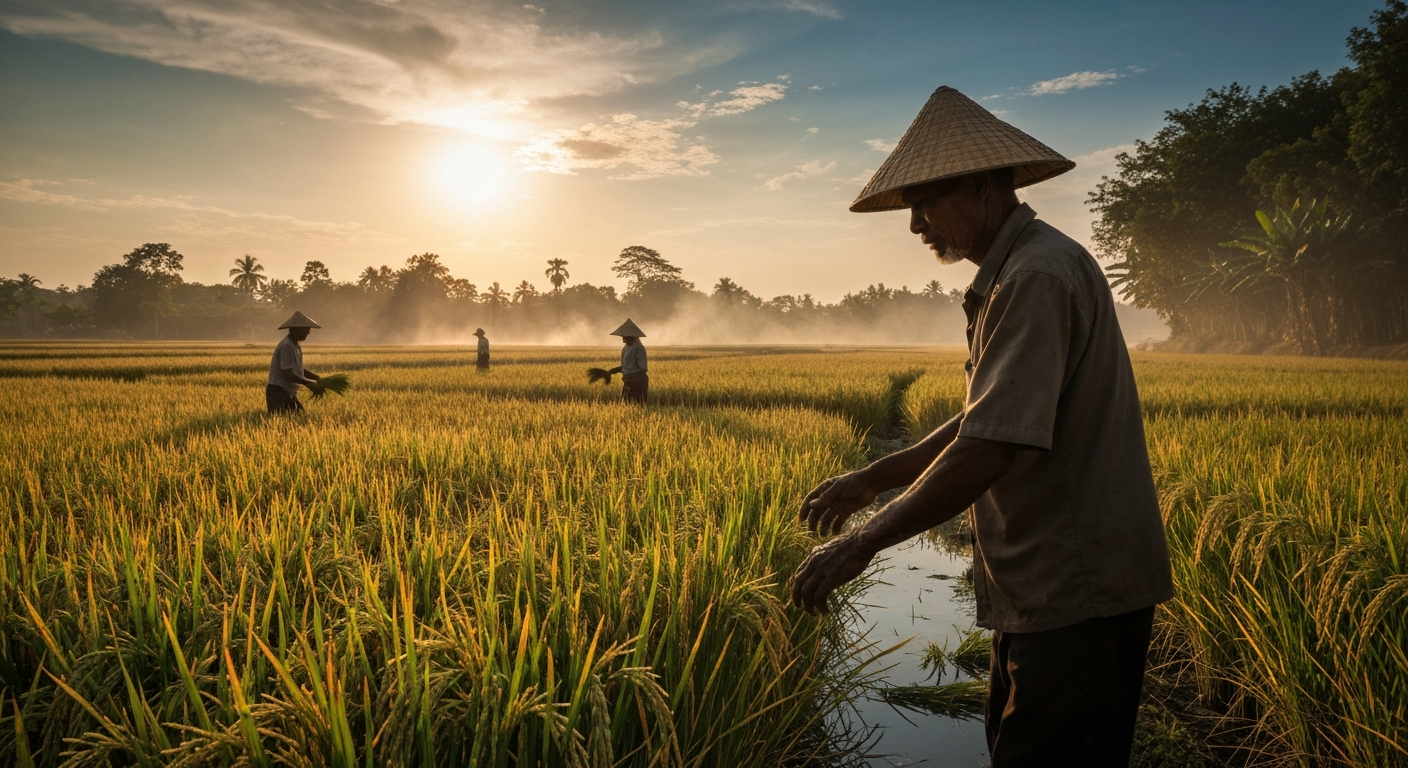
Imagine peering out over a shimmering green landscape, rows of rice plants swaying gently, their grains heavy and ripe. This isn't just a picturesque scene; it's the foundation of life for billions of people around the world. Now, imagine that same scene, but instead of lush green, you see brittle, brown stalks struggling against a hostile, salty soil.
This bleak vision is becoming increasingly common as rising sea levels and unsustainable farming practices turn once-fertile land into barren salt traps. But what if rice, the staple food for over half the planet, could learn to shrug off this salt, as easily as you shrug off a jacket? It sounds like science fiction, yet the answer might be hiding right under your feet, in the dirt itself.
Your Rice Plants Could Soon Be Super-Resilient
This isn't just a hopeful dream. Researchers are uncovering how the invisible world beneath the soil surface – what we call the soil microbiome, a community of tiny life forms like bacteria and fungi, much like your gut microbiome influences your health – holds the key to making rice incredibly resilient. Recent studies, including one focused on the salt-sensitive "Nipponbare" rice variety, show that simply having the right soil microbes can help rice plants thrive even in heavily salted conditions that would normally kill them. These tiny allies act like personal bodyguards, buffering the rice from environmental stress.
In fact, plants grown in salty conditions with these helpful microbes actually looked and performed almost identically to healthy plants grown in perfect, unsalted soil. That's a staggering discovery. Think of it: a plant facing a major challenge, yet appearing unfazed because of its unseen helpers. It's like sending your child to school with a brilliant tutor who makes even the hardest subjects feel easy.
How Tiny Soil Helpers Build Stronger Plants
So, how do these microscopic helpers work their magic? It turns out they boost the plant's natural defenses and energy production. When rice plants encounter salt, they usually struggle to produce enough chlorophyll – the green pigment that captures sunlight for food, like solar panels in a leaf. Salinity also slashes their ability to photosynthesize, which is the process where plants convert sunlight, water, and carbon dioxide into energy, much like a factory turning raw materials into finished goods.
The soil microbiome seems to switch on the plant's internal "power-up" mode. Microbes help the plant maintain higher levels of chlorophyll and improve its photosynthetic rate, even under stress. It’s like these tiny organisms are whispering instructions to the plant's cells, telling them, "Keep going! You've got this!" This improved efficiency helps the rice grow taller and produce more biomass, which is the overall plant material. This crucial research, often conducted by plant scientists at institutions like the University of California, Davis, highlights the potential of natural solutions.
The Secret Within The Green Leaves
You might be surprised to learn that a staggering one-fifth of the world’s irrigated land is now affected by salt, rendering it less productive. The secret to fighting back against this silent threat is deeply entwined with the plant's greenness. Researchers found that chlorophyll, especially chlorophyll a, was a primary indicator of how well rice could cope with salt. The healthier the plant's "solar panels" were, the better it performed.
Imagine a highly trained athlete with a special supplement that lets them breathe more efficiently during a race. The soil microbes essentially provide that "supplement" for rice, allowing it to "breathe" better through its stomata (tiny pores on leaves, like your skin's pores) and keep its energy production humming. This finding really hammers home that vibrant color isn't just pretty; it's a window into the plant's fundamental survival mechanisms. Understanding your gut microbiome can similarly unlock hidden health benefits for you (/article/your-gut-has-a-hidden-power-switch).
The Path to More Food and Happier Farmers
This isn't a quick fix that will be on every farm next year; it’s a promising area of ongoing research. But if we can harness these native soil microbiomes – possibly by introducing specific beneficial microbes or encouraging their growth – the implications are huge. Farmers could face fewer crop losses from salty soils, leading to more stable incomes and better food security for everyone. You might even see your favorite rice dishes become more affordable and readily available.
Addressing skeptics, scaling this technology is a major hurdle. Different soil types and climates host different native microbes, meaning a "one-size-fits-all" solution is unlikely. Researchers need to identify which specific microbial communities are most effective and how to introduce or cultivate them reliably in diverse agricultural settings. It's a complex puzzle, but the early pieces fit together beautifully.
A Future Where Dirt Feeds The World
Beyond just rice, this discovery hints at a much broader potential for sustainable agriculture. If microbes can help rice resist salt, what other stresses could they mitigate? Drought? Pests? Nutrient deficiencies? Imagine a future where plants are naturally more robust, requiring fewer chemical inputs like fertilizers and pesticides. This approach aligns perfectly with efforts to help plants naturally consume less fertilizer (/article/how-plants-secretly-eat-less-fertilizer) and could lead to healthier ecosystems overall.
The potential here is truly inspiring. The humble dirt beneath our feet, often overlooked, could be a silent powerhouse, ready to revolutionize how we feed a growing global population. It reminds us that often, the most sophisticated solutions are found in the most natural and unexpected places. This insight into the unseen world working tirelessly for our benefit makes even the ordinary feel extraordinary, proving that tiny microbes can indeed hold the key to a healthier, more abundant future. Plus, these tiny microbes can keep your food fresher for longer, too (/article/tiny-microbes-are-the-secret-to-fresher-food).
Key Takeaways
- Native soil microbes can help rice plants thrive in salty soil, making them as resilient as if they were in perfect conditions.
- These microbes boost crucial plant functions like chlorophyll production and photosynthesis, which are vital for plant energy and growth.
- Harnessing the power of the soil microbiome offers a sustainable, biological solution to global food security challenges posed by increasing soil salinity.
Frequently Asked Questions
What is a soil microbiome? The soil microbiome is the complex community of microscopic organisms, like bacteria and fungi, living in the soil. They play crucial roles in nutrient cycling, plant health, and ecosystem stability, much like the beneficial bacteria in your gut.
How do soil microbes help rice grow in salty soil? These beneficial microbes enhance the rice plant's ability to produce chlorophyll and perform photosynthesis, even under salinity stress. This helps the plant maintain its energy production and growth, making it more resilient.
Why is this discovery important for food production? Salinity threatens vast amounts of agricultural land, reducing crop yields. By using soil microbes, we could grow rice in previously unsuitable areas, increasing global food security and providing sustainable solutions for farmers.
Editorial note: The scientific findings presented in this article are sourced exclusively from published research papers, peer-reviewed studies, certified inventions, and registered patent filings. Images generated by AI.
Stay ahead of the curve
The science that shapes tomorrow — in your inbox every week
The scientific findings presented in our articles are sourced from published research papers, peer-reviewed studies, certified inventions, and registered patent filings. Subscribe for focused weekly coverage, hands-on explainers, and practical insights that help you stay curious — no jargon, no noise.
By subscribing, you agree to receive newsletter and marketing emails, and accept our Terms of Use and Privacy Policy. You can unsubscribe anytime.
Water Technology, Smart Irrigation & Sustainable Farming
Environmental scientist and journalist covering India's water crisis and the agricultural innovations designed to survive it.
View full profile →