Your Sick Plant Has a Secret. AI Just Heard It.
If you've ever watched a cherished plant wither, you know the helpless feeling. Now, imagine that scale across an entire farm. This new AI system is changing how we fight diseases in one of the world's most vital crops, promising more food for everyone.
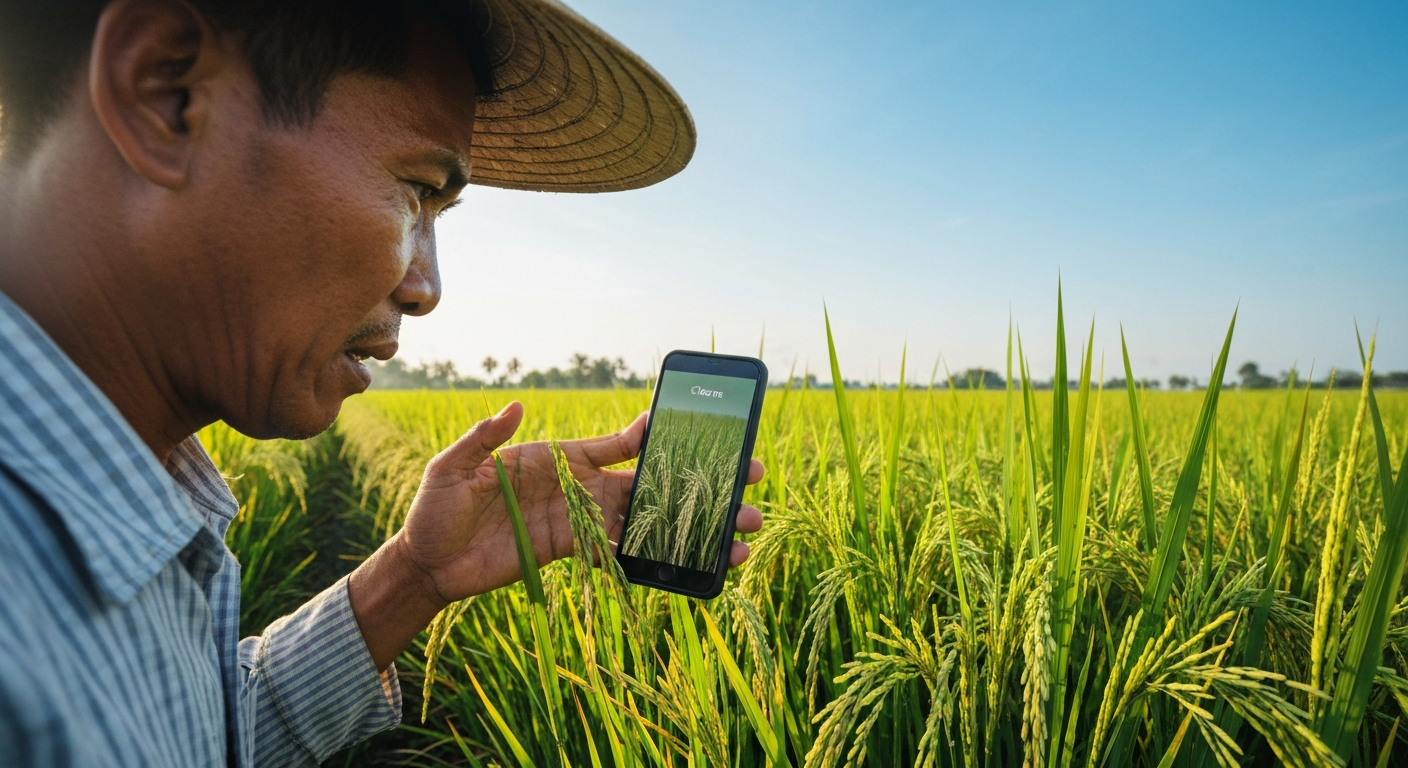
I’ve had my share of gardening failures. That moment you spot a yellow leaf, then another, then a whole branch drooping—and you have no idea why. Is it too much water? Not enough? A hidden pest? The clock starts ticking, and often, by the time you figure it out, it’s too late. Now, imagine that frustrating feeling magnified by millions, across vast fields, where entire communities depend on the harvest.
That's the daily reality for rice farmers around the world. Rice isn't just a grain; it's the lifeline for billions. It’s the staple food for over half the global population. But like any living thing, rice plants get sick. When they do, the consequences can be devastating, wiping out entire harvests and pushing families into hardship.
The Invisible Enemy You Can't Spot Alone
Spotting disease in a rice field is like finding a needle in a haystack—if the haystack were miles wide and the needles changed color depending on the light. Farmers, with their encyclopedic knowledge passed down through generations, still face immense challenges. Identifying specific diseases early requires years of expertise and an almost superhuman ability to be in multiple places at once.
Think about it: a rice paddy can stretch for acres, containing millions of individual plants. Manually inspecting each one, or even a representative sample, is a monumental task. You'd need an army of experts, working non-stop, under the scorching sun. Even then, human eyes can miss subtle early signs, leading to misdiagnosis or delayed treatment. And a delayed treatment is often no treatment at all.
What if a Digital Detective Could Scan Every Leaf?
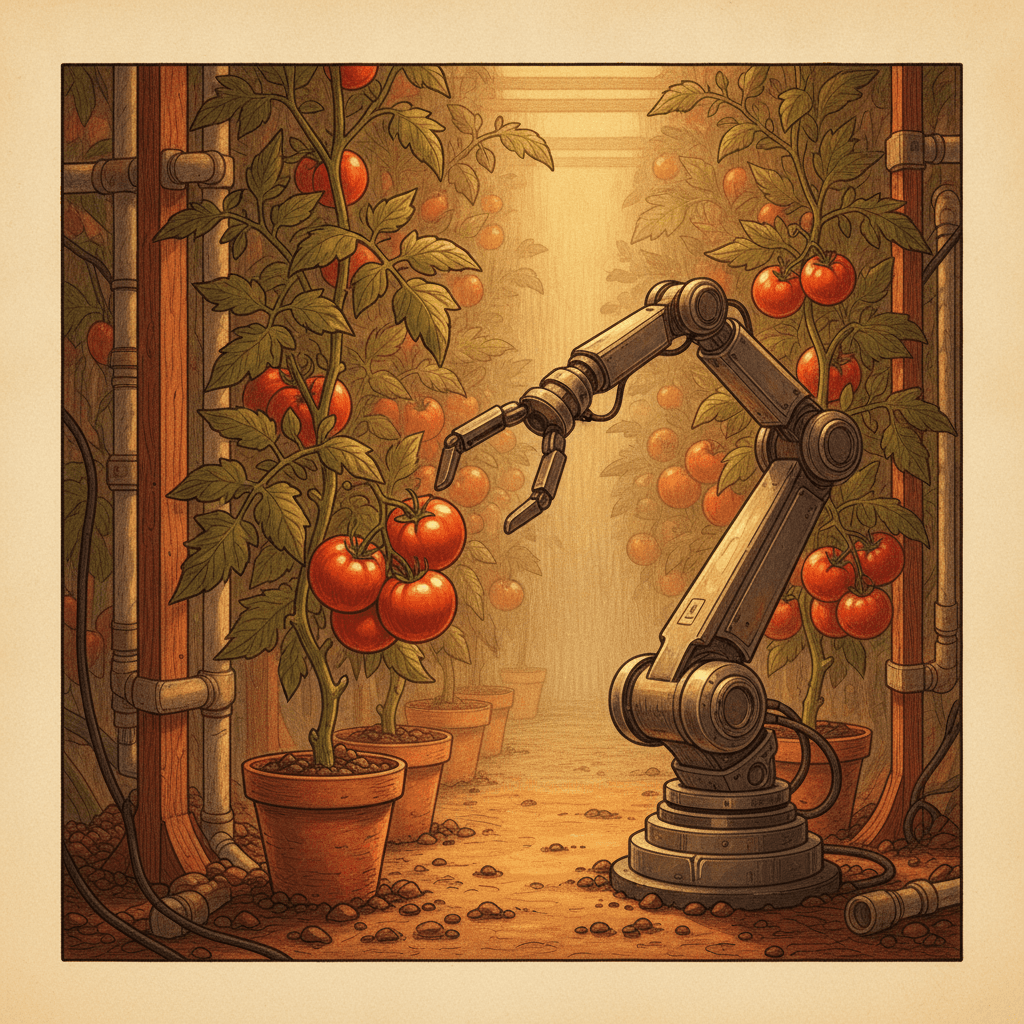
This problem has vexed agriculture for centuries. But what if you could give every farmer a microscopic, all-seeing eye that never gets tired, never makes a mistake, and knows exactly what to look for? That’s precisely what a team of researchers just demonstrated, and it sounds less like science fiction and more like a tool you’ll soon find on every farm.
They've developed a system that uses deep learning—a type of artificial intelligence that lets computers learn from huge amounts of data, much like how your brain learns patterns. Imagine teaching a computer to identify different dog breeds, not by programming specific rules like "four legs and fur," but by showing it millions of dog pictures until it figures out the nuances itself. That’s deep learning at its core.
Teaching a Computer to Diagnose Sick Plants
Specifically, they leveraged something called a Convolutional Neural Network (CNN). Think of a CNN as a super-specialized visual detective. Instead of just seeing an image, it breaks it down, pixel by pixel, learning to identify tiny features, textures, and color patterns. It's like teaching that visual detective to spot the specific brown spots, blights, or blasts that plague rice leaves, even when they're barely visible to the human eye.
The researchers used powerful tools like TensorFlow and Keras—these are essentially the advanced blueprints and building blocks for creating and training these digital detectives. They fed the CNN thousands upon thousands of images of healthy and diseased rice leaves, carefully labeled. Each time, the network learned a little more, refining its ability to distinguish between a healthy leaf and one suffering from, say, rice blast.
From Lab to Your Fingertips
So, how does this digital detective get its findings to you, the farmer, or ultimately, your grocery store? It needs a way to communicate. The team built a complete system, not just the "brain." They crafted a back-end using Python and the Flask framework—this is the hidden engine, the part that does all the complex analysis when it receives an image. It's like the chef in the kitchen, preparing the meal.
Then, there's the front-end, implemented in React.js. This is what you actually see and interact with, like the menu and serving staff at the restaurant. It's a clean, intuitive interface where a farmer could simply upload a picture of a suspicious leaf from their smartphone, and within moments, get a diagnosis. No more waiting, no more guessing.
The Numbers Don't Lie: A New Era for Farming
The results are seriously impressive. This AI system achieved an accuracy rate of 95.60% in detecting healthy rice plants, as well as those afflicted by blast, blight, and brown spots. To put that in perspective, imagine a doctor being right 95.6% of the time, almost instantly. This kind of precision allows farmers to diagnose problems much, much faster than traditional methods.
When you can identify a disease early, you can treat it early. That means targeted interventions, less wasted pesticide or fertilizer, and crucially, saving crops that would otherwise be lost. This isn't just about efficiency; it's about resilience. It’s about giving farmers a fighting chance against threats that used to feel insurmountable.
What This Means for Your Next Meal
This technology isn't just a niche agricultural tool; it directly impacts your dinner plate. More efficient and accurate disease detection means healthier rice yields. Healthier yields mean more food available globally, which helps stabilize prices and ensures food security, especially in regions heavily reliant on rice.
Imagine fewer crop failures due to disease. That translates to more consistent food supplies, less volatility in prices at the grocery store, and ultimately, a more stable world. This kind of AI isn't replacing human knowledge; it's augmenting it, empowering farmers with tools that amplify their expertise and protect their livelihoods. It’s a powerful reminder that sometimes, the biggest problems in the world can be tackled with clever algorithms and a camera.
Editorial note: The scientific findings presented in this article are sourced exclusively from published research papers, peer-reviewed studies, certified inventions, and registered patent filings. Images generated by AI.
Stay ahead of the curve
The science that shapes tomorrow — in your inbox every week
The scientific findings presented in our articles are sourced from published research papers, peer-reviewed studies, certified inventions, and registered patent filings. Subscribe for focused weekly coverage, hands-on explainers, and practical insights that help you stay curious — no jargon, no noise.
By subscribing, you agree to receive newsletter and marketing emails, and accept our Terms of Use and Privacy Policy. You can unsubscribe anytime.
Health & Biomedical Innovation
Science journalist and former biomedical researcher covering the frontiers of medicine.
View full profile →