Your Seeds May Secretly Grow Better Food
Imagine a future where plants grow stronger, healthier, and more resilient, simply by getting a head start from their own seeds. This quiet secret of nature could change how we farm.
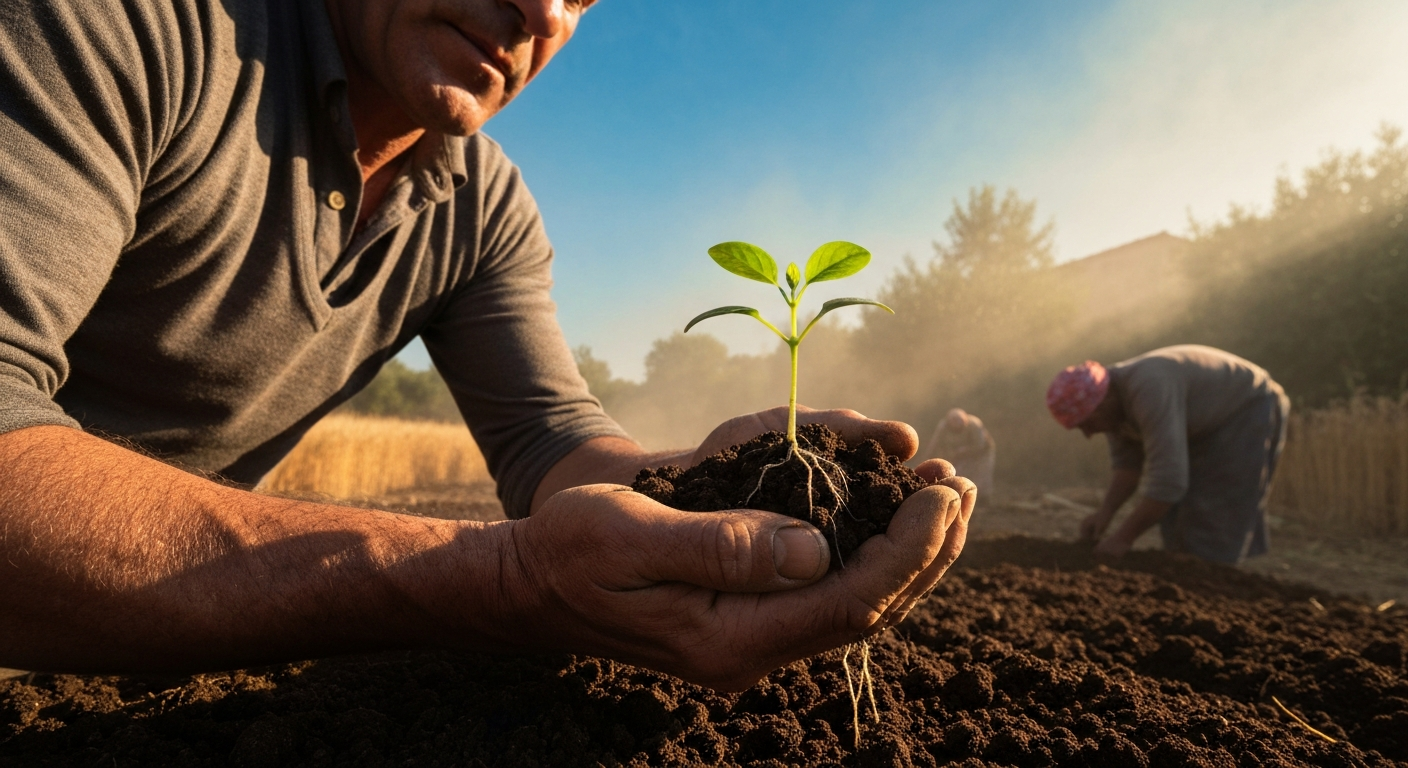
What if the key to growing healthier, more resilient crops was already hidden inside the very seeds you plant? Imagine a world where our food plants naturally fend off disease and thrive in harsh conditions, not because of pesticides or complex genetic tinkering, but because their "first friends" — a special group of beneficial microbes — were passed down from their parent plants, giving them an incredible head start.
This isn't some far-off dream from a science fiction novel. Researchers at Southwest University in China, led by Professor Lingfei Yu, have actually uncovered evidence that seeds carry a unique microbial inheritance. These tiny hitchhikers, called seed endophytes, act like inherited bodyguards, setting up shop inside a seedling before anything else, profoundly influencing how the plant grows and handles stress.
Your Plant's Invisible Bodyguards Are Passed Down Seeds don't just hold the genetic blueprint for a new plant; they also carry a diverse community of bacteria, much like a baby inherits gut microbes from its mother. These inherited endophytes colonize the emerging seedling before most other microbes from the soil can get in, giving them a "priority effect." Think of it like a new kid arriving in a schoolyard: if their best friends are already there, they'll shape the social dynamics more easily than if they show up alone. This early arrival helps friendly microbes establish a beneficial environment for the plant.
The team studied a fascinating plant called Desmodium sequax, which thrives in polluted soils, specifically polymetallic mine tailings. They found that planting D. sequax significantly improved soil quality, microbial diversity, and the overall health of the ecosystem. It's like this plant acts as a natural soil healer, and a big part of that healing power comes from its seed-borne microbes.
How a Tiny Bacterium Rewires Plant Growth The real surprise came when they isolated a dominant bacterium from the seeds, called Pantoea agglomerans D905. When this specific microbe colonized seedlings early, it profoundly changed the plant's root exudates – the chemical signals roots release into the soil, acting like an invitation to other microbes. Imagine your plant's roots putting out a very specific "welcome mat" that only good guys recognize. This metabolic reprogramming led to a completely different microbial community forming around the roots, known as the rhizosphere.
The resulting root microbiomes, shaped by this early colonization, grew larger, had a different structure, and were more stable. And here's the kicker: these reassembled microbiomes significantly improved plant growth and even reduced how much toxic cadmium the plants absorbed from the polluted soil. It's like the inherited microbe built a better neighborhood for the roots, making the whole plant tougher. This kind of interaction, where plant roots talk to their microbial partners, is a bit like your gut having a hidden power switch that influences your entire body.
Why This Matters for Your Next Meal This isn't just a fascinating botanical detail; it has massive implications for how we grow our food. If we can understand and harness these inherited microbial engineers, we could develop crops that are naturally more robust, needing less intervention from synthetic fertilizers or pesticides. This could lead to a future where your crops will soon grow their own pest control.
The traditional agricultural approach often treats seeds as sterile entities, completely ignoring this built-in microbial legacy. Imagine if instead of trying to sterilize everything, we actively cultivated and enhanced these beneficial seed microbes. This could mean healthier food, more sustainable farming practices, and even crops that can thrive in marginal lands. Scientists still need to prove this works consistently across different plant species and environments. It will likely take a decade of dedicated research to translate this understanding into widespread farming practices, but the potential is enormous.
This understanding reminds us that nature's solutions are often complex and interconnected, relying on invisible partners. From the moment a seed sprouts, it's not alone; it's part of a grand microbial symphony, inherited from its past, shaping its future. And that's a truly wonderful thought.
Key Takeaways
- Seeds carry beneficial "inherited engineers" — microbes that give new plants a crucial head start.
- These early microbes alter a plant's chemical signals, shaping the entire root microbiome for better health.
- Harnessing this natural process could lead to more resilient, productive, and sustainable food crops.
Frequently Asked Questions
What is a seed endophyte? A seed endophyte is a beneficial microbe, often a bacterium or fungus, that lives inside a plant's seed. It's passed down from the parent plant and helps the new seedling establish itself and thrive.
How do these microbes help plants grow? These inherited microbes colonize the plant early, influencing what the roots release into the soil. This attracts other beneficial microbes, creating a stronger, more stable community around the roots that improves plant growth and stress resistance.
Can this discovery impact how we farm? Absolutely. By understanding and potentially enhancing these natural seed-borne microbes, we could develop crops that are more resilient to stress and disease, reducing the need for chemical inputs and promoting more sustainable agriculture.
Editorial note: The scientific findings presented in this article are sourced exclusively from published research papers, peer-reviewed studies, certified inventions, and registered patent filings. Images generated by AI.
Stay ahead of the curve
The science that shapes tomorrow — in your inbox every week
The scientific findings presented in our articles are sourced from published research papers, peer-reviewed studies, certified inventions, and registered patent filings. Subscribe for focused weekly coverage, hands-on explainers, and practical insights that help you stay curious — no jargon, no noise.
By subscribing, you agree to receive newsletter and marketing emails, and accept our Terms of Use and Privacy Policy. You can unsubscribe anytime.
Sustainable Food Systems, Mediterranean Agriculture & Food Waste Innovation
Italian food systems journalist writing about the science of producing food more sustainably — and wasting far less of it.
View full profile →