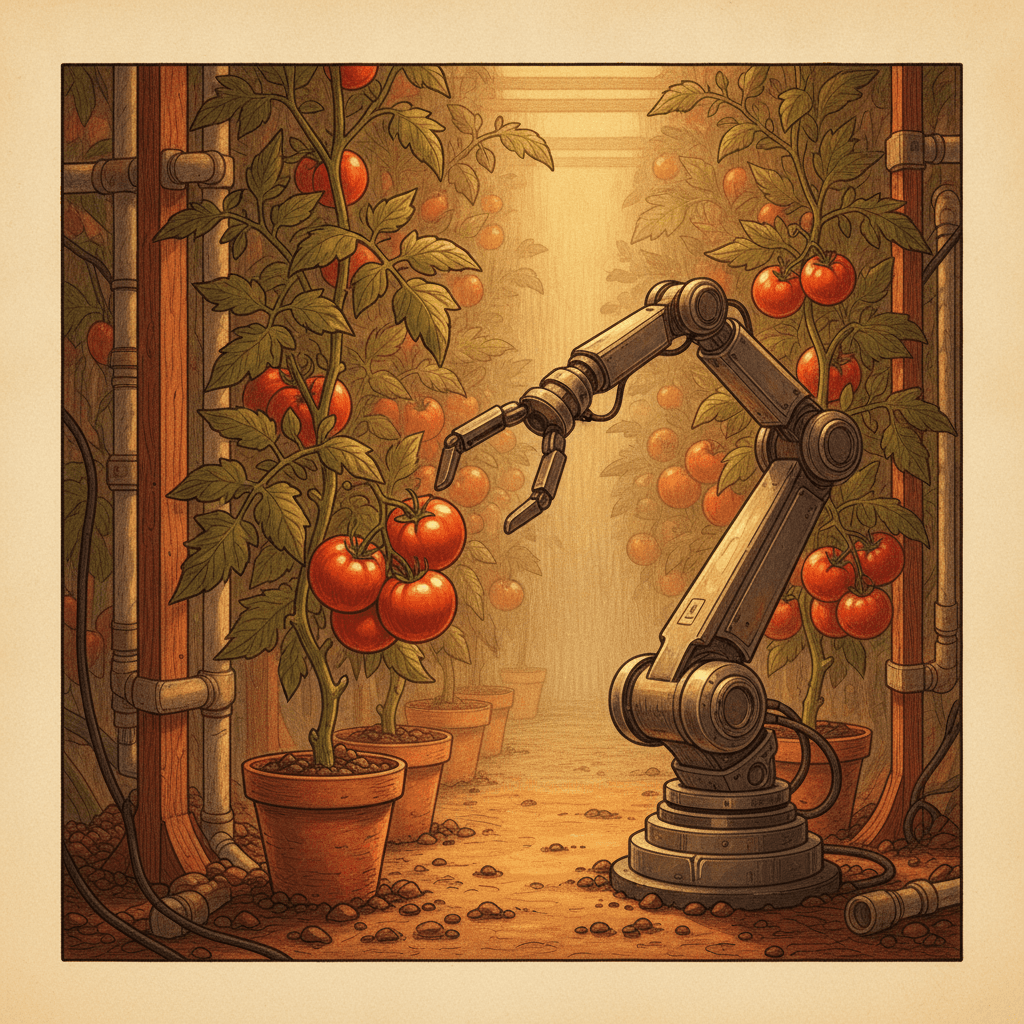
Your Rooftop Will Soon Grow Your Food
Imagine fresh, hyper-local food without the enormous carbon footprint of traditional farming. Your city's buildings are about to become green oases feeding thousands.
Have you ever walked through a city and wondered where all the fresh food comes from? The truth is, most of what you eat travels hundreds, if not thousands, of miles to reach your plate. That journey isn't just about time; it comes with a massive environmental cost, from fuel emissions to wasted water.
Traditional farming, while essential, faces huge pressures. Sprawling fields demand vast amounts of land and water, two resources becoming increasingly scarce. We often try to optimize these systems, but the core issue remains: bringing farm to table across long distances is incredibly inefficient and unsustainable for our rapidly growing urban populations.
But what if your next salad didn't come from a faraway field, but from a farm just a few floors above your head? Scientists and innovators are quietly transforming how we grow food, turning empty city spaces into thriving agricultural hubs. This isn't science fiction; it’s happening right now, promising a future where your city buildings aren't just housing people, but feeding them too.
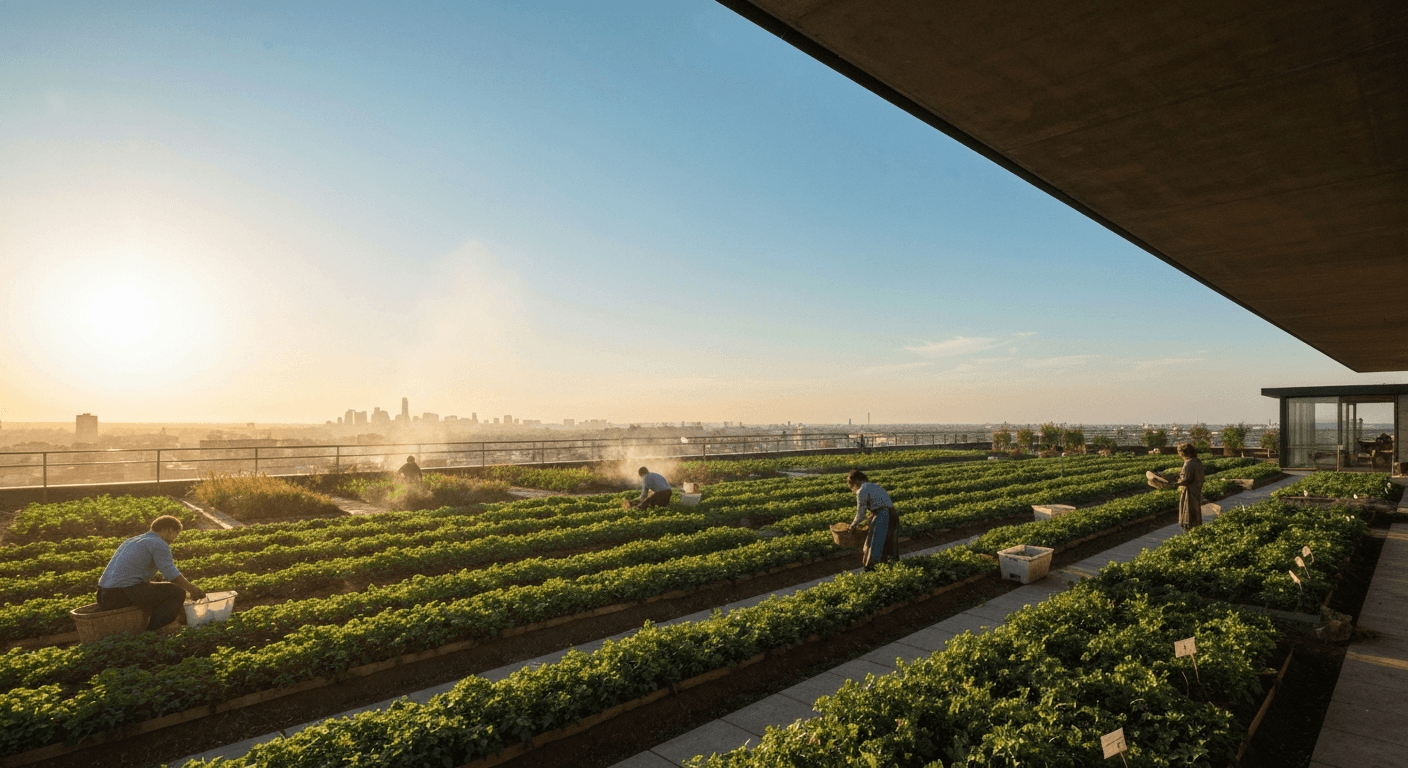
These clever new approaches involve two big ideas: urban greening and vertical farming. Urban greening is essentially bringing nature back into the city – think of green roofs, which are like building caps covered in plants, or green walls, which are vertical gardens on building exteriors. These aren't just pretty; they help cool down buildings by 0.5-1.0°C, like giving them a natural air conditioner, and even manage rainwater.
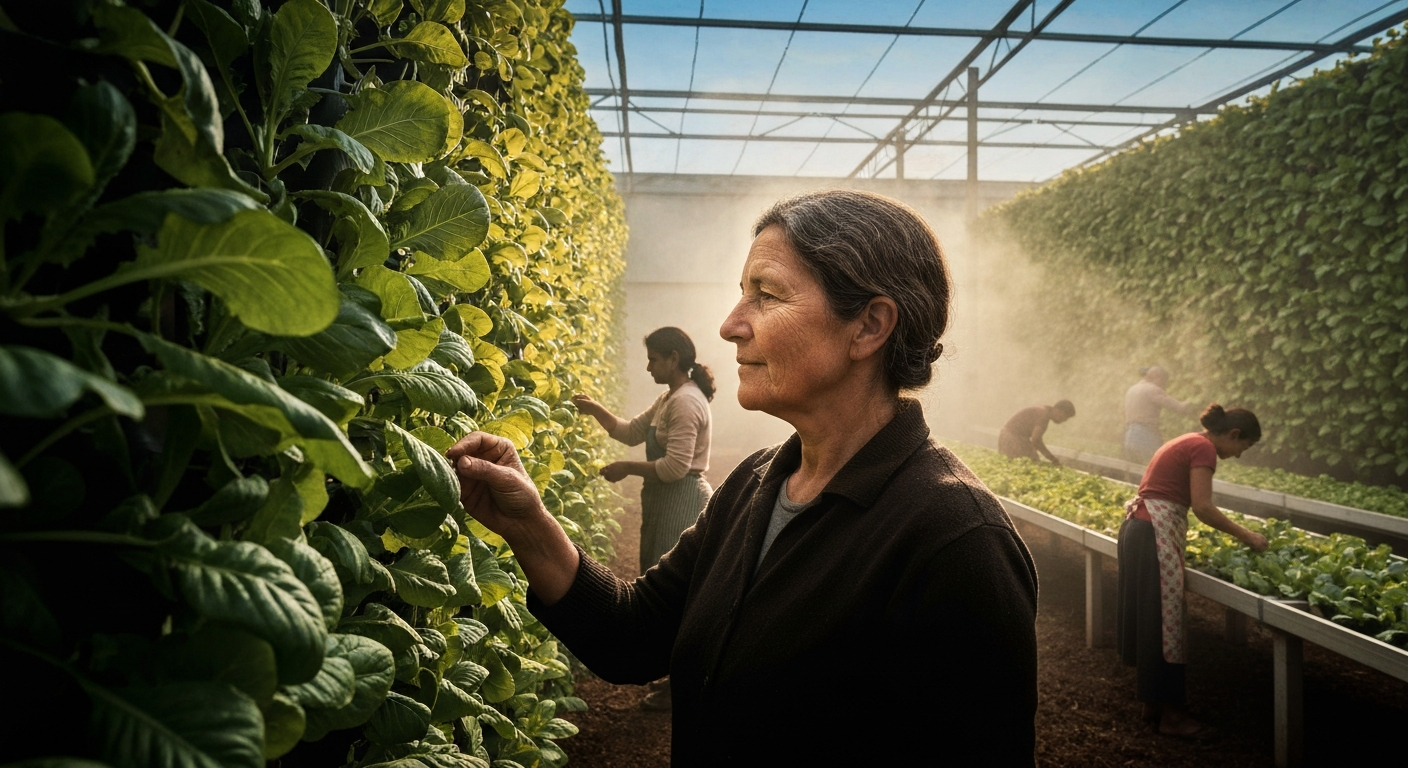
Vertical farming takes this a step further, growing food in stacked layers inside buildings, much like books on a bookshelf. Instead of soil, these farms often use hydroponics (growing plants in nutrient-rich water) or aeroponics (misting plant roots with nutrients). They also use special LED lights, which are like super-efficient mini-suns, providing the exact light spectrum plants need to thrive.
The real magic here is efficiency. Vertical farms can produce 5 to 10 times more food per square foot compared to traditional farms. Imagine getting ten harvests from the space of one! And get this: they use an astonishing 95% less water. That's because the water is recycled within the system, like a closed-loop aquarium where the water keeps circulating. This is a huge win, especially in places where water is precious.
While vertical farming is incredibly productive, it does have a significant hurdle: energy consumption. Those special LED lights, which are crucial for growth, can account for 30-50% of the farm's operating costs. However, advancements in LED technology are making them more efficient every year, and integrating these farms with renewable energy sources, like solar panels on the roof, is helping to tackle this challenge.
Singapore is a shining example of this future. With limited land, they’ve become a pioneer in urban agriculture. Places like Sky Greens, the world's first commercial vertical farm, are producing a ton of fresh vegetables daily. Think about that – one small farm feeding hundreds, every single day. India, facing rapid urbanization with projections that 60% of its population will live in cities by 2050, is also seeing a surge in urban farming. This shift is crucial for localized food production, ensuring cities can feed themselves sustainably.
What does this mean for you? It means fresher produce on your grocery store shelves, picked hours instead of days ago. It means less strain on our planet's resources and a smaller carbon footprint for your food. Plus, urban green spaces aren't just for growing food; they improve air quality, manage stormwater, and even boost our mental well-being. Think about a future where cities are not just concrete jungles, but lush, productive landscapes. Imagine walking through your neighborhood, past buildings with vibrant green facades, knowing that just behind those walls, fresh food is growing, cleaning the air, and making your city a healthier place to live. It’s a quiet transformation that could redefine urban living and how we connect with our food. (/article/your-air-could-secretly-clean-itself)
How Urban Farms Are Changing City Life
Urban farming and greening aren't just about growing food; they're about creating more resilient, livable cities. These systems provide numerous "ecosystem services," which are like the free benefits nature gives us. For example, green roofs absorb rainwater, preventing city flooding and reducing the burden on drainage systems, much like a giant sponge.
Beyond practical benefits, these green spaces make cities more pleasant. Urban parks and street trees don't just look nice; they offer shade, reduce noise pollution, and provide crucial habitats for local wildlife. Community gardens, in particular, foster social connections and give city dwellers a hands-on experience with where their food comes from. This shift means cleaner air, cooler temperatures, and a stronger sense of community. (/article/your-homes-leftovers-could-quietly-power-a-city)
The Surprising Savings Beyond the Plate
You might be surprised to learn that vertical farms, despite their energy needs, offer significant long-term savings. Because they are indoors and controlled, they don't face weather extremes, pests, or diseases that plague traditional outdoor farming. This means less reliance on pesticides and herbicides, making the food cleaner and the farming process more environmentally friendly.
A surprising fact: because the growing environment is so controlled, vertical farms can grow produce year-round, ensuring a consistent supply regardless of seasons or climate events. This consistency helps stabilize food prices and availability, reducing price spikes caused by bad harvests. It also shortens the supply chain dramatically, cutting down transportation costs and spoilage.
What's Next for Food in Your City?
While these technologies are already making waves, widespread adoption still needs time and investment. Energy consumption for vertical farms, though improving, remains a key challenge that researchers are constantly tackling through innovations in LED efficiency and better integration with renewable energy sources. We're probably looking at another 5-10 years before we see these farms as a common sight in most major cities.
The focus now is on scaling up these operations and making them more economically viable for a wider range of crops. Imagine a future where your apartment building has a community vertical farm in its lower levels, supplying fresh produce directly to residents, or where every major grocery store chain integrates rooftop greenhouses. This localized approach not only provides fresh food but also creates green jobs and fosters urban resilience. (/article/your-crops-will-soon-grow-their-own-pest-control)
Key Takeaways
- Urban greening and vertical farming are turning city spaces into efficient, sustainable food production zones, reducing the environmental impact of traditional agriculture.
- Vertical farms use up to 95% less water and produce 5-10 times more food per area than conventional farms, though energy costs are a current hurdle being addressed.
- These innovations promise fresher, more accessible food for city dwellers, while also improving urban air quality, cooling temperatures, and fostering community.
Frequently Asked Questions
What is urban greening? Urban greening involves integrating plants and natural spaces into cities, like green roofs, walls, and parks. It helps cool cities, manage stormwater, and improve air quality.
How does vertical farming save water? Vertical farms use closed-loop systems, recycling water within the growing process. This allows them to use up to 95% less water compared to conventional farming.
What are the main challenges for vertical farms? The biggest challenge is energy consumption, primarily for lighting. However, advancements in LED technology and renewable energy integration are steadily improving their sustainability.
Can vertical farms grow all types of food? Currently, leafy greens, herbs, and some smaller fruits like strawberries are most common. Research is ongoing to expand the variety of crops that can be efficiently grown.
Editorial note: The scientific findings presented in this article are sourced exclusively from published research papers, peer-reviewed studies, certified inventions, and registered patent filings. Images generated by AI.
Stay ahead of the curve
The science that shapes tomorrow — in your inbox every week
The scientific findings presented in our articles are sourced from published research papers, peer-reviewed studies, certified inventions, and registered patent filings. Subscribe for focused weekly coverage, hands-on explainers, and practical insights that help you stay curious — no jargon, no noise.
By subscribing, you agree to receive newsletter and marketing emails, and accept our Terms of Use and Privacy Policy. You can unsubscribe anytime.
Vertical Farming, Lab-Grown Food & Precision Fermentation
Food tech journalist tracing the future of how humanity will grow, manufacture, and eat its food.
View full profile →