Your Home Might Invite New Viruses
What if the very places you live could be unknowingly increasing your risk of encountering novel diseases? New insights reveal how bats nesting near us expand the list of potential virus hosts, especially in crowded regions like Asia.

You might not think of your home, your garage, or even that old shed in the backyard as a secret hotspot for predicting future global health concerns, but a new scientific report suggests they are. It turns out the simple act of wildlife, specifically bats, choosing to live in human-made structures profoundly changes how we should predict where the next unknown virus might emerge. This isn't about some distant, exotic jungle; it's about what’s happening in your neighborhood.
Think of it like this: Imagine a complex weather forecast model that tries to predict if it will rain tomorrow. Traditionally, it looks at temperature, humidity, and wind. Now, scientists are adding a brand new, overlooked factor to their models for virus prediction – whether the animals carrying those viruses prefer to roost, or hang out and sleep, in your attic or under a bridge instead of a cave. This seemingly small detail significantly sharpens our foresight.
Why Your Proximity to Wildlife Matters More Than You Think
We've always known that living close to wild animals increases the chance of "spillover," which is when a pathogen, like a virus, jumps from an animal to a human, similar to how a spark can jump from a campfire to dry grass nearby. But a recent preprint on bioRxiv, led by researchers integrating new data, highlights a crucial, often underestimated factor: where those animals live relative to us. They've found that bats' preference for nesting in "anthropogenic structures"—our buildings, bridges, and other human-built environments—is a powerful clue for predicting their virus hosting ability.
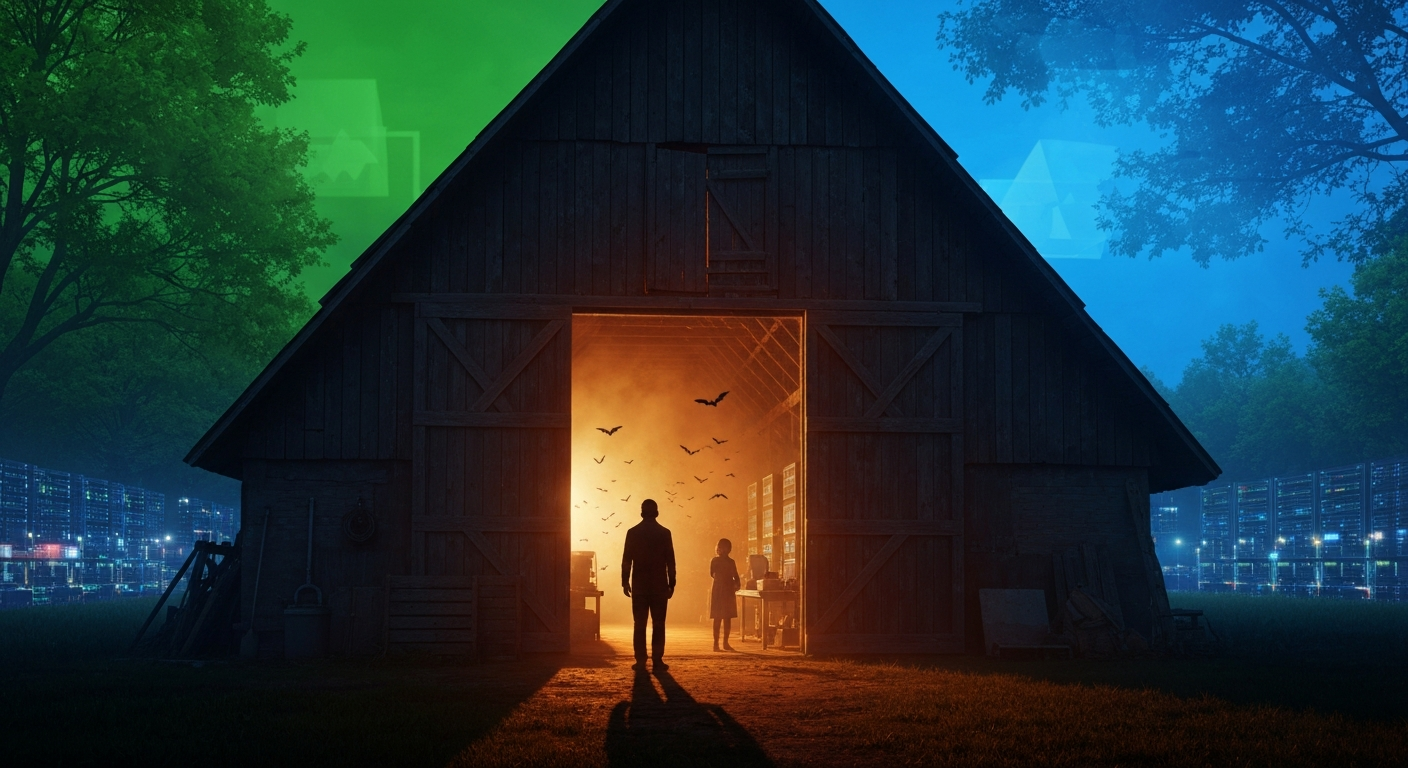
This isn't just about general closeness; it's about the specific nature of that closeness. If bats are regularly using a warehouse or an old barn, their interactions with humans and domestic animals change, creating different pathways for viruses to potentially spread. This new data suggests we've been underestimating the risks by not focusing enough on these shared living spaces.
The Hidden List of Unseen Threats
Scientists leveraged machine learning models, which are like super-smart pattern recognition programs, to sift through vast amounts of data on bat species and their viruses. When they added this novel data about bats living in human structures, the models revealed something surprising. While the overall accuracy of predicting virus presence didn't drastically change, the models suddenly extended the list of potential, yet-undetected host species. It's like finding a hidden list of ingredients in a recipe you thought you knew by heart, suggesting flavors you never expected.
This means many bat species we hadn't previously flagged as high-risk for hosting certain viruses are now on the radar, simply because they choose to live near us. The implications are significant: we might have a blind spot for many viruses, not because they’re rare, but because their carriers are just under our noses in unexpected places.
Asia's Secret Hotspots
The findings particularly highlight Asia as a critical region. The research indicates that areas with a high diversity of anthropogenic roosting bats in Asia also have the greatest proportion of likely novel hosts. This means that in these densely populated areas, where humans and bats often share the same environments, the potential for discovering new virus hosts—and by extension, new viruses—is much higher than previously understood. It's a stark reminder that our living habits intertwine with the natural world in ways we're only just beginning to fully grasp.
Think about it: many Asian cities and rural areas have a rich mix of old buildings, temples, and natural caves, all of which can serve as bat habitats. The blend of high human population density and bats comfortably coexisting in our structures creates a unique landscape for viral exchange. This geographic specificity helps us understand where to focus our prevention and surveillance efforts. You can learn more about how technology helps in these situations, like the simple AI that sees sickness spreading in human populations.
How Scientists Are Redrawing the Risk Map
This new understanding helps researchers refine what they call "predictive host distributions." Essentially, they're creating more accurate maps of where different viruses are likely to be found, even before they're officially detected. For certain viral outcomes, specifically a bat species' general ability to host a virus (its "virus hosting ability"), living in human structures proved to be more important than factors like the bat's diet or where it forages for food. However, it was less important than overall human population density, which remains a huge factor in disease spread, like turning up the volume on an already loud radio.
The researchers used this information to build models that didn't just perform well but actually extended our knowledge of potential hosts. This isn't about making a perfect prediction every time; it's about improving the odds and giving us an earlier warning system for potential health threats.
What This Means For You and Our Future
While this research doesn't mean you should immediately evict every bat from your neighborhood (bats are crucial for ecosystems, eating pests and pollinating plants), it does offer a new perspective. It reminds us that our growing urban and suburban footprints are not isolated from the natural world. Our homes and infrastructure become integrated parts of ecosystems, influencing wildlife behavior and, consequently, patterns of potential disease emergence. It suggests that considering where wildlife chooses to live near us could be as important as tracking human population movements for preventing future pandemics.
In the coming years, expect scientists and public health officials to incorporate this kind of "roosting ecology" data more routinely into their surveillance efforts. This new perspective helps us understand that seemingly minor ecological details can have major global health implications, pushing us to rethink how we coexist with nature. It’s a quiet observation that has the potential to add significant layers to our understanding of disease prevention for decades to come, helping us prepare for unseen challenges before they arise.
Key Takeaways
- Bats living in human-made structures significantly alters how we predict where new viruses might emerge, often expanding the list of potential host species.
- This "anthropogenic roosting" factor, while less critical than human population density, is more important than a bat's diet or foraging habits for predicting virus hosting ability.
- The research highlights Asia as a hotspot for these undetected hosts, underscoring the need for targeted surveillance where human and bat habitats frequently overlap.
Frequently Asked Questions
Q: Does my home directly cause bat viruses to spread to humans? A: Not directly, but bats choosing to live in human structures increases their proximity and interaction with people and livestock, which can create more opportunities for viruses to potentially jump from bats to humans.
Q: Is it dangerous to have bats living near my house? A: Bats are vital for ecosystems. This research primarily improves prediction models for unknown viruses. It doesn't mean all bats near homes are dangerous, but it highlights the need for careful monitoring and understanding of human-wildlife interfaces.
Q: How does this research help prevent future pandemics? A: By identifying new, previously underestimated bat species that could host viruses, especially in regions like Asia, scientists can better target surveillance efforts. This improved foresight helps create earlier warning systems for potential viral spillover.
Q: What is "anthropogenic roosting"? A: "Anthropogenic roosting" simply means animals, in this case bats, choosing to live or roost (rest) in structures created or modified by humans, like buildings, bridges, or even culverts, rather than entirely natural environments.
Editorial note: The scientific findings presented in this article are sourced exclusively from published research papers, peer-reviewed studies, certified inventions, and registered patent filings. Images generated by AI.
Stay ahead of the curve
The science that shapes tomorrow — in your inbox every week
The scientific findings presented in our articles are sourced from published research papers, peer-reviewed studies, certified inventions, and registered patent filings. Subscribe for focused weekly coverage, hands-on explainers, and practical insights that help you stay curious — no jargon, no noise.
By subscribing, you agree to receive newsletter and marketing emails, and accept our Terms of Use and Privacy Policy. You can unsubscribe anytime.
Vertical Farming, Lab-Grown Food & Precision Fermentation
Food tech journalist tracing the future of how humanity will grow, manufacture, and eat its food.
View full profile →