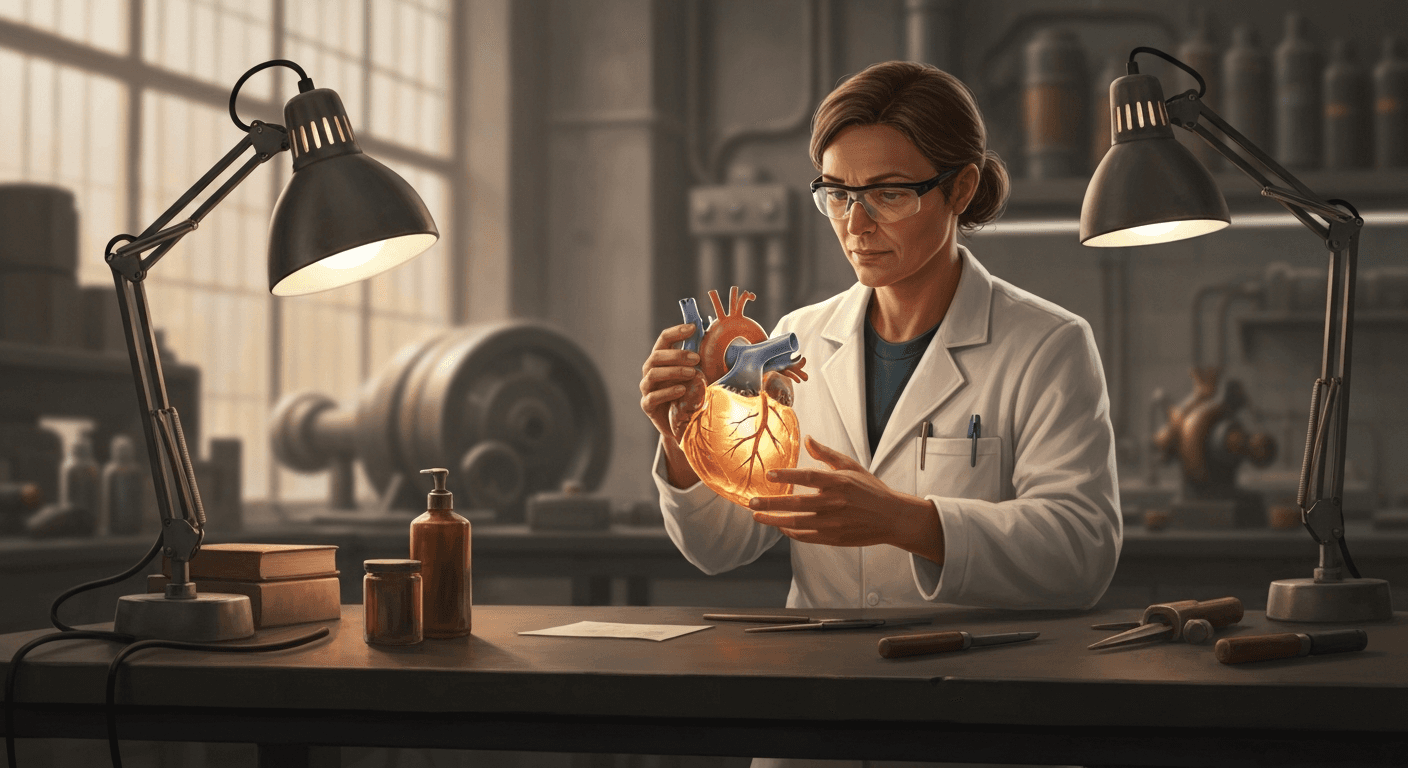
Your Heart Could Quietly Heal Itself
Imagine your damaged heart repairing itself after a heart attack, no surgery needed. New discoveries in mRNA technology might make this a quiet reality sooner than you think, offering a powerful new way to recover.

Imagine a tiny, molecular instruction manual injected right into your heart, telling its cells exactly how to repair themselves after a major injury, like a heart attack. This isn't science fiction anymore; it's the quiet promise of messenger RNA (mRNA) therapy, a technology you might recognize from recent vaccines, now being tailored to mend the very fabric of your most vital organ. Scientists are moving beyond just preventing diseases to actively programming your body's own immune system to fix damage from within.
Your heart, after a heart attack, goes through a chaotic period, like a battlefield after a skirmish. First, there's an intense clean-up crew (immune response), which is essential but can also cause collateral damage, leading to scarring (fibrosis) that weakens the heart permanently. What researchers are learning is how to precisely guide this clean-up crew to promote healing instead of scarring. This involves using mRNA, which are like temporary blueprints that tell your cells to make specific proteins, like building blocks or repair instructions, for a short time.
The trick is making sure these mRNA blueprints get to the right cells and stay hidden from your body's natural defenses, which might otherwise destroy them before they can do their job. Think of it like a secret message delivered in a tiny, stealthy envelope – a lipid nanoparticle (LNP) – that slips past security. These nanoparticles are crucial because they protect the mRNA and help it enter cells. Scientists are refining these envelopes so they specifically target heart tissue, ensuring the healing messages go exactly where they're needed.
Reprogramming Your Body's Own Repair Crews
Your immune system plays a dual role after a heart attack: it starts cleaning up dead tissue, but some of its actions can actually lead to scar formation, which makes your heart stiff and less efficient. This new approach aims to reprogram those immune cells, particularly a type called macrophages, to become "builders" rather than just "demolishers." Instead of creating permanent scar tissue, these re-engineered cells would encourage regeneration. For example, some mRNA therapies are designed to activate "trained immunity," which is like teaching your immune cells new tricks, helping them remember how to promote healing and suppress inflammation more effectively.
One surprising fact? The same lipid nanoparticles used to deliver mRNA for vaccines are now being engineered to specifically target different organs. Researchers like those at Moderna and AstraZeneca are developing systems that ensure these tiny carriers deliver their genetic payload precisely to the heart, avoiding other tissues. This level of precision is like having a postal service that knows exactly which apartment in a skyscraper needs a specific letter, even if thousands of others are in the building.

Guiding Healing, One Molecular Message at a Time
The process involves several key steps. First, the mRNA itself is designed to avoid triggering an immune alarm when it enters your cells. Scientists achieve this by subtly modifying the "letters" in the mRNA code, making it look more like your body's own natural mRNA. Then, this modified mRNA is packaged into its special lipid nanoparticle envelope. Once injected, these nanoparticles travel to the heart, fuse with heart cells, and release the mRNA.
The heart cells then "read" these instructions and temporarily produce the healing proteins. This transient expression, meaning the proteins are only made for a short time, is important because it avoids long-term changes to your DNA. Instead, it's a temporary nudge, allowing your body to recalibrate its healing response. Early trials, like those by AstraZeneca (AZD8601) and potentially others, are exploring how specific growth factors, vital for tissue repair, can be delivered this way.
What This Could Mean for Your Future
This technology is still in its early stages for heart repair, with clinical trials underway but likely a decade away from widespread use. The biggest hurdles include ensuring consistent, targeted delivery to the heart and understanding how repeated doses might interact with the immune system. Researchers are also exploring multi-mRNA formulations, like sending several different instruction manuals at once, to tackle various aspects of heart damage simultaneously. This could mean a future where, instead of invasive surgery or long-term medication with side effects, a simple injection helps your heart restore itself to health.
The implications for recovery from heart attacks are profound. Instead of living with a damaged, weaker heart, you might have the chance for a more complete recovery. This could mean more energy, better quality of life, and fewer follow-up complications. It's about moving from managing damage to actively repairing it, leveraging your body's own incredible machinery to do the work. Imagine if your doctor's AI could pinpoint the exact cells that need these healing instructions, guiding precision dosing. (/article/your-doctors-ai-will-see-hidden-sickness)
What's Next for This Heart-Healing Tech?
Scientists are focusing on optimizing the delivery systems, making the lipid nanoparticles even more specific to heart tissue. They're also investigating strategies for repeat dosing, making sure the body doesn't build up resistance to the therapy. For example, a single heart attack might not be one event but a series of molecular processes unfolding over days or weeks, each potentially benefiting from a timed mRNA intervention. It's a complex dance with your body's internal healing mechanisms.
This ability to "talk" directly to your cells and guide their behavior is a powerful tool. It's a quiet revolution, not with big, flashy machines, but with tiny molecular messages. Eventually, this could change how we approach recovery not just for heart disease, but potentially for other organ damage too. Think of other applications where cells need a temporary nudge to fix themselves, perhaps even in fighting off plant diseases by teaching crops to be resilient. (/article/your-crops-will-soon-grow-their-own-pest-control) This kind of cellular programming could become a cornerstone of future medicine, allowing your body to become its own best healer.
Key Takeaways
- mRNA therapy aims to reprogram the body's immune response after a heart attack, promoting healing over scar tissue formation.
- Specialized lipid nanoparticles are crucial for safely delivering mRNA instructions specifically to heart cells.
- This approach is still in development, with potential widespread availability roughly 10 years away.
Frequently Asked Questions
What is mRNA therapy for heart repair? mRNA therapy uses temporary genetic instructions to tell your heart cells and immune system how to heal damage after a heart attack, encouraging repair instead of scarring. It's like giving your cells a temporary repair manual.
How does it get to the heart? The mRNA is packaged inside tiny, protective lipid nanoparticles, which act like stealth delivery vehicles. These nanoparticles are engineered to specifically target and enter heart cells, ensuring the message goes to the right place.
When will this be available? While clinical trials are ongoing, this technology for heart repair is still experimental. It's likely about a decade away from being a widely available treatment in clinics.
Editorial note: The scientific findings presented in this article are sourced exclusively from published research papers, peer-reviewed studies, certified inventions, and registered patent filings. Images generated by AI.
Stay ahead of the curve
The science that shapes tomorrow — in your inbox every week
The scientific findings presented in our articles are sourced from published research papers, peer-reviewed studies, certified inventions, and registered patent filings. Subscribe for focused weekly coverage, hands-on explainers, and practical insights that help you stay curious — no jargon, no noise.
By subscribing, you agree to receive newsletter and marketing emails, and accept our Terms of Use and Privacy Policy. You can unsubscribe anytime.
Metamaterials, Photonics & Optical Innovation
Photonics journalist covering the strange and consequential science of materials that bend, trap, and manipulate light in ways physics said were impossible.
View full profile →