Your Fruit Scraps Could Wrap Your Groceries
Did you know millions of tons of food waste end up in landfills each year, often wrapped in plastics that last for centuries? Soon, the peels from your fruit might become fully compostable packaging, offering a real solution to plastic pollution.
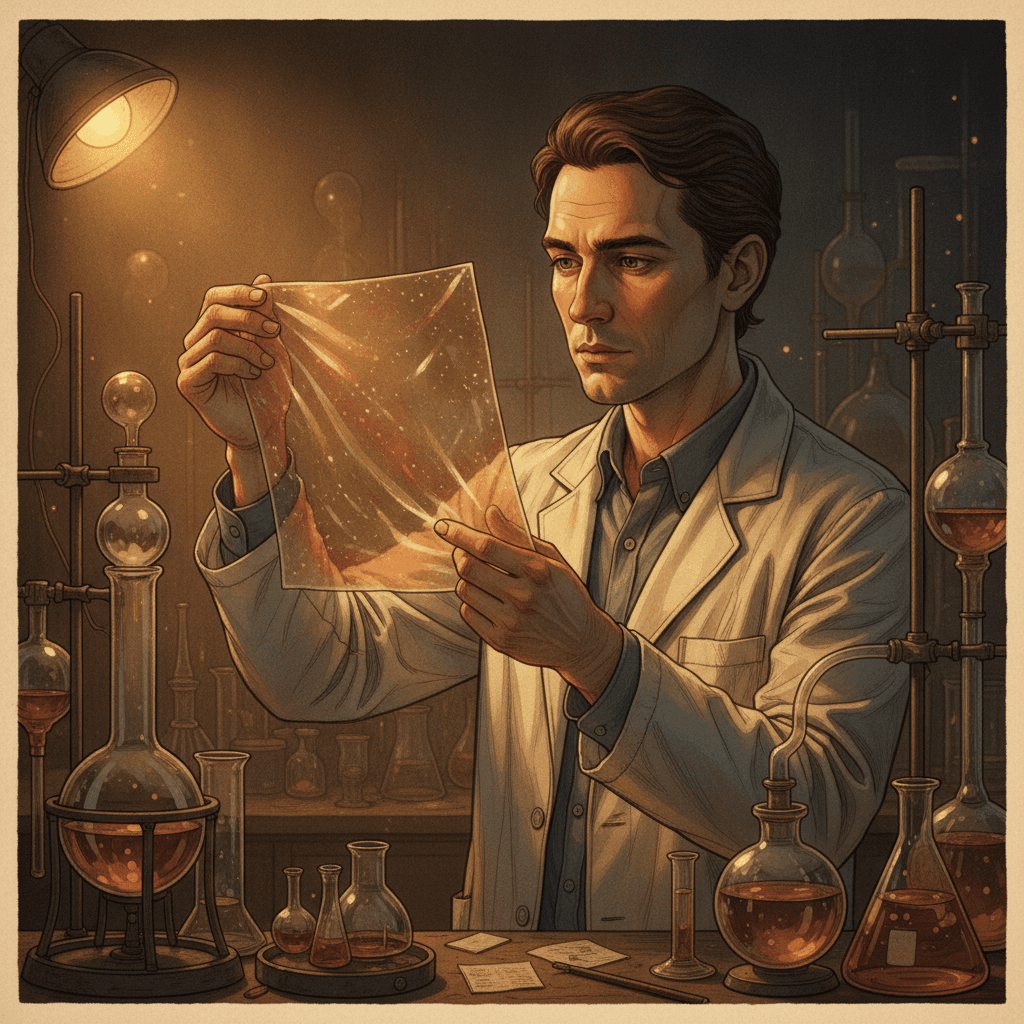
The world where your everyday fruit peels become the packaging for your groceries isn’t science fiction. Imagine unwrapping your fresh vegetables from a film that looks and feels like plastic, but once you’re done, you can toss it into your compost pile or even your garden, knowing it will simply turn back into soil in a matter of weeks. This isn't just a fantasy; it's a future that new science is making very real, very quickly.
This concept sounds incredible, but it's built on solid evidence. Researchers in China have recently secured a patent for creating a completely degradable bioplastic film using the leftover peels of sea-buckthorn berries. Led by scientists at institutions like Zhejiang University of Technology, their work details how this agricultural waste can be transformed into a functional, environmentally friendly material.
Turning Waste into a New Material
So, how does this work? It’s a bit like a chef who takes a humble ingredient and transforms it. First, the sea-buckthorn peel residues, which are usually just thrown away after juicing, are collected. Think of these peels as a rich source of raw materials, specifically cellulose – a complex sugar that gives plants their structure, much like the skeleton in your body.
The process starts with cleaning the peels and then removing sugars, drying them, and grinding them into a fine powder. This powder then undergoes a series of purification steps, including methods like ethanol ultrasonic extraction (using sound waves to pull out specific components) and enzymolysis (using special proteins, or enzymes, to break down molecules) to yield high-purity sea-buckthorn cellulose. This cellulose is the main ingredient for the new plastic-like film.
Next, this purified cellulose is mixed with water to form a solution, much like dissolving sugar in your tea. To make it pliable and sturdy, natural gelling enhancers and glycerol (a common additive in many foods and cosmetics that helps keep things moist and flexible) are added. This mixture is then stirred and homogenized, meaning everything is blended so thoroughly it becomes perfectly uniform, like a smooth batter.
Finally, this "film-making slurry" is cast onto a surface, dried, and molded into the desired film. The scientists can even adjust the film’s properties—like how strong it is, how much light passes through it, or how well it resists water—by changing the amount of cellulose or the type of gelling agent they use. It’s a precise dance of chemistry, resulting in a film that's safe, non-toxic, and truly green.
Why This Matters for Your Shopping
This development addresses a massive global problem: plastic pollution. Did you know that a single plastic bag can take up to 1,000 years to decompose? Our current reliance on traditional plastics, which are made from fossil fuels and linger in the environment for centuries, is overwhelming our planet. A surprising fact is that globally, we produce over 400 million tons of plastic waste every year, and a significant portion of that is for packaging. (/article/tiny-plastic-is-changing-your-food-air)
This new bioplastic offers a clear alternative. When this sea-buckthorn film is discarded, it completely breaks down in soil. This means instead of becoming microplastics that pollute our oceans and enter our food chain, it returns to nature without a trace. It’s a big step towards a circular economy, where waste from one process becomes a valuable resource for another. This is similar to how we're learning to use eating tiny bugs could fix your farm fields for soil health.
Overcoming Challenges and Looking Ahead
Of course, getting this into every supermarket isn't as simple as just making a few films in a lab. The biggest hurdle for any new material is scaling up production efficiently and affordably to compete with existing, mass-produced plastics. Researchers will need to prove its durability for various packaging needs, ensure it can be manufactured consistently at a large scale, and show that its cost is competitive enough for widespread adoption by industries.
However, the potential is huge. Beyond grocery packaging, this kind of material could be used for single-use items, agricultural mulches, or even in textiles. Think about how this could reduce the burden on landfills and oceans, improving air and water quality. It represents a way to turn unavoidable agricultural waste into a valuable product, echoing broader efforts to optimize [your farm fields will grow more with less](/article/your-farm-fields-will-grow-more-with-less] through sustainable methods.
This approach isn't just about finding a replacement for plastic; it's about reimagining our relationship with resources. It’s about seeing the value in what we once considered trash and leveraging nature's own chemistry to solve some of our biggest environmental puzzles.

Key Takeaways
- New bioplastic films made from sea-buckthorn fruit peels can fully biodegrade in soil, offering a true alternative to traditional plastics.
- The manufacturing process turns agricultural waste into a valuable resource, reducing landfill burden and promoting a circular economy.
- This innovation could significantly reduce global plastic pollution, impacting everything from food packaging to single-use items.
Frequently Asked Questions
What is sea-buckthorn bioplastic made from? Sea-buckthorn bioplastic is made from the leftover peel residues of sea-buckthorn berries, which are usually discarded after juicing. These peels are processed to extract high-purity cellulose, the main building block for the film.
How is this bioplastic different from regular plastic? Unlike regular plastics derived from fossil fuels, this bioplastic is made from plant waste and is fully biodegradable. It breaks down naturally in soil, preventing long-term pollution and returning to the environment.
What are the main benefits of using this material? The primary benefits include reducing plastic pollution, utilizing agricultural waste, and offering a non-toxic, environmentally friendly packaging solution. It helps create a more sustainable, circular economy for materials.
Editorial note: The scientific findings presented in this article are sourced exclusively from published research papers, peer-reviewed studies, certified inventions, and registered patent filings. Images generated by AI.
Stay ahead of the curve
The science that shapes tomorrow — in your inbox every week
The scientific findings presented in our articles are sourced from published research papers, peer-reviewed studies, certified inventions, and registered patent filings. Subscribe for focused weekly coverage, hands-on explainers, and practical insights that help you stay curious — no jargon, no noise.
By subscribing, you agree to receive newsletter and marketing emails, and accept our Terms of Use and Privacy Policy. You can unsubscribe anytime.
Battery Materials, Energy Storage Chemistry & Electric Vehicle Technology
Battery materials journalist covering the chemistry behind the electric revolution — and why the next decade of progress depends on what's inside the cell, not outside it.
View full profile →