Your Drinking Water Relies On Trees' Thirst
Ever wonder why some places always have water, and others struggle? How trees "sweat" makes a huge difference to your tap, and we're finally starting to understand why. This new approach could secure water for millions.
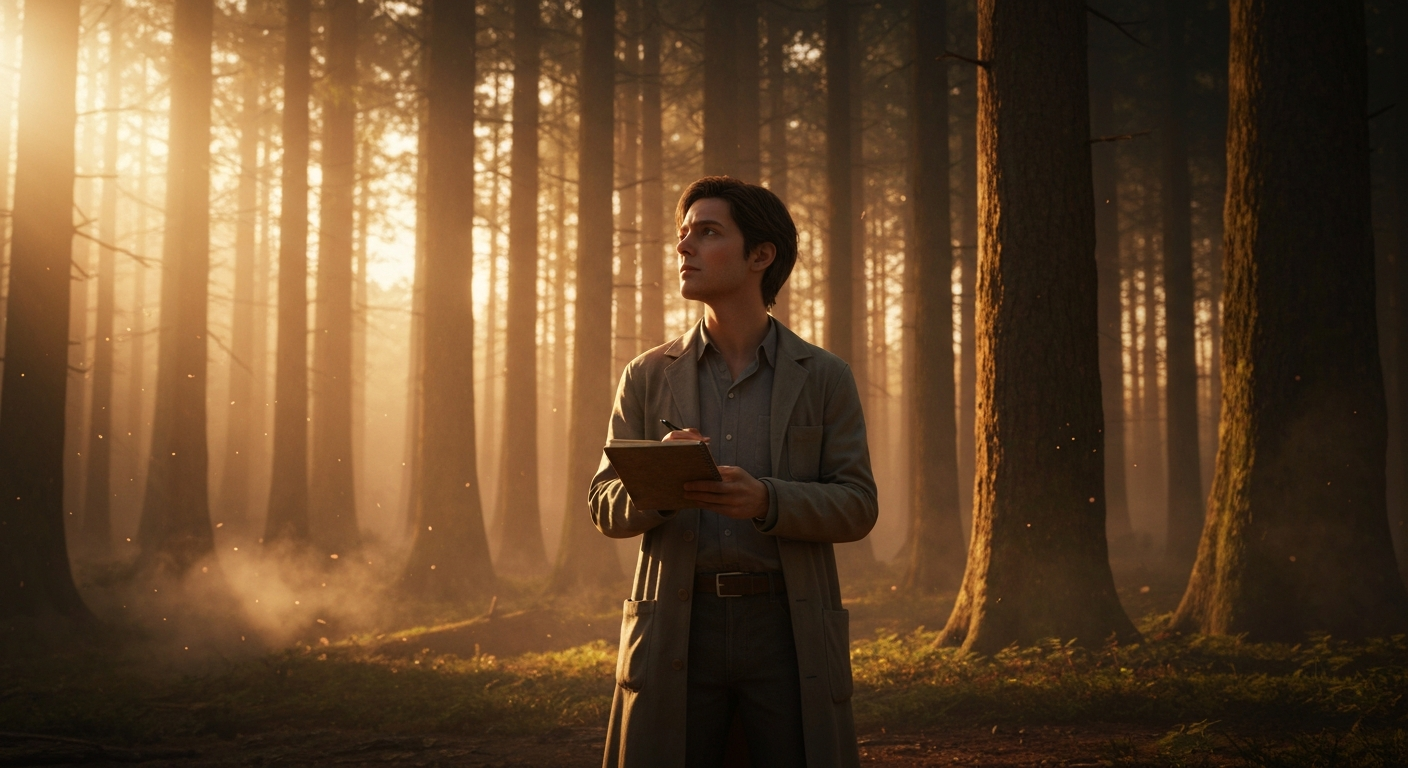
You might think predicting future water shortages is a guessing game, a roll of the dice in an increasingly unpredictable climate. But what if scientists could precisely map out where water will be scarce—or abundant—years in advance, just by understanding how trees drink? This isn't a distant fantasy; it's a real endeavor taking shape right now.
A team of researchers, leveraging a vast global database of tree observations, recently peered deep into how forests worldwide handle water. They uncovered surprising patterns that could fundamentally change how we manage every single drop you rely on. It means a future where city planners, farmers, and even individuals like you could have a clearer picture of water availability, well before the taps run dry.
We're Getting Closer to Understanding How Trees "Sweat"
Our planet's forests are like massive, breathing sponges, constantly pulling water from the soil and releasing it back into the atmosphere. This process is called transpiration, and you can think of it as trees "sweating" through tiny pores on their leaves, much like you sweat to cool down. It’s an absolutely vital part of the global water cycle, influencing everything from local humidity to rainfall patterns hundreds of miles away.
For years, trying to predict how much water entire forests transpire has been incredibly difficult because every tree species, every soil type, and every local climate seems to play by its own rules. Imagine trying to predict how much water a diverse crowd of people will drink on a hot day if some are marathon runners, some are toddlers, and some are just sitting in the shade. It’s a mess of variables!

How Smart Algorithms Are Mapping Nature's Water Flow
The exciting news is that new research is tackling this complexity using incredibly smart computer programs known as machine learning. Think of machine learning as a super-detective who learns from millions of cases to spot hidden patterns, far too intricate for any human to see. In this case, researchers used two types of these digital detectives—a "random forest" algorithm and a "neural network" algorithm. These are sophisticated pattern-recognizers, trained on a massive global dataset called SAPFLUXNET, which collects information from ninety-five sites spanning seven different biomes, or major habitat types, around the world.
Instead of trying to force a single explanation onto every tree on Earth, the scientists used a clever trick: clustering. Imagine you have a general doctor trying to treat every possible ailment for every person. It wouldn't be very effective. But if you grouped patients by specific conditions—say, all kids needing care go to a pediatrician, and all heart patients go to a cardiologist—you'd get far better results. That's what clustering does: it groups similar trees or forest types together, allowing the machine learning models to learn much more precise rules for each group.
Why Grouping Trees By Type Matters More Than You'd Think
This specialized approach made a huge difference. While a single, "one-size-fits-all" model struggled, these clustered models achieved impressive accuracy, with R-squared values ranging from 0.74 to 0.90. An R-squared value, if you're curious, is essentially a measure of how well a model predicts real-world observations; a perfect prediction would be 1.0. So, getting up to 0.90 is like a weather forecast being right 90% of the time—a remarkably strong fit.
The surprising fact? What makes a tree "sweat" varies wildly depending on where it lives. In places with little water, like dry deserts or semi-arid regions, the amount of moisture in the soil is the main factor controlling how much water a tree moves. But in hotter climates, where temperatures are high year-round, sunlight (solar radiation) actually plays a bigger role than air temperature. This means our intuition about what drives water use in trees often needs a significant recalibration.
Who's Building This and What's Next
This fundamental research is currently being built by scientists and environmental modelers, often at universities and national research institutions globally, like those contributing to the SAPFLUXNET database. They're trying to integrate these specific tree-level insights into much larger, global climate and hydrological models that predict water movement across entire continents. The immediate next steps involve peer review of this preprint, meaning other scientists will rigorously scrutinize the methods and findings.
What's holding this back from being fully implemented in your local water utility's planning? A few things. First, while SAPFLUXNET is extensive, we still need more continuous, high-quality data from even more diverse forest ecosystems worldwide. Second, these specialized models need to be scaled up and integrated into existing policy frameworks and decision-making tools, which is a complex task involving both science and governance.
When This Could Affect Your Daily Life
If current research continues at this pace, and we see successful integration into broader climate models, you could start seeing the benefits of this kind of understanding in the next 5 to 10 years. Imagine city planners making better decisions about where to build new neighborhoods, knowing which forest areas are crucial for recharging local aquifers. Farmers might receive more accurate long-range forecasts about water availability, allowing them to choose crops and irrigation strategies that save precious resources.
This isn't about some distant technology; it's about refining our understanding of nature itself. Ultimately, better predictions of forest transpiration translate directly into more secure drinking water for you and your community, more resilient ecosystems, and smarter land management decisions in a world where every drop counts. It’s about ensuring that the hidden thirst of our forests is understood, so that your tap never runs dry.
Key Takeaways
- Understanding how trees "sweat" (transpire) is crucial for predicting global water availability and securing future water resources.
- New machine learning models, by grouping similar forest types, can predict tree water use with significantly higher accuracy than older methods.
- The primary environmental drivers of tree water use vary wildly by climate type; for example, soil moisture is key in dry areas, while sunlight matters most in consistently hot regions.
Frequently Asked Questions
What is forest transpiration? Forest transpiration is the process where trees absorb water from the soil through their roots and then release it as vapor into the atmosphere through tiny pores on their leaves, essentially "sweating."
Why does understanding tree water use matter for people? Understanding how trees use water is vital because it directly impacts regional water availability, influencing everything from the amount of water flowing into rivers and reservoirs to local rainfall patterns and the long-term health of our ecosystems.
How does machine learning help predict water availability? Machine learning acts like a super-smart pattern detector, analyzing vast amounts of tree water use data to identify complex relationships between environmental factors (like soil moisture and sunlight) and how much water trees transpire, making predictions much more accurate.
Editorial note: The scientific findings presented in this article are sourced exclusively from published research papers, peer-reviewed studies, certified inventions, and registered patent filings. Images generated by AI.
Stay ahead of the curve
The science that shapes tomorrow — in your inbox every week
The scientific findings presented in our articles are sourced from published research papers, peer-reviewed studies, certified inventions, and registered patent filings. Subscribe for focused weekly coverage, hands-on explainers, and practical insights that help you stay curious — no jargon, no noise.
By subscribing, you agree to receive newsletter and marketing emails, and accept our Terms of Use and Privacy Policy. You can unsubscribe anytime.
Vertical Farming, Lab-Grown Food & Precision Fermentation
Food tech journalist tracing the future of how humanity will grow, manufacture, and eat its food.
View full profile →