Your Doctor May Soon See Future Sickness
A world where illness is caught before it even starts. This incredible new approach uses AI to spot hidden patterns in your data, promising earlier diagnoses for conditions like cancer.
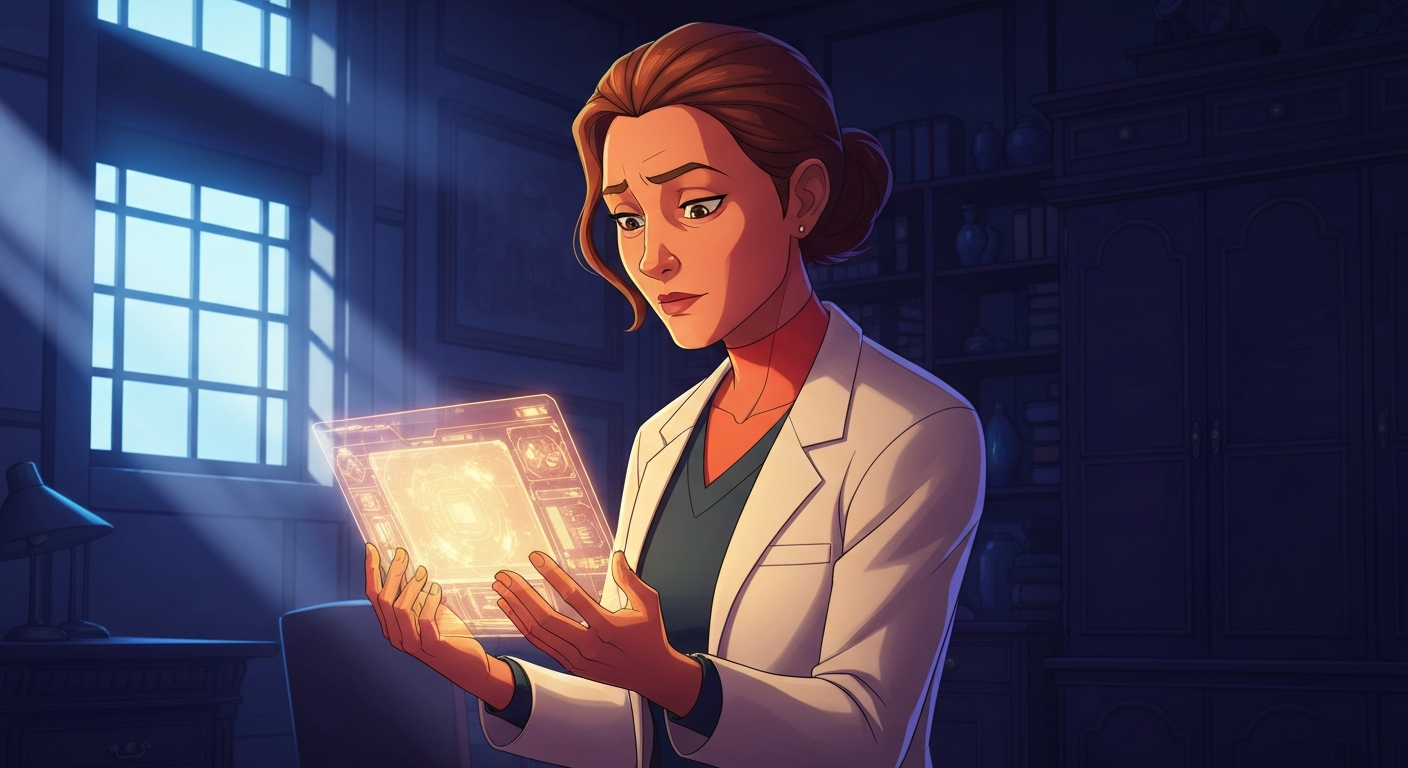
What if your doctor could look into a crystal ball, not to predict the future with magic, but with data? Imagine a world where subtle hints in your medical tests, barely visible to the human eye, are instantly flagged as a warning sign for something serious like cancer, years before it becomes obvious. This isn't a distant fantasy; it's a future that new artificial intelligence (AI) tools are actively building right now.
This isn't sci-fi. Recent peer-reviewed research, detailed in a perspective article in Europe PMC, highlights how machine learning, a type of AI where computers learn from data without explicit programming (like teaching a child by showing them many examples until they grasp a concept), is quietly changing how we detect diseases. Researchers like those contributing to this comprehensive overview are not just dreaming; they're showing how these intelligent systems can make diagnostics more robust and easier to understand.
So, how does this work? Think of it like a master detective sifting through countless clues. When doctors analyze images from an MRI scan or review molecular data from a blood test, they're looking for patterns. But the human brain can only process so much. AI, specifically machine learning algorithms, can churn through millions of these clues – patient records, lab results, imaging data – far faster and with more precision than any human. It's like having a super-powered magnifying glass that picks up tiny details you'd otherwise miss.
One surprising fact is how much data goes unused today. Our bodies are constantly generating information, from the way our cells behave to the subtle changes in our blood. Traditionally, much of this complex, "high-dimensional" data (meaning it has many different types of measurements, like a spreadsheet with thousands of columns) is too messy or vast for doctors to fully interpret. Machine learning models, however, are specifically designed to find hidden connections and predict outcomes from this kind of intricate information.
For example, imagine a computer model trained on thousands of cancer patient images and their eventual diagnoses. It learns what early-stage cancer "looks like" at a microscopic level, even if those patterns are too subtle for a human radiologist to consistently identify. This could mean detecting a tumor when it’s still incredibly small, making treatment much more effective. It's like having a digital second opinion that never gets tired or misses a detail. This kind of early detection is exactly what could improve long-term survival for illnesses like cancer, which currently remain a leading cause of death worldwide.
How AI Finds What We Miss
These AI tools don't just mimic human observation; they enhance it significantly. They excel at "pattern recognition," which is like a digital bloodhound sniffing out specific scents in a complex forest. For instance, when looking at a biopsy image, a pathologist might identify cancerous cells based on their shape and how they clump together. An AI system takes this further, analyzing thousands of microscopic features – texture, color gradients, cell density – that a human eye might overlook as insignificant, but which, when combined, form a tell-tale signature of disease. This enhanced capability could even help explain why your brain's curves quietly hide future sickness.
The process generally involves several steps. First, vast amounts of medical data are collected and labeled (e.g., "this image is cancer, this one is not"). Then, machine learning algorithms are trained on this data, essentially teaching them to identify patterns associated with different health conditions. Finally, these trained models can be used to analyze new, unseen patient data, providing predictions or classifications. It's a continuous learning loop, getting better with every piece of new information.
Addressing the Doubts and Looking Ahead
Of course, no system is perfect. Skeptics rightly point to the "black box" problem: sometimes, it's hard to understand why an AI made a particular decision, making doctors hesitant to trust it completely. Researchers are actively working on making these models more "interpretable," meaning they can explain their reasoning, much like a human expert would. This is crucial for integrating AI into clinical practice and building confidence among medical professionals.
Another challenge is ensuring these models work reliably across different populations and healthcare systems. A model trained on data from one hospital might not perform as well in another due to differences in equipment or patient demographics. This is like teaching a child to recognize apples only from red ones, and then asking them to identify a green apple – they might struggle. Future research will focus on creating more robust models that generalize well, adapting to various real-world applications.
The implications go far beyond just early detection. Imagine AI optimizing diagnostic assays themselves, tweaking laboratory tests to be more sensitive or cost-effective. Or using AI to interpret complex "multiscale data," combining everything from genetic markers to imaging results into a single, cohesive picture of your health. This could lead to truly personalized medicine, where treatments are tailored not just to your disease, but to your unique biological makeup. If this sounds like it's years away, you'd be right – widespread clinical adoption is likely a decade or more down the road, but the foundational work is happening now.
What Else Could Change?
If AI becomes a standard tool in diagnostics, you might see fewer invasive tests, as subtle clues could be picked up from routine screenings. Wait times for lab results could shrink dramatically. This could free up doctors to focus more on patient interaction and complex cases, rather than sifting through mountains of data. It also means we could potentially understand diseases, like cancer, in entirely new ways, identifying previously unknown risk factors or disease subtypes. It could even influence how we understand and manage other complex biological systems, like how your gut has a hidden power switch.
Ultimately, these tools are designed to augment human expertise, not replace it. They act as powerful assistants, enhancing our ability to understand the incredibly complex machinery of the human body. It's a testament to human ingenuity that we can build machines to help us understand ourselves better, peering into the hidden mechanics of health and sickness with unprecedented clarity.

Key Takeaways
- AI, through machine learning, can detect incredibly subtle disease patterns in medical data, leading to much earlier and potentially life-saving diagnoses.
- These intelligent systems act as super-powered assistants, processing vast amounts of complex data faster and more accurately than human observation.
- While challenges like interpretability and data generalization remain, ongoing research aims to make these AI tools a reliable part of future healthcare within the next decade.
Frequently Asked Questions
What is machine learning in diagnostics? Machine learning in diagnostics uses computer algorithms to find hidden patterns in vast medical data, like images or lab results, helping doctors identify diseases earlier and more accurately than human analysis alone.
How does AI improve early cancer detection? AI can spot extremely subtle indicators of cancer in medical scans and patient data, often before they become apparent to human experts. This allows for much earlier diagnosis, leading to better treatment outcomes and higher survival rates.
When will this AI be used in hospitals? While the research is promising, widespread integration of AI-driven diagnostics into routine clinical practice is still about 10 years away. There are ongoing challenges in ensuring robustness, interpretability, and regulatory approval.
Editorial note: The scientific findings presented in this article are sourced exclusively from published research papers, peer-reviewed studies, certified inventions, and registered patent filings. Images generated by AI.
Stay ahead of the curve
The science that shapes tomorrow — in your inbox every week
The scientific findings presented in our articles are sourced from published research papers, peer-reviewed studies, certified inventions, and registered patent filings. Subscribe for focused weekly coverage, hands-on explainers, and practical insights that help you stay curious — no jargon, no noise.
By subscribing, you agree to receive newsletter and marketing emails, and accept our Terms of Use and Privacy Policy. You can unsubscribe anytime.
AI in Healthcare, Biomedical Computing & Drug Discovery Algorithms
Computational biologist and science journalist covering the remarkable collision of artificial intelligence with medical research.
View full profile →