Your Data Is Quietly Under Attack Right Now
Imagine a digital world where all your online secrets are exposed. New advancements in quantum computing mean your most sensitive data is at risk, but scientists are building a powerful new shield.
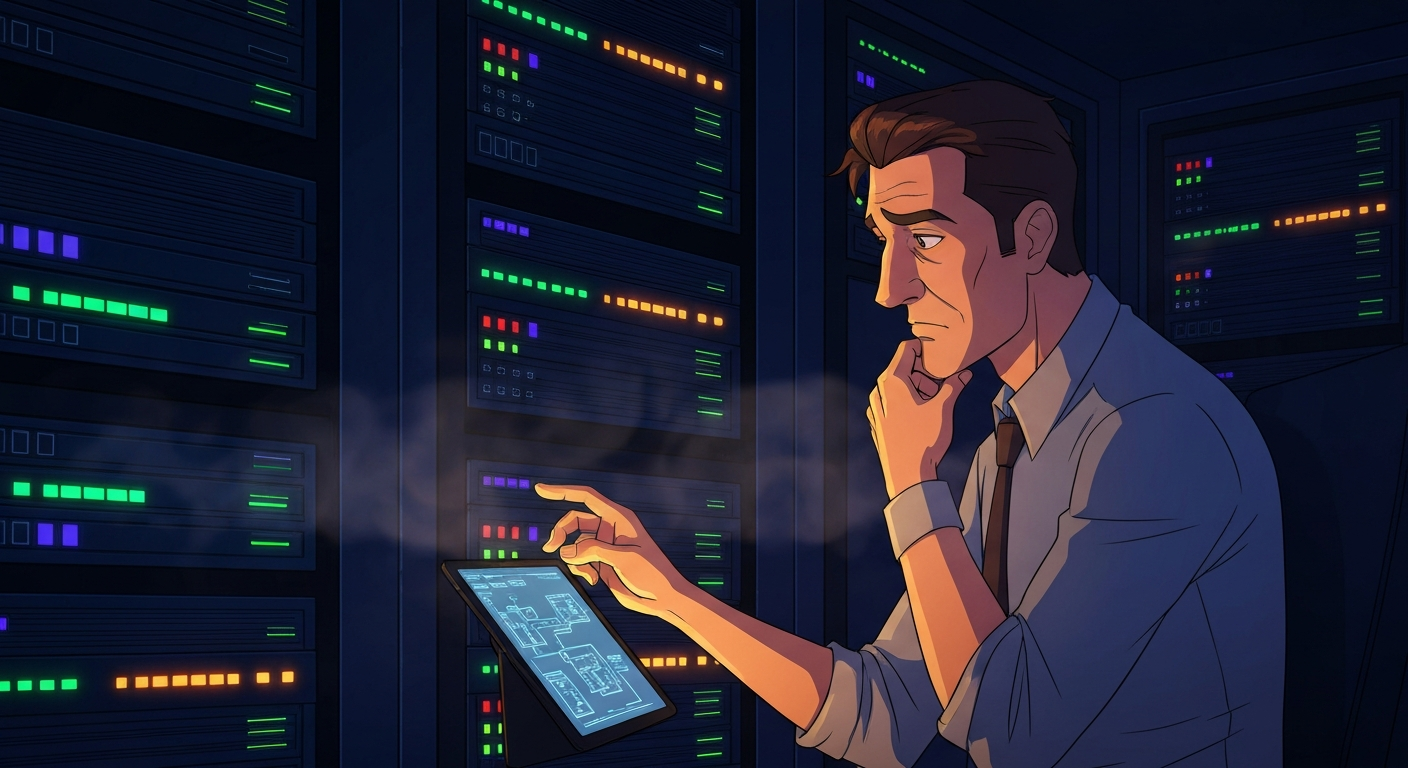
Have you ever worried about your private conversations, bank details, or even your health records falling into the wrong hands? Well, your most sensitive data is quietly under attack right now, not by today's hackers, but by the super-powerful computers being built for tomorrow. Scientists have now finalized the fundamental building blocks for a new kind of digital defense, ready to protect us from machines that could break our current security like a child's puzzle. This is a massive leap in securing our future online lives.
Today's digital world relies on a kind of mathematical padlock called public-key cryptography. Think of it like a really, really complex maze that takes normal computers billions of years to solve. But here's the kicker: quantum computers, which use the strange rules of tiny particles, can solve these mazes almost instantly. They're like having a cheat code for every padlock we currently use, capable of cracking what's called RSA (used for secure websites) or Diffie-Hellman (for exchanging secret keys) in the blink of an eye. Even more surprising, a quantum algorithm called Grover's can make even the strongest symmetric encryption, which scrambles your messages, half as secure.
This isn't a distant threat; it’s happening already. Machines like IBM's Condor processor now boast over 1,000 "qubits," which are the basic computing units of a quantum computer, much like bits in a regular computer. Every single piece of encrypted information you send today could be stored by malicious actors, waiting for the day quantum computers are powerful enough to decrypt it. This "Harvest Now, Decrypt Later" strategy means your five-year-old email, saved today, could be exposed tomorrow.
This new Hybrid Post-Quantum Cryptographic (HPQC) framework is our answer, acting like a super-strong, multi-layered shield for your digital life. Imagine you have a locked safe: instead of just one kind of lock, this system puts on several different types of locks – some classic, some entirely new and quantum-proof. So, even if someone figures out how to pick one lock with a quantum tool, they'll still be stumped by the others.
Researchers from institutions like NIST (the U.S. National Institute of Standards and Technology) have been working for years to identify and standardize these new quantum-resistant algorithms. They’ve picked winners like CRYSTALS-Kyber for securely exchanging secret keys, and CRYSTALS-Dilithium and SPHINCS+ for ensuring digital signatures are truly authentic – meaning no one can forge your digital identity. These new algorithms are like designing entirely new kinds of padlocks that even a quantum computer can't pick.
This isn't just theory; it's already being put to the test. Simulating real-world scenarios, engineers found that integrating these new quantum-resistant measures into common internet protocols like TLS 1.3 (which keeps your web browsing secure) only adds a 23-31% delay to connecting. Think of it as your digital handshake taking a fraction of a second longer to include several more layers of security. This minimal impact means we can actually deploy this system without making our internet noticeably slower.
So, who's building this digital fortress? Companies and governments worldwide are racing to adopt these new standards. Organizations like the NSA (National Security Agency) and NIST have laid out clear roadmaps for migrating to these quantum-safe systems over the next few years. You’ll start seeing these protocols integrated into everything from 5G/6G networks and the billions of smart devices in the "Internet of Things" to the cloud services that store all your photos and documents.
While the full rollout will happen gradually, experts predict that if current quantum computing advancements continue at their pace, these quantum-safe protections could be widely implemented in critical infrastructure and secure communication channels within the next 5-10 years. This means the digital "skeleton key" that future quantum computers will possess won't be able to unlock your future data.
This shift changes everything about how you interact online. Your online banking will be safer, your private messages genuinely private, and your sensitive personal data will remain yours. It means your digital identity, from signing documents to verifying your purchases, will have an ironclad defense, protecting you from future threats that haven't even fully materialized yet. It's about building a future where you can trust your digital interactions, no matter how powerful the computing tools become. We've even seen similar layered defenses emerge in protecting physical systems.
What Does This New Framework Actually Do?
This Hybrid Post-Quantum Cryptographic (HPQC) framework directly addresses the threat of quantum computers by combining traditional, time-tested security methods with brand new, quantum-resistant ones. It means your data gets a double layer of protection, making it exponentially harder for even the most powerful future computers to crack. This approach is called "crypto-agility," allowing systems to adapt and swap out algorithms as new threats emerge or new, even stronger defenses become available. It’s like having a system that can instantly upgrade its locks.
This isn't just about preventing decryption; it's also about authenticating digital identities. Imagine signing a contract online; this framework ensures that your digital signature cannot be forged by a quantum computer. It uses a family of algorithms derived from lattice problems, which are mathematical puzzles so hard that even quantum computers struggle with them. These new puzzles are incredibly robust, creating a virtually unbreakable digital signature.

Why Do We Need New Algorithms for Security?
We need new algorithms because the mathematical problems that current security relies on are easily solvable by quantum computers. For example, RSA security depends on the difficulty of factoring very large numbers, an operation that quantum computers can perform quickly using Shor's algorithm. Without new algorithms, our digital security would crumble. This vulnerability impacts everything from government secrets to your personal online shopping.
Consider the immense amount of data flowing through modern networks, whether it's or securing smart cities. Every piece of encrypted data today carries a potential ticking time bomb. This framework ensures that whether you're accessing your health records or making a secure payment, the underlying cryptographic protections are robust enough to withstand the computational power of quantum machines. Protecting data is a constant arms race, and this is our next major weapon.
How Will This Affect Your Everyday Online Experience?
In the short term, you likely won't notice any difference in your daily online experience, as the changes happen behind the scenes. However, over the next decade, as companies and service providers update their systems, you'll benefit from significantly enhanced security for all your digital communications and transactions. This foundational upgrade means everything from messaging apps to cloud storage and even in certain secure device communications will be shielded against quantum attacks. The biggest impact is peace of mind, knowing your personal data remains private.
Key Takeaways
- Current digital security is vulnerable to future quantum computers, making today's encrypted data a target for "Harvest Now, Decrypt Later" attacks.
- A new Hybrid Post-Quantum Cryptographic (HPQC) framework, combining classical and quantum-resistant algorithms, is being implemented to protect future networks.
- This framework will significantly enhance the security of online activities, from banking to personal communications, by integrating advanced, quantum-proof digital defenses within the next decade.
Frequently Asked Questions
What is quantum-resistant cryptography? Quantum-resistant cryptography refers to new mathematical techniques designed to protect digital data from being decrypted by powerful quantum computers. It uses different types of complex math problems that are still too hard for even quantum machines to solve.
Why is my current data at risk from quantum computers? Your data is at risk because current encryption methods rely on mathematical problems that quantum computers can easily solve. Malicious actors could be collecting your encrypted information today, waiting to decrypt it once quantum computers are widespread.
When will I see quantum-safe security protecting me? You will likely start seeing quantum-safe security widely implemented in critical systems and common online services within the next 5-10 years. The transition will happen gradually as companies and governments upgrade their digital infrastructure.
Editorial note: The scientific findings presented in this article are sourced exclusively from published research papers, peer-reviewed studies, certified inventions, and registered patent filings. Images generated by AI.
Stay ahead of the curve
The science that shapes tomorrow — in your inbox every week
The scientific findings presented in our articles are sourced from published research papers, peer-reviewed studies, certified inventions, and registered patent filings. Subscribe for focused weekly coverage, hands-on explainers, and practical insights that help you stay curious — no jargon, no noise.
By subscribing, you agree to receive newsletter and marketing emails, and accept our Terms of Use and Privacy Policy. You can unsubscribe anytime.
AI Ethics, Algorithmic Bias & Responsible Computing
Technology ethicist and journalist covering the human consequences of the decisions embedded in algorithms and AI systems.
View full profile →