Your Cancer's Secret Shield: Can We Finally Turn It Off?
Imagine if cancer cells had a hidden "on" switch for survival, making them resist every attack. Scientists are now figuring out how to flip that switch to "off." This could change how we fight cancer forever.
We all know someone who's faced cancer, and watched them battle through rounds of treatment. Sometimes, those treatments work wonders. But far too often, the cancer fights back, developing resistance or returning with renewed vigor. It feels like an unfair fight, like the cancer has a secret weapon we can't quite pinpoint.
You've probably wondered why some cancers are so stubbornly resilient. Why do they sometimes shrug off powerful drugs or radiation, only to grow stronger? It turns out, cancer cells are incredibly clever. They adapt, mutate, and develop sophisticated defenses, almost like they have their own internal survival blueprint.
This isn't just bad luck. It's a fundamental part of how many cancers operate, a deeply embedded mechanism that helps them evade destruction. For years, this "secret shield" felt almost insurmountable, a biological enigma making our most potent therapies less effective.
The Master Switch Keeping Cancer Alive
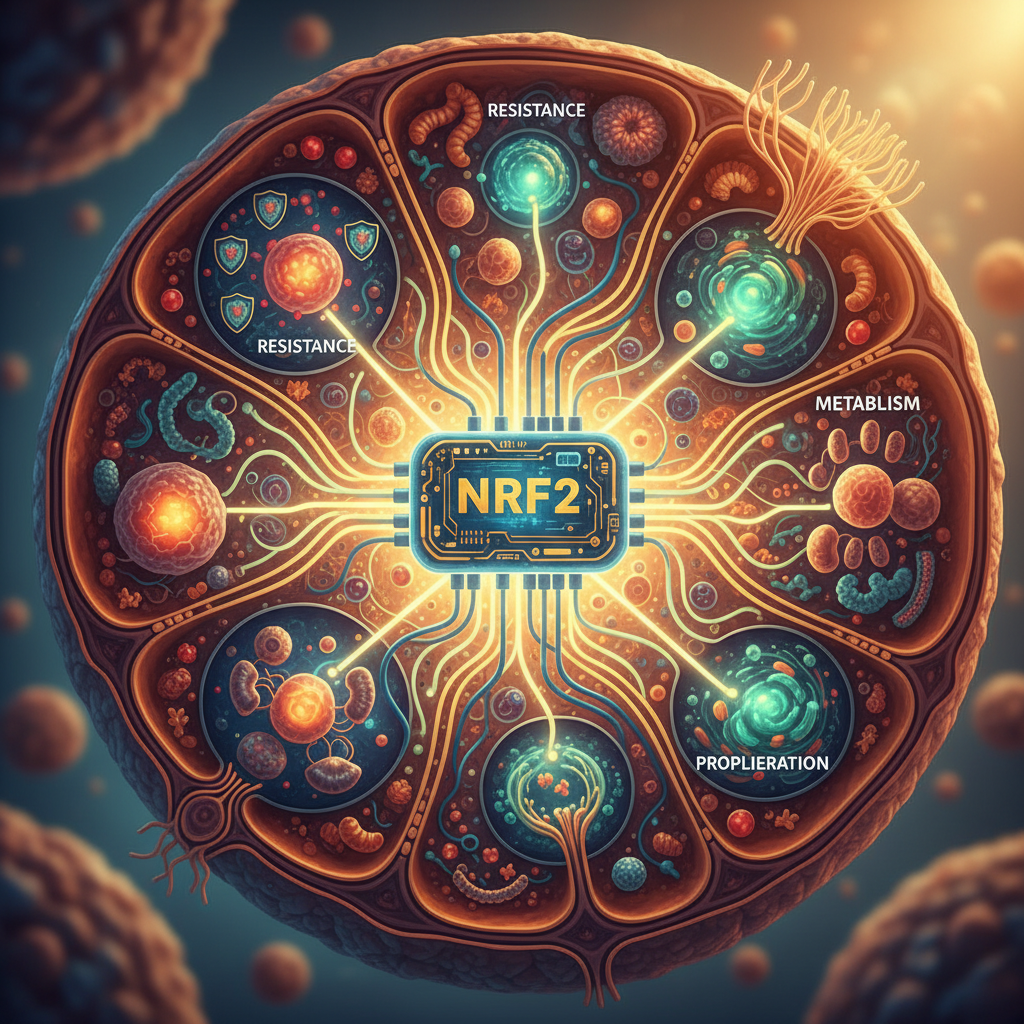
What if I told you there's a specific molecular pathway, a kind of master survival switch, that many human cancers hijack to stay alive and even thrive? It's called NRF2 (Nuclear factor erythroid 2-related factor 2), and researchers are now zeroing in on it as a critical target. Think of NRF2 like the cancer cell's personal architect, designing and building fortifications that protect it from harm and even help it spread.
This NRF2 pathway is often overactive in tumors, boosting their survival rates, according to recent insights from PubMed research. Normally, NRF2 is a protective system for your healthy cells, shielding them from stress. But in cancer, it's hijacked, turned into a pro-survival mechanism for the tumor. It's like a security system designed to protect a vault, but instead, it's protecting the thieves inside the vault.
When NRF2 is ramped up, it does several things that are bad news for you but great for cancer. First, it helps tumor cells avoid apoptosis, which is the programmed cell death every healthy cell is supposed to do when it's damaged. Think of apoptosis as the self-destruct sequence for faulty cells; NRF2 helps cancer cells disable it. Second, NRF2 promotes "autophagy," a process where cells break down and recycle their own components. In cancer, NRF2 makes this process pro-survival, giving the tumor a way to scavenge resources and keep going even under attack.
IMAGE_
How NRF2 Helps Cancer Resist Your Best Efforts
NRF2 doesn't just protect cancer; it actively helps it grow, spread, and become harder to treat. This dual role is one of the most surprising facts about NRF2. It's not just a shield; it's also a growth accelerator. It fuels the "stemness" of cancer cells, which are like the super-resilient, seed-like cells that can regenerate a tumor even after most cells are killed off. Imagine trying to weed a garden, but a few "super seeds" always survive and regrow everything.
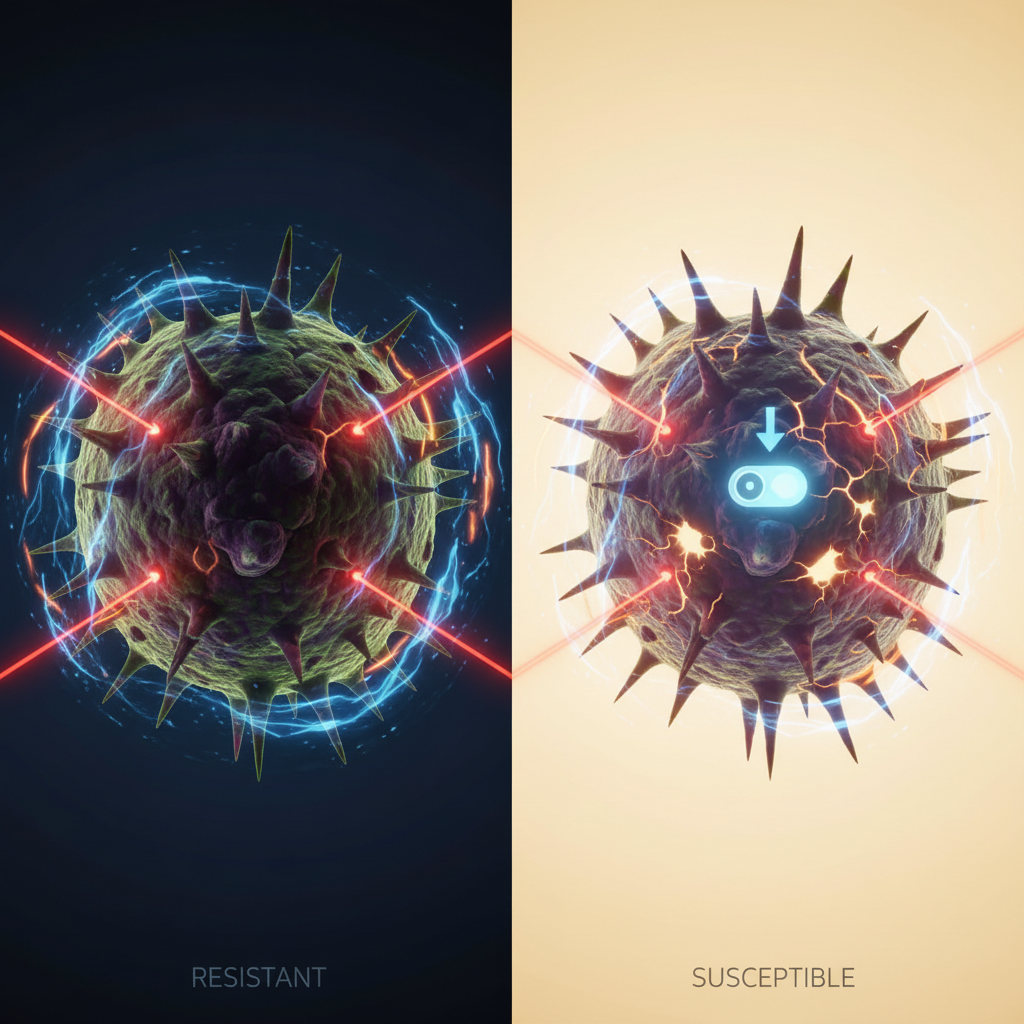
This overactive NRF2 pathway also makes cancer cells resistant to chemotherapy and radiation therapy. Your doctor might hit the tumor with powerful drugs or beams, but NRF2 acts like an internal deflector shield, minimizing the damage. It also ramps up glycolysis, which is how cancer cells feed themselves by rapidly consuming sugar, and promotes epithelial-mesenchymal transition (EMT), a process that allows cancer cells to detach and spread to other parts of the body – the essence of metastasis.
So, NRF2 isn't just one problem; it's a whole suite of problems rolled into one molecular pathway. It's the reason many treatments eventually falter, leaving patients and doctors searching for new options. The good news? We're beginning to understand how to turn this powerful weapon against itself.
IMAGE_

Disarming Cancer's Architect: A New Strategy
The exciting part is that if NRF2 is the problem, then targeting it could be the solution. Researchers are now exploring pharmacological modulation of NRF2, essentially trying to re-engineer its function. This means finding ways to inhibit NRF2 directly, or to manipulate its regulators, like a protein called KEAP1, which normally keeps NRF2 in check. Think of it like a smart bomb designed specifically to disable the cancer's personal architect.
The ultimate goal is to disarm this central survival pathway without harming healthy cells. This is a complex dance, but the possibilities are significant. Imagine a future where a treatment doesn't just attack cancer, but also removes its ability to protect itself and fight back. This approach makes existing therapies more effective and prevents resistance from developing.
Scientists are even developing clever tools for this. Nanoparticles, tiny molecular delivery systems, are being engineered specifically to inhibit NRF2, ushering in a new era of ultra-precise cancer treatment. These microscopic couriers could deliver their NRF2-blocking cargo directly to tumor cells, minimizing side effects on healthy tissues.
What This Means For You and The Future of Cancer Care
This isn't a cure that's ready tomorrow. These are preclinical insights, meaning much of this work is still happening in labs and early studies. But it's paving the way for clinical trials in the near future, offering a serious glimmer of hope. The potential is immense: if we can consistently disable NRF2 in tumors, we might significantly enhance cancer treatment capabilities across a wide range of human cancers.
This shift in understanding — from just killing cancer cells to also disarming their survival mechanisms — could change the entire paradigm of cancer care. It suggests that future treatments might be less about brute force and more about strategic, targeted interventions that exploit cancer's own vulnerabilities. It's about taking away cancer's ability to cheat, making the fight fairer for you.
For patients and their families, this research into NRF2 cancer pathways means renewed hope for more effective, longer-lasting treatments, and fewer relapses. It means that the stubborn resistance you've witnessed in cancer may finally have a solution beyond more aggressive therapy. The fight against cancer is relentless, but our understanding of its weaknesses is growing just as fast.
IMAGE_
Key Takeaways
- Many human cancers hijack the NRF2 molecular pathway to enhance their survival, resist treatments, and promote growth and spread.
- NRF2 not only protects tumor cells from programmed death but also increases their drug and radioresistance, acting as a "master switch" for cancer's resilience.
- New research is focused on pharmacologically inhibiting NRF2, potentially using engineered nanoparticles, to disarm cancer's survival mechanisms and significantly improve treatment outcomes in the future.
Editorial note: The scientific findings presented in this article are sourced exclusively from published research papers, peer-reviewed studies, certified inventions, and registered patent filings. Images generated by AI.
Stay ahead of the curve
The science that shapes tomorrow — in your inbox every week
The scientific findings presented in our articles are sourced from published research papers, peer-reviewed studies, certified inventions, and registered patent filings. Subscribe for focused weekly coverage, hands-on explainers, and practical insights that help you stay curious — no jargon, no noise.
By subscribing, you agree to receive newsletter and marketing emails, and accept our Terms of Use and Privacy Policy. You can unsubscribe anytime.
Health & Biomedical Innovation
Science journalist and former biomedical researcher covering the frontiers of medicine.
View full profile →