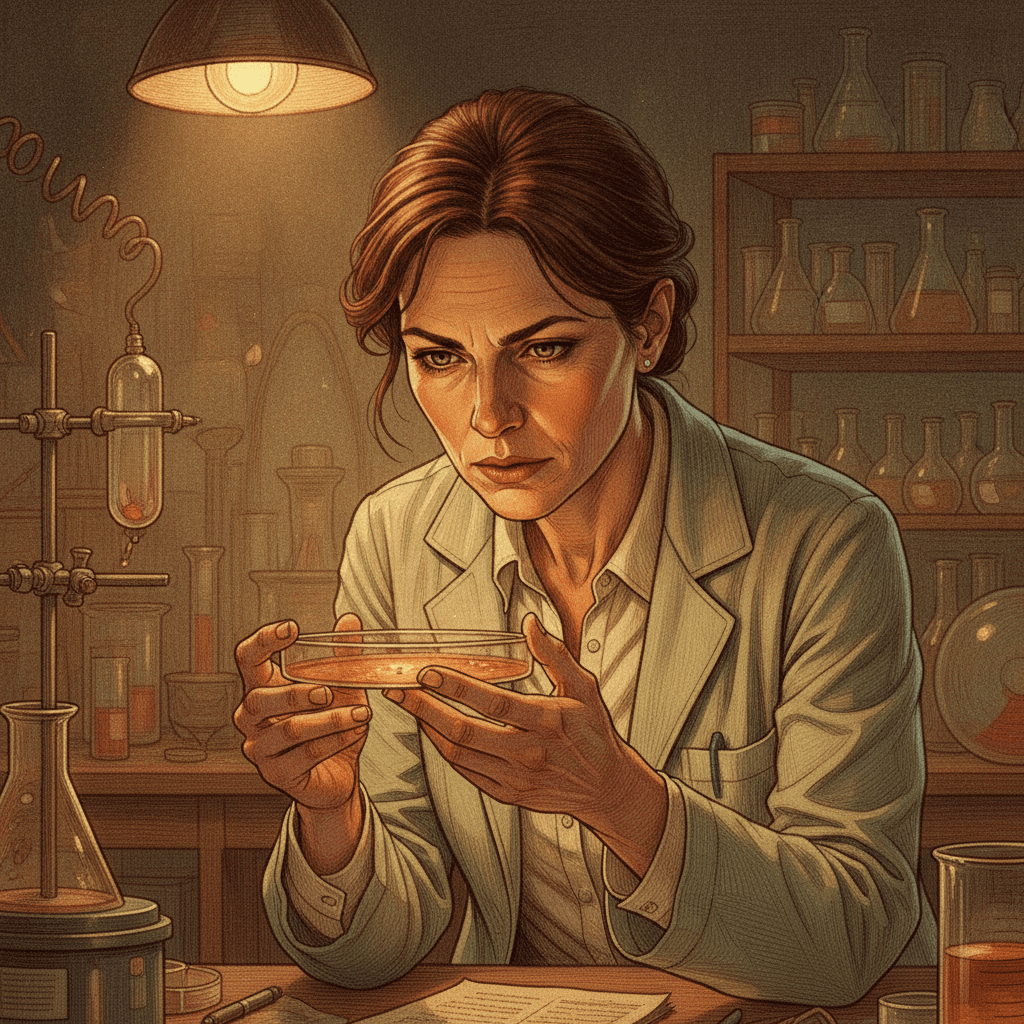
Your Body's Shield Can Stop Fighting Itself
A future where your immune system is fully unleashed against cancer, no longer held back by the tumor itself. Discover the hidden mechanism tumors use to tire out your disease-fighting cells, and how scientists plan to disarm it.

Have you ever felt completely drained after a long, intense period of stress, like your energy just vanished? Your body's tiny immune defenders, called CD8+ T cells, can feel that same kind of burnout when fighting cancer, and tumors are secretly making it worse. These T cells are like your body's personal SWAT team, trained to identify and eliminate threats, but cancer has figured out how to make them tired and ineffective, a state scientists call "exhaustion."
This isn't sci-fi; it's a profound area of cancer research. Scientists at institutions like the University of Pennsylvania and the Wistar Institute, including researchers like Dr. E. John Wherry, have been delving deep into how tumors actively stabilize this exhausted state in T cells. They're uncovering the precise molecular signals that turn a temporary fatigue into a permanent disability, essentially switching off your body's best defense. This detailed understanding, published in OpenAlex, is reshaping how we think about fighting cancer.
Your T cells become exhausted after prolonged exposure to cancer cells, much like a guard dog constantly barking at a fence. Initially, this "barking" — persistent signaling from T cell receptors — tells the cells to keep fighting. But over time, if the threat persists, the cells start to ramp down their activity. It’s a natural mechanism to prevent an overreaction that could harm healthy tissues, but tumors exploit it.
Here’s the surprising part: the tumor isn't just a passive target; it's an active saboteur. The environment around the tumor, known as the tumor microenvironment, constantly sends out signals that actively cement this exhaustion. Think of it like a coach shouting demotivating messages to your already tired team. This microenvironment is a chaotic mix of low oxygen levels (hypoxia), competition for nutrients, imbalances in salts, and even physical pressure from the tumor's growth. Each of these factors reinforces the T cells' exhaustion, making it incredibly difficult for them to recover.
These signals combine to reprogram the T cells, essentially changing their genetic instruction manual, or epigenome. This epigenetic imprinting means the exhaustion isn't just a temporary state; it's like a deep, stubborn stain that won't wash out. Even treatments like checkpoint inhibition, which aim to "take the brakes off" exhausted T cells, only provide a temporary boost. They restore some function, but don't fully reset the cell's identity. This is why many cancers eventually become resistant to these treatments.
What does this mean for you? Well, if we can understand exactly how tumors lock T cells into this exhausted state, we can find ways to unlock them. Imagine if you could give your immune cells a "reset button" that truly reprogrammed them to fight as vigorously as they did on day one. This understanding could lead to new therapies that not only remove the brakes but also fundamentally rebuild your body's immune shield.
The next generation of cancer therapies won't just block inhibitory signals; they'll tackle the whole chaotic mess within the tumor. This includes therapies that address the low oxygen, the nutrient competition, and even the epigenetic "imprint" that makes exhaustion so sticky. Scientists are exploring combination approaches, perhaps targeting metabolic pathways within the T cells or using agents that can physically remodel the tumor microenvironment itself.
For instance, by 2030, we might see treatments that combine existing immunotherapy with drugs that specifically target proteins like TOX, a key player in solidifying T cell exhaustion. This could make current treatments far more effective and durable for many types of cancer. It's about dismantling the tumor's defensive strategies piece by piece, rather than just poking at them.
This research reminds us that cancer is far more complex than just "bad cells." It's a cunning opponent that learns to manipulate our body's own defenses. But by unmasking these hidden strategies, we're not just finding new treatments; we're gaining a deeper appreciation for the incredible, intricate dance happening inside us every moment. It's a battle where your body has a chance to finally stop fighting itself.
The Problem: Your Immune Cells Get "Burned Out" by Tumors
Your immune system's T cells, the microscopic warriors fighting infections and cancer, can become completely exhausted by persistent threats. This exhaustion means they lose their ability to effectively kill cancer cells. The tumor microenvironment, the area immediately surrounding a tumor, actively stabilizes this exhausted state, turning temporary fatigue into a permanent shutdown. This is a major reason why some cancer treatments, while initially successful, may eventually stop working.
How Tumors Tire Out Your Immune System
Tumors wear down your T cells through a combination of sustained attack signals and active environmental sabotage. Here’s a simplified breakdown:
- Constant Alarm: When T cells constantly detect cancer cells, it's like a persistent alarm. Initially, this ramps up their activity.
- Internal Rewiring: Over time, continuous signaling triggers internal changes, guided by factors like NFAT and TOX, that begin to "rewire" the T cell for exhaustion. Think of it as a program running in the background telling them to stand down.
- Environmental Pressure: The tumor itself creates a hostile environment. It reduces oxygen (hypoxia), hogs nutrients, creates ionic imbalances, and even exerts physical pressure. These external factors amplify the internal rewiring, forcing the T cells deeper into exhaustion.
- Epigenetic Lock-in: These combined pressures lead to epigenetic changes, like permanent "off" switches on the T cells' DNA. This ensures the exhaustion isn't temporary; it's a fundamental shift in the cell's identity. This "locked-in" state is what makes reversing exhaustion so challenging.
Why Does This Understanding Matter for Cancer?
Understanding how tumors stabilize T cell exhaustion is absolutely crucial because it opens up entirely new strategies for cancer immunotherapy. If we know exactly how tumors are turning off our immune system, we can develop targeted therapies to undo that damage. Instead of just trying to "wake up" exhausted T cells, we can now aim to fundamentally "reprogram" them back to their full fighting potential. This could lead to more durable and effective treatments, especially for cancers that resist current immunotherapies.

Key Takeaways
- Tumors actively sabotage your immune system by making disease-fighting T cells permanently exhausted.
- This exhaustion is cemented by the harsh tumor environment, which epigenetically reprograms T cells.
- Future cancer treatments will need to combine existing therapies with approaches that "reset" T cells and counteract the tumor's environmental tricks.
Frequently Asked Questions
What is T cell exhaustion? T cell exhaustion is a state where immune cells, specifically CD8+ T cells, lose their ability to effectively fight cancer or chronic infections due to prolonged exposure and signals from the disease environment.
How do tumors cause T cell exhaustion? Tumors cause T cell exhaustion by constantly stimulating them and creating a hostile environment with low oxygen, nutrient scarcity, and physical stress, which together reprogram the T cells to become dysfunctional.
Can T cell exhaustion be reversed? Current immunotherapies can temporarily restore some function to exhausted T cells, but research shows that tumors can "lock in" this exhaustion. New strategies aim to fully reprogram and reverse this deep-seated cellular change.
Editorial note: The scientific findings presented in this article are sourced exclusively from published research papers, peer-reviewed studies, certified inventions, and registered patent filings. Images generated by AI.
Stay ahead of the curve
The science that shapes tomorrow — in your inbox every week
The scientific findings presented in our articles are sourced from published research papers, peer-reviewed studies, certified inventions, and registered patent filings. Subscribe for focused weekly coverage, hands-on explainers, and practical insights that help you stay curious — no jargon, no noise.
By subscribing, you agree to receive newsletter and marketing emails, and accept our Terms of Use and Privacy Policy. You can unsubscribe anytime.
Infectious Disease, Vaccines & Global Health
Global health writer tracking the science that protects populations from the diseases that threaten them most.
View full profile →